Slate and Glass Calls in Wet Weather
There's nothing quite like the crisp air of a Virginia spring morning, the gobbler sounding off on the roost, and the anticipation building as you set up. You pull out your trusty slate or glass call, ready to coax that bird in, only to find the surface feels damp, slick, or just… off. Suddenly, your perfect yelps sound like a dying squeak, or worse, nothing at all. This guide is all about tackling that frustrating reality and making sure your friction calls sing, even when Mother Nature throws some moisture your way.
The Challenge of Wet Weather on Friction Calls
It’s a tale as old as time for turkey hunters across Virginia. You've scouted for weeks, found the perfect roost, and now, as dawn breaks, a thick fog rolls in, or a light drizzle starts to fall. You reach for your favorite slate or glass call, confident in its ability to mimic the sweet talk of a hen, but instead of the crisp, clear notes you’re used to, you get a muted, raspy, or completely silent response. The sheer frustration of a call failing when a gobbler is hot can be enough to make even the most seasoned hunter want to pack up and head home.
Why Moisture Muffles Your Yelps and Clucks
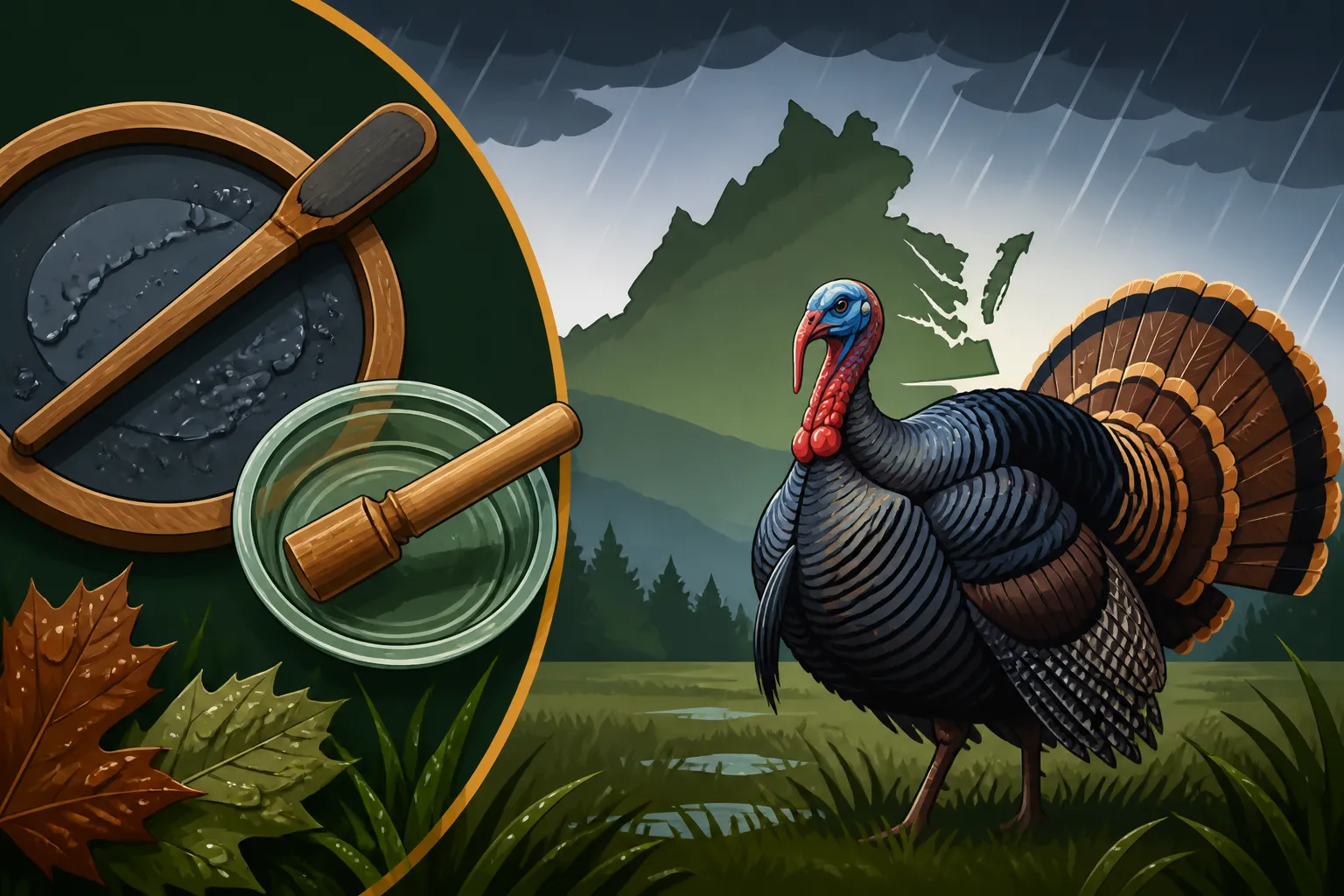
At its heart, a friction call relies on, well, friction. Whether it's a slate call with a wood or carbon striker, or a glass call with a similar setup, the magic happens when the striker tip drags across the calling surface, creating vibrations that produce sound. Think of it like a violin bow across strings – the bow needs grip. Moisture, whether from rain, dew, or even just high humidity, is the arch-nemesis of this process. It acts as a lubricant, filling the microscopic imperfections and pores on the call's surface and on the striker tip.
When these tiny spaces are filled with water, the striker can't grab the surface effectively. It slides rather than skips and vibrates, leading to a muffled, inconsistent, or non-existent sound. Imagine trying to run a pencil eraser across a wet tabletop; it just skids. The same principle applies here. This can happen particularly quickly with porous materials like slate, which can absorb moisture, making the problem even more pronounced and harder to quickly remedy in the field. Glass, being non-porous, might seem less susceptible, but even a thin film of water on its smooth surface is enough to kill the friction needed for a clean sound.
Common Frustrations Hunters Face
The disappointment of a wet call can range from a minor annoyance to a hunt-ending disaster. Picture this: you've got a gobbler hammering in the bottomland hardwoods, just out of sight, and he's responding to every call. You know he's getting close, maybe twenty yards, but then a sudden shower hits, or you accidentally brush your call against a dewy branch. You try to cluck, a soft, reassuring sound you've mastered, but it comes out like a wet sigh, utterly unlike a hen. The gobbler, now wary, shuts up or slowly drifts away. It's a gut-wrenching feeling, knowing your equipment failed you at the crucial moment.
Another common scenario involves early morning hunts. You arrive before dawn, and everything is soaked with heavy dew. Your calls, which sounded perfect at home, are now silent or produce only a weak, scratchy noise. You're left scrambling, trying to dry them with whatever you have—a damp sleeve, a handkerchief, or even the brim of your hat. This kind of unpreparedness can not only spoil your chances with that particular bird but also erode your confidence in your calling setup for the rest of the day. We've all been there, and it's a frustrating situation that can easily be avoided with a little foresight and the right techniques.
Preparing Your Slate and Glass Calls for Inclement Weather
The key to preventing wet-weather call failures often lies in preparation, long before you even step foot in the woods. Proactive maintenance and smart carrying strategies can make all the difference between a successful hunt and a frustrating silence. Treating your calls right before and during the hunt ensures they are ready to perform when a big gobbler demands it.
Pre-Hunt Maintenance and Conditioning
Before the season even begins, or certainly before each hunt, giving your calls some love goes a long way. For both slate and glass, the surface needs to be rough enough to create friction. Use a conditioning pad, typically a piece of fine-grit sandpaper or a special abrasive pad designed for calls, to scuff the entire calling surface. For slate, this roughs up the surface and helps remove any oils or residue that can accumulate. For glass, it creates the necessary texture for the striker to grab. Don't forget your strikers! The tip of your striker also needs attention. Use the conditioning pad to scuff the tip, rotating it to create an even, textured surface. Many hunters will even carry a small piece of conditioning pad or sandpaper in their vest pocket for quick touch-ups in the field.
Consistency is key here. Make it a habit to condition your calls before every outing, or at least check them thoroughly. Think of it like checking your tire pressure before a long drive – a small step that prevents bigger problems. If you're using an app like GoHunt to scout Scouting With the Virginia DWR App, you might even notice a weather forecast that predicts damp conditions, giving you an extra reminder to give your calls a thorough pre-hunt conditioning. A well-conditioned call is your first line of defense against the damp.
Protective Measures in the Field
Once you've prepped your calls, the next step is keeping them dry during the hunt. This means more than just not dropping them in a puddle. Consider how you carry them. Many hunters use call caddies or pouches that offer some protection, but often these are not truly waterproof. Invest in a small, sealable waterproof bag or container specifically for your friction calls. Something as simple as a heavy-duty Ziploc bag can make a huge difference. Keep this bag tucked inside your vest, close to your body, where your body heat can help prevent condensation from forming on the call's surface.
When you set up for a call sequence, be mindful of your surroundings. Avoid placing your call directly on damp ground or against a wet tree trunk. If you're Setting Up Against a Big Oak, place it on a dry patch of leaves or, better yet, keep it in your lap or pocket until you're ready to use it. If rain is a possibility, consider a small, lightweight call cover, or even just pulling the brim of your hat over the call as you operate it. Every little bit of protection helps maintain that crucial dry surface. Remember, even a brief exposure to moisture can render a call useless, so be vigilant about keeping them shielded from the elements.
On-the-Fly Solutions for Wet Friction Calls
Despite your best efforts, sometimes calls get wet. It happens to the best of us, especially in the unpredictable spring weather of Virginia. When it does, don't panic. There are quick fixes you can try right there in the field to get your friction call back in action and hopefully entice that stubborn gobbler.
Drying and Reconditioning Techniques
The moment you realize your call is damp and sounding off-key, the first step is to dry it. If you have a clean, dry cloth in your vest, use it. A bandana, a spare glove, or even a soft section of your shirt can work in a pinch. Gently wipe the calling surface and the striker tip. Avoid using anything oily or greasy, as that will only exacerbate the problem. Once the visible moisture is gone, it's time to recondition. This is where that small piece of fine-grit sandpaper or conditioning pad you tucked into your pocket comes in handy.
Carefully scuff the calling surface again, paying attention to the areas where the striker typically makes contact. For slate, you might see a whitish powder develop, which is normal. For glass, you're looking to create a slightly frosted appearance. Then, scuff the tip of your striker, ensuring it has a fresh, rough edge. If you're really in a bind and don't have a conditioning pad, you can sometimes use the rough edge of a piece of bark, a coarse section of denim from your jeans, or even carefully rub the striker on the grit of your boot sole. These are emergency measures, of course, but they can be surprisingly effective at restoring enough friction for a few critical calls. Just make sure whatever you use is clean and won't transfer unwanted residues to your call.
Alternative Calling Strategies
Sometimes, despite your best efforts, a friction call just won't cooperate in severely wet conditions. Or perhaps you've been caught in an unexpected downpour, and everything is soaked. This is when having a backup plan is crucial. Diversify your calling arsenal. Mouth calls (diaphragm calls) are generally impervious to moisture and can be your best friend in wet weather. They require no external parts, and since they are in your mouth, they stay warm and dry. Practicing with a few different mouth calls before the season will ensure you're proficient when you need them most. While they may not offer the same range of tones as a well-played friction call, they can still produce excellent yelps, clucks, and purrs.
Another option is a box call. While box calls can also be affected by moisture (especially the chalked lid and sound boards), they are often easier to dry and get back into action quickly than a deeply saturated slate call. Just be sure to wipe down the paddle and the soundboards and re-chalk as needed. And don't forget the power of locator calls. Even if your turkey calls are failing, a crow call or an owl hooter will work fine in the wet and can help you pinpoint a gobbler's location, allowing you to reposition for a better setup, perhaps utilizing Wind and Thermals on a Blue Ridge Slope. Being versatile with your calling means you're never completely out of the game, even when your favorite call is temporarily sidelined.
Material Differences and Performance in Damp Conditions
When it comes to friction calls and wet weather, not all materials are created equal. Understanding the nuances of slate versus glass, and how different striker materials react to moisture, can help you make informed decisions about what calls to carry and how to manage them in challenging conditions.
Slate Versus Glass: A Wet Weather Showdown
Let's break down the two main players: slate and glass. Each has its loyal following and distinct characteristics, which become even more apparent when moisture is involved.
Slate Calls:
Slate calls, known for their soft, realistic yelps and clucks, are beloved by many hunters for their natural sound. The surface is naturally porous, which contributes to its realistic tone but also makes it a sponge for moisture. When slate gets wet, water can soak into the surface, making it extremely difficult to create friction. The sound will often become raspy, muted, or simply non-existent. Deep saturation can take a long time to dry out completely, rendering the call ineffective for an extended period. Some hunters opt for ceramic or crystal calls, which are similar to glass but have different tonal qualities, and these can also be impacted by moisture, though perhaps less severely than traditional slate.
Glass Calls (including Crystal):
Glass calls, on the other hand, are known for their sharper, higher-pitched sounds that can carry further, making them excellent for locating birds or calling over longer distances, especially in areas like Still-Hunting Jefferson Forest Ridges. Because glass is non-porous, it doesn't absorb water. However, a thin film of moisture on the surface is all it takes to compromise the friction. The striker will slide instead of bite, producing a squeaky, wet sound or no sound at all. The good news is that glass often dries much faster than slate. A quick wipe with a dry cloth and a scuff with a conditioning pad can often bring a glass call back to life almost immediately.
Ultimately, neither is perfectly immune to moisture, but glass often recovers more quickly. Many experienced hunters carry both, appreciating the different tonal qualities each offers, and being prepared to switch depending on the conditions. Knowing how each call reacts to moisture allows you to manage expectations and implement the right field fixes.
Here's a quick comparison:
| Feature | Slate Calls | Glass Calls (including Crystal) |
|---|---|---|
| Sound Profile | Softer, more realistic, great for close work | Sharper, louder, carries further, good for locating |
| Moisture Absorption | Highly porous, absorbs water, takes longer to dry | Non-porous, water sits on surface, dries quickly |
| Wet Sound | Muted, raspy, often silent, difficult to get friction | Squeaky, slick, can be silent, loss of crispness |
| Recovery | Can be slow to dry and recondition | Fast recovery with wiping and reconditioning |
| Best Use | Close-in calling, subtle work | Locating, loud calling, windy days, Rattling Volume in Thick Mountain Cover |
Striker Materials and Their Impact
While the calling surface gets most of the attention, the material of your striker also plays a critical role in how well your friction call performs in damp conditions. Most strikers are made from wood, carbon, or a blend of synthetic materials.
-
Wood Strikers: These are perhaps the most traditional and common. Different woods like hickory, purpleheart, or dymondwood offer varying tones. When dry, they provide excellent friction and produce rich sounds. However, wood is porous and can absorb moisture. A wet wooden striker tip will become slick and lose its ability to grip the calling surface, just like the call itself. It can also swell slightly, changing its contact point. Carrying multiple wooden strikers, ideally of different wood types, gives you options, and you can try to dry one while using another. Always scuff the tip regularly to expose fresh wood fibers.
-
Carbon Strikers: Carbon strikers are often denser and less porous than wood, making them somewhat more resistant to moisture. They tend to produce sharper, crisper notes, especially on glass calls. While a carbon striker won't absorb water like wood, a film of moisture on its tip can still cause it to slide. However, they usually dry very quickly with a wipe. Many hunters prefer carbon for its consistency and durability, especially when conditions might be less than ideal.
-
Synthetic Strikers: These can be made from various materials, often composites or plastics. They are generally the most impervious to moisture because they are non-porous. Synthetic strikers can maintain their friction better in damp conditions compared to wood, though they might not always produce the same warmth of tone. They are often a reliable choice as a backup for wet weather.
The best approach is to carry a variety of strikers. Have a few wooden ones for different tones, a carbon one for damp days, and perhaps a synthetic one for those truly miserable, rainy mornings. If one striker gets wet and refuses to work, you can quickly switch to a dry one, scuff the tip, and be back in the game. Being able to adapt not only your calling surface but also your striker material gives you a significant advantage when the weather turns against you in the turkey woods.
Disclaimer
This article is for general informational purposes only and does not constitute professional advice. Laws, prices and regulations vary by location and change over time. Consult a qualified professional for guidance on your specific situation.