Is a .243 Enough for Virginia Whitetails?
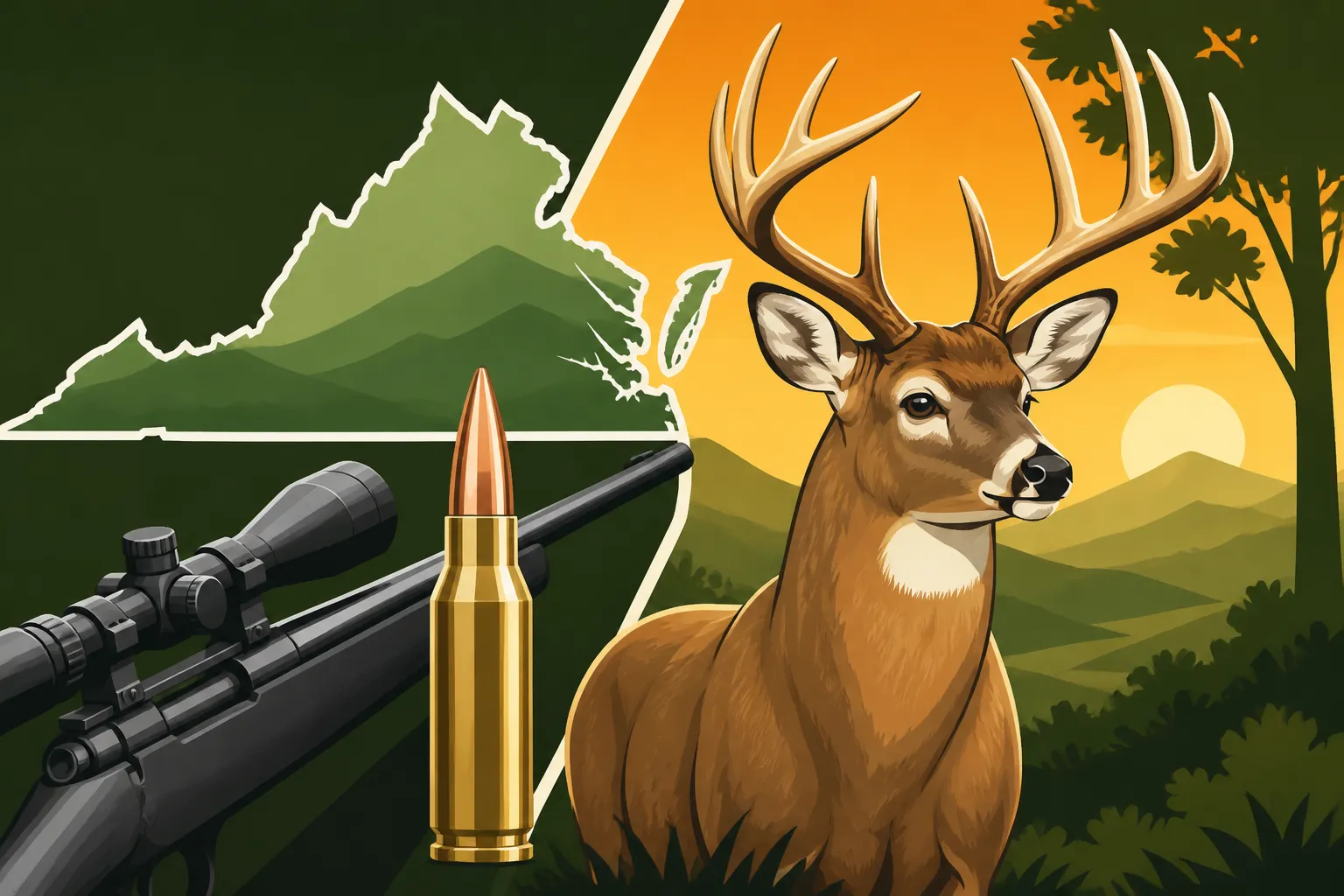
There’s a question that whispers through deer camps and rings out in online forums every hunting season: "Is my .243 Winchester enough gun for Virginia whitetails?" It’s a completely valid concern, and one that speaks to every hunter's desire to be ethical and effective in the field. Nobody wants to wound an animal or feel undergunned when that buck of a lifetime steps out. This guide is here to dive deep into the venerable .243, exploring its capabilities and practical applications specifically for deer hunting across Virginia's diverse landscapes.
Understanding the .243 Caliber's Capabilities
The .243 Winchester has earned a reputation over decades as a versatile and potent cartridge, beloved by varmint hunters and deer hunters alike. But what makes it tick, and how does that translate to putting venison in the freezer right here in Virginia?
Ballistics and Bullet Construction for Whitetails
At its heart, the .243 Winchester is a high-velocity, flat-shooting cartridge, typically firing bullets in the 80 to 100-grain range. When you’re looking at these numbers, it’s easy to get lost in the jargon, but let's break it down simply. That high velocity means less bullet drop over typical hunting distances, which is a huge confidence booster when you're sighting down the scope.
However, velocity alone doesn't tell the whole story. The real magic for deer hunting lies in bullet construction. For whitetails, you want a bullet designed for controlled expansion. Think about a good soft-point bullet, or even a bonded core design. These bullets are engineered to mushroom predictably upon impact, creating a larger wound channel and transferring maximum energy to the animal, while still retaining enough weight to penetrate deeply. Cheap, varmint-style bullets, on the other hand, are designed to fragment explosively on small targets; they might not penetrate enough on a deer, leading to a shallow wound. Choosing the right bullet weight and type is paramount with the .243. An 85-grain Nosler Partition or a 95-grain Winchester Deer Season XP, for example, is built to perform beautifully on deer, even if it might look like a smaller bullet on paper.
Ethical Shot Placement: The Real Key to Success
Here’s the absolute truth about any rifle caliber: it’s only as effective as the shooter behind it and the shot placement they achieve. A well-placed shot with a .243 is infinitely more effective and ethical than a poorly placed shot with a magnum. We're talking about putting that bullet directly into the heart-lung vital zone. This area, located just behind the shoulder, is where the vast majority of vital organs reside. When a bullet impacts here, it causes massive internal damage, leading to a quick, humane harvest.
The .243’s relatively light recoil plays a huge role in achieving this. Many hunters, especially those who are recoil-sensitive or newer to hunting, find that they can shoot a .243 much more accurately than a heavier-recoiling caliber. This improved accuracy means a higher probability of making that perfect shot when the moment counts. So, while the .243 might not have the raw "knockdown power" of a .30-06, its ability to promote pinpoint accuracy in the hands of a capable shooter often makes it the more effective choice for ethical harvesting.
Recoil and Shooter Confidence
Let's be honest, heavy recoil isn't fun for most of us. It can lead to flinching, anticipating the shot, and ultimately, poor accuracy. This is where the .243 truly shines. Compared to popular deer calibers like the .30-06 or even the .270, the .243 has significantly less recoil. This reduced kickback is a huge advantage, especially for younger hunters, smaller-framed individuals, or anyone who simply wants a more pleasant shooting experience at the range and in the field.
When you're not flinching or anticipating the jolt, you can focus purely on your sight picture and trigger control, leading to tighter groups and increased confidence. That confidence extends beyond the shooting bench; it translates directly to the stand. Knowing you can place your shot precisely, even under the adrenaline of seeing a mature Virginia buck, is invaluable. A confident shooter with a .243 is far more effective than a flinching shooter with a larger, more powerful rifle. Better yet, the pleasant shooting experience often encourages more practice, which makes you an even better shot overall. It’s a positive feedback loop that directly benefits ethical hunting.
Virginia Whitetails and Their Environment
Virginia offers an incredible variety of hunting experiences, from the thick, rugged mountains to the sprawling agricultural fields of the Piedmont and the dense swamps of the Tidewater region. Each of these environments presents unique challenges and opportunities, and understanding how the .243 fits into this picture is crucial.
Virginia Deer Size and Toughness
The average size of a Virginia whitetail can vary quite a bit depending on the region. A mature buck in the mountainous western part of the state might be a bit leaner, but certainly no less tough, than a corn-fed monster from the rich agricultural lands of the Piedmont or the Eastern Shore. Generally, Virginia deer are typical eastern whitetails, weighing anywhere from 100 to 200 pounds for a mature animal, with some larger specimens certainly existing. They're not notoriously "tougher" than deer in other states, but they are resilient animals.
The idea that a .243 isn't "enough" often stems from a misconception about deer toughness. A deer's vitals are not armored. A well-constructed bullet from a .243, placed accurately, will cause fatal damage regardless of the deer's size within typical whitetail ranges. The key is that the bullet needs to penetrate and expand, which good quality hunting ammunition designed for deer will do. Whether you're hunting the rolling hills of Bedford County or the dense woods near [Lynchburg], a .243, properly utilized, is up to the task for Virginia's deer population.
Typical Hunting Distances in Virginia
Hunting distances in Virginia are incredibly diverse. If you're perched in a treestand overlooking a vast soybean field in the Piedmont, you might face a 200-yard shot. On the flip side, still-hunting through the dense mountain laurel of the Jefferson National Forest, your shot might be under 50 yards, often closer. In the swamps of the Eastern Shore, visibility might be limited to mere dozens of yards.
The .243 is incredibly well-suited for the vast majority of these scenarios. Its flat trajectory minimizes guesswork for those longer shots across fields, and its minimal recoil makes it easy to stay on target when quick, close-range opportunities arise in thick timber. Most deer are taken under 150 yards, a range where the .243 maintains excellent energy and accuracy. Even at 200-250 yards, with good bullet selection and practice, the .243 performs admirably. While it's not a 500-yard magnum, most Virginia hunters rarely encounter such distances, especially on public lands where shots are often restricted by terrain and cover. For finding prime spots with varying distances, scouting tools can be a huge asset; many hunters rely on mapping apps like GoHunt to understand the terrain and plan their approach, giving them an edge in knowing potential shot distances.
The Impact of Cover and Obstacles
Virginia is known for its beautiful, but often dense, cover. From the thick brush of a clear-cut to the hardwoods of the George Washington National Forest, obstacles between you and your deer are a common challenge. This is where bullet selection with a .243 becomes even more critical. While no rifle bullet is truly "brush-proof," some designs are better than others at resisting deflection if they clip a twig or branch on their way to the target.
Heavier, more robustly constructed bullets tend to be less prone to deflection than lighter, frangible ones. This is another reason to opt for quality deer-specific ammunition over varmint loads. The .243, with a good 90-100 grain bullet, offers a decent balance for navigating these conditions. However, the best practice, regardless of caliber, is always to ensure a clear shot path. Even a slight deflection can turn a lethal shot into a wound, so patience and careful shot selection are always your best allies in Virginia's varied cover. Understanding Wind and Thermals on a Blue Ridge Slope can also help position yourself for clearer shots.
Practical Considerations for the .243 in Virginia
Choosing the .243 is just the first step. To truly make it effective in the Virginia woods, you need to understand how to optimize your setup and acknowledge its limitations.
Ammunition Selection: Making Your .243 Shine
This is perhaps the single most important factor in making the .243 an ethical and effective deer cartridge. Do not, under any circumstances, use varmint ammunition for deer. It cannot be stressed enough. Varmint bullets are designed to expand rapidly and fragment upon hitting small animals like groundhogs or coyotes. On a deer, they won't penetrate deeply enough to reach vital organs reliably, leading to wounded animals and lost deer.
Instead, look for ammunition specifically labeled for deer or big game hunting. Common bullet weights for deer in .243 include 85, 90, 95, and 100 grains. Here's a quick rundown of what to look for:
| Bullet Weight (Grains) | Typical Use & Performance | Pros for Virginia Deer |
|---|---|---|
| 85-90 gr | Light-for-caliber, high velocity | Very flat shooting, excellent for open areas. Good for smaller deer or younger hunters. |
| 95-100 gr | Standard deer hunting weight | Excellent energy retention, better penetration. More forgiving on quartering shots. |
Focus on bullet designs that feature controlled expansion and good weight retention. Brands like Federal Fusion, Winchester Power-Point, Remington Core-Lokt, Hornady InterLock, and Nosler Partition all offer excellent options in the .243 caliber specifically engineered for deer. Some hunters even find that they perform well with specialty ammunition such as Barnes TSX (all-copper) which provides fantastic weight retention and deep penetration, even in lighter weights. Check your local sporting goods store or online retailers for availability; GoHunt's resources can sometimes point you to retailers or reviews for specific ammunition types. Knowing your rifle and testing different loads to see what groups best is a critical step before hitting the woods.
When the .243 Might Feel Undergunned
While the .243 is certainly capable, there are specific scenarios where a hunter might feel undergunned, or where a larger caliber could offer more margin for error.
- Less-Than-Ideal Shot Placement: Let's face it, we all strive for perfect shot placement, but hunting isn't always perfect. If your shot is a bit off, hitting a shoulder blade or a gut shot, a larger caliber with more mass and energy might offer a slightly better chance of still incapacitating the animal. However, this isn't an excuse for poor shooting; it's just acknowledging reality.
- Very Long-Range Shots: While the .243 is flat-shooting, its energy drops off significantly past 300 yards. For hunters consistently taking shots at these extended ranges, a caliber with more retained energy and less wind drift (like a 6.5 Creedmoor or .308 Winchester) would be a more responsible choice. Again, most Virginia deer are taken at much closer ranges.
- Thick-Skinned or Very Large Animals: While a .243 is adequate for typical Virginia whitetails, if you were to encounter an exceptionally large black bear (legal in some areas of Virginia during deer season, with proper tags), or if you were hunting an animal like elk, the .243 would be considered underpowered. For Bear Hunting Virginia's Mountains and Piedmont, you’d likely want a heavier caliber.
It's about understanding the limits and hunting within them. If you stick to ethical shot distances and use appropriate ammunition, the .243 is rarely truly "undergunned" for Virginia whitetails.
The "Confidence Factor" and Ethical Hunting
Ultimately, hunting ethically boils down to making a clean, swift kill. The caliber you choose is a tool to achieve that. For many, the .243 fosters confidence because of its mild recoil, leading to better shooting. If you can confidently and consistently place a bullet in a 3-inch circle at 150 yards with your .243, you are far better equipped than someone who flinches with a .300 Win Mag and can only hold an 8-inch group.
The psychological aspect of hunting is real. If you’re truly confident in your rifle, your ammunition, and your ability to shoot it accurately, you'll perform better under pressure. If you have nagging doubts about the .243's power, those doubts might lead to hesitation or a flinched shot. It's an internal calculation you have to make. For a very large number of Virginia hunters, the .243 provides that perfect balance of sufficient power and shootability that breeds confidence, making it a highly ethical choice. Regular practice at the range, perhaps even practicing with your hunting gear on, will solidify that confidence.
Alternatives and Complementary Approaches
If you're still weighing your options or just want to be a more effective hunter, there are always other calibers and strategies to consider.
Other Popular Virginia Deer Calibers
While the .243 is a solid choice, Virginia hunters certainly have a fondness for a few other calibers that offer similar or increased performance for whitetails.
- .270 Winchester: This is a classic, beloved by many. It offers a flatter trajectory and more energy than the .243, typically with 130-150 grain bullets. Recoil is manageable for most.
- .308 Winchester: Another highly popular and versatile cartridge. It's known for its accuracy, good energy, and compact cases, making it a favorite for AR-platform rifles and bolt-actions alike. Bullets usually range from 150-180 grains.
- .30-06 Springfield: The quintessential American deer cartridge. The .30-06 offers significant power and versatility, handling bullet weights from 150 to 200 grains effectively. It can take any game animal in North America, including larger Virginia's Black Bear Population. However, it comes with noticeably more recoil than the .243 or .270.
Each of these calibers has its strengths, but they also typically come with more recoil. The best choice is always the one you can shoot most accurately and confidently. For Rifle Setups for Virginia Deer Hunting, the selection of calibers is broad, but the principles of shot placement remain the same.
Skills Over Caliber: Practice and Scouting
Regardless of what caliber rifle you choose, your personal skill set will always be the most significant factor in your hunting success and ethical take.
- Practice, Practice, Practice: There is no substitute for trigger time. Regularly visiting the range, practicing from different positions (prone, kneeling, standing, from a hunting blind), and under varying conditions will dramatically improve your accuracy and confidence. Know your rifle, know your ammunition, and know your effective range.
- Scouting is Key: Understanding deer movement, feeding patterns, and bedding areas is paramount. Spend time in the woods before the season opens. Look for tracks, rubs, scrapes, and other signs. Use tools like the Scouting Virginia Public Land Before Season app or online mapping software to identify potential travel corridors, pinch points, and food sources. The more you know about where the deer are and how they move, the better your chances of getting a close, ethical shot, making caliber less of a limiting factor.
- Know Your Target: Beyond general shot placement, understand deer anatomy intimately. Be able to visualize the vital organs from different angles. This knowledge will guide your shot selection in the field.
Understanding Virginia's Legal Requirements
Virginia's hunting regulations are designed to promote safety and ethical hunting. Thankfully, the .243 Winchester is a perfectly legal and widely accepted cartridge for deer hunting across the Commonwealth. There are no minimum caliber restrictions for centerfire rifles that would exclude the .243. The Virginia Legal Firearms for Deer Hunting rules are generally quite permissive for common hunting calibers.
However, always remember to check the most current Virginia Department of Wildlife Resources (DWR) regulations for any specific county-level restrictions or changes to season dates and bag limits. For example, some urban archery zones might have different rules for firearms, but for general deer season, your .243 is good to go. Adherence to all regulations, from licensing to blaze orange requirements, is a non-negotiable part of responsible hunting in Virginia.
Disclaimer
This article is for general informational purposes only and does not constitute professional advice. Laws, prices and regulations vary by location and change over time. Consult a qualified professional for guidance on your specific situation.