Bear Hunting Virginia’s Mountains and Piedmont
Many Virginia hunters dream of taking a black bear, but the thought of pursuing these powerful, intelligent animals in our diverse landscapes can feel incredibly daunting. Whether you're navigating the vast public lands of the Blue Ridge or deciphering private land patterns in the rolling Piedmont, bear hunting presents unique challenges. This comprehensive guide will walk you through everything you need to know, from understanding bear behavior and season specifics to proven tactics and essential gear, helping you prepare for a successful and ethical bear hunt in the Old Dominion.
Understanding Virginia's Black Bear Population and Behavior
Virginia's black bear population has seen a remarkable comeback over the past few decades, growing significantly from isolated pockets to a thriving, widespread presence across much of the state. This success story is a testament to sound wildlife management and the adaptability of bears themselves. However, it also means that hunters need to understand where these magnificent animals live, how they behave, and what influences their movements throughout the hunting season.
Where Virginia Black Bears Live Today
While bears are often associated with the dense forests of the Appalachian Mountains, Virginia's black bears have truly expanded their range, thriving not only in the traditional mountain strongholds but also increasingly in the rolling hills and agricultural lands of the Piedmont. If you're wondering how many black bears Virginia has, the population estimates continue to show a robust and growing number, allowing for healthy harvest opportunities. In the western part of the state, areas like the George Washington National Forest and the Jefferson National Forest are prime bear habitat, offering vast expanses of public land. These mountains provide the dense cover, diverse mast crops, and remote hollows that bears favor.
However, don't overlook the Piedmont, where bears are now well-established. Counties like Amherst, Nelson, and even parts closer to the I-95 corridor have seen a significant increase in bear sightings and populations. Here, bears adapt to more fragmented landscapes, often using creek bottoms, dense swamps, and thickets bordering agricultural fields for cover and travel. They might be found right on the edges of suburban development, taking advantage of food sources offered by both natural and human environments. This adaptability makes them a fascinating, yet challenging, quarry in both regions. You can find more specific details on Where Mountain and Piedmont Bears Range.
Virginia's Growing Bear Population and Harvest Trends
The story of Virginia's black bear is one of impressive growth. Through dedicated conservation efforts, including habitat management and regulated hunting seasons, the bear population has steadily increased. This growth has led to a corresponding rise in harvest numbers, providing more opportunities for hunters while still maintaining a healthy population. When you look at Virginia bear harvest trends, you'll see fluctuations based on mast crop availability and hunter effort, but the overall trajectory has been upward. The Virginia Department of Wildlife Resources (DWR) actively monitors these trends, using data from harvest reports, nuisance complaints, and scientific studies to make informed management decisions.
For hunters, this means a better chance of encountering bears, but it also necessitates understanding localized population dynamics. In areas with higher bear densities, competition for food might lead to more widespread movement, especially during lean mast years. Conversely, in areas where bears are more established, they might have more predictable travel patterns. Staying informed about the latest DWR reports and local observations is crucial. This proactive approach helps hunters adjust their strategies to current conditions, ensuring they're hunting responsibly and effectively in a thriving bear landscape.
Understanding Bear Food Sources and Seasonal Movements
Black bears are opportunists, and their movements are heavily dictated by the availability of food. Understanding their diet throughout the year is key to predicting where they might be during hunting season. In late summer and early fall, bears are hyperphagic, meaning they are intensely focused on consuming vast amounts of calories to build up fat reserves for winter denning. During this period, hard mast like acorns (especially white oak acorns, which are less tannic), hickory nuts, and beechnuts are absolute magnets in forested areas. Soft mast, such as wild grapes, blackberries, and various berries, also plays a crucial role.
As the season progresses into late fall, bears will continue to gorge on whatever mast is available. If hard mast is scarce, they might shift their focus to agricultural fields, particularly cornfields, soybean fields, or even apple orchards on private lands. This is where understanding local farming practices becomes critical, especially in the Piedmont. A bear's home range can be surprisingly large, and they will travel considerable distances to exploit abundant food sources. Heavy hunting pressure in one area might also push bears into thicker, less accessible cover, or even into different drainage systems. Observing fresh sign – scat, tracks, rubbed trees, and overturned rocks – provides invaluable clues about their current feeding preferences and travel routes, making your scouting efforts more efficient.
Deciphering Virginia's Bear Season Regulations
Hunting black bears in Virginia requires a thorough understanding of the state's specific regulations, which can vary significantly depending on the region and the hunting method. These rules are put in place by the Virginia Department of Wildlife Resources (DWR) to ensure sustainable populations and safe hunting practices. Misinterpreting or overlooking a regulation can quickly turn a promising hunt into a frustrating, or even illegal, situation.
Key Season Dates and Regional Specifics
Virginia's bear season structure is designed to offer various opportunities while managing local populations. Generally, there are archery, muzzleloader, and firearms seasons for bears, often overlapping with deer seasons in different parts of the state. However, it's crucial to consult the latest DWR Hunting & Trapping Regulations digest for the exact dates, as they can shift slightly year to year. For example, some counties in the southwest region might have an early bear season that closes sooner, while others might have a more extended firearms season. The state is broadly divided into different zones for bear management, often delineated by county lines or geographic features like the Blue Ridge Mountains.
This regional variation means that a tactic or a season date that is legal and effective in, say, Bath County, might be completely different in Southampton County. You might find a more restrictive bear bag limit in one region compared to another. Always double-check the specific county you plan to hunt in, as local ordinances can also play a role, particularly regarding Sunday hunting or the discharge of firearms near residential areas. Staying updated on Virginia Bear Season Rules is non-negotiable for a responsible hunter.
Navigating Mange-Affected Counties and Special Rules
One of the significant challenges facing Virginia's bear population in certain areas is mange. This skin disease, caused by mites, can be debilitating and even fatal for bears, impacting local population health. In response, the DWR has implemented special rules in specific counties to help manage affected populations. These rules might include reduced seasons, modified bag limits, or specific reporting requirements aimed at monitoring the disease's prevalence and impact.
It's absolutely vital to be aware of Virginia's Mange-Affected Bear Counties before planning your hunt. If you're hunting in or near one of these areas, you might find that the bear season is cut shorter, or certain harvest restrictions apply. For instance, in some counties, the DWR might ask hunters to specifically target smaller bears or to report any signs of mange observed on harvested animals. These measures are critical for the long-term health of the bear population and require the full cooperation of the hunting community. Always check the DWR website or the current regulations manual for the most up-to-date information on these special zones.
Mandatory Reporting and Carcass Movement Guidelines
Harvesting a bear in Virginia isn't just about the hunt itself; it also comes with important post-harvest responsibilities. All harvested bears must be reported to the DWR within a specific timeframe, typically within 24 hours of harvest, using the DWR's online reporting system or mobile app. This mandatory reporting is crucial for the DWR to collect vital data on bear harvest numbers, sex, and age, which directly informs future management decisions. Failing to report a harvested bear is a violation and can carry penalties.
Furthermore, hunters need to be aware of Virginia bear checking requirements, especially if they plan to transport the carcass out of state or through specific Chronic Wasting Disease (CWD) management areas. While CWD is primarily a deer disease, the principle of carcass movement restrictions applies to preventing the spread of any potential wildlife disease. Generally, the DWR wants the head and cervical vertebrae of a bear from specific CWD zones to remain within those zones or to be submitted for testing. Always check the DWR regulations for any specific instructions regarding carcass movement, especially for interstate travel. These guidelines are in place to protect wildlife resources across a broader region, and compliance is a key part of ethical hunting.
| Virginia Bear Hunting Seasons (General Overview – Always Check DWR for Specifics) |
|---|
| Season Type |
| Archery Season |
| Early Muzzleloader |
| General Firearms |
| Hound Season |
| Bag Limit |
Proven Tactics for Mountain Bear Hunting
Hunting black bears in Virginia's mountains, particularly in the vastness of the George Washington and Jefferson National Forests, is a quintessential big game experience. It demands physical fitness, an understanding of the terrain, and a keen eye for bear sign. These mountains are rugged and unforgiving, but they hold a strong population of bears for those willing to put in the work.
Still-Hunting and Spot-and-Stalk Strategies in Steep Terrain
The mountains of Virginia are tailor-made for still-hunting and spot-and-stalk tactics, though both demand patience and a careful approach. Still-hunting involves moving slowly and deliberately through the woods, taking a few steps, then pausing for several minutes to observe, listen, and scan for movement. This method is incredibly effective when you're working through areas with abundant mast, dense cover, or along prominent ridges and hollows that bears use for travel. Focus on moving into the wind or a crosswind to keep your scent from reaching a bear, and use the contours of the land to your advantage. Climbing to a high point, like a ridgetop saddle, and using quality optics to glass opposing slopes or distant clear-cuts is a common and successful spot-and-stalk technique for Spot-and-Stalk Tactics for Mountain Bears.
When spot-and-stalk hunting, especially in the larger public lands, consider areas with a mix of dense timber, open stands of oak and hickory, and recent timber cuts which can provide both food and bedding cover. The key is to climb high, glass low, and be prepared for a long, quiet stalk once a bear is spotted. Thermal currents, which typically rise during the day and fall in the evening, must be factored into your approach to avoid being winded. A good topographical map or a GPS mapping app like the one offered by GoHunt on your phone can be invaluable for navigating the complex terrain and planning your entry and exit routes without spooking game.
Exploiting Natural Mast Crops and Bear Sign
Bears in the mountains are heavily dependent on natural food sources, and understanding the annual mast crop is perhaps the most critical factor in successful mountain bear hunting. Hard mast, particularly acorns, is a primary food source in the fall. After a poor acorn year, bears might be more concentrated in areas where alternative foods like wild grapes, pawpaws, or even beech nuts are available. Scouting before the season opens is paramount to identify these hotspots. Look for areas with fresh bear scat, claw marks on trees, and overturned rocks and logs, which indicate recent feeding activity.
When you're Hunting Bears Over Natural Mast in the Mountains, focus your efforts on oak ridges, especially those with white oaks, which drop their acorns earlier and are preferred by bears due to their lower tannin content. As the season progresses, red oaks become more important. Also, pay attention to the transition zones between different forest types, such as where mature hardwoods meet thick rhododendron or mountain laurel thickets. These edges provide both food and security cover. Setting up a stand or ground blind on a well-used trail leading to a prime mast area or a water source can be highly effective. Early morning and late afternoon are prime times, as bears move to and from their feeding and bedding areas.
Utilizing Hounds in Permitted Regions
For many, the traditional method of bear hunting in the mountains involves the use of trained hounds. While not permitted everywhere, Hunting Bears With Hounds Where Virginia Allows It is a time-honored tradition in many western Virginia counties. This method requires specialized dogs that can track a bear's scent, push it from its bed, and eventually tree or bay it, allowing the hunter to approach for a shot. It's a highly dynamic and physically demanding form of hunting, often covering vast amounts of rugged terrain.
Hunters who use hounds spend countless hours training their dogs and learning the intricate movements of bears. This approach often involves a team of hunters working together, communicating via two-way radios or GPS tracking systems for dogs, to strategically position themselves ahead of the chase. The success of a hound hunt relies on several factors: the skill and endurance of the dogs, the experience of the handlers, and the cooperation of the entire hunting party. It's a method that truly embodies the camaraderie of hunting and offers a unique challenge that some mountain hunters prefer. Always ensure you are familiar with the specific regulations for hunting with hounds in your chosen county, as they can be quite detailed regarding permitted dates and times.
Effective Strategies for Piedmont Bear Hunting
Bear hunting in the Piedmont region of Virginia presents a different set of challenges and opportunities compared to the mountains. While the terrain might be less dramatic, the fragmented habitat, presence of agricultural land, and closer proximity to human development require a nuanced approach. Piedmont bears are incredibly adaptable, and successful hunting here often means understanding how they utilize these diverse landscapes.
Hunting Bears Around Agricultural Areas
In the Piedmont, agricultural fields are often major draws for black bears, especially when natural mast crops are scarce or when bears are building fat reserves in late summer and fall. Cornfields, soybean fields, and even peanut fields can provide a dense food source and excellent cover. Bears will often enter these fields at night to feed, bedding down in adjacent thickets or creek bottoms during the day. Identifying fresh tracks at field edges, scat containing crop remnants, or broken cornstalks can be key indicators of bear activity.
Setting up a ground blind or elevated stand along the edge of an active field, particularly near known entry and exit points, can be a highly effective strategy. Consider prevailing winds and thermal patterns to ensure your scent doesn't carry into the field. Sometimes, a bear will even bed down within a large cornfield, making it incredibly difficult to locate. For this reason, focusing on early morning or late evening movements as bears move to and from these food sources tends to be more productive. Always be aware of property lines and ensure you have explicit permission from landowners if hunting on private land bordering agricultural areas.
Identifying Travel Corridors and Bedding Areas in Fragmented Habitat
The Piedmont's landscape is often a patchwork of small woodlots, dense stream corridors, and open fields. In this fragmented habitat, identifying key travel corridors and secure bedding areas is paramount. Bears will use creek bottoms, powerline cuts, fencerows, and unpressured strips of timber to travel between food sources and bedding cover. These linear features act as "highways" for bears, providing both concealment and a direct route. Scouting these areas for tracks, rubs, and scat can reveal consistent travel patterns.
Bedding areas in the Piedmont tend to be in the densest, most inaccessible cover available. This might include thick pine plantations, overgrown clear-cuts with dense briars and saplings, or extensive wetland swamps. Bears seek out these areas for security during daylight hours. By using mapping tools, perhaps with the aerial imagery layers provided by GoHunt, you can identify these thick cover patches and then scout the ingress and egress points. Setting up a stand where a travel corridor funnels into or out of such a bedding area can be extremely productive, especially during the mid-day hours when bears might still be on the move.
Leveraging Stand Hunting Opportunities on Private Land
Much of the Piedmont is privately owned, and gaining landowner permission is often the key to unlocking some excellent bear hunting opportunities. On private lands, bears might be less pressured and can establish more predictable routines. Once permission is secured, focus on thorough scouting to identify prime stand locations. This might involve placing trail cameras near suspected food sources, travel corridors, or water features to confirm bear activity and pattern their movements.
Stand hunting, whether from a treestand or a ground blind, is a common and effective method in the Piedmont. When selecting a stand location, prioritize areas that offer a commanding view of potential bear movement, good concealment, and a favorable wind direction. Consider pinch points, such as where two thickets come close together or where a creek bend forces animals into a narrow strip of land. On private land, you might even have the option to plant a small food plot (where legal and permitted by the landowner) or to identify natural soft mast patches like persimmon or apple trees that bears frequent. Remember, consistent communication and respect for the landowner are crucial for maintaining access for future seasons.
Essential Gear for a Virginia Bear Hunt
Successfully pursuing black bears in Virginia, whether in the rugged mountains or the rolling Piedmont, requires more than just knowing where to hunt and how. Having the right gear, from your weapon to your clothing and navigation tools, can make all the difference in comfort, safety, and ultimately, success. Don't skimp on quality or preparation when it comes to equipping yourself for a bear hunt.
Selecting the Right Firearm or Archery Setup
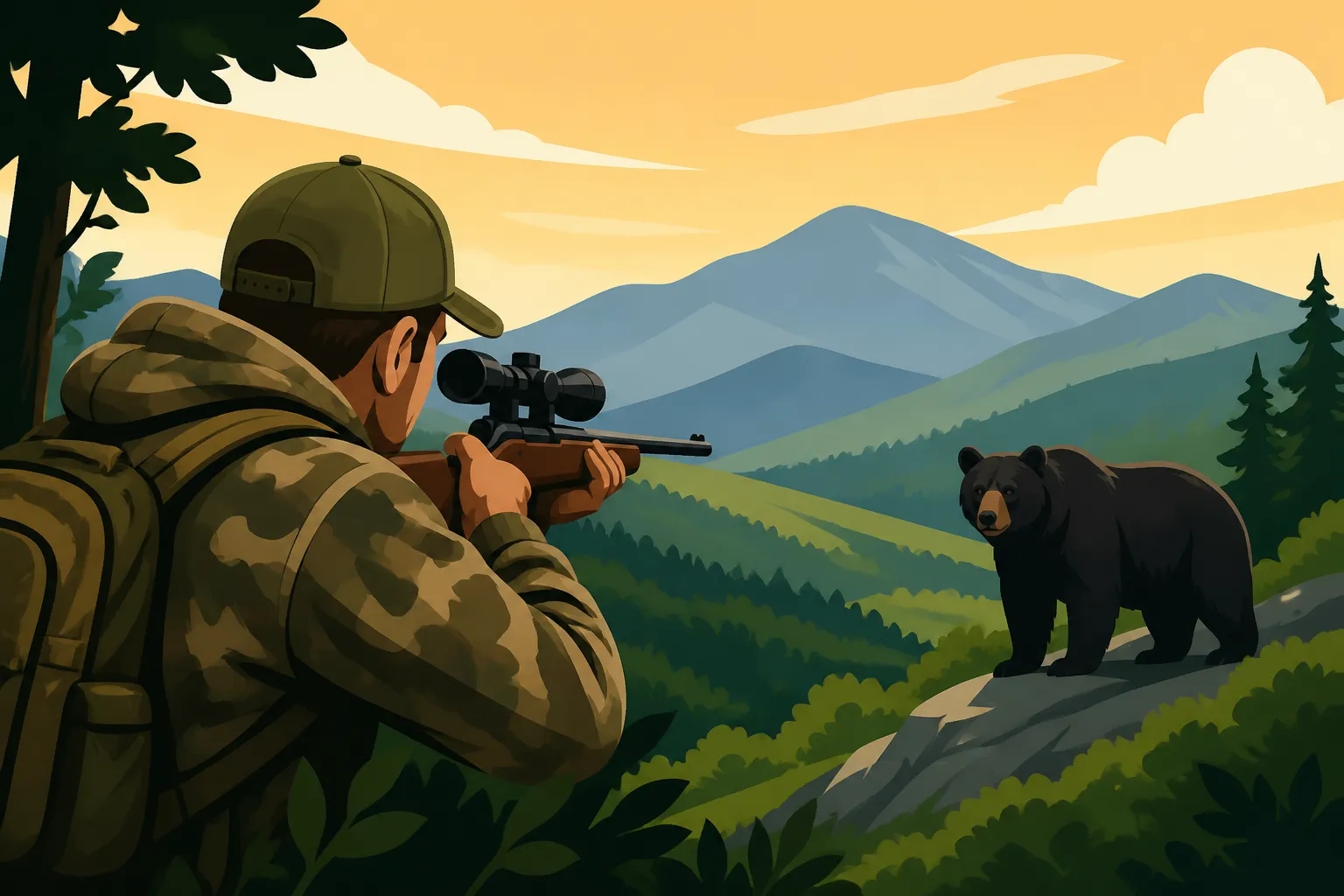
When it comes to weapons for bear hunting, both firearms and archery equipment can be effective, but each has specific considerations. For rifle hunters, choosing a cartridge with adequate stopping power is paramount. While a .243 is enough for Virginia whitetails, something in the .270, .30-06, or .308 range, or even larger magnums, is generally recommended for bears. These calibers deliver the energy and bullet construction needed for a clean, ethical kill on a large, tough animal. Solid, heavy-for-caliber bullets designed for deep penetration are preferred. You can find more detail on Rifle Calibers for Virginia Bear. Shot placement is always critical, but a heavier hitting round provides a greater margin of error.
For bowhunters, ensuring your setup delivers enough kinetic energy for deep penetration is key. This means a minimum draw weight of around 50 pounds, paired with heavy, well-constructed arrows and durable broadheads. Fixed-blade broadheads are often favored for their reliability and penetration capabilities on tough hide and bone. Crossbows are also legal during archery seasons in Virginia, offering another option for hunters. Regardless of your choice, spend ample time at the range, practicing from various positions and distances to ensure you're confident and proficient with your chosen weapon.
Optics for Locating and Tracking Bears
Optics are an indispensable tool for any bear hunter, especially in the expansive and often dense terrain of Virginia. A good pair of binoculars (8×42 or 10×42 are excellent all-around choices) will help you pick apart distant hillsides, identify subtle movements in thick cover, and confirm if that dark blob is indeed a bear or just a stump. Look for binoculars with good low-light performance, as bears are often most active during dawn and dusk. Investing in quality glass will reduce eye strain and allow you to see more detail, which can be crucial when trying to distinguish a bear from its surroundings.
A rangefinder is also highly recommended, especially when hunting with a rifle or bow in varying terrain. It allows you to precisely measure distances, which is vital for accurate shot placement. Many hunters also choose a rifle scope with reliable low-light capabilities and a clear, crisp image. When still-hunting or spot-and-stalking in the mountains, a scope with a moderate magnification range (e.g., 3-9x or 4-12x) offers versatility for both close-quarters encounters and longer shots across hollows. Using a binocular harness is a great way to keep your optics accessible and protected while keeping your hands free.
Preparing for the Elements: Clothing and Safety Gear
Virginia's hunting seasons can span from the warmth of early fall archery to the biting cold of late general firearms season in December and January. Layering is always the name of the game. Start with a moisture-wicking base layer, add insulating layers like fleece or wool, and top it off with a waterproof and windproof outer shell. Wool is an excellent choice for insulation, as it retains warmth even when wet and is naturally quiet, which is perfect for still-hunting. Insulated, waterproof boots are essential, especially if you're navigating wet creek bottoms or snowy mountain ridges.
Beyond clothing, several safety items should always be in your pack. A reliable headlamp with extra batteries is crucial for walking in before dawn or out after dark, especially when Tracking a Deer Through Virginia Leaf Litter or a bear. A well-stocked first-aid kit, a map and compass (in addition to your GPS device or phone app), a sharp knife, and sufficient water and snacks are non-negotiable. For bear hunting specifically, carrying bear spray, even if you are carrying a firearm, can be a prudent last line of defense in a close-quarters encounter, as it offers a non-lethal deterrent. Always inform someone of your hunting plans, including your exact location and expected return time.
Ethical Practices and Safety Considerations
Hunting black bears is a privilege that comes with significant responsibilities. Ethical behavior and strict adherence to safety protocols are paramount, not only for your own well-being but also for the reputation of the hunting community and the continued health of Virginia's bear population. Approaching a bear hunt with respect for the animal and the environment is key.
Critical Shot Placement and Tracking Wounded Bears
Black bears are incredibly tough animals, and achieving a clean, ethical kill is of utmost importance. This requires precise shot placement targeting the vital organs: the heart and lungs. Whether using a rifle or bow, aim for the "crease" behind the shoulder, slightly low, to maximize your chances of hitting both lungs and potentially the heart. Avoid shoulder shots, as the heavy bone and muscle can prevent penetration, and headshots, which are rarely lethal and often only wound the animal. Always ensure you have a clear, unobstructed shot, and only take a shot when you are confident in your ability to make it count. More information on Shot Placement on a Virginia Black Bear can guide your practice.
If a bear is hit, even if you believe it was a good shot, assume it is wounded and dangerous. Give the animal time before beginning to track. Bears can travel surprising distances, even with fatal wounds, and can be incredibly aggressive when cornered. Carefully examine the hit site for blood, hair, and bone fragments to determine the nature of the hit. Tracking a wounded bear, especially in dense cover, requires extreme caution and ideally, the help of experienced tracking dogs (where legal) or other knowledgeable hunters. Never track alone. If blood trailing after dark in Virginia, use a powerful headlamp and proceed with extreme care. The goal is always to recover the animal respectfully and efficiently.
Encountering Bears in the Field and Ensuring Personal Safety
While bears generally prefer to avoid humans, encounters can happen, especially when you're actively hunting in their habitat. Most bears will flee if they detect you, but it's crucial to know how to react in different scenarios. If you see a bear at a distance, make noise to announce your presence and often it will move off. If a bear approaches or stands its ground, make yourself appear as large as possible, wave your arms, and speak in a loud, firm voice. Do not run, as this can trigger a chase instinct. Back away slowly, always facing the bear.
In the rare event of a defensive attack, particularly if a sow perceives you as a threat to her cubs, fight back aggressively with anything you have. If you are using bear spray, deploy it according to the manufacturer's instructions, aiming for the bear's face. The key is to be prepared and knowledgeable about bear behavior. Always carry your weapon safely and ensure you have easy access to bear spray if you choose to carry it. Being aware of your surroundings, making noise periodically while hiking, and avoiding thickets where a bear might be bedded can help prevent surprise encounters.
Respecting Landowners and the Hunting Community
Hunting black bears in Virginia often involves navigating both public and private lands. If you are fortunate enough to gain permission to hunt on private property, respecting the landowner and their land is paramount. Always obtain explicit, preferably written, permission before stepping foot on private property. Familiarize yourself with Virginia posted land rules, which dictate what constitutes legal posting and what is considered trespassing.
This respect extends beyond the hunt itself. Ensure gates are closed, do not litter, drive only on designated roads, and avoid damaging crops or property. Offering to share some of your harvest or help with small tasks can go a long way in building a positive relationship and securing future access. For public land hunters, respecting fellow hunters means giving them space, avoiding crowding, and being mindful of noise and movement. Ethical hunting practices, such as clean kills, proper game recovery, and adherence to all regulations, reflect positively on the entire hunting community and help ensure that bear hunting opportunities remain for generations to come.
Post-Harvest Care: Field Dressing and Processing Bear Meat
Harvesting a black bear is an exciting moment, but the work isn't over when the animal hits the ground. Proper field dressing, cooling, and processing are crucial for preserving the quality of the meat and ensuring a respectful end to the hunt. Bear meat, when handled correctly, can be a delicious and rewarding wild game meal.
Rapid Field Dressing and Cooling Techniques
Due to their dense fat layers and body heat, bears spoil much faster than deer, especially in warmer early season conditions. Rapid field dressing is absolutely essential. As soon as possible after the shot, begin the process. The traditional gutting method involves opening the body cavity from the sternum to the pelvis and removing all internal organs. Some hunters also prefer to remove the windpipe and esophagus from the chest cavity. This immediately allows the body to begin cooling from the inside out.
After gutting, prop the cavity open with sticks or a specialized gambrel to allow maximum airflow. If you're in a remote mountain hollow or on a long drag back to the vehicle, consider quartering the bear in the field using the "gutless method" to reduce weight. This involves removing the hide and meat in sections, which also helps with rapid cooling. For a truly remote harvest, a good frame pack can be indispensable for boning out a deer or bear and packing out the meat in game bags. The faster you can get the hide off and the meat cooled, the better the quality will be.
Transporting Your Harvest and Virginia Bear Checking Requirements
Once field dressed, the challenge shifts to transporting your bear out of the woods. Black bears are heavy and awkward animals, often weighing several hundred pounds. Dragging a bear out of a mountain hollow can be incredibly strenuous, and sometimes impossible without help. Having a deer sled or a sturdy deer cart can make this process significantly easier, especially on relatively flat terrain or old logging roads. For extremely rugged or remote areas, quartering the bear into manageable pieces and packing it out is often the only viable option.
Upon reaching your vehicle, if you've harvested a bear, remember the mandatory Virginia bear checking requirements. You must report your harvest to the DWR within 24 hours. This can typically be done through the DWR's Go Outdoors Virginia mobile app or online portal. You'll need to provide information such as the county of harvest, date, sex of the bear, and the weapon used. This data is vital for wildlife management. Additionally, be aware of any specific DWR requests for biological samples, especially if you harvested your bear in a disease management area. For instance, in areas like Rockingham County, which sits at the center of DMA1 for CWD, specific testing may be mandatory.
Handling and Preparing Bear Meat
Bear meat is a delicious and versatile wild game, but it requires careful handling and cooking due to potential parasites like Trichinella. The most crucial step in preparation is ensuring the meat is thoroughly cooked to an internal temperature of at least 160°F (71°C) to kill any trichinella parasites. Never eat bear meat rare or medium-rare.
When butchering a deer at camp, or a bear, work quickly and cleanly. Remove as much fat as possible during the butchering process, as bear fat, while rendered for cooking by some, can impart a strong flavor to the meat. Separating cuts for roasts, steaks, and ground meat is a good practice. Bear roasts are excellent slow-cooked, while steaks can be marinated and grilled. Ground bear meat, often mixed with a leaner meat like pork or beef, makes fantastic chili, sausage, or burgers. Remember to freeze any meat not immediately consumed. Proper handling ensures not only safety but also that you and your family can enjoy the fruits of your challenging and rewarding bear hunt for months to come.
Disclaimer
The information provided in this guide is for general informational purposes only and is not intended as legal advice. Hunting regulations, season dates, and specific rules can change. It is the sole responsibility of the hunter to consult the official Virginia Department of Wildlife Resources (DWR) regulations annually and adhere to all applicable state and local laws before and during any hunting activity.