Upland Vests With Water Capacity
There's nothing quite like a crisp autumn morning in the Virginia uplands, following a loyal bird dog through broom-sedge fields or tackling a thorny clear-cut for grouse. But as glorious as those hunts are, they are also incredibly demanding, and one of the biggest challenges hunters often overlook is staying properly hydrated. Trudging up and down hills, busting through thick cover, and navigating varied terrain, all while carrying your gear, can leave you parched and fatigued faster than you think, especially when Virginia's weather decides to throw a curveball. This guide will walk you through the essential features and considerations for choosing and using an upland vest with water capacity, ensuring both you and your four-legged hunting partner stay refreshed and focused throughout your hunt.
Why Hydration is Critical for Virginia Upland Hunting
Virginia's diverse landscapes, from the humid lowlands to the rolling Blue Ridge Mountains, present a unique set of challenges for upland hunters. You might start your day with a chill in the air, only for the sun to break through and send temperatures soaring by mid-morning. This constant variability makes staying on top of your hydration game absolutely non-negotiable, not just for your comfort but for your safety and effectiveness in the field.
The Unpredictable Virginia Weather
Picture this: you're out chasing Grouse Hunting Blue Ridge Cover in October. You layered up at dawn because it was a brisk 40 degrees. By 10 AM, however, the sun is high, and you're soaked in sweat as you push through a dense patch of mountain laurel, the temperature now hovering in the low 60s. That kind of swing, coupled with the sheer physical exertion of navigating uneven terrain and thick cover, can quickly lead to dehydration. When you're constantly on the move, sweat loss is significant, and if you're not replenishing those fluids, fatigue sets in, your decision-making gets fuzzy, and your overall enjoyment of the hunt plummets. It’s not just about feeling thirsty; it’s about maintaining energy, focus, and physical endurance for those long, rewarding walks.
Beyond temperature, Virginia's humidity can also play a role. Even on cooler days, a humid environment can make you feel warmer and exacerbate sweat loss, leading to a false sense of security about your hydration needs. You might not feel "parched" in the same way you would on a dry, arid day, but your body is still working hard and losing precious fluids. A reliable water source integrated into your gear removes the guesswork and ensures you're always just a sip away from feeling re-energized.
Keeping Yourself and Your Dog Hydrated
It’s easy to focus solely on your own needs, but for many upland hunters, their canine companion is the heart of the hunt. These dogs, whether a hard-charging setter or a tenacious beagle, are expending even more energy than we are, covering two or three times the distance through dense cover and scenting out game like rabbits or quail. Their need for water is often greater and more immediate than ours, especially on warmer days or after an intense flush. Bird Dog Boots and Cut Pads are important, but so is internal care.
Imagine your dog making a beautiful retrieve after a long point, only to come back panting excessively, its tongue practically dragging. If you don't have water readily available, that dog's performance and health are at risk. Dehydration in dogs can be very serious, leading to heatstroke in extreme cases. A good upland vest with water capacity allows you to carry enough for both of you, ensuring your best friend can keep performing at their peak and remain healthy throughout the day. It’s a partnership, and their well-being is just as important as yours.
Beyond the Thermos: The Convenience Factor
Sure, you could carry a separate water bottle or a small cooler in your truck. But how practical is that when you're three miles deep into a national forest, or working a long fencerow for Rabbit Hunting Virginia Fencerows? The constant stopping, digging through a pack, or returning to the vehicle disrupts the flow of the hunt and can be a real nuisance. This is where the beauty of an integrated hydration system in an upland vest truly shines.
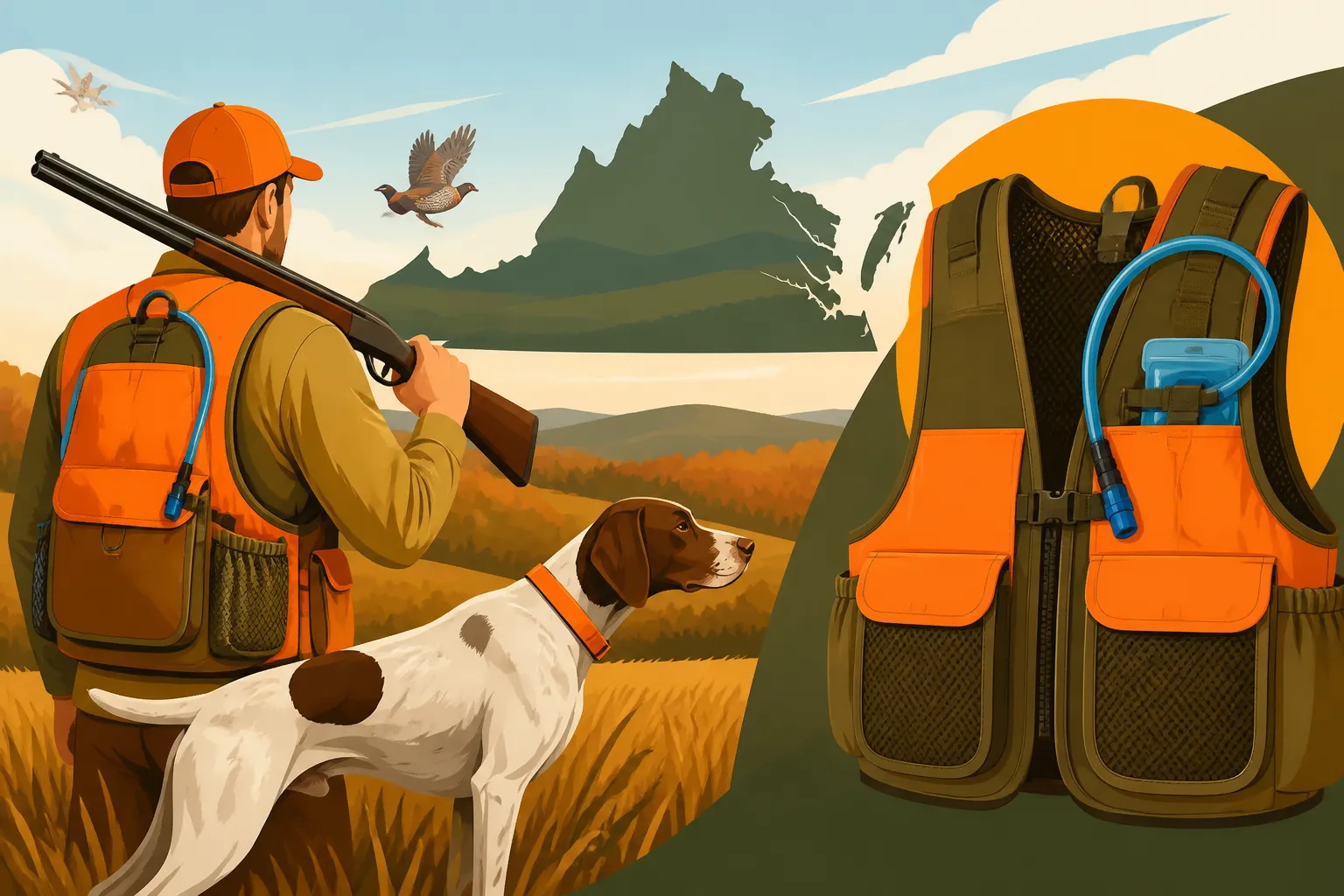
With a well-designed vest, your water is always within reach, often via a hydration bladder with a drinking tube that allows for hands-free sipping while you're still on the move. Or, if you prefer bottles, the pockets are usually strategically placed for easy access without removing the vest. This seamless access means you're more likely to hydrate regularly, preventing dehydration before it even starts. It allows you to maintain focus on your dog, the cover, and the game, rather than being distracted by the logistics of getting a drink.
Key Features to Look for in an Upland Vest with Water Capacity
When you're sifting through the countless options for upland vests, the ones designed with dedicated water capacity stand out. It’s not just about having a place to put water; it’s about how that water is carried, accessed, and integrated into the overall design of the vest to enhance your hunting experience.
Integrated Hydration Systems vs. Bottle Pockets
This is often the first major decision point. Many modern upland vests incorporate a hydration bladder sleeve, typically holding 1 to 3 liters of water. This is fantastic for hands-free hydration: you just bite down on the valve on the drinking tube, and you're good to go. The weight is distributed evenly across your back, and there are no bulky bottles jostling around. Brands like GoHunt often design their vests with these integrated sleeves in mind, allowing for a streamlined system. The downside can be cleaning and refilling, which can be a bit more involved than just grabbing a fresh bottle. However, for continuous, on-the-go sipping, a bladder system is tough to beat, especially when you're focused on Squirrel Hunting a Virginia Oak Ridge and don't want to break stride.
Alternatively, many vests feature external bottle pockets, often on the sides or lower back. These pockets are designed to securely hold standard water bottles, making refills incredibly easy. Just swap out an empty for a full one at the truck, or even grab a fresh one from a cooler you stashed. Some hunters prefer this method because they can also use these pockets for other items when not carrying water, offering more versatility. For example, if you're on a shorter hunt or it's a very cool day, you might opt for just one bottle and use the other pocket for extra shells or a radio. The choice often comes down to personal preference for accessibility and how you plan to manage your water supply throughout the day.
Comfort and Fit for Long Hauls
An upland hunt is a marathon, not a sprint. You'll likely be covering several miles, potentially over very broken terrain. A poorly fitting vest can turn an enjoyable day into a miserable experience, causing chafing, shoulder fatigue, or lower back pain. When looking at vests with water capacity, pay close attention to the comfort features, especially around the shoulders and waist.
Look for vests with generously padded shoulder straps that are wide enough to distribute weight effectively. Adjustable shoulder and sternum straps are crucial for customizing the fit, preventing the vest from bouncing or shifting as you walk. A robust, adjustable waist belt is perhaps the most important feature, as it allows you to transfer much of the load (including the weight of your water and game) from your shoulders to your hips. This significantly reduces strain and helps maintain good posture, even when your game bag is full after a successful day pursuing Virginia Squirrel and Rabbit Season Rules. A vest that feels great when you first put it on might feel like a torture device after five miles, so consider how the weight will be distributed over time.
Storage and Organization Beyond Water
While water capacity is the focus, a great upland vest needs to do more than just carry liquids. Upland hunting requires a surprising amount of gear, and good organization means less fumbling and more efficiency in the field. Think about what you typically carry on a hunt and ensure the vest has dedicated, easily accessible spots for those items.
Essential storage includes shell pockets, which should be large enough to hold a box or two of shells and positioned for quick access for reloading. A large, blood-proof game bag on the back is a must-have, expanding to accommodate several birds or rabbits. Beyond these, look for accessory pockets for smaller essentials: a whistle for your dog, a GPS or mapping device (like the kind you might use with GoHunt's mapping features), a compact first-aid kit, dog treats, your phone, and maybe even a small snack. Some vests even include specialized pockets for electronics or transmitters if you use an e-collar for your dog. The better organized your vest, the less time you'll spend searching for items and the more time you'll spend hunting. Packs for a Day on Public Land need similar organization.
Choosing the Right Water Capacity and Style for Virginia Terrains
Virginia's diverse hunting grounds, from the thick piedmont pine plantations to the steep mountain hollows, dictate different needs when it comes to your upland vest and its water capacity. What works perfectly for a quick morning hunt might be utterly insufficient for an all-day trek in challenging conditions.
Capacity Needs: Day Hunts vs. Extended Stays
For most typical day hunts in Virginia, especially for species like quail or rabbits in milder weather, a vest with 1 to 2 liters of water capacity is usually sufficient for one hunter and a dog. This will get you through a good half-day or more, assuming you start well-hydrated. However, if you're planning an all-day grind, particularly during the warmer fringes of the season (early fall or late spring turkey hunting, if you also carry water in your turkey vest), or in more remote areas where resupply isn't an option, you'll want to lean towards the higher end, perhaps 2.5 to 3 liters.
Consider the actual terrain as well. Breaking brush uphill in the mountains requires significantly more exertion and thus more water than walking relatively flat agricultural fields. If you're going deep into public land like George Washington National Forest, where a quick trip back to the truck isn't feasible, maximizing your water carry is paramount. Always err on the side of having a little too much water rather than not enough.
Vest vs. Pack vs. Hybrid Designs
The term "upland vest" can be a bit broad, as designs have evolved to include more backpack-like features for increased capacity and comfort.
- Traditional Vests: These are often lighter, focused on shell pockets and a game bag, with water capacity sometimes an afterthought (e.g., small bottle pockets). They excel in ease of movement but may lack significant water storage for longer hunts.
- Upland Packs: These are essentially small backpacks with integrated game bags and shell loops. They offer substantial storage and hydration capacity, often utilizing hydration bladders. They're great for long, demanding hunts where you need to carry extra layers, a first-aid kit, and more water, but can sometimes feel a bit bulky for fast-paced action or hot weather. First Aid Kits for Remote Mountain Ground are easily carried in a pack.
- Hybrid Designs: This is where many modern upland vests with water capacity truly shine. They blend the quick-access features of a vest (front shell pockets, easy-access game bag) with the load-carrying and hydration capabilities of a pack (padded shoulder straps, waist belt, hydration bladder sleeve). These are often the sweet spot for Virginia upland hunters, offering the best of both worlds—mobility and ample hydration without sacrificing essential storage. Many popular models from brands like GoHunt fall into this category, aiming for that perfect balance.
Material Durability and Weather Resistance
Virginia's cover can be unforgiving. Briar patches, greenbrier thickets, multiflora rose, and dense undergrowth are the norm when chasing grouse or rabbits. Your vest isn't just carrying your gear; it's also taking a beating. Therefore, the durability of the materials is paramount.
Look for rugged fabrics like Cordura nylon, heavy-duty canvas, or other abrasion-resistant synthetics. Reinforced stitching at stress points is also critical. A vest that can't stand up to the thorns and snags of a Virginia clear-cut will quickly become a tattered mess. Also, consider some level of water resistance. While you might not need a fully waterproof vest, a water-resistant coating can help shed light rain or dew, keeping your gear (and you) a bit drier. This is especially true for items in external pockets. Hunting in a damp environment can lead to things getting soaked quickly, so a vest that offers some protection from moisture is a definite advantage. Think about when you're wading through a wet field or brushing up against dew-laden foliage; having a vest that sheds water will make your hunt much more comfortable. Brush Pants for Virginia Mountain Laurel are a good pairing with a durable vest.
Here's a quick comparison of hydration system types:
| Feature | Integrated Bladder System | External Bottle Pockets | Hybrid (Bladder + Pockets) |
|---|---|---|---|
| Water Capacity | Typically 1-3+ Liters | Varies by bottle size, usually 1-2 Liters total | 2-4+ Liters (bladder plus 1-2 bottles) |
| Accessibility | Hands-free sipping via hose; constant, steady flow | Quick bottle grab; easy to see remaining water | Bladder for main hydration, bottles for quick sips/dog water |
| Weight Distribution | Even across back; less shifting | Can be uneven if only one bottle is full | Excellent, bladder weight centered, bottles balanced |
| Refill/Cleaning | Can be more involved (bladder specific tools) | Very easy, swap bottles or use a faucet | Bladder cleaning plus easy bottle refills |
| Versatility | Primarily for hydration | Pockets can be used for other gear when empty | High, ample water and flexible pocket use |
| Best For | Long, strenuous hunts; hands-free mobility; consistent hydration | Shorter hunts; easy resupply; preferring bottled water | All-day hunts; varied needs; hunter & dog hydration |
Tips for Maximizing Your Upland Vest's Hydration System
Having a great upland vest with water capacity is just the first step. To truly get the most out of it, you need to understand how to prepare it, use it effectively in the field, and ensure your dog also benefits from its capabilities.
Pre-Hunt Preparation and Maintenance
Before you even step foot in the woods, a little prep work goes a long way. If you're using a hydration bladder, always clean it thoroughly after each use. This prevents mold and funky tastes. Warm, soapy water and a bottle brush kit designed for bladders are your best friends here. Make sure it dries completely before storing it. On the morning of your hunt, fill your bladder (or bottles) with fresh, cold water. Consider adding ice cubes to the bladder if it's a warm day; this keeps your water refreshing for longer. For early season Hunting the Rut East of the Blue Ridge, that cool water can be a game changer.
Also, take a moment to check for leaks. There's nothing worse than discovering a slow drip that soaks your back, or worse, your extra shells, an hour into a hunt. Give the drinking tube a quick suck to ensure the valve is working properly and not dripping. If you're using bottles, make sure the caps are securely tightened. This routine check might seem minor, but it can save you a lot of discomfort and frustration later on.
Field Usage and Accessibility
Once you're in the field, making the most of your hydration system is about smart usage. If you have a hydration bladder, run the drinking tube through the vest's loops or straps so it's always positioned near your mouth or shoulder, ready for a quick sip. Avoid letting it dangle, where it can get caught on brush. In colder Virginia weather, especially if you're hunting late season for Late-Season Food Sources for Virginia Whitetails, you might even consider an insulated sleeve for your drinking tube to prevent the water from freezing in the line. Small sips taken regularly are far more effective than gulping down a lot of water only when you feel parched.
For bottle users, practice drawing and replacing bottles without looking or breaking stride. The best pockets are those that hold bottles securely but allow for one-handed access. You want to be able to hydrate without having to stop your dog's cast or take your eyes off that prime cover.
Hydration for Your Canine Companion
Your dog is working hard, and they need water just as much as you do, if not more. A good upland vest with ample water capacity allows you to easily share. Carry a collapsible dog bowl—they fold flat and take up minimal space. When you stop for a break, or after your dog has made an intense retrieve, offer them water. Pour some from your bladder's hose into the bowl, or simply use one of your water bottles.
Some hunters even carry a separate, smaller water bottle specifically for their dog. This can be handy if you prefer not to mix your drinking supply. There are also specialized dog water bottles with attached dispensing cups that make it easy to give your dog a drink on the fly. Remember, if your dog is panting excessively, slowing down, or showing signs of fatigue, water is the first and most critical intervention. Don't wait until they're showing distress; offer water frequently, especially during and after periods of high activity. Staying hydrated ensures your dog can perform their best, allowing for more successful and enjoyable hunts for both of you. Boots for Walking Virginia Ridges are great for you, but consider dog pads too!
Disclaimer
This article is for general informational purposes only and does not constitute professional advice. Laws, prices and regulations vary by location and change over time. Consult a qualified professional for guidance on your specific situation.