Squirrel Hunting a Virginia Oak Ridge
There’s nothing quite like the crisp air of a Virginia morning, the rustle of leaves underfoot, and the promise of a squirrel hunt. Many hunters get frustrated trying to find these elusive tree-dwellers, feeling like they're just wandering aimlessly. This guide is dedicated to helping you master the art of hunting squirrels on Virginia's oak ridges, focusing on strategy, timing, and making the most of these productive natural food sources.
The Irresistible Pull of Virginia's Oak Ridges for Squirrels
When you're chasing squirrels in Virginia, oak ridges are your golden ticket. It's not just a hunch; there's a biological reason these areas are squirrel magnets. Oaks provide a consistent, high-energy food source, especially during the fall and early winter months, making them prime real estate for both gray and fox squirrels.
Why Acorns are a Squirrel's Best Friend
Think about it from a squirrel's perspective: an oak ridge is like an all-you-can-eat buffet that lasts for months. White oaks, red oaks, pin oaks – Virginia has a fantastic variety, and each drops its acorns at slightly different times, creating a prolonged feeding season. When you find an oak ridge, especially one with a mix of mature trees, you've found a pantry that squirrels will visit daily, sometimes for hours on end.
Acorns are packed with carbohydrates and fats, essential for squirrels to build up fat reserves for the colder months. This is why you'll see a flurry of activity in the early fall as they actively gather and bury nuts, a behavior known as scatter-hoarding. Later in the season, when fresh acorns are scarce or covered by snow, they’ll dig up these buried treasures. Understanding this seasonal dependency is key to predicting their movements and finding them consistently. For more on this, you might find our guide on Reading Cuttings Under an Oak particularly useful, as it delves into how to interpret what squirrels have been eating.
Habitat Beyond Just Food
Beyond the food, oak ridges often provide ideal habitat. Mature oak trees offer plenty of den sites – natural cavities in the trunks and limbs – where squirrels can escape predators and weather. The canopy provides cover from hawks and owls, while the forest floor, typically rich with leaf litter, gives them places to bury nuts and serves as a natural sound dampener for your approach, if you're careful.
On a broad Virginia oak ridge, you'll also often find a mix of other tree species like hickory, beech, and even some pine. While oaks are dominant, these other trees contribute to the overall biodiversity and can offer additional food sources or escape routes. For instance, hickories provide equally nutritious nuts, and squirrels won't pass those up either. A ridge that combines various nut-producing trees will almost always hold more squirrels than a monoculture. When you're Scouting Virginia Public Land Before Season, prioritize ridges with this kind of diverse mast crop.
Optimal Timing and Proven Tactics for Success
Timing is everything when it comes to squirrel hunting on an oak ridge, and your approach can make or break your day. Squirrels are creatures of habit, largely driven by food availability and predator avoidance, so understanding their daily routines is crucial.
The Golden Hours: Early Morning and Late Afternoon
Squirrels are most active during the first few hours after sunrise and the last few hours before sunset. Why? Because these are typically the coolest, calmest parts of the day, making foraging more comfortable and less energy-intensive. In the early morning, they're typically leaving their dens, stretching, and heading straight to the best feeding grounds – your oak ridge. They'll spend a good part of the morning gorging themselves, burying nuts, and chasing each other.
By midday, activity often wanes as they might retreat to their dens for a nap, especially if it's warm or very windy. However, they'll usually emerge again in the late afternoon for another feeding frenzy before bedding down for the night. Planning your hunt around these peak activity windows dramatically increases your chances of encountering squirrels. This is especially true when you're focusing on Virginia Small Game Season Rules, as these hours often align perfectly with legal hunting times.
Still-Hunting for Patient Success
Still-hunting is perhaps the most effective method for oak ridge squirrels. It involves moving very slowly through the woods, stopping frequently to observe and listen. You're not just walking; you're flowing with the landscape. Take five steps, then stop for five minutes. Seriously. Use your binoculars to scan the branches, look for tell-tale tail flicks, and listen for the distinct sounds of squirrels cutting nuts or rustling leaves on the ground.
The key to still-hunting is patience and stealth. Wear quiet clothing – wool or fleece is excellent for this – and pay attention to the wind direction. If you're moving into the wind, your scent is carried away from the squirrels, and the wind can also help mask the sound of your movements. Remember that squirrels have incredible eyesight and can pick up on subtle movements. If you spot one, try to get a tree trunk between you and it before moving closer for a shot. For longer treks on public land, a good backpack, like those designed for Packs for a Jefferson Forest Day Hunt, will allow you to carry essentials comfortably while still-hunting.
| Hunting Method | Description | Ideal Conditions | Pros | Cons |
|---|---|---|---|---|
| Still-Hunting | Moving very slowly, pausing often to observe and listen. | Calm, clear days; early morning/late afternoon. | Highly effective for observant hunters; covers ground. | Requires extreme patience and stealth; can be slow. |
| Sit-and-Wait | Finding a productive spot and remaining motionless. | Windy days; known hot spots (active trees, den trees). | Minimal movement; can wait out "stuck" squirrels. | Less ground covered; requires warm, comfortable gear. |
| Stalking | Carefully approaching a spotted squirrel, using cover. | Open woods with good visibility; after initial spot. | Direct approach to game; feels more active. | Very challenging due to squirrel's keen senses; easy to spook. |
| Calling | Using vocalizations to attract or locate squirrels. | Any time, but works best when squirrels are active. | Can draw hidden squirrels out; helps confirm presence. | Can also alert squirrels to your presence if overdone. |
Stalking and Calling: Adding to Your Arsenal
Once you spot a squirrel, or hear one, you can transition from still-hunting to a more direct stalk. This means using available cover – tree trunks, brush piles, terrain features – to slowly close the distance. Keep your eyes peeled for other squirrels; often, where there's one, there are more.
Squirrel calls can also be incredibly effective, especially if you're having trouble locating them or if they've gone quiet. A simple bark call can often get a squirrel to bark back, giving away its position. A "cutter" call, mimicking a squirrel gnawing on a nut, can sometimes draw curious squirrels out of hiding. Don't overdo it, though; too much calling can make them suspicious. A couple of barks or cuts every 5-10 minutes is usually sufficient. These methods can be particularly useful when you're exploring different approaches for Squirrel and Small Game Hunting in Virginia.
Another great tactic, especially on windy days, is to find a good spot with multiple mature oak trees and just sit quietly. The wind will help mask your sound, and squirrels are often less wary when the wind is rustling through the leaves, as it covers the sound of their own movements. Position yourself so the sun is not directly in your eyes, and choose a spot with good visibility and a clear backdrop. I've often seen success by focusing on a specific cluster of trees rather than trying to cover too much ground, especially if previous scouting with tools like GoHunt showed heavy acorn production in that specific pocket.
Essential Gear for a Successful Hunt
Having the right gear makes a world of difference. It's not about having the most expensive equipment, but rather reliable tools that enhance your experience and effectiveness, especially when navigating Virginia's varying terrains and weather.
Firearms and Ammunition: Precision is Key
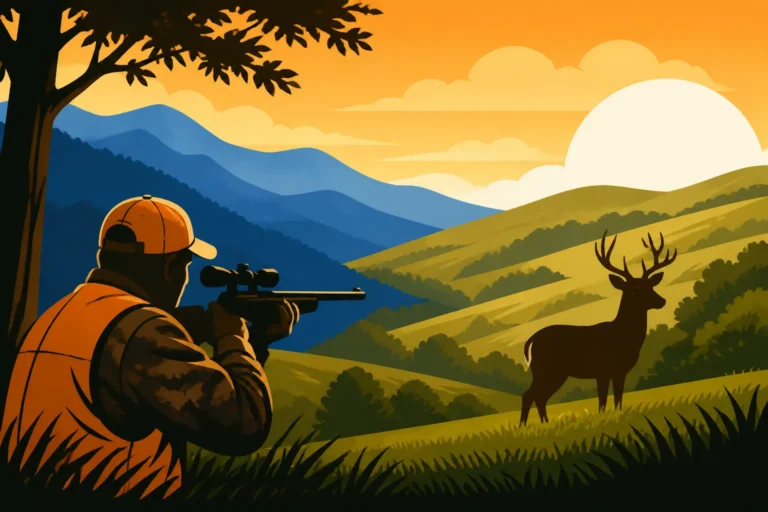
For squirrel hunting, precision is paramount. A .22 caliber rimfire rifle is the classic choice for a reason. It's accurate, quiet, and economical. A good .22 rifle, whether a bolt-action, semi-auto, or lever-action, allows you to make clean headshots, preserving the meat. For ammunition, standard velocity or subsonic .22 LR rounds are often preferred for their reduced noise, which can be critical if you're hoping to get multiple squirrels from the same area without spooking them all. A quality scope, even a fixed 4x or a low-power variable, will greatly aid in target acquisition in the dappled light of an oak ridge.
Some hunters prefer shotguns, especially if they're also looking for Rabbit Hunting Virginia Fencerows or dealing with very dense cover where squirrels might be moving quickly. A .410 or a 20-gauge with light game loads (like #6 shot) can be effective. However, shotguns tend to damage more meat and are louder, potentially limiting your chances at multiple squirrels. If you do opt for a shotgun, patterning it to ensure tight groups at squirrel distances (20-30 yards) is crucial.
Optics and Navigation: Seeing and Staying Found
A good pair of binoculars is non-negotiable for still-hunting squirrels. An 8x or 10x magnification is perfect for scanning tree canopies and spotting subtle movements. Look for optics with good light gathering capabilities for those crucial early morning and late evening hours. Brands like GoHunt often integrate mapping features that can be invaluable for pinpointing specific oak stands and marking active areas, saving you a lot of time and legwork. Using a mapping app like this can help you scout from your couch, identifying potential hot spots before you even step foot in the woods.
When you're out there, even on familiar ground, it's easy to get disoriented, especially on large public tracts like those in the George Washington National Forest. Carry a reliable GPS unit or use a mapping app on your phone (like the one offered through GoHunt) with downloaded maps, especially if you anticipate areas without cell service. Knowing where you are and where you're going helps you focus on the hunt itself.
Clothing and Comfort: Blending In and Staying Warm
Your clothing choice is crucial for both comfort and stealth. Layers are always a good idea in Virginia's fluctuating weather. Start with a moisture-wicking base layer, add an insulating layer (fleece or wool works great), and top it off with a quiet outer layer in camouflage or subdued earth tones. Wool is especially good because it's naturally quiet and retains warmth even when damp. Comfortable, waterproof boots are also essential, as you'll be doing a lot of walking and standing. Opt for boots designed for Boots for Walking Virginia Ridges with good ankle support.
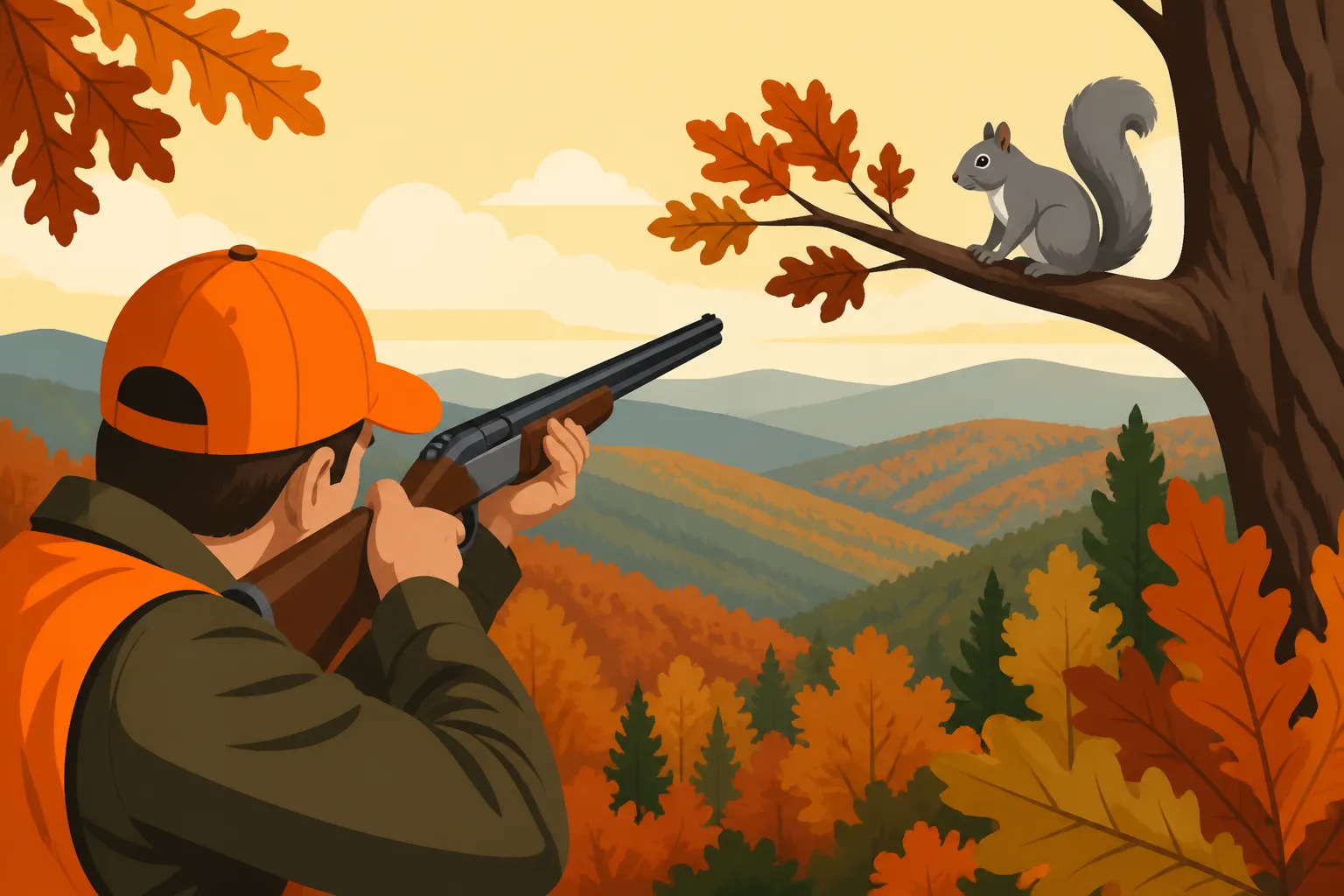
Don't forget the small details: a warm hat, thin gloves for trigger finger dexterity, and a small, comfortable Upland Vests With Water Capacity for carrying your shells, calls, and a snack. If you're hunting during the general firearms deer season, remember Virginia's blaze orange requirements, which also apply to small game hunters during that period. Even outside of those specific regulations, a touch of blaze orange on a hat or vest is a smart safety measure, particularly on public lands where other hunters might be present.
Virginia Regulations and Ethical Considerations
Understanding the specific regulations for squirrel hunting in Virginia and always practicing ethical hunting is paramount. It ensures a safe, legal, and responsible experience for everyone.
Season Dates and Bag Limits
Virginia's squirrel season typically opens in early fall and extends through late winter, often overlapping with several deer seasons. The exact dates can vary slightly year to year, so always check the current Virginia Department of Wildlife Resources (DWR) regulations before heading out. Generally, the daily bag limit for squirrels is generous, usually around six per day. You'll want to be familiar with the official Virginia Squirrel Season Opening Day and closing dates to ensure you're hunting legally.
Remember that certain public lands, like Wildlife Management Areas (WMAs) or National Forests, may have additional specific regulations or access requirements. Always check the DWR website or signs at your chosen hunting location for any site-specific rules. For instance, some WMAs might require a specific access permit in addition to your basic hunting license. Don't forget that if you also enjoy hunting other small game, the Virginia Small Game Season Rules often cover various species you might encounter.
Blaze Orange and Safety First
Safety should always be your number one priority. If you are squirrel hunting during any open firearms deer season (or certain other specific seasons), Virginia law requires you to wear blaze orange or blaze pink. This means at least 100 square inches on the upper body, visible from 360 degrees. Even when not legally required, it's a good practice, especially on public lands where other hunters might be present. It's better to be seen than to be mistaken for game.
Beyond visibility, always know your target and what is beyond it. A .22 bullet can travel a considerable distance, so be absolutely certain of your shot and backdrop. Use ear and eye protection, even when shooting a .22, as cumulative noise exposure can damage your hearing, and eye protection is crucial to prevent injury from ricochets or debris. Always treat every firearm as if it were loaded, keep the muzzle pointed in a safe direction, keep your finger off the trigger until ready to shoot, and be sure of your target and what is beyond it. These are not just rules; they are habits that save lives. When hunting on Hunting Pressure on Virginia Public Land, these safety protocols are even more critical.
Respect for the Resource and Landowners
Ethical hunting extends beyond just following the law. It means respecting the animals you pursue, the land you hunt on, and your fellow outdoorsmen. Only take clean, ethical shots. If you wound an animal, make every reasonable effort to recover it. This commitment to recovery is a fundamental aspect of being a responsible hunter.
If you are hunting on private land, ensure you have explicit permission from the landowner. Understand their specific rules for their property. Always leave the land better than you found it – pack out all your trash, and don't disturb anything unnecessarily. This respect for private property is key to maintaining access for future generations. If you're considering expanding your efforts to other species, our guide on Squirrel and Small Game Hunting in Virginia offers a broader perspective on responsible hunting practices across the Commonwealth.
Disclaimer
Please note that hunting regulations, season dates, and bag limits are subject to change. Always consult the official Virginia Department of Wildlife Resources (DWR) website or current hunting digest for the most up-to-date and accurate information before planning any hunting trip. This guide is for informational purposes only and does not supersede official regulations.