Headlamps for Walking Out After Dark
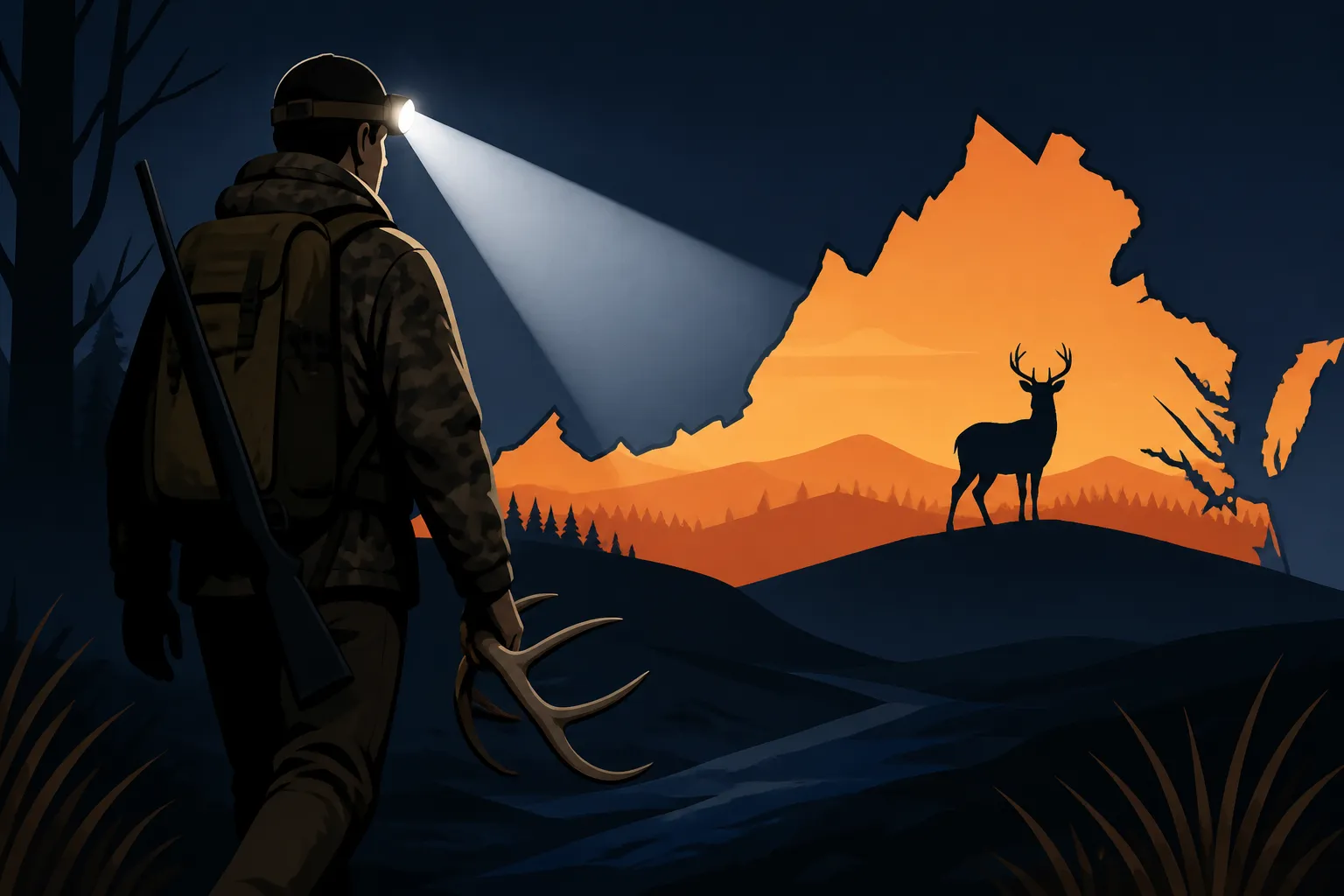
Few experiences are as unsettling for a Virginia hunter as being caught out in the pitch-black woods after a long day, trying to navigate uneven terrain with nothing but a weak phone flashlight. The fear of twisting an ankle, getting turned around, or worse, losing that hard-earned game you just harvested, is a real frustration many of us have faced. This guide is all about equipping you with the knowledge to choose and effectively use a headlamp, ensuring your walks out after dark are safe, efficient, and stress-free, whether you're recovering a deer or just heading back to the truck.
The Absolute Necessity of a Reliable Headlamp for Virginia Hunters
Let's be honest, hunting hours in Virginia often push right up against dusk, and sometimes, well, things don't always go according to plan. You might be tracking a deer late into the evening, field dressing an animal, or just hiking back to your vehicle after the last legal shooting light has faded. In these moments, the tiny beam from your phone simply doesn't cut it. It leaves you fumbling, staring at the ground, and completely unaware of your surroundings. That's where a dedicated headlamp becomes not just a convenience, but a crucial piece of safety and efficiency gear.
Why a Headlamp Beats a Handheld Light Every Time
Think about it: when you're carrying a rifle, a bow, or perhaps dragging a deer, your hands are full. A handheld flashlight is just another item to juggle, to drop, or to get in the way. A headlamp, on the other hand, keeps your hands completely free, projecting light exactly where your eyes are looking. This simple fact is a game-changer. Imagine trying to follow a faint Blood Trailing After Dark in Virginia with one hand on a light and the other trying to steady yourself through thick briars. It's a recipe for frustration and potential mistakes. With a headlamp, both hands are free to part brush, check your footing, or even use a map if you're navigating.
Moreover, the quality of light from a good headlamp is usually far superior to most phone flashlights. We're talking about brighter beams, better flood capabilities for illuminating a wide area, and often, specific modes like red light that preserve your natural night vision. If you've ever tried to read a map or check your Virginia Deer Reporting Requirements on your phone after looking into a bright white light, you know the struggle. A headlamp designed for outdoor use understands these nuances.
Safety First: Avoiding Mishaps in the Dark
The Virginia woods, especially in the mountains or dense swamps, are unforgiving after dark. Roots, rocks, downed timber, and hidden ditches become serious hazards. A good headlamp illuminates these obstacles, allowing you to see where you're stepping and maintain a steady pace. I've had my share of near-tumbles because I wasn't paying enough attention to my footing in low light, and trust me, a sprained ankle miles from the truck is no joke.
Beyond personal safety, there's the critical aspect of game recovery. You've just made a good shot, but the animal ran a bit, and now it's dark. Trying to find that deer in the dense undergrowth, especially after a long day of Hunting West of the Blue Ridge, demands clear vision. A powerful headlamp allows you to pick up faint blood trails, spot downed animals, and navigate back to them safely. It also helps with the subsequent task of Field Dressing a Deer in Cold Weather, making sure you can see what you're doing cleanly and efficiently. Nobody wants to rush that process in the dark, risking a careless mistake.
Key Features to Prioritize in a Hunting Headlamp
Not all headlamps are created equal, and what works for reading a book in a tent might not cut it for navigating dense woods or searching for a blood trail. When you're choosing a headlamp for Virginia hunting, there are several key features that should be at the top of your list. Don't skimp here; this is an investment in your safety and success.
Lumens and Beam Types: Seeing What You Need, Where You Need It
Lumens indicate the brightness of the light output. For general walking in the woods, 100-200 lumens might suffice. But for serious blood trailing, spotting game at a distance, or thoroughly illuminating a Scrape Lines Along a Logging Road during a pre-dawn scout, you'll want something with a higher output, ideally in the 300-800 lumen range, with a "burst" mode that can temporarily kick it up even higher if needed. Many modern headlamps offer multiple settings, allowing you to conserve battery life while still having access to powerful light when required.
Beyond sheer brightness, consider the beam type. Most quality headlamps offer a combination:
- Spot Beam: This is a focused, narrow beam designed for distance. It's great for seeing down a trail, identifying landmarks, or scanning the woods ahead.
- Flood Beam: A wider, more diffuse light that illuminates your immediate surroundings. This is essential for walking on uneven ground, field dressing, or setting up a Treestand Setups in George Washington National Forest in the dark, as it gives you a broad view of your workspace without harsh hotspots.
- Red Light: This is a non-negotiable feature for hunters. Red light preserves your night vision and is much less likely to spook game. It's perfect for walking to your stand in the pre-dawn hours, checking your gear without blinding yourself, or reading a map on your Go Outdoors Virginia Map Tool. Many hunters also find that red light is less attractive to biting insects in warmer weather, a definite bonus.
Battery Life and Power Source: Don't Get Caught in the Dark
This is where many hunters make a mistake, underestimating how long they might actually need their light. Always look for a headlamp with excellent battery life, especially on its medium settings. Modern headlamps typically use either disposable AA/AAA batteries or integrated rechargeable lithium-ion batteries.
Disposable Batteries (AA/AAA): These offer the convenience of swapping out dead batteries for fresh ones in the field, which can be a lifesaver on multi-day hunts or in remote areas where charging isn't an option. The downside is carrying extra batteries and the environmental impact.
Rechargeable Batteries: Many high-performance headlamps now feature integrated rechargeable batteries, often charged via USB-C. These are convenient for daily use and can be recharged from a power bank if you're spending a night or two in camp. However, if you're on an extended backcountry trip without access to charging, you'll need to carry a robust power bank or choose a model that allows you to swap out its proprietary rechargeable battery for a spare. Some innovative models even offer hybrid systems, allowing you to use either the rechargeable pack or disposable batteries as a backup. When checking the specs, pay attention to the battery life at various lumen settings, not just the maximum "burst" mode. A good headlamp from a brand like GoHunt will clearly list these performance metrics.
Durability and Water Resistance: Built for the Virginia Outdoors
Virginia's weather can be unpredictable. You might start a hunt in sunshine and end it in a downpour or a sudden snow flurry. Your headlamp needs to withstand these conditions. Look for an IPX rating; an IPX4 rating means it's splash-proof, which is usually sufficient for rain and sweat. An IPX7 rating means it can be submerged for a short period, which is great peace of mind if you accidentally drop it in a puddle or stream while Recovering a Deer From a Mountain Hollow.
Beyond water, the woods are tough. Your headlamp will get bumped, dropped, and scraped. Choose a model known for its robust construction. Hard plastics and aluminum housings are generally more durable than flimsy plastic. A comfortable, adjustable strap is also crucial, especially if you'll be wearing it for extended periods or with a hat.
Comfort and Ease of Use: Because You're Already Focused on the Hunt
A powerful headlamp is useless if it's uncomfortable to wear or difficult to operate with cold, gloved hands.
- Weight: Lighter is generally better, but not at the expense of durability or battery life. Some heavier lamps might have a top strap for added stability.
- Controls: Simple, intuitive buttons are key. Can you switch modes and turn it on/off easily, even with thick gloves on? Can you access the red light mode without cycling through blinding white light settings?
- Adjustability: The lamp itself should be able to tilt up and down easily, allowing you to direct the beam without craning your neck. The strap should be easily adjustable to fit over a bare head, a beanie, or even a thicker hood.
Effective Headlamp Use and Best Practices in the Field
Having the right headlamp is only half the battle; knowing how to use it effectively in varying hunting scenarios is just as important. From pre-dawn approaches to late-night recoveries, a smart approach to your headlamp can make all the difference.
Pre-Dawn Approaches and Post-Dusk Exits
When you're sneaking into your Hanging a Stand on a Jefferson Forest Ridge before sunrise, stealth is paramount. This is where your red light feature shines. Use the lowest red light setting possible to navigate your trail. It provides enough illumination to avoid tripping hazards without broadcasting your presence to every deer in the county. Animals, especially deer and turkey, are less likely to perceive red light as a threat. Save the bright white light for when you're safely in your stand and settled, or if you absolutely need to check something detailed.
Conversely, when walking out after dark, you've likely finished hunting for the day, but you still want to be mindful of future hunts. If you're on public land, avoid walking out like a lighthouse. Use enough light to be safe, but keep it pointed down unless you're actively looking for something specific. If you're returning through an area you plan to hunt again soon, use red light or a low white light setting to minimize disturbance. Remember, critters hear you and smell you first, but a sudden bright light can certainly add to their wariness. Carrying a good headlamp from a brand like GoHunt means you have the flexibility to adjust your light to the situation, which is key for successful Scouting Virginia Public Land Before Season as well as the hunt itself.
Blood Trailing and Game Recovery in the Dark
This is arguably the most critical scenario for a powerful headlamp. When Blood Trailing After Dark in Virginia, you need both wide illumination and a focused spot beam. Start with a medium flood setting to get a general idea of the area. Then, switch to a higher lumen spot beam to meticulously scan for drops of blood, disturbed leaves, or broken twigs. A red light can sometimes make blood appear darker and stand out against green vegetation, so experiment with your light modes to see what works best for your eyes and the conditions.
Patience is vital here. Take your time, mark the last spot of blood, and then slowly fan out, looking for the next sign. It's often helpful to have another person with a headlamp, one person focusing on the immediate trail, the other scanning ahead or to the sides. If you’re in dense cover or a deep hollow, the ability of your headlamp to pierce the darkness and illuminate obstacles will be invaluable for Recovering a Deer From a Mountain Hollow.
Unexpected Situations and Emergency Use
Sometimes, things just go sideways. Maybe you get a flat tire on your ATV far from the road, or perhaps you just plain get turned around. Your headlamp is your best friend in these moments. Always keep a spare set of batteries or a fully charged power bank in your Packs for a Jefferson Forest Day Hunt. Consider carrying a compact, secondary headlamp or a small flashlight as a backup, just in case your primary fails.
Having a headlamp that can flash or strobe can also be a safety feature, allowing you to signal for help if you're in distress. While hopefully you'll never need it, knowing your gear can assist in an emergency provides significant peace of mind. Even something as simple as using your light to help a buddy out of a muddy spot or navigate a steep incline after the sun goes down demonstrates its versatility and importance.
Headlamp Maintenance and Troubleshooting for Longevity
A headlamp is an investment in your safety and success, and like any critical piece of gear, it needs a little love to ensure it performs when you need it most. A dead battery or corroded contacts can turn a crucial tool into dead weight faster than you can say "where's my phone?"
Battery Care: The Lifeblood of Your Light
This is the number one maintenance point. If your headlamp uses disposable batteries, remove them at the end of the hunting season or if you know you won't be using the light for an extended period. Batteries can leak, and that corrosive material can permanently damage your headlamp's electronics. Store your headlamp and batteries separately in a cool, dry place.
For rechargeable headlamps, aim to store them with a partial charge (around 50-70%) rather than fully charged or completely drained, as this can extend the battery's overall lifespan. Give them a full charge before every hunting trip, especially if you're planning a Cold-Weather Sitting Strategy in the Mountains or a late-season hunt where days are shorter and nights are longer. If your rechargeable battery is showing signs of diminished capacity, check if a replacement battery pack is available for your specific model; many high-quality headlamps, including some from GoHunt, offer user-replaceable battery options.
Cleaning and Storage: Keeping It Ready for Action
After a long day in the woods, your headlamp can get dirty. Wipe down the lens with a soft, clean cloth to remove any mud, dust, or smudges. A dirty lens significantly reduces light output. If your headlamp is waterproof, you can gently rinse off mud, but ensure it's completely dry before storing it. Pay attention to any charging ports or battery compartments, ensuring they are free of debris.
Store your headlamp in a dry environment, ideally protected from extreme temperatures. Keeping it in your hunting pack, ready to go, is a good habit. However, if you store it in a vehicle that gets extremely hot or cold, it can degrade battery performance over time.
Troubleshooting Common Headlamp Issues
Even the best gear can sometimes act up. Here are a few common issues and quick fixes:
- Light Won't Turn On:
- Check Batteries: Are they dead? Are they inserted correctly (positive and negative aligned)? For disposables, try a fresh set. For rechargeables, ensure it's fully charged.
- Clean Contacts: Sometimes, dirt or corrosion on the battery contacts can prevent the circuit from completing. Gently wipe the metal contacts inside the battery compartment and on the battery itself with a clean cloth or a pencil eraser.
- Dim Light Output:
- Low Battery: This is the most common culprit. Charge or replace batteries.
- Dirty Lens: Clean the lens.
- Wrong Mode: Ensure you haven't accidentally set it to a very low-power mode.
- Flickering Light:
- Loose Batteries/Contacts: Re-seat batteries firmly and clean contacts.
- Moisture: If it's been exposed to water, let it dry out thoroughly in a warm, dry place (but avoid excessive heat).
- Strap Issues: If the strap stretches or loses elasticity, many headlamp brands offer replacement straps. A loose strap will make the headlamp bounce and become uncomfortable.
By taking these simple steps, you'll ensure your headlamp is always ready to illuminate your path, providing safety and peace of mind on every Virginia hunting adventure.
Disclaimer
This article is for general informational purposes only and does not constitute professional advice. Laws, prices and regulations vary by location and change over time. Consult a qualified professional for guidance on your specific situation.