Working a Dove Field on Opening Day
Opening day for dove season in Virginia is something many hunters eagerly anticipate, often marking the unofficial start of fall hunting traditions. However, the excitement can quickly turn to frustration if you're not prepared for the fast-paced action, unpredictable bird movement, and often crowded conditions that come with chasing these acrobatic flyers. This guide will walk you through everything you need to know to successfully work a dove field on opening day, from pre-season scouting to ethical shooting practices.
Understanding Virginia's Dove Fields and Regulations
Dove hunting in Virginia is a fantastic way to kick off the fall season, offering fast-paced action and a social atmosphere that many other hunts lack. But like any form of hunting, success on opening day isn't just about showing up with a shotgun. It requires a solid understanding of where you can hunt and what rules you need to follow.
Public vs. Private Fields and DWR Management
Virginia offers a mix of public and private land opportunities for dove hunters. The Virginia Department of Wildlife Resources (DWR) manages a number of public dove fields, often located on Wildlife Management Areas (WMAs). These fields are specifically planted with crops like sunflowers, millet, corn, or wheat that doves are naturally attracted to, creating prime feeding grounds. The DWR works hard to ensure these fields are productive, sometimes even doing prescribed burns or disking operations to make seeds more accessible. Hunting on these public fields can be an excellent option, especially if you don't have access to private land, but it often comes with increased pressure. You'll definitely want to check the specific regulations for the WMA you plan to visit, as some require special permits or have specific sign-in procedures, which you can often find using the Scouting With the Virginia DWR App. Knowing when these fields are open and if a quota hunt is in effect is crucial.
Private land, of course, offers its own set of advantages and challenges. Many farmers plant dove fields specifically for hunting, either for personal use, to lease out, or to host pay-per-day hunts. The quality and management of these fields can vary wildly, from meticulously maintained sunflower patches to stubble fields with scattered wheat. Gaining access to private land typically involves asking for permission, often long before opening day. A well-managed private field can offer a more controlled and potentially less crowded hunting experience, leading to higher success rates if the birds are there. Regardless of whether you're on public or private ground, always verify the land boundaries, especially if you're using a mapping tool like GoHunt, to avoid any accidental trespassing. Understanding Virginia's Public Dove Field Draw Rules can be a game-changer if you're looking for a less crowded public land experience, as these often limit the number of hunters.
Key Regulations for Dove Hunting on Opening Day
Virginia has specific regulations governing dove hunting, and it's absolutely vital to be familiar with them before you head out. These rules are in place for safety, conservation, and to ensure fair chase. First and foremost, you need a valid Virginia hunting license, a Virginia Migratory Bird Hunting License, and federal Harvest Information Program (HIP) certification. If you don't have these, you're not legally allowed to hunt migratory birds, including doves. The daily bag limit for doves is 15 birds, and the possession limit is 45. It's easy to get excited and over-harvest, especially on a hot field, so keep a mental tally and stop when you hit your limit. You're also required to use non-toxic shot on many federal lands and some WMAs, though lead shot is generally permissible for doves on private land. Always double-check the specific rules for your hunting location.
Beyond bag limits and shot type, there are critical rules about baiting and manipulating fields. You cannot hunt doves over a "baited area," which means any area where salt, grain, or other feed has been placed to attract doves. Normal agricultural practices, however, are usually fine. For example, hunting over a freshly harvested grain field where the crop was planted and left standing for normal agricultural purposes is legal. The nuance between what constitutes "baiting" and "normal agricultural practice" can be subtle and has tripped up many hunters, so if you're ever in doubt, err on the side of caution or consult the Virginia DWR regulations directly. Also, remember the general requirement for blaze orange or pink during certain seasons; while often not required for dove hunting, it's a good habit to understand Virginia Small Game Season Rules for other species you might encounter later in the year, and to ensure you have safety in mind.
Pre-Season Scouting and Preparation
Opening day isn't the time to figure out where the doves are flying or if your gear is in working order. The most successful dove hunters put in the groundwork long before the first shot is fired. This foresight makes all the difference in turning a potentially frustrating day into a rewarding one.
Identifying Prime Dove Habitat and Flight Paths
Doves are creatures of habit, and understanding their daily routines is the cornerstone of effective scouting. They need three main things: food, water, and grit. Your pre-season scouting should focus on locating fields that provide these essentials, such as cut corn, wheat stubble, millet, or sunflower fields. Doves also love open, bare ground where they can easily spot and pick up seeds. Early morning and late afternoon are peak feeding times, so watch fields during these periods. Look for "white washing" on fence lines, power lines, or dead trees, which indicates a popular loafing or roosting area. The most critical aspect of scouting, however, is identifying their flight paths. Doves will often fly along specific corridors between feeding areas, water sources, and roosts. These might be tree lines, creek bottoms, or even distinct terrain features. These natural travel lanes are where you want to set up your ambush.
When you're out scouting, pay close attention to the time of day and the direction of the sun. Where will the birds be coming from? Where will the sun be in relation to your setup? Having the sun at your back can be a huge advantage, as it makes it harder for doves to see you and easier for you to track them. Take notes on wind direction if possible, as doves often fly into the wind when approaching a field. Don't just scout the fields themselves; also identify nearby water sources like farm ponds or creeks, and grit sources like gravel roads or sandy patches. Often, the best hunting isn't directly in the middle of a feeding field, but along a flight path leading to or from it, or near a water source where birds congregate after feeding. GoHunt's mapping features can be incredibly helpful here, allowing you to mark key observations and plan potential stand locations well in advance, giving you an edge when the crowds arrive. This kind of detailed reconnaissance is vital for success, especially when you're looking to consistently Pass-Shooting Doves Over a Water Hole.
Preparing Your Setup: Blinds, Decoys, and Comfort
Once you've identified promising locations and flight paths, it's time to plan your setup. Doves have excellent eyesight, so concealment is paramount. A simple blind made from natural vegetation like cornstalks, brush, or hay bales can be incredibly effective. Make sure your blind breaks up your outline and casts minimal shadows. Portable pop-up blinds are also popular, but ensure they blend into the surroundings. Don't forget your stool or chair – opening day often involves a lot of sitting between flurries of action, and comfort makes a big difference. A good, lightweight Dove Stools and Field Gear setup can mean the difference between lasting all day and calling it quits early.
Decoys can be a game-changer, especially on pressured birds or slower days. Spinning-wing decoys are particularly effective, mimicking doves landing or feeding and drawing in distant birds. Place them strategically: some on the ground in open patches, some on fence lines, and a spinning-wing decoy or two prominently displayed. A common setup involves placing ground decoys in an open spot within range, with a spinning-wing decoy slightly above them, creating a focal point for incoming birds. Just remember that doves often commit quickly, so be ready. Finally, consider the weather. Early September in Virginia can be brutally hot and humid. Bring plenty of water, sunscreen, bug spray, and wear light, breathable clothing, preferably in camouflage patterns that match the field you're hunting. You're not just preparing for the birds; you're preparing for the elements. If you're going to the trouble of Setting Up a Dove Field Before Opening Day, you might as well ensure your personal comfort is optimized for the actual hunt.
Essential Gear for a Successful Dove Hunt
Having the right gear won't guarantee a limit, but it will certainly improve your odds and make the experience much more enjoyable. Dove hunting, while requiring less specialized equipment than, say, duck hunting, still benefits from thoughtful gear selection.
Shotguns, Ammunition, and Choke Selection
When it comes to shotguns, most hunters opt for a 12-gauge or 20-gauge, as these offer a good balance of power and manageable recoil for the high volume of shooting often involved. A semi-automatic or pump-action shotgun is preferred by many due to their faster follow-up shots, which can be crucial when multiple birds are zipping past. The important thing is to use a shotgun you're comfortable with and can swing smoothly. A well-fitting shotgun is vital for quick, instinctive shooting. You can learn more about general firearm choices in Shotguns for Virginia Grouse and Dove.
Ammunition choice is equally important. For doves, standard lead target loads or light game loads are usually sufficient. Shot sizes like 7.5, 8, or even 9 are commonly used. These smaller pellets provide a dense pattern, which is ideal for the relatively small body size of a dove and the quick, erratic flight patterns. Make sure you bring plenty of shells – it's not uncommon to shoot several boxes on a good opening day. As for chokes, an Improved Cylinder or Modified choke is a popular choice. These chokes offer a relatively open pattern that's forgiving on fast-flying birds at typical dove shooting ranges (20-40 yards). A more open choke like Improved Cylinder is excellent for closer shots, while Modified provides a bit more reach. Avoid full chokes unless you're an expert shot and only anticipating long-range birds, as they can result in too tight a pattern and more missed birds up close. The right Choke Choice for Fast Flushes can dramatically improve your success rate and reduce frustration.
Decoys, Seats, and Retrieval Tools
As mentioned, decoys can significantly boost your success. Spinning-wing decoys from brands like Mojo Outdoors are incredibly effective. Their lifelike motion acts as a magnet, drawing in curious doves from afar. Static decoys, strategically placed on the ground, can create the illusion of a safe feeding area, encouraging birds to commit. When setting up static decoys, scatter them naturally, as if doves are feeding. A common mistake is clumping them together. Think about how real doves would spread out in a field.
A comfortable and portable seat is non-negotiable for a long day in the field. Options range from simple folding chairs to specialized dove stools with built-in storage. A good seat keeps you concealed, comfortable, and ready to spring into action. Many hunters also bring a small cooler for drinks and snacks, especially if they plan to hunt for several hours. Finally, a game vest or shell belt is incredibly useful for carrying extra ammunition, harvested birds, and other small essentials, keeping everything organized and within reach. For retrieving downed birds, especially in thick cover, a good bird dog is invaluable. If you don't have one, a retriever stick or even a simple rake can save your back and ensure you find all your birds. Every lost bird is a wasted opportunity, so having a plan for quick retrieval is crucial.
| Gear Item | Recommended Type | Key Benefit |
|---|---|---|
| Shotgun | 12- or 20-gauge Semi-auto/Pump | Fast follow-up shots, versatile |
| Ammunition | Lead target loads (7.5, 8, 9 shot) | Dense pattern for small, fast birds, economical |
| Choke | Improved Cylinder or Modified | Forgiving pattern at typical ranges |
| Decoys | Spinning-wing & Static | Attracts distant birds, creates feeding illusion |
| Seat | Portable chair/dove stool | Comfort, concealment, readiness |
| Game Vest/Shell Belt | Multi-pocket | Organizes ammo, birds, and small gear |
| Retrieval Tool | Bird dog/retriever stick | Efficiently locates downed birds |
| Hydration | Water bottle/cooler | Essential for hot Virginia days |
Opening Day Tactics and Etiquette
Opening day on a dove field can be a whirlwind. Birds are flying fast, shots are ringing out, and excitement levels are high. Knowing how to position yourself, shoot effectively, and interact safely and ethically with other hunters will make your experience much better.
Optimizing Your Position and Concealment
Your position in the field is paramount. Based on your scouting, you should have a good idea of where doves are entering and exiting the field, and where they're flying between food, water, and roosts. Set up along these flight corridors, rather than just anywhere in the field. Think about the sun and wind direction; try to have the sun at your back to make it harder for doves to see you and easier for you to see them. Doves often approach into the wind before flaring, so setting up to take advantage of this can be beneficial. Avoid setting up in a spot where you'll be shooting directly into the sun. If you can, pick a spot near a natural break in vegetation, a solitary tree, or a fenceline that provides some natural cover, allowing you to blend in.
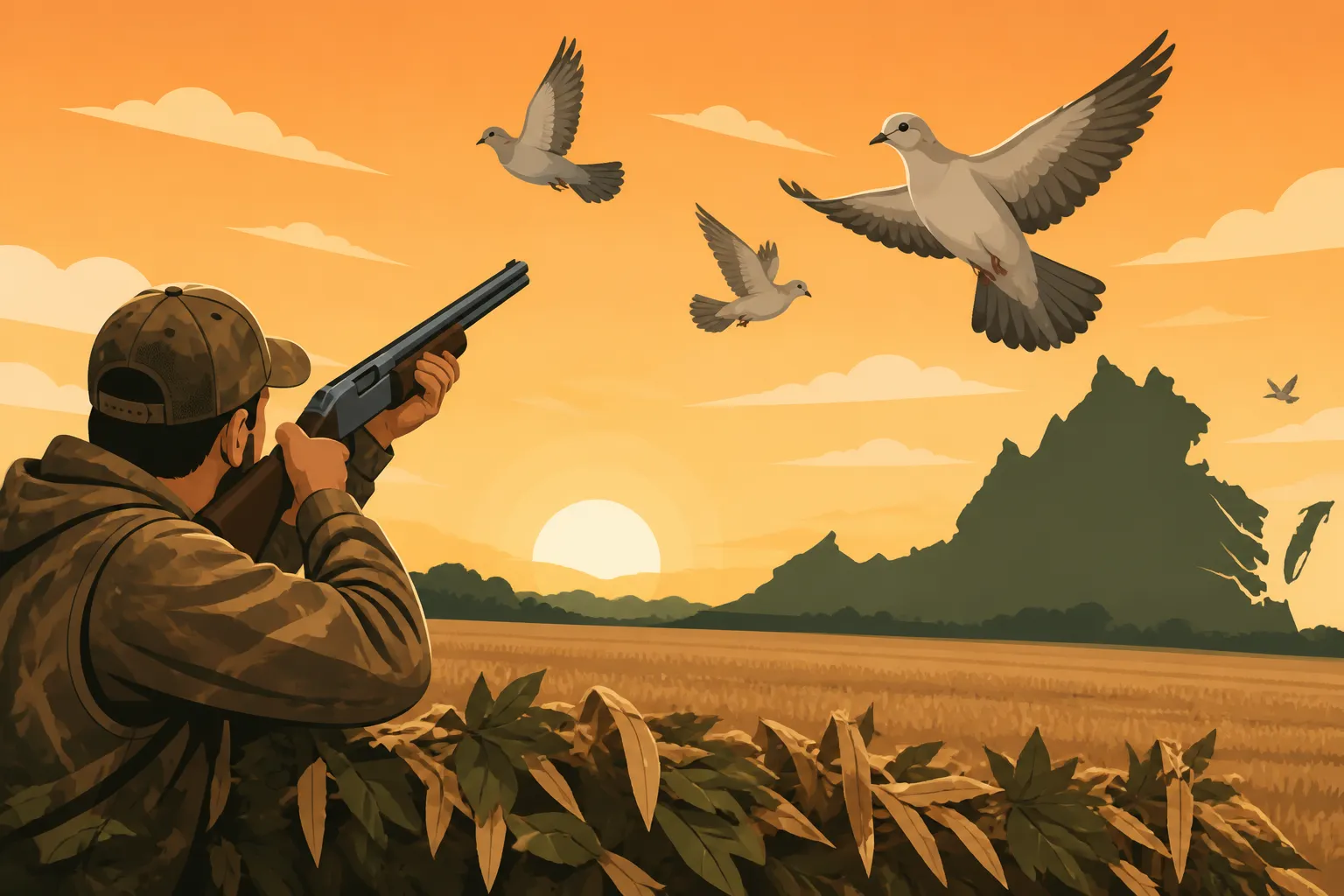
Once you're in your chosen spot, stay still and keep movement to a minimum. Doves have incredible eyesight and will flare at the slightest movement or flash. Wear camouflage that matches the surroundings. If you're on a cut cornfield, wear patterns that mimic dry stalks. If you're near a treeline, opt for woodland patterns. When a flock approaches, resist the urge to jump up too soon. Let them get within effective shotgun range before you make your move. This not only increases your chances of a clean kill but also avoids unnecessarily spooking birds for other hunters. A quick, smooth mount of your gun and fluid swing are critical for connecting with these acrobatic flyers. Practice your swing at home, mounting an unloaded shotgun to your shoulder and tracking an imaginary bird. This muscle memory will pay dividends when the real action starts.
Handling Pressure and Maintaining Safety
Public dove fields, especially on opening day, can sometimes feel like a firing range. While this can be frustrating, it's a reality of the sport and managing it safely and ethically is crucial. The cardinal rule of firearm safety always applies: know your target and what's beyond it. Never shoot towards other hunters or structures. Be mindful of your shooting lanes and avoid taking shots that could endanger others. Communication with nearby hunters, even just a friendly nod or wave, can help establish invisible boundaries and maintain safety. If a field is too crowded or you feel unsafe, it's always better to move to another location or come back another day. Your safety, and the safety of others, is always the top priority.
Ethical considerations extend beyond just safety. Respect other hunters' space. Don't crowd someone's setup, especially if they were there first. A general rule of thumb is to give other hunters at least 50-100 yards of space, or more if the terrain allows. If a bird falls closer to another hunter's position, allow them to retrieve it, especially if they shot it. The social aspect of dove hunting is part of its appeal, but courtesy goes a long way. After the initial flurry of activity, you might find that birds become "field shy" due to pressure. This is where your scouting and adaptability come into play. Being willing to move to a less pressured area, even if it's just a short walk, can make a huge difference. Don't be afraid to adjust your strategy; what worked for the first hour might not work later in the day. Understanding how to handle these situations is also key when considering broader topics like Hunting Pressure on Virginia Public Land.
Post-Hunt Practices and Sustaining Success
Your responsibilities as a hunter don't end when the shooting stops. Proper care of your harvest and thoughtful planning for future hunts are essential elements of being a responsible and successful Virginia dove hunter.
Managing Your Harvest and Field Care
Doves, like most game birds, are perishable. Especially on a warm Virginia September day, prompt field care is crucial to ensure the quality of your harvest. As soon as you retrieve a bird, dispatch it cleanly if necessary, and get it cooled down. Many hunters will immediately gut their doves, or at least open the body cavity to allow heat to escape. Plucking or breasting out birds shortly after the hunt is ideal. If you're hunting for several hours, a small cooler with ice packs is invaluable for storing your birds, keeping them fresh until you can get them home for processing. Remember that doves are delicate, and handling them roughly can bruise the meat.
When transporting your harvest, ensure you comply with all regulations. All migratory birds, including doves, must have one fully feathered wing attached while being transported from the field to your home or a processing facility. This allows DWR officials to identify the species. Once at home, you can completely process them. Dove breasts are a popular choice for grilling, frying, or making delicious appetizers like "dove poppers" wrapped in bacon and jalapeño. Don't let your hard work go to waste! Proper care not only honors the animal but ensures you get to enjoy the fruits of your labor.
Planning for the Second Dove Split
Virginia's dove season is often divided into multiple "splits" or segments. While opening day gets all the fanfare, the later splits can offer excellent hunting opportunities, often with far less pressure. Doves are migratory, so bird numbers can change throughout the season as different waves move through the state. The second dove split in October, for example, often sees different flight patterns and bird behaviors compared to the early September opener. Birds will have been shot at before, making them warier, but cooler weather can also make for more comfortable hunting conditions and more concentrated feeding activity as birds prepare for longer migrations. You can find more details in Hunting the Second Dove Split in October.
To maintain success, continue your scouting, even after opening day. Birds might shift their preferred feeding areas as different crops are harvested or as natural food sources become available or depleted. Fields that were hot on opening day might be quiet two weeks later. Adaptability is key. Keep an eye on weather patterns, as cold fronts can trigger significant bird movement. A little bit of continuous effort, even just driving around and observing, can help you locate new concentrations of birds and ensure you enjoy a productive season beyond just the opening day excitement. Also, consider expanding your hunting areas to include some of the fantastic Virginia Wildlife Management Areas or even exploring new private land opportunities, always remembering to secure permission first.
Disclaimer
Please note that hunting regulations, seasons, and licensing requirements can change. Always consult the official Virginia Department of Wildlife Resources (DWR) website and their most current hunting regulations digest before planning any hunt. This guide is for informational purposes only and does not supersede official DWR regulations. Safe and ethical hunting practices are the responsibility of every individual hunter.