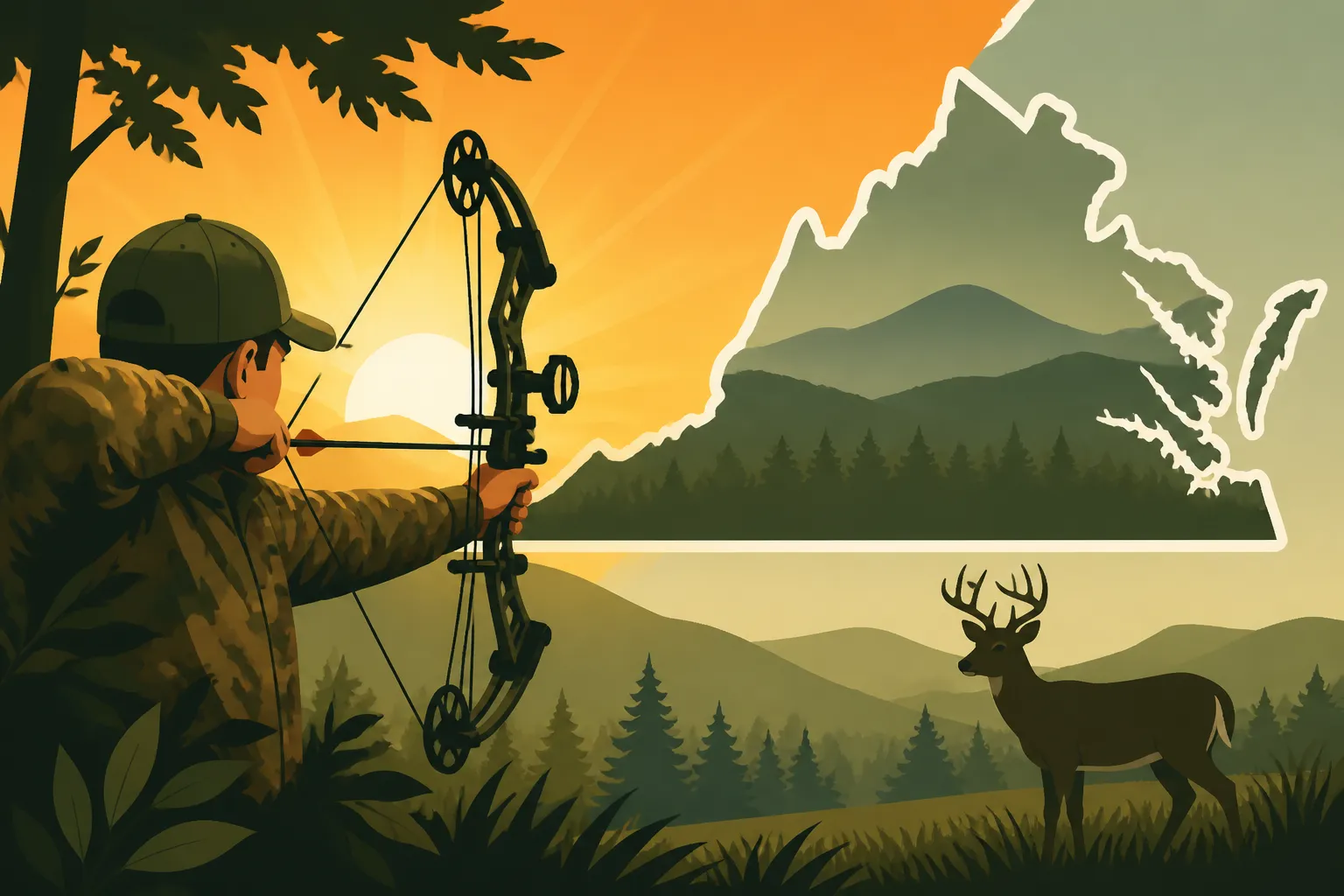
When Virginia’s Statewide Archery Season Opens
The crisp air of early autumn, the rustling leaves underfoot, the eager anticipation of chasing whitetails with a bow in hand – it's a feeling every Virginia archery hunter knows. But before you can even think about drawing back on that mature buck, there's always that pressing question: exactly when does Virginia's statewide archery season open? It can be a little confusing, especially with the different urban archery zones, and nobody wants to miss opening day or, worse, head afield before it's legal. This guide is here to clear up any confusion, providing you with all the details you need to be ready when that first arrow can legally fly.
Understanding the Calendar: When the Arrows Fly in Virginia
The opening day of Virginia's statewide archery season is a highly anticipated event for bowhunters across the Commonwealth. It marks the true beginning of deer season for many, offering a unique opportunity to pursue whitetails before the pressures of firearms seasons set in. Knowing the exact date and understanding the nuances of the season structure is crucial for a successful and legal hunt.
The Statewide Archery Season Kick-Off
For most of Virginia, the statewide archery season consistently opens on the first Saturday in October. This date has become a beloved tradition for bowhunters, signaling the arrival of cooler weather, changing leaves, and deer beginning to shift their patterns from summer to fall routines. It's a time when many of us have already spent countless hours in the off-season practicing, scouting, and preparing our gear. The first Saturday in October means waking up before dawn, the chill in the air a welcome change, and the woods still relatively quiet compared to later seasons. You’ll find hunters eager to get into their stands, hoping to capitalize on those early-season patterns before deer become more nocturnal or pressured.
This early start gives archers a unique window into deer behavior. While the rut is still weeks, if not months, away, deer are often still somewhat predictable, focusing heavily on available food sources like acorns, persimmons, and agricultural crops. Understanding these patterns, honed through diligent scouting, is key to making the most of these initial weeks. The statewide season generally runs through the end of November, often overlapping with the early muzzleloader season and eventually the general firearms season, though archery remains legal throughout. For a complete look at the various hunting periods, it’s worth checking out the comprehensive guide on Virginia Deer Season Structure Explained.
Distinguishing Statewide Archery from Urban Archery Zones
It's easy to get the various archery seasons mixed up, especially with the growing popularity of urban archery opportunities. While the statewide archery season kicks off in October, many of Virginia's urban archery zones actually open much earlier, typically in early September. These zones, often located in suburban areas close to major cities like Richmond, Virginia Beach, and Charlottesville, are designed to help manage burgeoning deer populations in areas with limited firearms hunting opportunities.
The rules and regulations for urban archery can differ significantly from statewide archery, not just in terms of opening dates but also in terms of specific boundaries, antlerless deer opportunities, and sometimes even weapon restrictions. For example, in many urban archery zones, hunters are often encouraged or even required to harvest antlerless deer to help control herd numbers effectively. This can mean extended antlerless opportunities or specific quotas not found in the statewide regulations. It's vital to know if the property you're hunting falls within one of these special zones. If you're considering hunting within city limits, be sure to consult resources like Virginia Urban Archery Opening Day for precise dates and regulations that apply to those specific areas. Always check the Virginia Department of Wildlife Resources (DWR) regulations for the specific county or city you plan to hunt to avoid any mishaps.
Preparing for the Early Archery Woods
Successful archery hunting in Virginia, especially during the early season, hinges on diligent preparation long before opening day. From fine-tuning your equipment to understanding the terrain and the deer that inhabit it, every detail counts. The early season presents its own unique challenges and opportunities, making thoughtful preparation even more critical.
Essential Gear and Scouting in the Lead-Up
As the statewide archery season approaches in early October, your preparation should be well underway. This isn't just about pulling your bow out of the case the week before; it's a continuous process that ideally starts months beforehand. First and foremost, your equipment needs to be in top shape. Your bow should be properly tuned, and you should be consistently grouping your arrows out to your maximum ethical hunting range. Don't forget to practice with the broadheads you intend to use. Different broadheads can fly differently than field points, and you need to be absolutely confident in their accuracy. You can find excellent advice on specific equipment considerations in Bow and Crossbow Setups for Virginia.
Beyond your bow, assess your treestands or ground blinds. Are they safe? Are they properly secured? Are they positioned optimally for the wind conditions and deer travel patterns you've observed? Many hunters use scouting tools like GoHunt to meticulously map out potential stand locations, identify bedding areas, and pinpoint primary food sources. This kind of detailed digital scouting, combined with boots-on-the-ground recon, gives you a significant advantage. It allows you to visualize terrain features, identify funnels, and plan entry and exit routes that minimize disturbance. Don't underestimate the value of pre-season scouting; it truly is the bedrock of early season success. For a deeper dive into this crucial phase, check out Scouting Virginia Public Land Before Season.
Weather and Habitat Conditions in Early October
Virginia's early October weather can be a bit of a mixed bag, and understanding its impact on deer behavior is crucial for archers. While we might dream of crisp, cool mornings, the reality is that many early October days can still be quite warm, sometimes even pushing into the 70s or 80s, especially in the Piedmont and Eastern regions. This warm weather means deer are often more active during the cooler parts of the day – dawn and dusk – and will spend the hotter midday hours bedded down in thick cover, often near water sources.
Thermals play a huge role, especially in the mountainous terrain west of the Blue Ridge. As the sun rises and warms the earth, air currents will often rise, carrying your scent uphill. Conversely, in the evenings, as the air cools, thermals will typically drop, carrying your scent downhill into hollows and bottoms. Paying meticulous attention to wind direction and thermals is paramount. A tool like GoHunt can often integrate wind data into your mapping, helping you make smarter decisions on stand placement for a given day.
Habitat-wise, early October is prime time for hard mast (acorns) and soft mast (persimmons, wild grapes) to be dropping. Deer will often pattern heavily around these food sources. A good acorn crop can scatter deer, as they don't have to travel far to feed. Conversely, a poor acorn year can concentrate deer around remaining food sources or agricultural fields. Understanding these food trends and observing which trees are producing is a critical piece of the early season puzzle. You can often see the remnants of last year's mast crops, which can give you clues about potential hot spots.
Navigating Regulations and Licensing
Hunting in Virginia requires more than just knowing when the season opens and having your gear ready; it also demands a thorough understanding of the state's licensing requirements and archery-specific rules. The Virginia Department of Wildlife Resources (DWR) sets these guidelines to ensure safety, ethical hunting practices, and effective wildlife management.
License Requirements for Archery Hunters
Before you even step foot into the Virginia woods with your bow, you need to ensure you're properly licensed. For resident adult hunters, the basic requirement usually involves a statewide hunting license and a separate big game license. These two are typically combined in what's often referred to as a "hunting and big game license" package. Non-residents have similar requirements but with different fee structures. It's important to understand that these licenses are generally valid for a specific license year, which in Virginia typically runs from July 1st through June 30th of the following year.
If you're planning to hunt deer with a bow or crossbow, the big game license is what authorizes you to harvest deer and bear. There isn't a separate "archery license" in Virginia; your standard hunting and big game licenses cover all legal hunting methods during their respective open seasons. However, always double-check the current regulations annually, as rules can sometimes change. For a detailed breakdown of costs and options, the article Virginia Hunting Licenses and What They Cost is an excellent resource. The easiest way to purchase and manage your licenses is online through the DWR's Go Outdoors Virginia system. You can learn more about this convenient process by visiting Buying a License on Go Outdoors Virginia. Always carry proof of your current licenses with you afield, whether it's a physical copy or stored digitally on your phone via the DWR's official app.
Understanding Archery-Specific Rules
Beyond general hunting licenses, there are specific rules that apply to archery equipment and its use during the season. Virginia is generally very accommodating to various bow types, including traditional longbows, recurves, and compound bows. Crossbows are also legal for deer hunting during the archery season, but there are specific requirements regarding their draw weight and safety mechanisms. For instance, crossbows must have a minimum draw weight and a safety device, and hunters must adhere to specific bolt lengths and broadhead types. If you're a crossbow user, it's particularly important to review Crossbow Rules During Virginia Archery Season to ensure your setup complies with all legal specifications.
When it comes to broadheads, Virginia regulations typically require broadheads to have at least two sharp, cutting edges with a minimum width. This ensures a quick, humane harvest. Mechanical broadheads are generally permitted as long as they meet these cutting diameter requirements when deployed. It's also worth noting that while blaze orange is a mandatory requirement during general firearms season in Virginia, it is not required for bowhunters during the archery-only portion of the season. However, once the muzzleloader or general firearms seasons open and overlap with archery, the blaze orange requirements do apply to all hunters afield, regardless of weapon choice. It's crucial to understand these transitions, and the specifics can be found in Virginia Blaze Orange Requirements. Always prioritize safety, even when not legally required, by being aware of other hunters in the area.
Tactics for Early Season Archery Success
Early season archery hunting in Virginia offers a unique set of challenges and rewards. Deer behavior is largely dictated by food sources and their daily routines established over the summer. Understanding these patterns and employing smart, low-impact tactics can significantly increase your chances of success.
Targeting Pre-Rut Deer Patterns
During the early statewide archery season in October, the deer in Virginia are still very much in their "pre-rut" phase. This means their primary motivations are food, water, and security. Unlike the later rut where bucks are actively chasing does, early season bucks are more predictable, often moving between bedding areas and food sources along established travel corridors. Your success will largely depend on your ability to locate these key resources and intercept deer along their routes.
Food sources are king in early October. As mentioned earlier, falling acorns (especially white oak acorns, which deer often prefer first) can be major attractants. Persimmon trees, wild apple trees, and various agricultural fields like soybeans or corn can also be hot spots. Bucks, in particular, will often stage in thicker cover near these food sources before heading out to feed at last light. This staging behavior creates excellent opportunities for archers who can patiently sit and wait. Using tools like GoHunt to identify different timber types and agricultural fields via aerial photography can reveal potential feeding and bedding areas. The article Reading Aerial Photos for Piedmont Deer offers great insights into how to interpret these aerial views for deer movement. Your scouting should focus on finding fresh sign around these food sources – rubs (though they'll be fresher later), scrapes, tracks, and droppings – to confirm deer activity.
The Importance of Scent Control and Quiet Movement
In the early season, deer are not yet accustomed to heavy hunting pressure, and their senses are incredibly sharp. This makes scent control and quiet movement absolutely paramount for archery hunters. A deer's nose is its primary defense mechanism, and even a slight whiff of human odor can send them bounding away before you even know they were there.
Your scent control regimen should be comprehensive. This means showering with scent-free soaps, washing your hunting clothes in scent-free detergent, and storing them in airtight bags or containers. Dressing at the truck and walking into your stand in clean, scent-free clothing can make a huge difference. Using scent elimination sprays on your boots and outer layers is also a good practice. Remember, wind direction is your ultimate scent control tool. Always position yourself downwind of where you expect deer to approach. Even with perfect scent control, a swirling wind can betray your presence.
Equally important is quiet movement. The woods in early October can be noisy with falling leaves and dry twigs underfoot, making it a challenge to move silently. Plan your entry and exit routes meticulously to avoid making unnecessary noise. Take your time, lift your feet, and avoid snapping branches. Setting up your treestand or ground blind well in advance also minimizes noise on the day of the hunt. Deer are often more relaxed in the early season, meaning they're not quite as jumpy as they will be during firearms season. This can work to your advantage if you're meticulous, allowing you to catch deer in predictable patterns. If you can effectively manage your scent and movement, you'll greatly increase your chances of getting a shot at a relaxed, unsuspecting whitetail. Finding natural travel corridors, such as a Hunting a Funnel Between Two Hollows, can allow you to minimize your movement and maximize your advantage.
Virginia Statewide Archery Season Quick Reference
To help you keep track of the key information for Virginia's statewide archery season, here's a handy table:
| Category | Detail | Important Considerations |
|---|---|---|
| Opening Day | First Saturday in October | Check DWR regulations annually for any changes. |
| Closing Day | Varies by year, typically end of November (overlaps with other seasons) | Archery may be used during muzzleloader/firearms seasons, but blaze orange rules apply. |
| Primary Target | White-tailed Deer | Bear can also be harvested by archery during this season where open. |
| Required Licenses | Virginia Hunting License + Virginia Big Game License (for deer/bear) | Non-residents require non-resident versions. |
| Crossbows | Legal during statewide archery season | Must meet DWR draw weight and safety requirements. |
| Blaze Orange | NOT required during archery-only portion | REQUIRED when archery season overlaps with muzzleloader or general firearms seasons. |
| Scouting Focus | Food sources (acorns, persimmons), water, bedding areas, travel routes | Use aerial maps (e.g., GoHunt) and boots-on-the-ground recon. |
| Deer Behavior | Pre-rut patterns, driven by food, water, and security; somewhat predictable | Less chasing, more routine movement. |
| Hunter Tactics | Scent control, quiet movement, wind awareness, patient stand sitting | Capitalize on early morning/late evening activity due to warmer temperatures. |
Disclaimer
Please remember that hunting regulations, seasons, and licensing requirements can change. Always consult the official Virginia Department of Wildlife Resources (DWR) regulations for the most current and accurate information before planning any hunting trip. This guide is for informational purposes only and should not replace official DWR documentation.