Hunting the Rut East of the Blue Ridge
Hunting the deer rut in Virginia, especially when you’re east of the Blue Ridge Mountains, can be a completely different ballgame than what you might experience out west. Many hunters get frustrated trying to apply mountain tactics to the rolling hills, vast agricultural fields, and sprawling timber blocks of the Piedmont and Coastal Plain, often missing out on prime opportunities. This guide is dedicated to breaking down the unique aspects of the rut in Eastern Virginia, offering actionable insights to help you capitalize on this exciting time of year.
Understanding the Rut's Timeline East of the Blue Ridge
The phrase "the rut" often conjures images of chaotic, all-day deer movement, but in reality, it's a dynamic period with distinct phases. East of the Blue Ridge, the timing and intensity can feel subtly different, shaped by local deer populations and habitat.
Peak Activity vs. Pre-Rut and Post-Rut
While many hunters eagerly await the "peak rut," this term can be a bit misleading. The whitetail rut isn't a single event but a progression. The pre-rut, typically starting in late October, sees bucks beginning to cruise, make scrapes, and establish rubs with more intensity. This is often an excellent time to hunt, as bucks are actively seeking does but haven't locked down with them yet. You'll find them checking out established travel corridors, scent checking bedding areas, and showing up unexpectedly.
The true "peak breeding" often occurs in mid-November for much of Virginia, aligning closely with what we describe in a general sense when we discuss Hunting the Rut in November. During this time, you'll witness bucks actively chasing does, sometimes leading to short but intense bursts of activity. Does will be receptive, and bucks will expend a lot of energy pursuing them, making them more vulnerable to hunters willing to sit all day. However, once a buck pairs up with an estrous doe, he might disappear for 24-48 hours, making the woods seem quiet. This lull is temporary and part of the cycle. Post-rut, which extends into late November and early December, finds bucks still seeking any remaining estrous does, often younger does experiencing their first estrus. They'll be worn down and hungry, focusing heavily on available food sources to regain weight. This phase can offer renewed opportunities, especially around prime feeding areas.
Regional Nuances and Microclimates
The vastness of Eastern Virginia, from the rolling Piedmont to the flat Tidewater, means there are regional subtleties in rut timing and deer behavior. The Virginia Department of Wildlife Resources (DWR) collects extensive data, and while the statewide breeding window is fairly consistent, local factors can shift things slightly. For instance, areas with higher deer densities might see a more condensed, intense rut as competition among bucks is higher. Conversely, areas with lower densities or more spread-out habitat might have a more prolonged, less dramatic peak.
In the agricultural heart of the Piedmont, where deer might have vast crop fields, the rutting behavior might be more observable at field edges, with bucks crossing open areas more frequently. Moving further east into the Coastal Plain and Tidewater, the terrain becomes flatter, often marshy, with dense pine plantations and swamp edges. Here, deer movement might be more concentrated along natural funnels created by water features, small ridges, or changes in vegetation. Understanding these subtle differences in habitat will dictate your strategy.
Key Behaviors and Sign During the Eastern Virginia Rut
To successfully hunt the rut east of the Blue Ridge, you need to become a master interpreter of deer sign and movement patterns. It’s not just about seeing a buck, but understanding why he’s there and what he’s doing.
Scrapes and Rubs
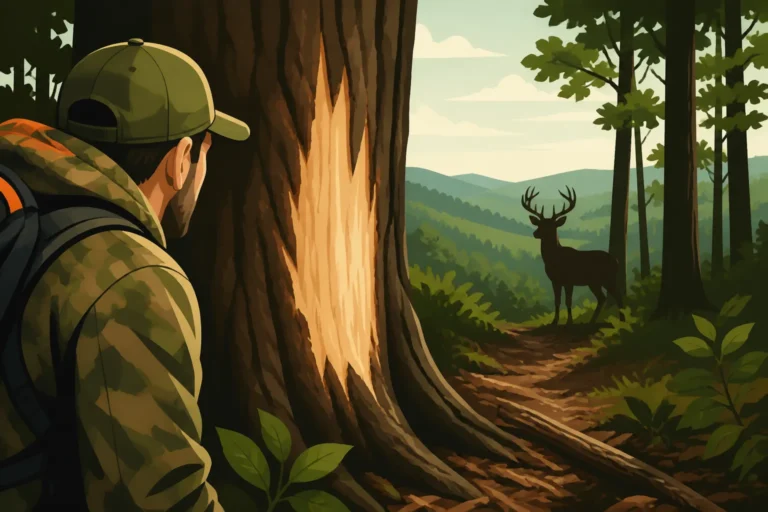
Scrapes and rubs are the billboards of the whitetail world, especially during the rut. While bucks start making rubs in the early fall to shed velvet and mark territory, their frequency and size increase dramatically during the pre-rut and peak rut. Look for fresh rubs, characterized by exposed, light-colored wood, often with sap still oozing. Multiple rubs along a line indicate a "rub line," a travel corridor a buck frequently uses. These are prime spots for a stand.
Scrapes, on the other hand, are circular patches of pawed-up earth, usually under a low-hanging branch (the "licking branch"). Bucks will urinate in them and rub their preorbital glands on the licking branch, depositing scent. Primary scrapes are often larger, revisited repeatedly, and found along major travel routes or near doe bedding areas. Smaller, secondary scrapes might pop up overnight and serve as temporary communication points. Fresh scrapes, damp from urination or with disturbed leaves, are invaluable indicators of recent buck activity. Setting up near a scrape line or a hot primary scrape, especially one along a travel corridor, can be highly effective. The topic of Scrape Lines Along a Logging Road often provides excellent insights into these natural communication hubs.
Deer Movement Patterns
During the rut, deer movement, particularly that of mature bucks, becomes less predictable in some ways, but more exploitable in others. While does still largely adhere to their patterns of moving between bedding and feeding areas, bucks are driven by one thing: finding receptive does. This means they’re constantly cruising, sometimes covering significant ground in search of a hot doe. They might travel through areas they wouldn't normally frequent during other times of the year, leading to unexpected encounters.
You might see bucks scent-checking the perimeter of open fields, slipping through dense thickets, or following creek bottoms, all with their nose to the ground, searching for estrous scent. The key is understanding that their movement is no longer solely dictated by food. Does in estrus will often lead bucks on chases, sometimes drawing them out of their typical cover. This is where a robust mapping application like GoHunt can be incredibly useful. With GoHunt, you can identify natural funnels, pinch points, and dense cover that bucks might use when cruising, even if there isn't a direct food source drawing them in. Being able to visualize these landscape features can help you anticipate where a buck might travel while searching for a doe.
Table: Rut Behavior East of the Blue Ridge
| Rut Phase | Typical Dates (Eastern VA) | Buck Behavior | Doe Behavior | Hunter Strategy Focus |
|---|---|---|---|---|
| Pre-Rut | Late Oct – Early Nov | Increased rubbing, scraping, cruising for does. | Consistent bedding/feeding, tolerating buck presence. | Hunt travel corridors, rub lines, fresh scrapes. Call aggressively. |
| Peak Rut | Mid-November | Actively chasing and breeding does, less predictable. | Estrous; being chased, seeking refuge. | Hunt all day. Focus on funnels, pinch points, doe bedding areas. Use rattling/grunting. |
| Post-Rut | Late Nov – Early Dec | Seeking remaining does, recovering weight, exhausted. | Returning to feeding patterns, some late estrus. | Hunt food sources (acorns, late crops). Use subtle calling. Target doe groups. |
Effective Hunting Strategies for Eastern Virginia Rutting Deer
The diverse landscape east of the Blue Ridge demands a versatile approach. What works in a mountain hollow might not cut it on a Piedmont farm.
Stand Placement and Terrain Features
When you're dealing with the gentler topography of Eastern Virginia, identifying natural funnels and pinch points becomes paramount. Unlike the distinct ridges and saddles of the mountains, these features might be more subtle:
- Field Edges: Bucks will often cruise the edges of corn, soybean, or hay fields, especially if there's a woodline or thicket adjacent. They'll use these edges to scent-check for does without exposing themselves entirely. A strategic setup on a Setting Up on a Piedmont Field Edge can be highly productive.
- Creek and River Bottoms: These natural corridors offer cover and easy travel, even if the water isn't particularly deep. Bucks will follow them, especially if they connect bedding and feeding areas or provide routes around open fields.
- Drainages and Swales: Even subtle dips in the terrain can provide cover for deer moving from one woodlot to another.
- Timber Changes: The transition from dense pine thickets to mature hardwoods, or the edge of a clear-cut, can create a natural travel lane. Deer will often skirt the edges of heavy cover.
- Pinch Points: Look for areas where dense cover narrows, forcing deer through a confined space. This could be a small timber block between two open fields, or a narrow strip of woods bordered by a road and a creek. These are high-odds spots during the rut.
Using aerial maps or a mapping app like GoHunt is crucial here. You can spend hours virtually scouting, identifying potential funnels and bedding areas, and then verify them on the ground.
Calling and Decoying Tactics
Calling can be incredibly effective during the Eastern Virginia rut, as bucks are actively seeking interaction.
- Grunt Calls: A simple grunt call mimicking a buck looking for a doe can stop a cruising buck or draw one in from a distance. During the pre-rut, a softer tending grunt might entice a curious buck. As the rut intensifies, more aggressive grunts or a snort-wheeze might challenge a dominant buck. Remember, when considering Grunt Calls in Mature Virginia Timber, the sound will carry differently than in open fields.
- Rattling: Mimicking two bucks fighting can be a powerful attractant, especially during the peak rut. Use short, sharp bursts of rattling followed by grunts, simulating a real fight. In open country, rattling might bring bucks in from further away, but they'll often approach cautiously, trying to circle downwind.
- Estrous Scents: While controversial for some, estrous doe urine can be a valuable tool. Place it strategically on a mock scrape, a scent wick downwind of your stand, or even on a decoy. Combined with calling, it can create a compelling illusion.
- Decoys: A single doe decoy, positioned to appear receptive, can be highly effective, especially when paired with a buck decoy. Bucks are often eager to challenge rivals during the rut. However, in heavily hunted areas or on smaller properties, decoys might spook wary deer if not used carefully. They work best in open or semi-open areas where they can be seen from a distance, such as along a field edge.
Adapting to Pressure and Weather
Eastern Virginia, with its mix of private and public lands, often experiences significant hunting pressure. Deer, especially mature bucks, become incredibly adept at avoiding hunters.
- Hunting Pressure: On public lands or smaller private tracts, deer learn quickly to move at night or stick to the densest cover. To combat this, you might need to employ tactics that involve deeper pushes into thickets, or hunt during the midday hours when many hunters have left the woods. Consider checking out tips for Finding Ground Others Walk Past on public lands. In areas with higher pressure, bucks might move less overtly, sticking to ditches, fencerows, and thick transition zones.
- Weather Fronts: Cold fronts, especially those accompanied by clear skies after a rain, can trigger significant deer movement. Bucks that have been "locked down" with a doe or conserving energy might become active again. Conversely, warm, sunny days during the peak rut can sometimes slow daytime activity, pushing movement closer to dawn and dusk. Pay close attention to weather forecasts and adjust your hunting times and locations accordingly. A dropping barometer before a front can also be a great time to be in the woods.
Gear and Preparation for Rut Hunting East of the Blue Ridge
Success during the rut isn't just about strategy; it's also about being prepared with the right gear and having done your homework long before the season arrives.
Essential Gear Considerations
While a good rifle or bow is obvious, several other items can make or break your rut hunt:
- Optics: Binoculars are your best friend for scanning field edges, thickets, and distant timber lines. A quality pair of 8x or 10x binoculars will help you pick apart cover and spot that cruising buck before he spots you. A rangefinder is also crucial for confirming distances, especially in varied terrain.
- Clothing: November in Eastern Virginia can swing from crisp mornings to surprisingly warm afternoons, only to plummet again with a cold front. Layering is key. Moisture-wicking base layers, insulating mid-layers, and a waterproof/windproof outer shell will keep you comfortable in changing conditions. Don't forget durable boots suitable for walking through wet leaves, mud, and potentially swampy areas. Remember Virginia's Blaze Orange Requirements during firearms season.
- Mapping App/GPS: A reliable GPS unit or a smartphone app like GoHunt or the official Scouting With the Virginia DWR App is indispensable. It helps you navigate public lands, mark stand locations, track deer movement, and identify property boundaries, which is particularly important when Hunting Small Private Tracts in Virginia or near suburban areas. Always carry a portable charger for your phone!
- Calling Devices: Grunt calls, rattling antlers, and scent wicks should be easily accessible. Practice your calls beforehand to sound realistic.
- Thermacell/Insect Repellent: Even in November, warm days can bring out pesky gnats or late-season mosquitoes, especially in creek bottoms or swampy areas. Don't let them ruin your sit.
Scouting and Pre-Season Work
The rut isn't the time to start learning your hunting ground. Effective rut hunting is built on diligent pre-season scouting.
- Summer and Early Fall Scouting: Spend time in the woods during the off-season. Identify food sources (acorn flats, persimmon trees, agricultural fields), bedding areas (dense pines, thick briar patches, laurel thickets), and natural travel corridors. Look for old rub lines and scrape areas that might be reactivated. Pay attention to how deer enter and exit fields. Tools for Reading Aerial Photos for Piedmont Deer can save you countless hours.
- Trail Cameras: Deploy trail cameras on rub lines, scrapes, and funnels. They are invaluable for understanding deer movement patterns, identifying specific bucks, and gauging the intensity of activity. A camera near a mock scrape or an established licking branch can give you real-time intel on buck behavior leading up to the rut.
- Access Routes: Plan your entry and exit routes to minimize disturbance. Deer are constantly on high alert during the rut, and bumping them on the way to your stand can ruin your hunt. Use terrain features, creek beds, or dense cover to conceal your approach. Knowing where and how deer move will allow you to get into your stand undetected and be ready when the action heats up.
Disclaimer
Hunting is an inherently dangerous activity. Always prioritize safety, understand and adhere to all Virginia Department of Wildlife Resources (DWR) regulations, and obtain appropriate licenses and permits. This guide provides general information and recommendations; specific conditions and rules may vary. It is the individual hunter's responsibility to ensure compliance with all laws and ethical hunting practices.