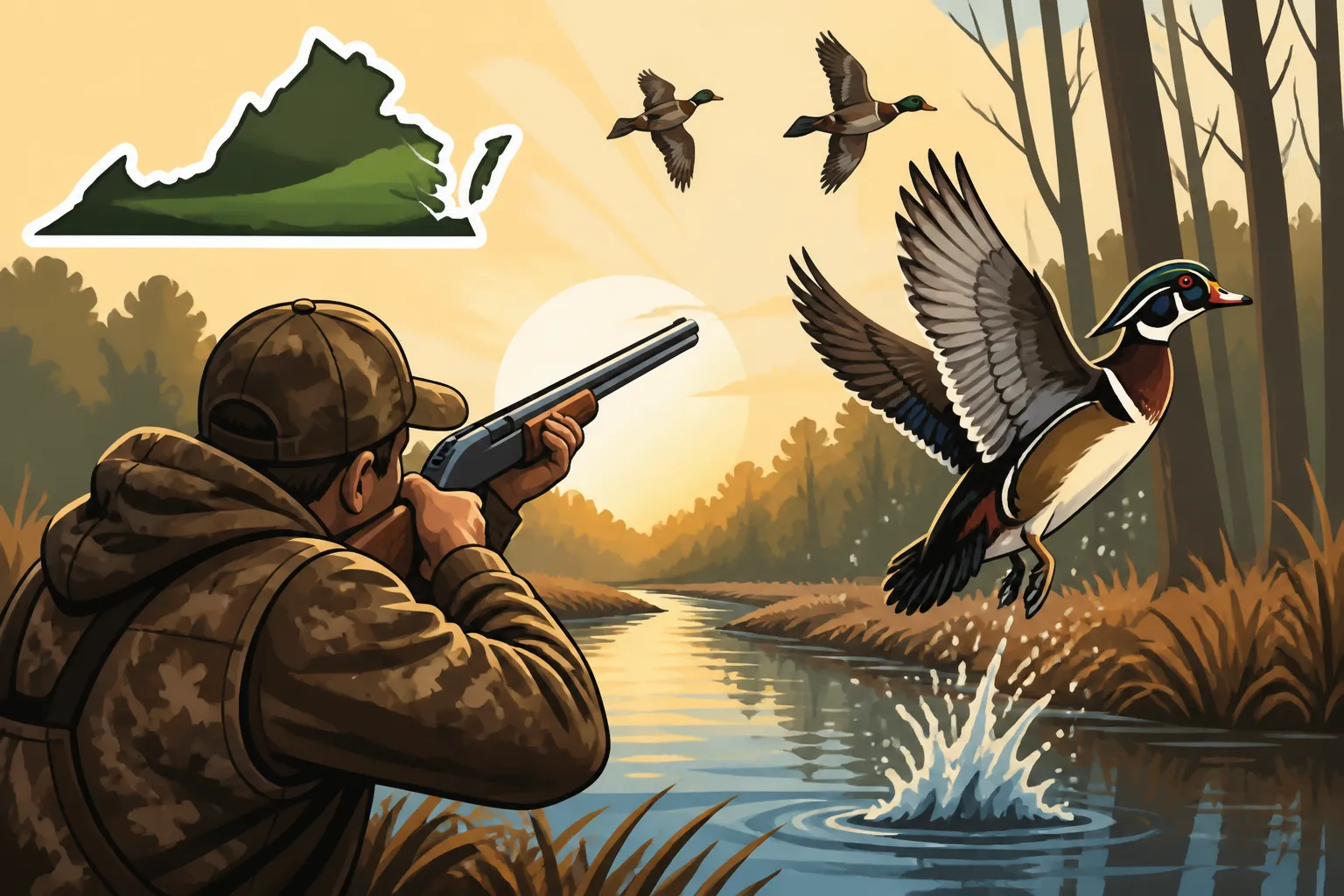
Jump-Shooting Virginia Creeks for Wood Ducks
The rush of wings, the splash of water, and the sudden, explosive flush of a wood duck from a hidden bend in a Virginia creek—there's nothing quite like it for an adrenaline-fueled waterfowl hunt. If you've ever felt the frustration of trying to decoy wary ducks or find a productive marsh spot, you know the appeal of a more active, dynamic approach. This guide will walk you through everything you need to know about jump-shooting Virginia's winding creeks and rivers for those beautiful, elusive "woodies."
Understanding Wood Duck Behavior and Habitat in Virginia Creeks
Wood ducks are absolute gems of the waterfowl world, known for their stunning plumage and preference for flooded timber, swamps, and, crucially, those quiet, meandering creeks that crisscross much of Virginia. Unlike their big-water brethren, wood ducks thrive in these intimate, sheltered environments, offering a unique challenge and reward for the hunter willing to seek them out.
Why Wood Ducks Love Virginia's Creek Systems
Virginia's landscape, particularly the Piedmont and Tidewater regions, is veined with countless small creeks, streams, and rivers, many of which are absolutely perfect wood duck habitat. These waterways often feature slow-moving currents, which are less energetically demanding than open water. More importantly, they offer an abundance of food and cover. Wood ducks are primarily dabblers, meaning they feed on the surface or by tipping up, and they absolutely gorge on acorns, particularly those from pin oaks and water oaks, which commonly grow along creek banks. Other favorite foods include various seeds, berries, and aquatic insects found in the leaf litter and shallow margins.
Think about a classic Virginia creek: it often has steep, forested banks, perhaps with some mature timber that creates ideal nesting cavities for these tree-nesting ducks. You'll frequently find beaver activity, too, creating backwater sloughs, flooded timber, and small ponds that are wood duck magnets. These pockets of still, sheltered water, often choked with downed trees and thick brush, provide not only abundant food but also crucial refuge from predators and hunting pressure. The dense overhead canopy offers concealment from overhead predators like hawks and eagles, making them feel secure. Even small, seemingly insignificant tributaries can hold a surprising number of birds if they offer these critical elements.
Prime Times and Conditions for Jump-Shooting
Jump-shooting success hinges on understanding when and where wood ducks are most vulnerable. While they can be found throughout the day, certain periods offer significantly better odds. Early morning, right after legal shooting light, is often phenomenal. Woodies will fly off their roosts, often in larger groups, and spread out along the creeks to feed. This is when you might catch them flying low over the water or sitting on log jams, just begging to be flushed. Similarly, late afternoon, typically the last hour or two before sunset, sees a reverse migration as ducks move from feeding grounds back to their roosting areas. These movements provide excellent opportunities for flushing birds that are actively feeding or resting before bedding down for the night.
Beyond the daily cycle, weather plays a critical role. A sudden cold front can push migrating wood ducks further south, bringing a fresh influx of birds into Virginia's waterways. Overcast days, especially those with a light drizzle, often keep ducks moving and feeding longer throughout the day, as opposed to bright, sunny days when they might seek denser cover. High water levels, often caused by heavy rains, can flood timber and expand feeding areas, potentially spreading birds out, but also opening up new, temporary habitat that might concentrate them in certain areas. Conversely, very low water might push them into deeper pools or larger rivers. Pay attention to the weather patterns, and consult the Virginia DWR's Virginia Duck and Goose Bag Limits and Virginia Waterfowl Zones and Seasons to align your hunt with optimal conditions and legal frameworks.
Essential Gear and Setup for Successful Jump-Shooting
Jump-shooting is a minimalist's game compared to setting elaborate decoy spreads, but having the right gear is still crucial for safety, comfort, and, most importantly, success. You're going to be walking, wading, and shooting in unpredictable terrain, so your equipment needs to be up to the task.
Shotguns, Ammunition, and Choke Selection
For jump-shooting wood ducks, you want a shotgun that's quick to shoulder and point. A 12-gauge or 20-gauge pump-action or semi-automatic shotgun is ideal. These guns offer reliability and the capacity for quick follow-up shots, which you'll appreciate when multiple birds erupt from cover. Lightweight models are a bonus, as you'll be carrying it for extended periods. The shots are almost always at close range, often within 15-30 yards, so an open choke is paramount. An Improved Cylinder (IC) or Modified (Mod) choke is perfect for delivering a broad pattern that increases your chances of connecting with a fast-flushing bird. Anything tighter, like a Full choke, will make hitting these close, darting targets much more challenging.
When it comes to ammunition, non-toxic shot is a strict requirement for all waterfowl hunting in Virginia. Steel shot is the most common and economical choice. For wood ducks, a smaller shot size like #4 or #6 steel works wonderfully. This provides a good balance of pellet count and energy to cleanly harvest these relatively small ducks. You don't need heavy loads; standard 2 ¾-inch shells with a velocity around 1,300-1,450 fps will do the trick without excessive recoil. Remember, the goal is a quick, clean kill, and a good pattern from an open choke with appropriate shot size will deliver that. While the context is different, checking resources like Waterfowl Loads for Chesapeake Bay Divers can still provide valuable insights into non-toxic shot options.
Waders, Clothing, and Safety Considerations
Your comfort and safety hinge on your clothing and footwear. Chest waders are almost always the best choice for jump-shooting creeks. They provide full waterproof protection, allowing you to wade through varying depths, scramble over beaver dams, and navigate muddy banks without getting soaked. Make sure they fit well and allow for a full range of motion. Breathable waders are a lifesaver, as you'll be exerting a lot of energy. Insulated waders are a must for colder late-season hunts. Hip boots might seem lighter, but they are a gamble, as you can easily step into water deeper than expected and fill them up.
Layering your clothing underneath your waders is key. Start with a moisture-wicking base layer, add an insulating mid-layer like fleece, and then your outer layer. You'll be working up a sweat walking, then potentially standing still, so the ability to shed or add layers is invaluable. While blaze orange isn't typically required for waterfowl hunting, wearing a blaze orange or pink hat, or an outer layer when walking to and from the creek, especially if you're on public land during deer season, is a smart safety measure. Consider adding a small, waterproof pack to carry extra shells, a rangefinder (useful for judging distance to potential flush points, not just shooting), a snack, water, and your phone. For colder weather, a pair of waterproof gloves that still allow for good trigger feel is essential. When traversing deeper sections or where the current is strong, a wading staff can provide crucial stability. And, of course, a personal flotation device (PFD) is always a wise, if not legally mandated, addition, especially if you're unsure of the water depth or bank stability. Consult resources like Waders for Cattail Marsh Hunting for tips on choosing the right waders for various aquatic environments.
| Gear Item | Recommended Type/Spec | Purpose |
|---|---|---|
| Shotgun | 12 or 20 gauge, pump or semi-auto | Quick handling, reliable, follow-up shots |
| Choke | Improved Cylinder (IC) or Modified (Mod) | Broad pattern for close, flushing birds |
| Ammunition | #4 or #6 Steel Shot, 2 ¾” shells | Non-toxic, good pellet count for small ducks |
| Waders | Chest Waders, breathable or insulated | Full waterproof protection, wading flexibility |
| Base Layers | Moisture-wicking synthetics | Manage sweat, maintain warmth |
| Mid Layers | Fleece, wool | Insulation for varied temperatures |
| Outerwear | Camo (waterproof/windproof) | Concealment, weather protection |
| Footwear | Insulated rubber boots (under waders) | Warmth and traction in muddy/cold water |
| Headwear | Camo hat, optionally blaze orange for travel | Concealment, sun/rain protection, safety |
| Gloves | Waterproof, good dexterity | Warmth, grip, trigger feel |
| Pack | Small, waterproof backpack | Carry shells, water, snacks, essentials |
| Safety Items | PFD (optional but recommended), Wading Staff | Buoyancy, stability in uncertain water |
Strategies and Techniques for Jump-Shooting Creeks
Jump-shooting is an active and engaging hunting method. It demands stealth, keen observation, and the ability to react quickly. It's less about waiting for the birds to come to you and more about going to the birds, often surprising them in their secluded hideaways.
Scouting and Approaching Creek Sections
Successful jump-shooting starts long before you ever step foot in the creek. Pre-season scouting is paramount. Use aerial maps on platforms like GoHunt or the Virginia DWR app to identify promising creek sections. Look for areas with dense timber, tight bends, beaver activity, oxbows, log jams, and areas where the creek widens slightly into a pond-like environment. These are all prime wood duck hangouts. Pay attention to how the creek winds, as it will inform your approach. Once you've identified potential spots, a walk-through before the season, or at least a day before a hunt, can confirm your suspicions. Look for fresh droppings, disturbed water, and other signs of recent duck activity. This is very similar to Reading a Tidal Creek for Deer Movement, where understanding the features dictates game behavior. The Scouting With the Virginia DWR App can be incredibly helpful for identifying public land access points and boundaries along these creeks.
When it's time to hunt, your approach is critical. Always try to walk against the current. This makes your movement quieter and less likely to stir up sediment that could alert ducks. Use the natural cover of the creek banks, trees, and brush to conceal your movements. Keep low, move slowly, and constantly scan ahead, not just on the water but also along the banks where ducks might be resting. Observe quiet pools and bends from a distance before rounding them. Sometimes, you can spot ducks sitting on logs or hidden in the shade before they see you. A good pair of binoculars can be useful for spotting ducks before they detect you, giving you an advantage. The goal is to surprise them, not scare them into an early, out-of-range flush.
Working the Creek: Flushing and Shooting
Once you're actively working a creek, maintain a slow, deliberate pace. Keep your gun ready, held in a comfortable, low-ready position. Anticipate flush points: thick patches of cover, submerged logs, deep pockets on the inside of a bend, or where a small feeder ditch enters the main creek. These are all places ducks love to hide. When you approach one of these areas, briefly pause and listen. You might hear the subtle splash or quack of a hidden duck before you see it.
When a duck or group of ducks flushes, it will often be explosive and close. The key is to react quickly but smoothly. Mount your gun, pick out a single bird (if multiple flush), swing through it, and pull the trigger. Because the shots are often at close range, you typically won't need a huge amount of lead, but practice on clays to get used to quick, decisive shots. If you have multiple birds, resist the urge to "flock shoot." Pick one, get your shot off, and if time allows and it's safe, transition to another. Retrieving downed birds can be challenging in dense creek environments. Mark where the bird falls, note any landmarks, and move quickly to retrieve it to prevent it from drifting downstream or getting lost in thick cover. If hunting with a dog, ensure they are trained for water retrieves in tight spaces.
Partner Hunting and Safety Tactics
While jump-shooting can be a solitary pursuit, hunting with a partner or small group can significantly increase your success and, importantly, your safety. With a partner, you can cover more water and set up flanking maneuvers. For example, one hunter can walk the main channel, while another walks the bank slightly ahead, covering a wider area and potentially pushing birds towards the wader, or vice-versa. This is similar in principle to Deer Drives With Three or Four Hunters, where coordinated movement increases effectiveness and safety.
Communication is vital. Establish clear signals or voice commands. Maintain safe spacing, typically 30-50 yards between hunters, depending on the terrain and visibility. Always know where your partner is and never shoot in their direction. Discuss designated shooting lanes before you enter a section. For example, the person on the left bank shoots left, the person in the water shoots straight ahead, and so on. This prevents accidental discharge and ensures everyone has a clear, safe shot. Retrieving downed birds is also much easier and safer with a partner. One person can keep an eye on the fallen bird while the other navigates the terrain for retrieval.
Creek Selection and Public Access in Virginia
Finding good jump-shooting opportunities in Virginia requires knowing where to look and understanding the rules of access. While private land offers many excellent spots, public access is available if you know where to find it.
Identifying Productive Public Creeks and Rivers
Virginia has a surprising amount of public land with excellent creek systems. The Virginia Department of Wildlife Resources (DWR) manages numerous Virginia Wildlife Management Areas (WMAs) across the state, many of which contain rivers and creeks perfect for jump-shooting. Places like the Amelia WMA, Hog Island WMA (though primarily for bay hunting, some adjacent creeks can be good), and James River WMA offer opportunities. However, many smaller, unnamed creeks and tributaries on other WMAs also hold birds. Check the individual WMA regulations before you go, as some may have specific access rules or seasons.
Beyond WMAs, many larger rivers in Virginia, such as the Rappahannock, Mattaponi, and Pamunkey Rivers, have public boat ramps or access points that allow you to put in and explore their smaller, often overlooked tributaries. These larger river systems often have slower-moving sections and oxbows that act as wood duck sanctuaries. Using the GoHunt app or the DWR's interactive map tool on their website is incredibly useful for overlaying public land boundaries with satellite imagery of these waterways. Look for sections where the river narrows, or where there are obvious signs of beaver activity, flooded timber, or dense shoreline vegetation. Even urban and suburban areas often have smaller creeks that might hold wood ducks, especially during migration, provided there's sufficient cover and access.
Navigating Private Land and Permission
While public land offers opportunities, some of the best wood duck creeks are often on private property. Understanding Virginia's trespass laws and the etiquette of requesting permission is crucial. In Virginia, you generally need explicit permission to hunt on private land. This can be verbal, but having written permission is always a safer bet, especially if there's any ambiguity about property lines. The post on Do You Need Written Permission in Virginia? explains this in more detail.
The best way to gain access is to simply knock on doors. Identify landowners whose properties border promising creek sections. Often, farmers and landowners are happy to grant access to hunters who are polite, respectful, and responsible, especially if they view wood ducks as a nuisance or simply don't hunt them themselves. A friendly introduction, a clear explanation of what you want to do (jump-shooting wood ducks, emphasizing you'll be safe and leave no trace), and offering to share some of your harvest can go a long way. The advice in Asking a Virginia Farmer for Permission can guide you in these interactions. Be prepared for rejections, but don't let them deter you. Persistence and courtesy often pay off. Always leave gates as you found them, pack out all your trash, and thank the landowner after your hunt, perhaps even dropping off a gift of processed duck meat.
Disclaimer
Please note: Hunting regulations can change. Always consult the most current Virginia Department of Wildlife Resources (DWR) regulations before any hunting activity. This guide provides general information and does not supersede official DWR guidelines.