Hunting a Standing Cornfield in Farm Country
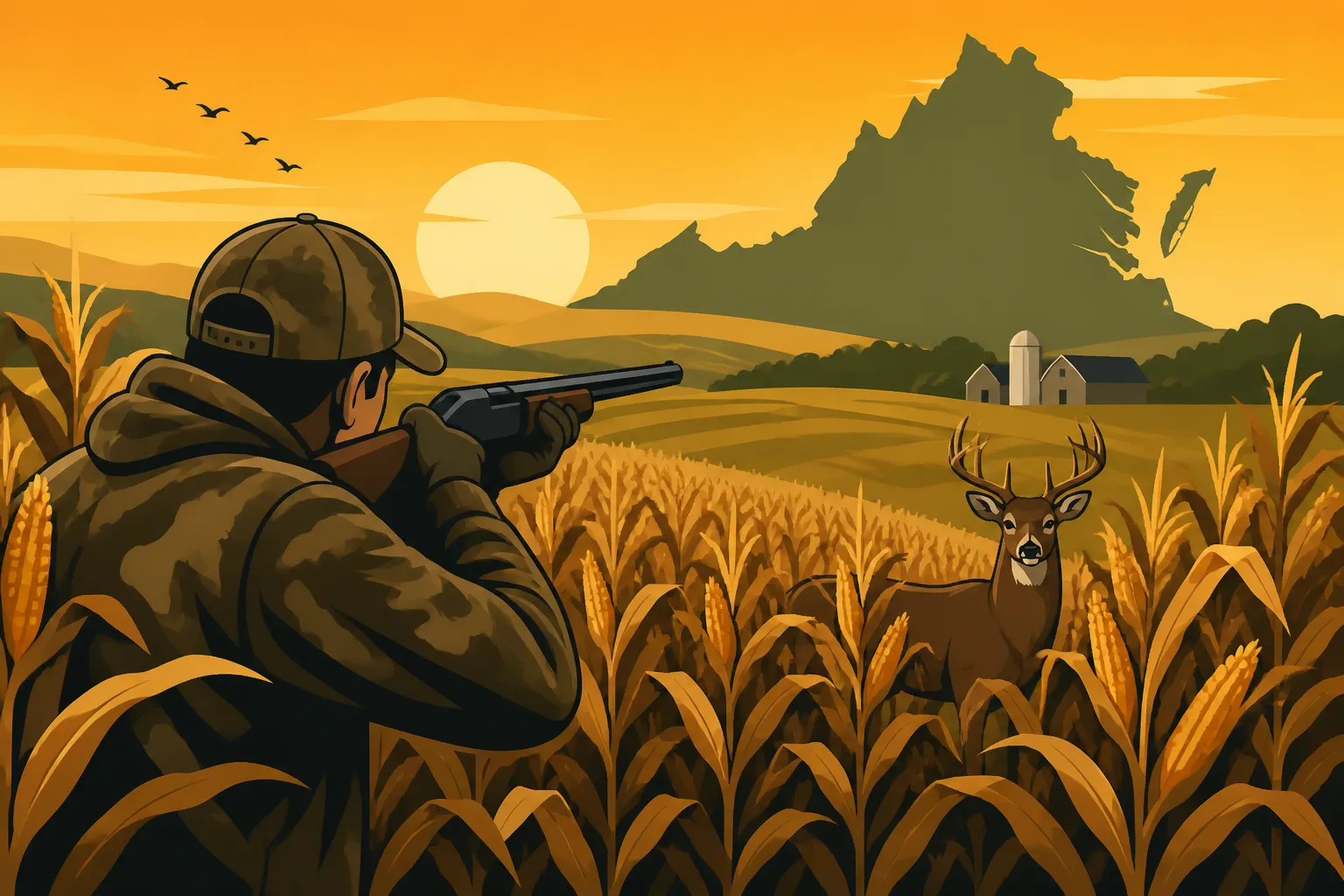
There’s nothing quite like the sight of a mature Virginia cornfield, stretching for acres under the autumn sun. It’s a beautiful landscape, but if you’re a deer hunter, you know it also presents one of the most frustrating challenges: where do the deer go when they disappear into that golden jungle? This guide is all about cracking the code of hunting these incredibly dense and productive agricultural havens, helping you understand deer behavior and employ tactics to find success in Virginia's farm country.
Understanding Deer Behavior in Standing Corn
Cornfields are truly magnificent structures from a deer's perspective. They offer an unparalleled combination of food, cover, and security, making them a prime destination for whitetails, especially during the fall hunting seasons in Virginia. Ignoring them or not knowing how to approach them effectively is leaving a huge piece of the puzzle unsolved.
Why Deer Love Cornfields
First and foremost, standing corn offers an incredibly rich food source. As the kernels mature, they become a high-energy, readily available meal. Deer will gorge themselves on corn, particularly as temperatures drop and they need to pack on calories for the winter. But it’s not just about the food. These tall, dense stalks provide nearly impenetrable cover. A mature buck can literally walk upright through a cornfield and be completely invisible from even a short distance away. This provides incredible security from predators, including us hunters. Think about the wide-open fields surrounding some of Virginia’s farms, especially in regions like the Piedmont or parts of the Shenandoah Valley. When hunters are scattered across the timber, that cornfield offers a safe refuge. It also serves as fantastic thermal cover, protecting deer from harsh winds and providing shade on warmer early-season days. It’s a deer's perfect storm: a five-star restaurant, a bulletproof bunker, and a climate-controlled hotel all rolled into one.
How Deer Use Corn for Movement and Bedding
Deer don't just randomly wander into a cornfield; they use it strategically. Within the vast expanse, they'll create intricate networks of internal travel lanes. These aren't always obvious, but they're often along old terrace lines, subtle depressions, or even just habitual paths between denser and slightly sparser sections. These lanes allow them to move with incredible stealth. When it comes to bedding, deer will often burrow deep within the corn, creating small, almost invisible beds where they feel completely secure. A mature buck might only be 20 yards off the edge of the field, but if he's bedded in tall corn, he's virtually impossible to spot. They'll also use the field edges for staging before moving out into other food sources after dark or retreating into it at first light. Understanding these exit and entry points is crucial. Pay attention to how the wind and thermals interact with the cornfield – deer will often bed or travel in a way that gives them the wind advantage, using the corn itself to funnel scents or mask their own.
Scouting and Planning Your Cornfield Hunt
You can’t just walk into a cornfield and expect to find deer, it’s too big and too dense. Successful cornfield hunting starts long before you ever carry a weapon. It begins with meticulous scouting and careful planning, leveraging both modern technology and old-school woodsman skills.
Pre-Season Aerial Reconnaissance and On-the-Ground Sign
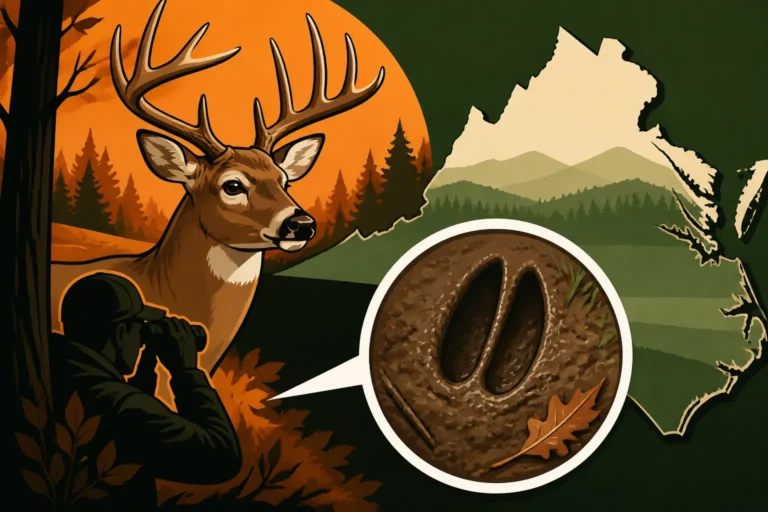
Before you even step foot near the corn, get to know the lay of the land from above. Tools like GoHunt, or even the Virginia DWR mapping tool, are invaluable for this. Look for property lines, but also identify key features within and around the cornfield. Are there waterways, power lines, or old farm roads cutting through it? These often serve as natural travel corridors or pinch points where deer traffic might be concentrated. Examine the field edges for adjacent timber, fence lines, or drainages that could funnel deer movement. Once you've got a good aerial overview, it's time for on-the-ground reconnaissance, ideally before the season opens, but even a few days before your hunt can make a difference. Walk the perimeter of the field, looking for fresh tracks where deer are entering and exiting. Pay close attention to corners, low spots, or where the corn meets other cover like a wood line or a creek bottom. Fresh droppings are a dead giveaway of recent activity. You might even find rubs and scrapes along the edges, indicating where bucks are marking their territory before heading into the corn. This kind of diligent scouting, whether in standing corn or in an adjacent Hunting a Funnel Between Two Hollows, will give you the intel you need to formulate a plan.
The Importance of Wind and Thermals
In a cornfield, the wind isn't just a factor; it's the factor. The tall stalks can create swirling, unpredictable air currents, making wind direction even more critical than in open timber. Deer rely heavily on their sense of smell for survival, so always, always approach and hunt a cornfield with the wind in your favor. This means planning your entry and exit routes meticulously to avoid busting deer. If the wind is coming from the west, you want to approach from the west, keeping your scent blowing away from where you expect deer to be. Consider how thermals will affect scent distribution, especially during the morning and evening. In the mornings, rising thermals will carry your scent upwards, while falling thermals in the evening will push it down. These dynamics are critical in areas like the Virginia Piedmont, where subtle elevation changes can dramatically affect scent cone. A common mistake is to hunt a field edge with a steady wind, only to have a thermal shift at midday, sending your scent swirling into the corn. Being aware of these shifts can make or break your hunt, much like when you're Wind and Thermals on a Blue Ridge Slope.
Effective Hunting Tactics for Standing Corn
Once you’ve done your homework, it’s time to put boots on the ground. Hunting standing corn requires a unique blend of stealth, patience, and sometimes, the willingness to adapt your approach to match the challenging environment.
Still-Hunting the Edges and Interior
Still-hunting is a highly effective, yet incredibly difficult, tactic in standing corn. The goal is to move as slowly and quietly as possible, pausing frequently to listen and scan. On the edges, this means hugging the treeline or brush, peeking into the corn where breaks allow. When still-hunting the interior, you'll need to navigate the dense stalks. This is where those internal travel lanes you identified during scouting become crucial. Focus on moving parallel to the rows, or along any natural breaks like ditches, old fence lines, or even areas where the corn might be thinner. The challenge is immense: visibility is often limited to mere yards, and the sound of rustling stalks can mask deer movement or give away your own. You'll need to develop an almost hyper-aware sense of hearing, distinguishing between natural field noises and the subtle sounds of a deer moving. This isn't a tactic for the impatient; success comes from extreme patience and an ability to pick apart the small details, similar to the quiet approach required when Still-Hunting Jefferson Forest Ridges.
Strategic Stand Placement and Ambush Points
For many, the most effective way to hunt standing corn is from a stand, focusing on the deer's entry and exit points. After all, eventually, they have to leave that corn. Look for trails that lead directly into or out of the field, especially those that connect to dense cover or other food sources. These are prime ambush points. Consider setting up where a ditch or a small creek forms a natural funnel, forcing deer into a narrower pathway. A classic spot is where a point of timber juts out into the cornfield, or where the corn transitions into a different type of cover, like a patch of Piedmont Broomsedge Fields. Elevated stands, like a ladder stand or a hang-on stand, offer a significant advantage, allowing you to see over the corn a bit, giving you a better view of moving deer and helping to keep your scent dispersed above their noses. Ground blinds can also be effective, especially if brushed in naturally along a thick edge, but you lose the elevation advantage. Remember to always consider your entry and exit routes to and from your stand, ensuring you don’t spook deer on the way in or out.
The Art of the Cornfield Drive
Sometimes, when deer are simply refusing to leave the corn, a carefully planned drive can be the most effective, albeit challenging, tactic. This is not a solo endeavor; it requires a team of hunters, clear communication, and a strong emphasis on safety. Typically, some hunters (pushers) slowly walk through the corn, attempting to push deer out towards other hunters (standers) positioned on the edges or at known escape routes. The key is for pushers to move at a slow, deliberate pace, giving deer time to react and move, rather than simply blowing them out of the field. Standers need to be acutely aware of their surroundings and safe shooting lanes. Communication is paramount – two-way radios can be a lifesaver here, allowing the team to coordinate movement and alert others to deer sightings. Before any drive, discuss the deer's likely escape routes. Do they tend to cut across to another woodlot, or will they follow a creek bottom? Understanding the adjacent cover and natural funnels, much like you would when planning Deer Drives With Three or Four Hunters, is critical for positioning standers effectively. Safety is non-negotiable, and every participant must be aware of their firing zones and the location of fellow hunters.
Overcoming Challenges and Maximizing Success
Hunting standing corn is not without its difficulties. The very characteristics that make it attractive to deer also make it a formidable environment for hunters.
Dealing with Limited Visibility and Sound
The most glaring challenge in a cornfield is the extreme lack of visibility. You often can't see more than a few yards in any direction, making it incredibly difficult to spot deer before they spot or smell you. This also means judging distance for a shot can be tricky. Combine this with the constant rustling sound of the cornstalks, especially on a breezy day, and your auditory senses are constantly under assault. It’s hard to hear a deer moving when the entire field sounds like it's alive. To counter this, move at an almost glacial pace, stopping every few steps for extended periods (5-10 minutes) to just listen. Use your eyes to pick apart any subtle changes in the texture or movement of the stalks ahead. This is where quality optics, even small binoculars, can help if you get a momentary glimpse. Scent control is also paramount. Even if you're covered visually and audibly, a slight wind shift can ruin your hunt if your scent isn't managed. Wearing quiet clothing and comfortable, soft-soled boots is also key to minimizing noise and maximizing your chances of hearing any faint deer movement.
Post-Shot Tracking in Thick Cover
Let's say you've done everything right: you've scouted, you've planned, you’ve made a clean shot. Now comes the next hurdle: tracking a deer in a standing cornfield. This can be one of the most difficult blood-trailing scenarios you'll ever face. The dense vegetation and often soft, tilled soil make finding blood extremely challenging. The corn leaves themselves can "wipe" blood off a deer's body as it runs, leaving a sparse trail. It's crucial to mark the exact spot where the deer was standing when you shot it and the last spot you saw it disappear. Use flagging tape or a bright marker to denote these points. If you have a tracking app like GoHunt on your phone, use it to drop pins and create a detailed path. When you begin tracking, move slowly, looking for even the smallest speck of blood on the ground, on cornstalks, or even on the underside of leaves. Grid searches, with multiple people walking parallel lines a few yards apart, are often necessary. If available and legal in Virginia, a trained tracking dog can be an absolute game-changer in a cornfield, significantly increasing your recovery odds. Remember, patience is key. Don't rush, and if the trail is difficult, back out and give the deer time, especially if the weather is cool. This is a scenario where having a plan for Blood Trailing After Dark in Virginia might become necessary.
| Tactic | Pros | Cons | Best Use Case |
|---|---|---|---|
| Still-Hunting | Highly mobile, covers a lot of ground, good for finding bedded deer | Extremely difficult in dense corn, poor visibility, high scent risk | Scouting, low-pressure situations, smaller cornfields |
| Stand Placement | Excellent visibility over edges, reduces scent cone, ambushes deer | Requires pre-scouting, less mobile, deer may stay deep in corn | Known travel corridors, field edges, funnels |
| Cornfield Drive | Effective for pushing deer out, can cover large areas | Requires multiple hunters, high safety risk, deer can be missed/blown | Large fields, high deer density, last resort tactics |
Disclaimer
Hunting is an activity that carries inherent risks. Always prioritize safety, understand and follow all Virginia Department of Wildlife Resources (DWR) regulations, and obtain appropriate licenses and permits. This guide is for informational purposes only and does not substitute for proper hunter education or professional guidance.