Reading a Bay Marsh for a Morning Flight
Trying to hunt ducks in a Virginia bay marsh can feel like trying to solve a riddle written in mud, water, and wing beats. You've got tides pushing and pulling, winds shifting, and ducks seemingly appearing out of nowhere or vanishing just as quickly. It's frustrating when you spend hours setting up, only for the birds to skirt your spread and land just out of range. This guide is all about helping you decode the bay marsh, understand how ducks use it, and position yourself for those incredible morning flights.
The Tidal Dance: Understanding Water Movement
The bay marsh is a living, breathing entity, and its rhythm is dictated by the tides. Ignoring this fundamental force is like trying to hunt deer without knowing when the rut hits – you're just missing a huge piece of the puzzle. Understanding how water levels shift and how currents and wind play into it is absolutely crucial for consistent success on the water.
High Tide's Bounty and Low Tide's Secrets
Imagine the marsh as a giant buffet, constantly changing its layout. At high tide, vast new feeding grounds become accessible. These are often shallow mudflats, submerged vegetation beds, and oyster reefs that were exposed or too shallow just hours before. Puddle ducks like mallards, black ducks, and widgeon will readily move into these newly flooded areas to dabble for seeds, aquatic plants, and invertebrates. They spread out, finding ample food sources, which can make them harder to concentrate.
As the tide begins to fall, those expansive feeding flats slowly drain. The ducks that were happily splashing around suddenly find their dinner disappearing. This is when they start to move, often heading towards deeper channels, creeks, or larger open water bodies where food might still be available or where they can simply rest. This is also when divers, like scaup and canvasbacks, become more active, feeding on beds of submerged aquatic vegetation that might be easier to access in slightly deeper, but still relatively shallow, water. For a hunter, understanding this transition point – when the ducks are forced to move – is absolutely golden. You might find great success setting up on a creek edge as the tide drops, knowing the birds will funnel into that deeper water. Conversely, a rising tide might push birds out of those channels and onto the newly covered flats. It’s a constant chess match, and knowing the tide charts for your specific area, whether it's near the Hunting the Eastern Shore Marsh or deeper into the Chesapeake, is your first move.
Currents, Wind, and Their Influence on Flight Paths
Beyond just the water level, the movement of the water itself – the current – and the wind above it are major players in the bay marsh game. Strong tidal currents can be a real headache when you're trying to set out a perfect decoy spread. Your meticulously placed blocks can get strung out, tangled, or even pulled under if not properly weighted and rigged. This is where heavier keel weights or anchor lines come in handy, especially when hunting areas with strong flows like those found around the larger tributaries flowing into the Bay. The current also dictates how ducks will often position themselves, especially when feeding or loafing. They'll typically face into the current, similar to how they face into the wind, as it provides stability and helps them take flight more easily.
Wind, however, is arguably the most dominant factor for waterfowlers. Ducks, like all birds, are incredibly sensitive to wind direction and speed. They almost always land and take off into the wind. This natural behavior means that your blind setup and decoy spread must account for the prevailing wind on the day of your hunt. If the wind is coming from the north, ducks will approach from the north and want to land facing north. Your blind should be positioned downwind of your decoys, allowing the birds to commit to the spread while giving you an optimal shot as they cup their wings for landing. A crosswind can be tricky, often leading birds to land just to one side of your spread. Understanding these dynamics is paramount to setting up a successful kill hole. Whether you're trying to lure in a flock of bluebills or a pair of black ducks, the wind will literally guide their flight path directly to or away from your setup.
Decoding the Marsh Landscape
Once you grasp the tidal flow and wind, the next step is learning to read the actual physical landscape of the marsh. It’s not just a uniform expanse of water and grass; it’s a mosaic of different habitats, each with its own appeal to various waterfowl species. Learning to identify these distinct features is like having a secret map to where the ducks want to be.
Spotting Prime Foraging Grounds
Ducks are, first and foremost, eaters. Their entire existence revolves around finding enough food to fuel their incredible migrations and daily activities. In the bay marsh, prime foraging grounds often manifest as vast beds of submerged aquatic vegetation (SAV), shallow mudflats rich with invertebrates, and oyster or clam beds. Different species have different culinary preferences. Puddle ducks, like the aforementioned mallards and black ducks, often favor shallow flats with abundant seeds from marsh grasses or aquatic plants. They'll dabble and tip up in water just a few inches to a foot or two deep. You'll often see the tell-tale signs of their feeding: muddy churned water, or if you're scouting, even plucked vegetation floating on the surface.
Diving ducks, on the other hand, go for deeper treasures. They're after snails, mussels, and those juicy SAV roots and tubers. Canvasbacks are famous for their love of wild celery, while scaup will dive for small crustaceans and mollusks. Spotting these areas means looking for healthy patches of grass growing underwater, or areas with established oyster beds. When scouting, pay close attention to the species of ducks you're seeing and try to identify what they're doing. Are they tipping up? Are they diving repeatedly in one spot? Are they flying a distinct pattern from one area to another? Sometimes, the best way to find these spots is to simply get out there at low tide in the off-season and look for exposed mudflats that show signs of previous feeding. The GoHunt app can be incredibly useful for studying aerial imagery, identifying lighter colored patches that might indicate submerged grass beds, or darker, muddier areas that suggest soft bottom for dabblers. This kind of detailed scouting, looking for the very specific foods ducks are targeting, is what separates the consistently successful hunters from those who just hope for the best.
Identifying Safe Havens: Roosts and Loafing Areas
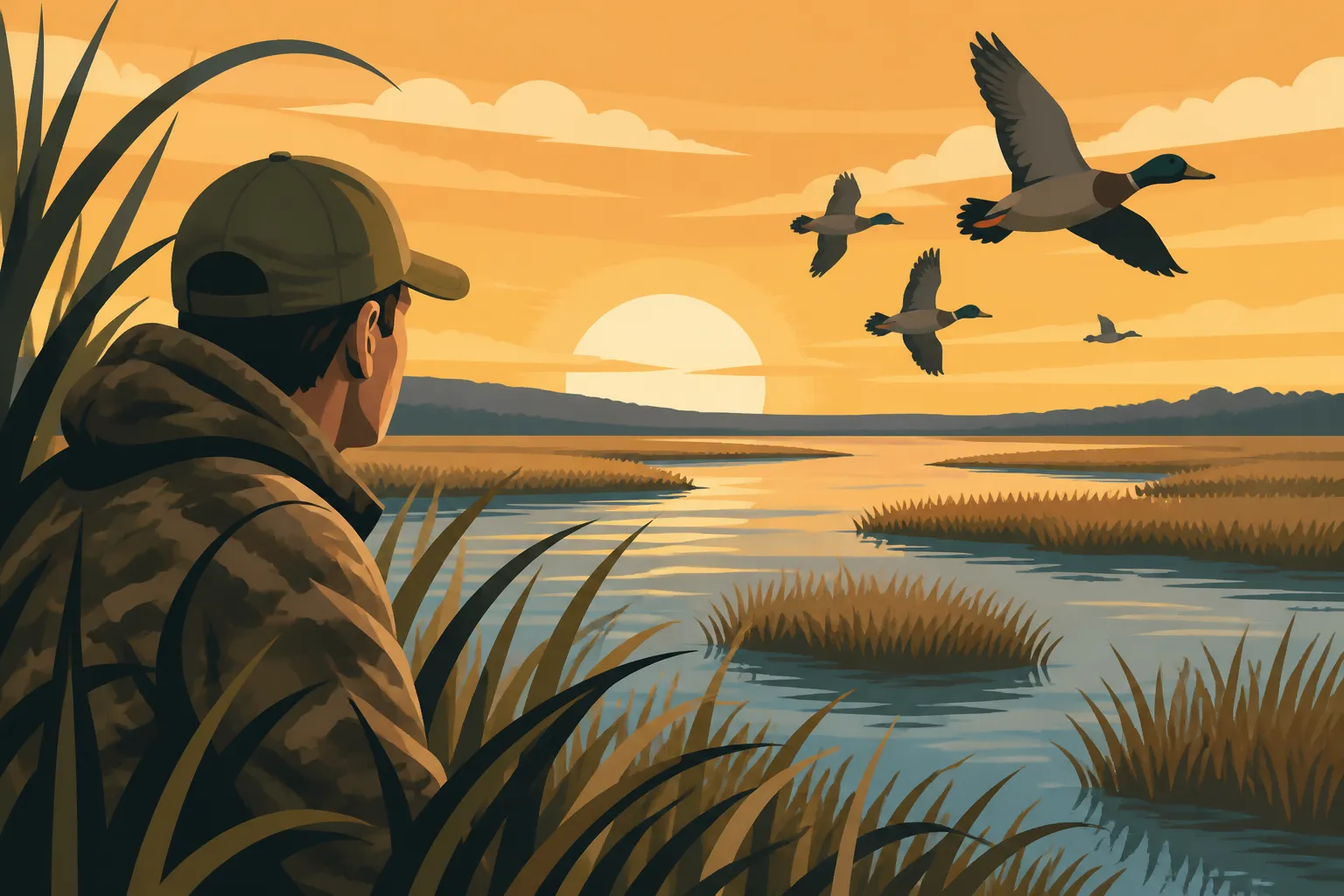
Ducks don't spend all their time eating. They also need places to rest, preen, and feel secure. These "safe havens" are just as important to identify as feeding grounds. Roosting areas are typically secluded, undisturbed stretches of open water, often surrounded by dense marsh grass or small islands that offer protection from predators and human disturbance. Ducks will fly to these areas at dusk and spend the night, departing at dawn for their feeding grounds. Observing these morning departure flights can give you invaluable intel on their general direction of travel.
Loafing areas, on the other hand, are spots where ducks gather during the day to rest between feeding sessions. These might be slightly elevated mudflats, sandbars, or quiet pockets of open water shielded from strong winds and currents. They're often close to feeding areas but offer a sense of security. If you see a large raft of ducks loafing in a particular spot, that tells you it's a place they feel comfortable and safe. The challenge is often that these areas are precisely where you can't hunt without disturbing a large number of birds. However, understanding their location is critical because it reveals their daily commute patterns. Ducks will often fly from a specific roost to a specific feeding ground, perhaps stopping at a loafing spot in between. Your goal is to intercept them along that flight path. Think about where these birds would travel if they were to leave a secure roost to head for a productive feeding flat. These are often natural funnel points, like narrow channels between islands or points of land. Knowing the general direction of travel from a known roost or to a known feeding area can help you strategically place your spread.
The Role of Natural Cover and Structure
Beyond just food and rest, the physical structure of the marsh plays a huge role in how ducks navigate and feel secure. Dense stands of marsh grass, particularly species like spartina or phragmites, provide crucial cover. This isn't just for hiding from predators; it also offers protection from harsh winds and can create natural windbreaks or funnels for flight paths. Ducks often prefer to fly along the edges of these dense cover areas, offering a defined travel lane.
Other structures, like small islands, old duck blinds, or even subtle changes in bottom contour, can act as reference points for flying birds. A slight bend in a creek or a prominent point of land can become a predictable turning point for ducks as they navigate the marsh. When you're Scouting Virginia Public Land Before Season, use tools like GoHunt or other mapping applications to identify these structural elements. Look for narrow channels that might funnel birds, points of land that break up open water, or areas where dense vegetation meets more open water. These are the natural ambushes the marsh provides. Understanding how a flock of birds might utilize a long point of marsh grass as a windbreak before committing to your Decoy Spreads for Chesapeake Bay Divers can be the difference between a successful hunt and watching them flare.
Crafting Your Morning Flight Strategy
Once you’ve put in the time to understand the tides, currents, wind, and the topography of your chosen marsh, it’s time to translate that knowledge into a concrete hunting strategy. This isn’t just about throwing out some decoys; it’s about creating an illusion, a safe and inviting landing strip for weary birds.
Optimal Blind Placement and Concealment
Your blind placement is arguably the most critical element of your setup. Remember, ducks are incredibly sharp-eyed. They've spent their lives avoiding predators, and anything that looks out of place will send them flaring. The golden rule is to be concealed and to position yourself with the wind at your back or slightly to your side. This allows ducks to approach your decoy spread into the wind, presenting them for an optimal shot as they hover or cup their wings to land. If the wind is at your face, birds will approach from behind you, making for awkward shots and potential visibility issues.
Natural cover is always your best friend. Look for dense marsh grass, a cluster of cedars on a small island, or even an old, well-weathered stump to set up against. If you're using a portable blind, ensure it's thoroughly brushed in with local vegetation. Don't just throw some grass on top; truly integrate it into the environment. Think about your silhouette against the sky, especially at first light. A silhouette against a bright horizon is a dead giveaway. Consider using a layout blind if you're hunting open mudflats or fields adjacent to the marsh. For more mobile hunters tackling various spots, a simple low-profile hide or even just laying prone in thick cover can be incredibly effective. Remember the sun, too. In the morning, if you can position yourself so the rising sun is behind you, it will be in the ducks' eyes as they approach, making it harder for them to spot you. It's all about becoming a ghost in the marsh.
Designing Effective Decoy Spreads for Bay Birds
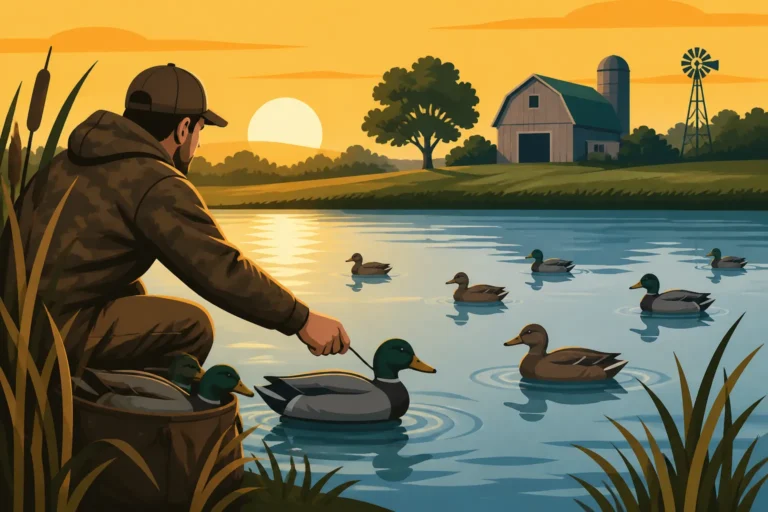
Decoy spreads are an art form, especially in the variable conditions of the bay marsh. You're not just putting out plastic birds; you're creating a convincing scene of security and abundance. The type and number of decoys will depend heavily on the species you're targeting and the amount of competition or hunting pressure the area sees. For Waterfowl Hunting the Chesapeake Bay, you'll likely encounter a mix of puddle ducks and divers. A "mixed spread" is often effective, incorporating both.
- Puddle Duck Spreads: For mallards, black ducks, and widgeon, focus on creating a natural-looking feeding flock. Often, a loose "J" or "U" shape with an open landing zone (the "kill hole") upwind of your blind works well. Include some active feeder decoys (those with their heads down) to simulate contented feeding. Motion decoys, like spinning wing models or jerk cords, can add a lot of realism, especially on calm days.
- Diving Duck Spreads: Divers tend to raft up in larger groups. A tighter, more concentrated spread, sometimes in a line or large blob, can work. You'll want to use larger decoys, as divers are often bigger birds than puddle ducks, and they want to see other divers. Consider species-specific decoys for canvasbacks, redheads, or bluebills if you know they are in the area. For areas like the Eastern Shore, where diver hunting can be phenomenal, large spreads of 50-100 decoys are not uncommon. Always remember to allow for that clear landing zone where birds can comfortably commit.
The most important thing is realism and dynamism. Mix up your decoy positions, use different postures, and ensure they're riding naturally on the water. Check your lines and anchors to prevent tangles and ensure your spread looks inviting, not chaotic, especially when dealing with the currents you might find on a typical morning flight.
Mastering the Art of Calling for Marsh Success
Calling is a nuanced skill that can either seal the deal or send birds packing. In the marsh, you're not always dealing with the same acoustics as in a timber hole. Sounds carry differently over open water and through dense reeds. The key is often to call less, and more realistically, especially on pressured birds.
- Puddle Duck Calling: For mallards and black ducks, a soft greeting call, a few contented quacks, and perhaps a chuckle feed call can be very effective. Avoid aggressive, loud calling unless the birds are at a great distance and need a firm "turn." The goal is to sound like happy, relaxed ducks. If birds are working your spread, scale back the calling. Let the decoys do the heavy lifting.
- Diving Duck Calling: Diver calling is a completely different ball game. Often, it's about sound rather than mimicry. A simple whistle for widgeon or a soft, guttural "burr" for canvasbacks can sometimes work, but often, divers are more attracted to the sight of a large, contented raft of their own kind. It's more about visual appeal than vocalizations for many diver species.
Pay attention to how the ducks respond. If they shy away, you're calling too much or too aggressively. If they look interested but don't commit, a few soft clucks or a whistle might be all it takes. Remember, often the best call is no call at all when birds are locked on your spread and wings are cupped. Practice makes perfect, and listening to live birds is the best teacher. This also ties into the general management and behavior of different waterfowl species, including details like Virginia Duck and Goose Bag Limits for what you can expect to harvest.
Adapting to the Unpredictable Bay
Hunting the bay marsh means embracing unpredictability. No two days are ever exactly alike, and the conditions can shift on a dime. The most successful waterfowlers are those who can read these changes and adapt their strategy on the fly. It's a continuous learning curve, but it's also what makes marsh hunting so incredibly rewarding.
Weather Fronts, Barometric Pressure, and Duck Behavior
The weather is perhaps the most significant external factor influencing duck behavior. A strong cold front pushing through Virginia can bring a fresh wave of migratory birds down the Atlantic Flyway. These "new" birds are often less wary and more aggressive to decoys, having just completed a long journey. Hunting immediately after a cold front passes, especially with clearing skies and a stiff northwesterly wind, can be absolutely phenomenal. The birds are hungry, tired, and looking for new, safe places to feed and rest.
Conversely, stable, high-pressure systems can sometimes lead to slower hunting, as birds are well-rested and less inclined to move or feed aggressively. A slow, drizzly day with low pressure can sometimes get birds moving, but they might fly lower and stick tighter to cover. Barometric pressure changes, though often subtle, do affect waterfowl. A falling barometer often precedes a storm, and ducks might feed heavily before it hits. A rapidly rising barometer after a storm might see them moving to new feeding grounds. Keep an eye on the forecast, but also develop a gut feeling for how the conditions are affecting the birds on a given day. Sometimes, an unexpected shift in wind or an approaching rain shower will suddenly flip a slow morning into a flurry of activity. Understanding these broader weather patterns is crucial for planning when and where to focus your efforts in relation to Virginia Waterfowl Migration Timing.
Post-Hunt Analysis and Continuous Learning
Every hunt, whether successful or not, is an opportunity to learn. This is where truly dedicated hunters excel. Don't just pack up and go home; take a moment to reflect. What worked? What didn't? Why did those ducks flare at 60 yards? Was it the sun? Your blind? Your calling? The way your decoys were set in the current?
Keep a detailed hunting journal. Note the date, time, weather conditions (wind, temperature, precipitation), tide stage, the species of ducks you saw, what they did, and where they went. Draw simple diagrams of your decoy spread and blind setup. Over time, you'll start to see patterns emerge. You might notice that a particular spot is only good on a falling tide with a southwest wind, or that black ducks prefer a specific kind of marsh grass. Use mapping tools like GoHunt to mark successful spots, observed flight paths, and even where birds landed outside your spread. This digital record-keeping allows you to build a comprehensive knowledge base of your hunting areas.
The bay marsh is a complex ecosystem, and truly "reading" it is an ongoing process. It requires patience, keen observation, and a willingness to adapt. Each season brings new challenges and new opportunities. By continuously observing, analyzing, and adjusting your approach, you'll steadily improve your understanding of the bay marsh and increase your chances of experiencing those unforgettable morning flights. Before you head out, make sure you're familiar with all the relevant rules, including Virginia Duck Zone Boundaries so you know which regulations apply to your specific hunting location.
Disclaimer
Hunting is an inherently dangerous activity. Always prioritize safety, follow all local and state regulations, and ensure you have the proper training and licensing before heading into the field. This guide is for informational purposes only and does not supersede official Virginia Department of Wildlife Resources (DWR) regulations.