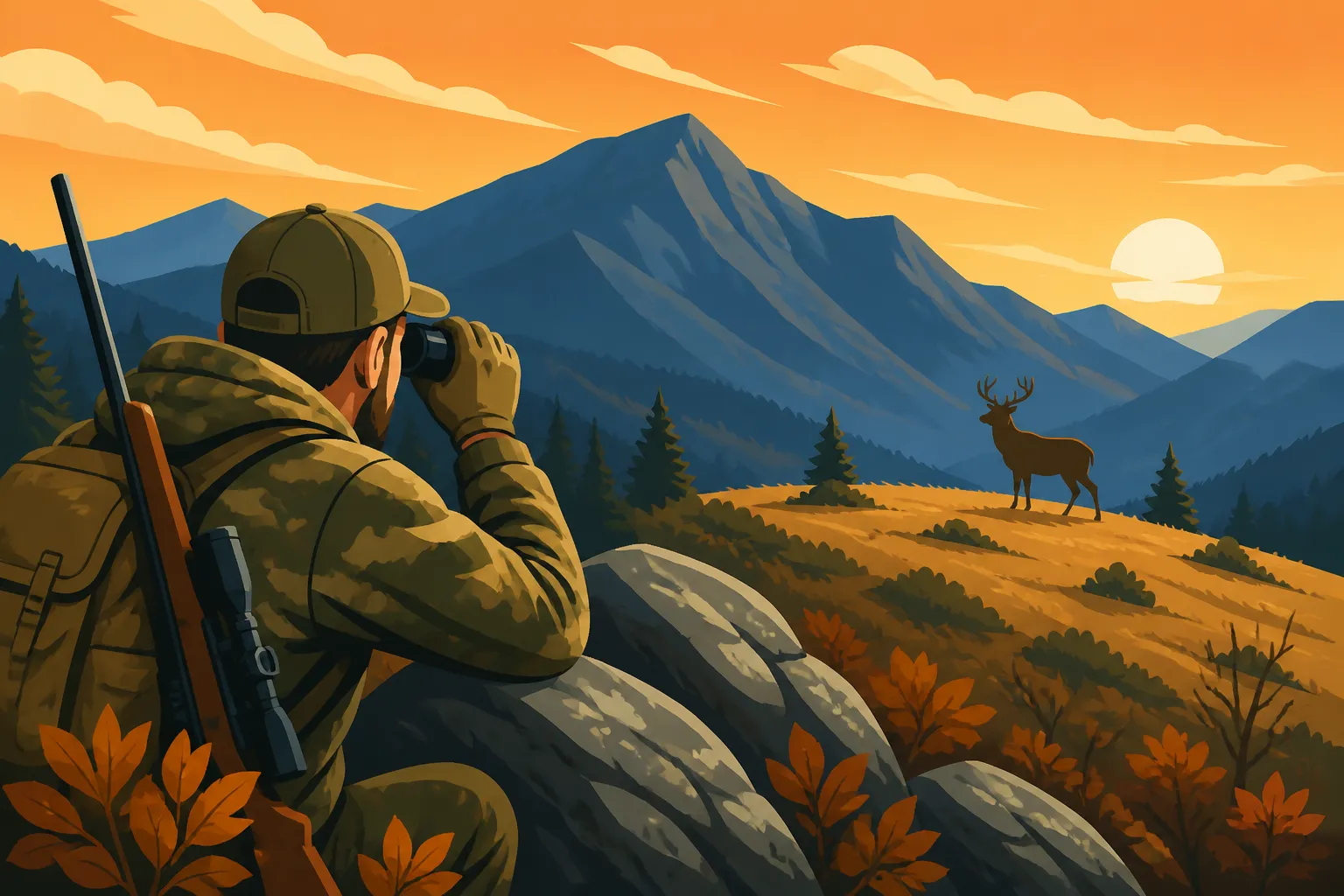
Hunting a High Elevation Mountain Bench
You've been putting in the miles, climbing those steep Virginia mountain faces, only to wonder if the deer are even up there. The frustration is real when you're looking at a sea of timber, trying to pinpoint where those elusive mountain whitetails might actually be traveling or bedding. This guide is all about cutting through that uncertainty, showing you exactly how to identify, scout, and successfully hunt those hidden high elevation mountain benches that often hold the biggest, oldest bucks in the Blue Ridge and beyond.
What Makes a High Elevation Mountain Bench So Special?
Let's be honest, hunting Virginia's mountains can be a brutal endeavor. The steep inclines, the thick cover, the sheer vastness of places like the George Washington National Forest or the Jefferson National Forest – it's enough to make anyone feel like they're just wandering aimlessly. But there are distinct features in this challenging landscape that offer deer predictable travel routes, bedding areas, and feeding opportunities. Among the most overlooked and productive are high elevation mountain benches. These aren't just random flat spots; they're subtle, often horizontal strips of relatively flatter ground that interrupt the otherwise steep slopes. They can be narrow, barely a game trail wide, or broad enough to hold acres of mature timber, but their value to deer is immense.
The Anatomy of a Deer Highway in the Mountains
Think of a mountain bench as a natural shelf or terrace carved into the hillside. It's a geological pause, a less arduous path for a deer to navigate a steep mountain face. Instead of constantly climbing or descending at a severe angle, deer can travel horizontally for significant distances along these benches with much less effort. This makes them absolute magnets for deer movement, especially during the rut when bucks are cruising for does, or anytime deer need to conserve energy moving between different parts of their home range. They’re often found just below ridgelines, or sometimes as a series of steps down a mountain.
These benches are prime locations because they naturally funnel deer movement. Imagine a buck scent-checking a ridge. He's not going to climb straight down and straight back up if he can skirt the mountain horizontally. These benches become his highways. They provide cover, often holding denser stands of timber or thick undergrowth right along their edges, giving deer a sense of security as they travel. They also create thermal hubs, pockets where rising or falling air currents might swirl, offering a deer a distinct advantage in detecting danger.
Why Deer Gravitate to These Features
Deer are creatures of efficiency and safety. High elevation mountain benches provide both in spades. First, they offer easier travel. A mature buck might cover significant ground along a bench in a single night, checking for scrapes, rubs, or does without expending the energy required to traverse truly rugged terrain. This becomes even more critical during the lean late season when energy conservation is paramount. You can observe this phenomenon by looking at the worn paths along these benches – they're often much more defined than trails on the steeper slopes.
Secondly, benches frequently serve as bedding areas or staging points. Deer love to bed where they can see, smell, and hear potential threats from multiple directions. A bench, especially one with good cover and perhaps a slight rise on the downhill side, offers exactly that. A deer bedded on a bench might have a commanding view of the slope below, while relying on the wind and thermals drifting up or down the mountain to detect anything approaching from above. Often, these benches are just below a primary food source on the ridge or above a water source in a hollow, making them perfect transitional zones for deer moving between feeding and bedding, especially during the low-light hours of dawn and dusk. This makes them key spots if you're trying to figure out Where George Washington Forest Bucks Bed.
Mastering the Art of Scouting High Elevation Benches
Hunting these high elevation mountain benches effectively starts long before the season opens, and certainly before you step foot in the woods with your bow or rifle. It begins with meticulous scouting, both from the comfort of your home and with plenty of boot leather on the ground. You need to become intimately familiar with the terrain, understand the subtleties, and pinpoint the exact locations where deer are most likely to travel and congregate.
Digital Reconnaissance with Topo Maps and Aerials
Your first step should always be with good mapping software. Services like GoHunt are invaluable for this. Fire up your computer and start pouring over the topographic maps of your target area, whether it's public land in the Jefferson National Forest or a piece of private ground you've gained access to. Look for contour lines that "flatten out" or widen on an otherwise steep slope. These wider gaps in the contour lines, often running horizontally or at a slight angle across the hillside, are your benches. They might be subtle, but a keen eye can spot them.
Overlaying aerial imagery is crucial. Once you've identified potential benches on the topo map, switch to the satellite view. Look for changes in vegetation density or type along these benches. Sometimes, benches hold different types of trees or undergrowth than the surrounding steep slopes, indicating better soil, water retention, or simply an older stand of timber. Pay attention to how these benches connect to other features like saddles, points, or draws. These connection points are often pinch points for deer movement, creating natural funnels. Identify several potential benches and their access points. This digital groundwork is a key part of Scouting Virginia Public Land Before Season.
Interpreting Ground Sign and Terrain
While maps can give you a blueprint, nothing beats putting boots on the ground. Once you’ve identified promising benches digitally, it’s time to explore them. The goal is to confirm your map findings and to discover fresh deer sign that reveals current deer usage. Walk the length of these benches. Look for well-worn deer trails, fresh tracks in the mud (especially after rain), and recent droppings. Don't just look on the bench; investigate the edges. Sometimes the heaviest sign will be found where the bench transitions into steeper ground, or where cover changes.
Look for rubs on trees, particularly on the edges of heavier cover. Bigger rubs on larger trees indicate mature buck activity. Scrapes, though less common on travel routes than in bedding or feeding areas, can still appear, especially if the bench provides good cover and a consistent wind. Pay attention to how deer are accessing the bench from above and below. Are there distinct trails leading up to a ridge or down into a hollow? These are critical entry and exit points you'll want to note. Finding fresh sign in big timber, like you would when Finding Sign in Big Jefferson Forest Timber, will tell you if the bench is actively used. When you're in the mountains, especially during colder weather, be sure to note any natural food sources on or near the bench, such as acorns, mountain laurel, or other browse that deer might be targeting.
Strategic Approaches to Hunting High Elevation Benches
So, you’ve done your homework, scouted the benches, and confirmed deer activity. Now comes the exciting part: actually hunting them. Because of the unique characteristics of mountain benches, your tactics need to be precise and well-thought-out. The goal is to intercept deer without alerting them to your presence, which means paying close attention to your movement, scent, and understanding of the wind and thermals.
Still-Hunting the Bench Edges
One of the most effective ways to hunt high elevation mountain benches, especially if they are long and winding, is still-hunting. This method involves moving very slowly, taking a few steps, then pausing for several minutes to observe, listen, and scan your surroundings. The key is to blend in with the environment, becoming part of the forest. When still-hunting a bench, focus on the edges where the relatively flat ground meets the steeper slopes. This transition zone is where deer are most likely to be moving, browsing, or even bedded.
Move into the wind or with a quartering wind, always being mindful of where your scent is going. Use the terrain to your advantage: duck behind large trees, move slowly over noisy leaves, and use binoculars to pick apart the cover before taking another step. This is a lot like Still-Hunting Jefferson Forest Ridges, where patience and careful movement are rewarded. Pay close attention to subtle movements, an ear flick, a horizontal line in the vertical timber, or the flash of a white tail. The beauty of still-hunting is that it allows you to adapt to changing conditions and follow fresh sign as you encounter it, covering more ground than a stationary stand while still being highly attentive.
Stand Placement for Overlooking Travel Corridors
For benches that show consistent, heavy use, a well-placed treestand or ground blind can be deadly. When choosing a stand location, you're looking for a spot that offers good visibility of the bench itself, as well as any intersecting trails or funnels leading to or from it. Often, the best stand locations are slightly off the main bench, perhaps on a smaller finger ridge or a point that allows you to overlook a longer stretch of the bench without being directly on top of it. This helps keep your scent out of the main travel corridor.
Consider your entry and exit routes carefully. You need to be able to get to and from your stand without spooking deer on the bench. This might mean using a different ridge system or approaching from an unexpected angle. When setting up a stand, remember the principles of Treestand Setups in George Washington National Forest. You want cover behind you to break up your silhouette, and enough height to get above a deer's line of sight and smell. If a ground blind is your preference, ensure it's well-brushed in and allows for quiet, concealed movement. Placing a camera near your potential stand site on a logging road or prominent trail leading to the bench can give you invaluable insight into deer travel times and patterns before you commit to a long sit.
Mastering Wind and Thermals
In the mountains, wind and thermals are your ultimate hunting partners, or your worst enemies. On high elevation benches, understanding how air currents move is paramount. In the mornings, as the sun rises and warms the earth, thermals will typically rise up the mountain. This means your scent will be carried upwards. In the evenings, as the air cools, thermals will fall down the mountain, carrying your scent downwards.
However, benches can create their own micro-thermals and swirling winds. The relatively flat surface can cause air to eddy or hold, making scent unpredictable. Always factor in the prevailing wind direction, but be prepared for thermals to override it at certain times of day. For example, if the wind is blowing across the mountain, but it's early morning, thermals might still carry your scent uphill, creating a complex challenge. Your best bet is to understand these patterns and try to hunt when the wind and thermals are consistently in your favor, blowing your scent away from where you expect deer to be. This deep understanding of Wind and Thermals on a Blue Ridge Slope is crucial for success. If you're on a bench in the mid-morning, expecting deer to move into bedding, you might position yourself with your scent blowing downhill, catching any deer moving up. In the evening, reverse that, positioning for your scent to blow uphill as deer drop down.
Key Considerations for Mountain Bench Hunting
Hunting high elevation mountain benches isn't just about identifying the spot and setting up; it's about a holistic approach that takes into account the time of year, weather conditions, hunting pressure, and the specific gear you’ll need to navigate this challenging terrain. Success often hinges on adapting to these variables.
Seasonal Nuances and Deer Behavior
The effectiveness of hunting high elevation mountain benches can vary significantly depending on the season. During the early archery season, when temperatures are still warm, deer might use benches primarily for travel between distant feeding and bedding areas, especially under the cover of darkness. As the rut approaches in October and November, these benches become prime cruising routes for bucks scent-checking for does. This is a fantastic time to be on a bench, as bucks are less cautious and more focused on breeding.
Later in the season, particularly when snow covers the higher elevations, deer might shift their patterns. They might still use benches, but they'll often prioritize areas with consistent food sources that are easier to access. This means if your bench has a good acorn crop or specific browse, it can remain a hot spot. Otherwise, deer might move to lower elevations or south-facing slopes that get more sun. When sitting for long periods in the mountains during colder weather, developing a Cold-Weather Sitting Strategy in the Mountains is essential to avoid cutting your hunt short.
Gear Up for Mountain Terrain
Hunting mountains demands specific gear that can withstand the rigors of the terrain and weather. Here’s a quick rundown of essential items:
| Category | Item | Why It's Essential for Bench Hunting |
|---|---|---|
| Navigation | GPS Unit or Robust Phone App (GoHunt) | You will get turned around on a mountain. A reliable GPS helps identify benches, mark stand locations, and navigate off-trail. |
| Footwear | Sturdy, Waterproof Hiking Boots | Essential for traction on steep, uneven terrain and keeping your feet dry in damp conditions. Good ankle support is non-negotiable. Refer to Boots for Virginia Swamps and Ridges for further guidance. |
| Clothing | Layered System | Mountain weather changes rapidly. Layers allow you to adapt to temperature fluctuations, from a chilly predawn climb to a warm midday still-hunt. |
| Optics | Quality Binoculars (8x or 10x) | Vital for spotting deer through thick timber from a distance, or picking apart cover while still-hunting. |
| Pack | Comfortable Day Pack | You'll be carrying water, snacks, extra layers, first-aid, and your game processing kit. A good pack, like those mentioned in Packs for a Jefferson Forest Day Hunt, distributes weight effectively for long hikes. |
| Safety | First-Aid Kit, Headlamp, Fire Starter | Emergencies happen. A reliable light source for walking out after dark and basic survival gear are non-negotiable. |
Don't skimp on quality for these items. A busted boot or a dead phone battery can turn a productive hunt into a dangerous ordeal in the backcountry. Always carry enough water, even on cold days, and have a plan for communication, especially if you're hunting alone.
Remember, high elevation mountain benches are not secret spots that only a few know about. They are natural features that savvy hunters have learned to identify and exploit for generations. With diligent scouting, a deep understanding of deer behavior, and a commitment to strategic hunting, you can unlock some of the most rewarding and challenging hunting experiences Virginia’s mountains have to offer.
Disclaimer
Hunting is an inherently dangerous activity. Always prioritize safety, understand and adhere to all Virginia Department of Wildlife Resources (DWR) regulations, and obtain proper licenses and permits before heading afield. The information provided here is for educational purposes only and should not replace professional guidance or personal judgment.