Hunting Shenandoah Valley Farmland
Hunting the Shenandoah Valley's rich farmlands for deer can be one of the most rewarding, yet frustrating, endeavors for any Virginia hunter. You’re often faced with vast, open fields that seem devoid of deer during the day, making it feel impossible to get a shot, or you struggle with the daunting task of securing permission on private property. This guide aims to peel back the layers of hunting these productive agricultural landscapes, helping you understand deer behavior, navigate landowner relations, and employ effective tactics to find success in the heart of Virginia’s farm country.
Understanding the Shenandoah Valley's Agricultural Landscape
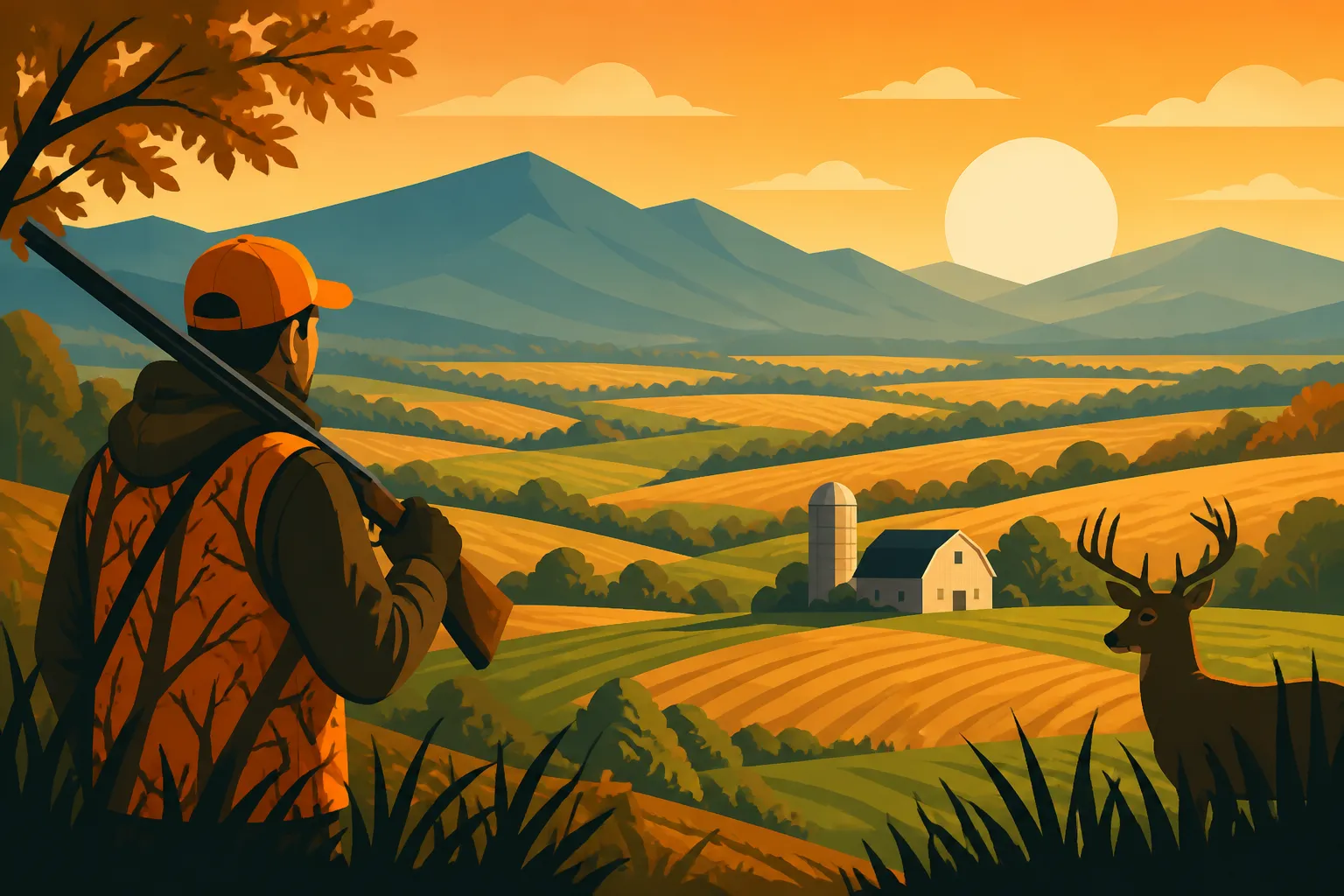
The Shenandoah Valley is a patchwork of fertile fields, rolling pastures, and pockets of timber, all woven together by creeks and rivers. This isn't your typical vast public land mountain hunt; it's a dynamic environment where deer patterns are intrinsically tied to agricultural cycles and the availability of cover. You'll find everything from expansive corn and soybean fields to hay and alfalfa plots, interspersed with smaller woodlots, thick fencerows, and brushy creek bottoms. This diverse habitat provides a smorgasbord of food and ample, though often fragmented, cover for whitetails.
Identifying Key Habitat Features in Farmland
When you're looking at a piece of Shenandoah Valley farmland, it’s easy to get overwhelmed by the sheer size of the fields. But success lies in identifying the subtle features that deer depend on. Field edges, for example, aren't just boundaries; they're highways and transition zones. A deer might spend its day bedded in a small woodlot or dense fencerow, then emerge onto the field edge at dusk to feed. These edges offer security cover close to food, making them prime travel corridors.
Beyond the obvious fields, pay close attention to the smaller, often overlooked pockets of cover. Think about those brushy creek bottoms that wind through properties, small draws that offer a dip in elevation, or even overgrown hedgerows that connect two larger timber blocks. These features act as natural funnels, concentrating deer movement and providing crucial thermal and escape cover. Deer are creatures of habit, and they will consistently use the path of least resistance or the most secure route between bedding and feeding areas. A good mapping tool, like those found on GoHunt, can help you dissect these properties from an aerial view, highlighting these critical connecting points.
Agricultural Cycles and Deer Movement
Deer in the Shenandoah Valley are deeply influenced by the agricultural calendar. Their feeding and bedding patterns shift dramatically with the planting, growth, and harvest of various crops. In late summer and early fall, towering cornfields offer incredible cover and a readily available food source. Deer can literally live inside these fields, making them incredibly difficult to hunt. Once the corn is cut, however, those deer are suddenly exposed and must find new bedding areas, often retreating to nearby woodlots or thicker river bottoms.
Similarly, soybean fields provide high-protein forage throughout the growing season. Once the beans turn brown and are harvested, deer switch their attention to spilled grains, clover, or winter wheat plots that farmers might plant. Understanding these cycles is paramount. If you're hunting during Virginia's General Firearms Deer Season, for instance, knowing when the corn is coming down in your area can dictate your entire strategy. A field that was unhuntable one week could become a hotspot for deer sign the next. Pay attention to local farming activity, as it’s your best indicator of shifting deer patterns.
Gaining Access and Building Relationships with Landowners
This is arguably the toughest part of hunting Shenandoah Valley farmland. Most of this prime ground is privately owned, and simply showing up with a hunting license won't get you far. The key isn't just getting permission; it's earning and maintaining it through respect, reliability, and genuine relationship-building. Many farmers are wary of hunters due to past negative experiences, so you need to differentiate yourself.
Approaching Landowners Effectively
When you decide to ask for permission, presentation and timing are everything. Don't show up in your hunting clothes with a rifle slung over your shoulder. Dress respectfully, as if you were going to a casual business meeting. Pick a time when farmers aren't busy with fieldwork – maybe a Sunday afternoon or a weeknight, rather than during planting or harvest season. Introduce yourself, explain why you're interested in hunting their land (e.g., you've noticed deer activity, you enjoy being outdoors, you're a responsible hunter), and reassure them of your commitment to safety and respect for their property.
Offer to help them with chores, like fixing fences, clearing brush, or even just being an extra set of hands during busy seasons. Some hunters offer to help with nuisance animals like coyotes or even feral hogs if they are present, which can be a real problem for farmers. For a deeper dive into this, you might find Asking a Virginia Farmer for Permission helpful. Be prepared for a "no," but remember that a polite "no" today doesn't mean "no" forever. Sometimes it takes multiple attempts or a recommendation from another trusted local.
Maintaining Trust and Good Will
Once you've secured permission, your work isn't over; it's just beginning. The relationship with the landowner is fragile and needs constant tending. Always communicate your hunting plans. Let them know when you'll be on their property and where you'll be. Respect their specific rules, whether that's avoiding certain fields, parking in a particular spot, or adhering to specific hunting days. This is critical for avoiding any misunderstandings that could quickly lead to your permission being revoked.
If you have success, share your bounty! Offering some fresh venison is a fantastic way to show gratitude. Even if you don't harvest anything, a simple "thank you" or a small gift around the holidays goes a long way. Helping with a few chores, even when not explicitly asked, will cement your standing. Remember, you're not just a hunter on their land; you're an invited guest, and showing consistent appreciation and respect will often lead to long-term access, which is invaluable in a place like the Shenandoah Valley.
Proven Tactics for Farmland Whitetails
Hunting farmland often requires a different approach than hunting dense timber or mountain terrain. The open nature of the landscape means deer are incredibly wary, making stealth and smart stand placement crucial.
Scouting Smart on Farm Properties
Scouting is paramount on farmland. Since deer movement is so tied to food, you need to know what crops are planted where and in what stage of growth. Utilize aerial maps extensively. Platforms like GoHunt allow you to zoom in on fields, identify small woodlots, fencerows, and creek drainages that might not be obvious from the road. Look for natural funnels – places where cover narrows, forcing deer into a smaller travel corridor. These could be pinch points between two fields, where a fencerow meets a timber edge, or a narrow strip of woods along a creek. Reading Aerial Photos for Piedmont Deer can offer excellent insights into this kind of terrain, even if the article focuses on the Piedmont, the principles apply here.
Spend time glassing fields from a distance during early mornings or late evenings before the season starts. This will give you a good idea of where deer are entering and exiting fields, where they're feeding, and where they might be bedding. Look for fresh tracks, droppings, and rub lines along field edges and within the small woodlots. After harvest, walk the field edges and along creek banks to uncover hidden trails. These observations will form the backbone of your hunting strategy.
Stand Placement and Approach Routes
Given the open nature of farmland, your stand placement needs to be meticulous. Wind direction is critical; deer will almost always approach a feeding area with the wind in their favor, so you need to be set up to intercept them without being detected. Ideally, you want multiple stand locations for different wind directions.
Consider using both treestands and ground blinds. Treestands work well along the edges of woodlots overlooking fields or pinch points. Aim to get as high as safely possible to get your scent above the deer's nose. For more guidance on stand selection, even though it's for public land, Treestand Setups in George Washington National Forest offers good foundational advice. Ground blinds, especially well-brushed-in ones, can be incredibly effective in open country or along fencerows where suitable trees are scarce. They offer concealment and help contain scent, and Using a Ground Blind on Virginia Public Land explains their advantages.
Your approach and exit routes are just as important as your stand location. You must be able to get to and from your stand without alerting deer. Use ditches, hedgerows, creek banks, or the cover of darkness. A common mistake is walking directly across an open field, spooking every deer in the area before you even climb into your stand.
| Crop Type | Peak Deer Use (Food) | Peak Deer Use (Cover) | Hunting Considerations |
|---|---|---|---|
| Corn | Late Summer – Fall | Late Summer – Fall | Excellent cover until harvested; hunt edges after cut. |
| Soybeans | Summer – Early Fall | Limited, mostly feeding | High-protein forage; deer can be in fields all day. |
| Alfalfa/Clover | Spring – Fall (Year-round) | Limited, but attractive | Highly attractive food source; target field edges. |
| Winter Wheat | Fall – Winter (Early Spring) | Limited, young growth | Early season attraction, especially after other crops are gone. |
| Hay Fields | Limited for food | Limited, occasionally for fawns | Less attractive unless bordered by heavy cover. |
Hunting Seasonal Shifts and the Rut
Deer activity on farmland ramps up significantly as the season progresses and crops are harvested. When the major food sources like corn and soybeans disappear, deer become more concentrated around remaining forage like winter wheat, clover plots, or browse in woodlots. This is when hunting Late-Season Food Sources for Virginia Whitetails becomes incredibly effective. Hunting a Standing Cornfield in Farm Country details strategies for when the corn is still standing, but be ready to adapt once the combines roll through.
The rut brings a different dynamic to farmland hunting. Bucks will travel extensively, checking field edges for does. They'll use fencerows and small woodlots as corridors to cruise, often scent-checking scrapes and rub lines along these routes. Setting up on a funnel or pinch point where bucks are forced to travel between bedding and potential doe feeding areas can be deadly during this time. For more on this critical period, consider strategies found in Hunting the Rut East of the Blue Ridge. Remember that on farmland, the buck-to-doe ratio can sometimes be skewed, making the rut an even more intense pursuit as bucks search far and wide.
Whether you’re dealing with the vast open expanses or the dense thickets, a good understanding of the land and a respectful relationship with the landowner are your most valuable assets in the Shenandoah Valley.
Disclaimer
Hunting is an inherently dangerous activity. Always prioritize safety, understand and follow all Virginia Department of Wildlife Resources (DWR) regulations, and obtain proper licenses and permits. The information provided here is for educational purposes and should not replace professional guidance or official DWR resources. Always practice ethical hunting and respect wildlife and private property.