Working River Cane Thickets for Deer
River cane thickets in Virginia are one of those habitats that often get overlooked, or perhaps more accurately, avoided, by many hunters. We've all been there, pushing through seemingly impenetrable tangles, only to come out scratched, frustrated, and empty-handed. But what if those dense, thorny havens are exactly where the deer are hiding, especially when hunting pressure picks up? This guide is all about equipping you to understand, scout, and effectively hunt these challenging yet highly productive river cane strongholds, turning that frustration into success.
Understanding River Cane Thickets as Deer Habitat
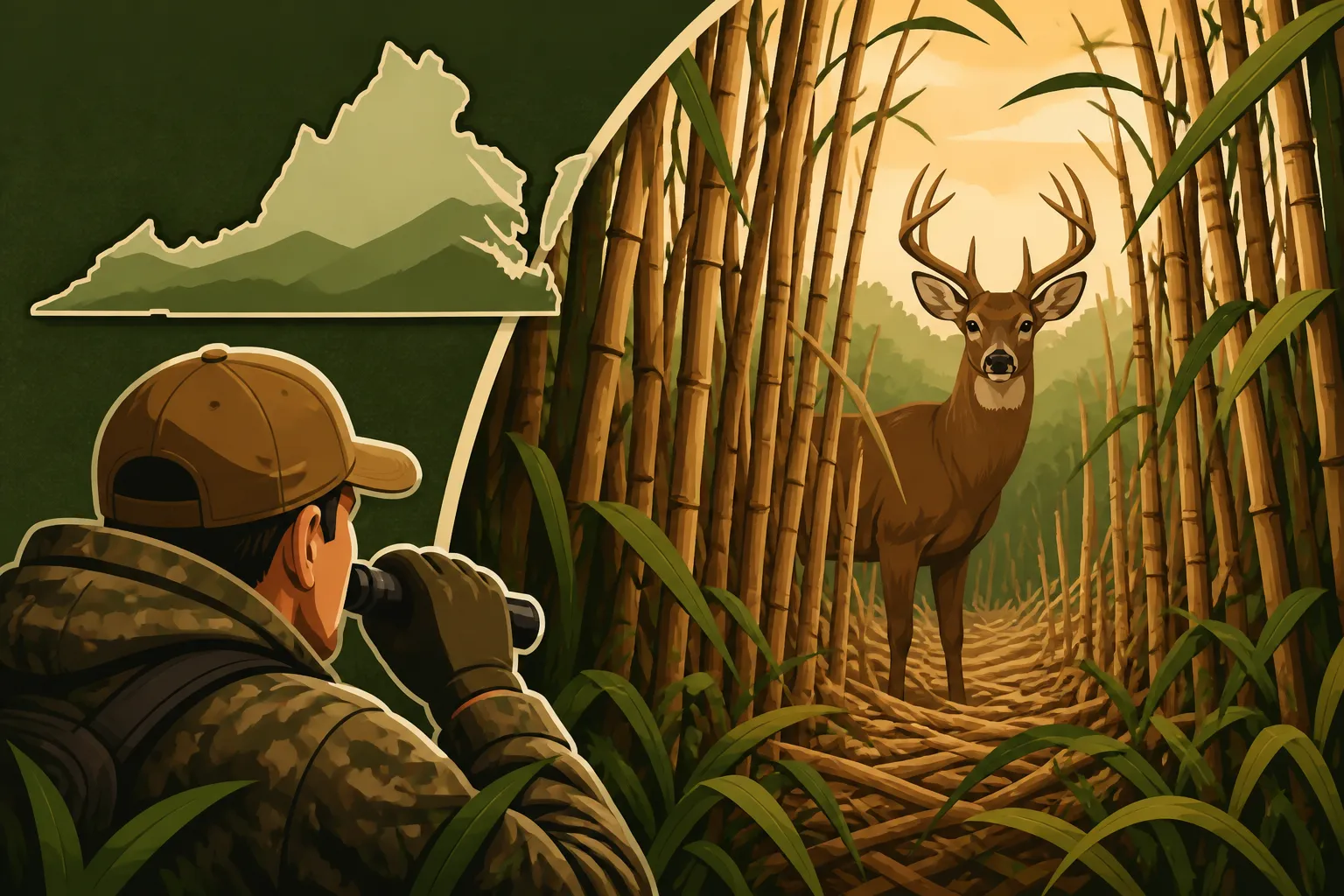
River cane ( Arundinaria gigantea ), often mistaken for bamboo, is a native grass that forms incredibly dense thickets, primarily along floodplains, creek bottoms, and moist, low-lying areas throughout Virginia. These aren't just patches of tall grass; they are miniature jungles, offering deer everything they need to feel safe and comfortable, which is why they can be such a goldmine for hunters willing to put in the effort.
Why Deer Love River Cane
Deer, particularly mature bucks and does with fawns, are constantly seeking security cover – places where they can bed down and feel invisible from predators, including us hunters. River cane provides exactly that. Its stalks grow incredibly close together, often forming a canopy that blocks out light and sightlines, making it nearly impossible for anything larger than a rabbit to move through quietly, let alone see very far. This dense structure acts like a natural fortress.
Beyond just cover, these thickets can also be food sources, especially the tender new shoots in spring and early summer. More importantly, they offer thermal regulation, providing shade in hot weather and a buffer against cold winds. When you consider the relentless pressure deer face during general firearms season, a river cane thicket becomes an absolute sanctuary. While other hunters are walking the timber, the smart deer are often buried deep in these impenetrable green walls, letting everyone else walk past. It can be incredibly frustrating to know deer are there, but you just can't get to them easily.
Identifying Productive Cane Stands in Virginia
Not all river cane is created equal. While many creek bottoms will have patches, the most productive stands for deer hunting are usually found along larger river systems and substantial creek drainages, especially those that border agricultural fields, mature timber, or other reliable food sources. Think of the James River bottoms, or the floodplains of the Staunton (Roanoke) River, or even smaller, unnamed creeks that wind through the Piedmont.
When you're looking at a map, or even driving by, keep an eye out for these tell-tale locations. Often, you'll see a distinct change in vegetation, with the cane forming a solid green band. Identifying these thickets is the first step; knowing which ones hold deer is the next. While it's tough to see inside them, look for obvious deer trails leading into and out of the cane along its edges. These trails, especially those that appear well-worn, are your first clue that deer are actively using the area. Unfortunately, unlike in an open woodlot, finding rubs and scrapes inside a dense cane thicket can be like finding a needle in a haystack, so you'll have to rely more on subtle cues and edge activity.
Scouting and Planning Your Hunt in Cane Thickets
Hunting river cane effectively begins long before you step foot in the woods with a weapon. It requires careful scouting, strategic planning, and a deep understanding of how deer use these unique habitats. Without this groundwork, you're likely to stumble through, alert every deer within a quarter-mile, and reinforce your belief that cane thickets are simply too much trouble.
Pre-Season Scouting Strategies
My absolute go-to for identifying promising river cane locations is using aerial maps. Tools like GoHunt or similar mapping applications are invaluable here. You can easily spot the distinct, often linear, green patches that denote cane thickets along waterways. Look for where these thickets intersect with food sources – agriculture fields, oak ridges, or even planted food plots. These transition zones are golden. Deer will often bed deep in the cane during the day and move to these edges to feed at dawn and dusk.
Once you’ve identified potential spots on the map, it's time for boots on the ground, but do this well before the season, perhaps in late summer or early fall when leaves are still mostly on the trees but before hunting pressure truly begins. Walk the edges of these cane thickets, not necessarily plunging headfirst into them unless you have a specific plan. Look for well-worn trails leading into the cane, especially those showing signs of recent use. Pay attention to wind direction on these scouting trips – it's going to be absolutely critical when you decide to hunt. Also, check for water sources nearby, as deer will often travel along creek bottoms adjacent to cane. Remember, Scouting Virginia Public Land Before Season is key to success in any habitat, and cane is no exception.
Reading Deer Sign Within the Cane
Reading deer sign inside a river cane thicket presents unique challenges. Forget about spotting that textbook rub line or an obvious scrape. The sheer density of the cane makes visual detection extremely difficult. Instead, you'll be looking for more subtle, often tactile, signs. The most common sign will be what I call "crawl tunnels." These are areas where deer have pushed through the cane repeatedly, creating low-slung tunnels, often barely big enough for a deer to squeeze through, that crisscross the interior. If you find these, you've found a highway.
Bedding areas within the cane are simply small depressions or flattened spots where deer have laid down. They won't be as obvious as a bed in pine needles, but you can feel them underfoot. The challenge is moving through quietly enough to not disturb every deer that might be bedded. The cane itself is noisy; every broken stalk snaps, every leaf rustles. This is where patience and an extremely slow pace become your best friends. It’s a completely different ballgame than Finding Sign in Big Jefferson Forest Timber where you have clear sight lines. This is a game of millimeters and muffled footsteps.
Effective Hunting Tactics for River Cane Deer
Once you've done your homework and identified a promising river cane thicket, it's time to think about how you'll actually hunt it. These tactics differ significantly from typical woodland hunting, requiring a more specialized approach to capitalize on the deer's reliance on this dense cover.
Still-Hunting and Stand Placement
Still-hunting through river cane is an art form, and honestly, it's often more about slow, deliberate movement along the edges or through established deer trails. If you try to crash through the middle, you’ll sound like a freight train, and every deer in the county will know you’re there. When you decide to still-hunt, move at a snail's pace, taking one or two steps every few minutes, stopping to listen and scan. Focus on the subtle movements, the flick of an ear, the twitch of a tail. This works best when you have a good wind in your favor, blowing from the cane towards you, so your scent isn't pushing into their sanctuary.
A more common and often more effective tactic is to use an elevated stand overlooking the cane's edges. Deer will often stage just inside the cane before moving out to feed, or slip back into it at first light. Positioning a treestand or a Ground Blind on Virginia Public Land on a prominent trail leading into or out of the cane can be incredibly effective. Pay close attention to the prevailing wind when setting up. A thermal rising or falling (check Wind and Thermals on a Blue Ridge Slope for more on this) can carry your scent right into the thicket, blowing your chances before you even see a deer. Remember, these thickets are security cover, so deer will be hypersensitive to anything out of place. This strategy is similar to Sitting a Field Edge in Late Season, but with the added challenge of dense cover on one side.
Small Drives and Pushing Tactics
River cane thickets are absolutely perfect for small deer drives, especially when you have a few hunting partners. Trying to drive a vast expanse of open timber can be hit-or-miss, but cane offers defined boundaries and funnel points, making it ideal for moving deer where you want them to go. A typical setup might involve one or two "pushers" slowly moving through the cane, while one or two "posters" are positioned quietly on the downwind side, overlooking the known exit trails or adjacent open areas.
The pushers need to move slowly and steadily, making just enough noise to encourage the deer to move, but not panic them into crashing out blindly. Think about deer drives with Three or Four Hunters where communication is key. The posters must be absolutely silent and ready, as deer will often burst out of the cane quickly. Safety is paramount here; ensure everyone knows their shooting lanes and where others are located. This is a great tactic for getting those reluctant bucks out of their daytime beds. Using GoHunt's mapping features can help you pre-plan your drive routes and poster locations, ensuring everyone is on the same page before the hunt begins.
Gear Considerations for Hunting River Cane
Hunting river cane isn't like a casual stroll through open hardwoods. The dense, often thorny nature of the vegetation, coupled with potentially wet conditions, demands specific gear choices to ensure your comfort, safety, and ultimately, your success. Skimping on the right equipment here will lead to a miserable, short-lived hunt.
Essential Clothing and Protection
First and foremost, you need durable, quiet clothing that can withstand abuse. Cotton is a no-go; it holds moisture, and when it snags, it rips. Opt for tough synthetic blends or even canvas-style materials designed for brush. Layers are always good, but the outer layer needs to be able to shed thorns and resist snags. If you’re pushing through the cane, consider wearing brush pants or chaps (like those from Filson or Wrangler Upland series) to protect your legs from the abrasive stalks and any hidden thorns. The last thing you want is shredded pants and scratched legs after an hour.
Footwear is another critical component. River cane thrives in moist environments, meaning you'll often be dealing with damp ground, mud, or even standing water. A good pair of waterproof boots is non-negotiable. Look for boots with aggressive traction to navigate potentially slick mud and good ankle support. Rubber boots, like those from LaCrosse or Muck Boots, are often ideal for these wet conditions, as they're completely waterproof and easy to clean. For deeper dives into footwear, check out Rubber Boots for Swamp Walking.
Optics and Navigation
When you're deep inside a river cane thicket, your visibility is severely limited, often to just a few feet. This means that high-powered binoculars aren't going to be your primary tool inside the cane. However, when you emerge to a cane edge or when you're perched in a stand overlooking it, a good pair of 8x or 10x binoculars can be crucial for spotting subtle movement in the fading light.
Navigation is where technology truly shines in these dense environments. A reliable GPS unit or a hunting app on your smartphone, like GoHunt, is essential. Satellite imagery will help you see the distinct boundaries of the cane, and having your exact location displayed on a topo map can prevent you from getting disoriented or accidentally trespassing. Trust me, it's incredibly easy to lose your sense of direction in a dense thicket, especially if you're focused on moving quietly. Always carry a power bank for your phone, and consider downloading offline maps before you head out, as cell service can be spotty in remote river bottoms. A good headlamp is also a must-have for the walk-in before dawn and the inevitable walk-out after dark. For more on pack essentials, consider reading Packs for a Day on Public Land.
Comparing River Cane Hunting Tactics
To help you decide which approach might be best for your next hunt, here's a quick comparison of still-hunting the edges versus small drives within river cane thickets.
| Feature | Still-Hunting Edges | Small Drives (2-4 Hunters) |
|---|---|---|
| Effort Level | Moderate (slow, deliberate movement) | High (requires coordination, physical exertion) |
| Noise Level | Low (primary goal is stealth) | Moderate (pushers create noise to move deer) |
| Visibility | Moderate to Good (from stand/edge) | Very Low (for pushers inside cane), Good (for posters on edge) |
| Hunter Count | 1-2 hunters (can be done solo) | 2-4+ hunters (requires teamwork) |
| Best For | Solo hunters, patient waiting, scouting new areas | Pressured deer, getting deer out of deep cover, specific thickets |
| Risk of Busted | Moderate (wind shifts, sudden movement) | Low (if posters are still, pushers expect noise) |
| Ideal Conditions | Calm, consistent wind, early morning/late evening | Mid-day, when deer are bedded, varied wind direction (for pushers to mask scent) |
Disclaimer
Always consult the Virginia Department of Wildlife Resources (DWR) regulations for the most current hunting seasons, bag limits, and specific rules that may apply to the area you plan to hunt. Hunting laws and regulations can change, and it is the hunter's responsibility to stay informed.