Reporting a Poacher in Virginia
It's an unfortunate truth that despite the beauty and abundance of Virginia's wild lands, some individuals choose to disregard the rules, stealing resources from ethical hunters and damaging our shared natural heritage. Knowing how to properly report a poacher is crucial for every responsible outdoors person. This guide will walk you through the essential steps, ensuring you have the knowledge to protect our wildlife and uphold the integrity of hunting in the Old Dominion.
Why Reporting Poaching Matters in Virginia
Poaching isn't just a minor infraction; it's a serious crime that impacts everyone who values Virginia's natural resources. It’s a direct assault on the conservation efforts funded by legal hunters and an insult to the wildlife itself. When someone illegally takes game, whether it's out of season, over the bag limit, or by prohibited methods, they are undermining the very system that allows us to enjoy hunting for generations to come.
The Impact on Wildlife and Conservation
Think about the ripple effect of a single poached deer. That deer might have been a breeding doe critical to the local herd, or a buck that contributed to the genetic diversity of the population. When poaching occurs, it can skew sex ratios, reduce population numbers, and disrupt natural ecological balances that the Virginia Department of Wildlife Resources (DWR) works tirelessly to maintain. These illegal acts can also spread diseases if carcasses are moved improperly or if sick animals are not reported. This is especially critical in areas designated as Chronic Wasting Disease (CWD) zones, where strict regulations are in place to control its spread. Understanding the nuances of Virginia's Four Chronic Wasting Disease Areas is vital for all hunters.
Furthermore, the funds generated by legal hunting licenses and permits directly support the DWR's conservation programs, habitat restoration projects, and wildlife management initiatives. When game is taken illegally, these vital funds are bypassed, essentially defunding the very efforts that sustain Virginia's wildlife. Every dollar spent on a legitimate Virginia Hunting Licenses and What They Cost goes back into the system to protect and enhance the hunting opportunities we all cherish. Poaching undermines this entire structure.
Protecting Our Hunting Heritage
Hunting in Virginia is a rich tradition, passed down through families and communities for generations. It’s about respect for nature, adherence to rules, and the challenge of a fair chase. Poaching tarnishes this heritage by creating a negative perception of all hunters, lumping the law-abiding majority in with the criminals. It erodes public trust and makes it harder for wildlife agencies to gain support for necessary management programs.
Moreover, every hunter has a responsibility to ensure the integrity of the sport. We owe it to ourselves, to future generations, and to the wildlife we pursue to act as stewards, not just participants. By reporting poachers, we actively stand up for ethical hunting practices and the rule of law. It's about preserving not just the game, but the very spirit of what it means to be a hunter in Virginia. When we consider the details of Virginia Wildlife Violation Penalties, we see that the DWR takes these offenses seriously, further reinforcing the importance of reporting.
How to Identify and Document Poaching Activity
Recognizing poaching isn't always obvious, but there are tell-tale signs and crucial pieces of information you can collect that will make your report much more effective. Your keen observation skills can be the difference between a successful investigation and a missed opportunity. Remember, you're not trying to be a detective, just a good witness.
Recognizing Suspicious Behavior
The first step is often noticing something that just doesn't feel right. This could be anything from hearing gunshots after legal shooting hours, to seeing someone with game during a closed season. For instance, if you're out scouting in August and see a vehicle with a freshly killed deer, that's a clear red flag, as Virginia Deer Season Structure Explained clearly outlines specific dates for different methods and regions.
Other suspicious activities might include:
- Hunting out of season: This is often the most obvious sign. If you see someone hunting migratory birds when their season is closed, or shooting a deer weeks before the general firearms opener, that's poaching.
- Illegal methods: Someone using a spotlight to "shine" deer at night, hunting with prohibited firearms (like a rifle in an archery-only urban zone), or using electronic calls for turkeys in spring could be poaching.
- Over the bag limit: While harder to prove without direct evidence, if you frequently see the same individual coming out of the woods with multiple deer in a short period, especially in regions with strict limits like those east or west of the Blue Ridge, it might warrant attention. Checking a Virginia Deer Harvest Online can sometimes reveal patterns if they are reporting some kills but taking others illegally.
- Suspicious vehicles: A vehicle parked in an unusual location, especially at odd hours, or one that appears to be involved in a late-night spotlighting run, is worth noting. Look for vehicles driving slowly, perhaps repeatedly, through an area at night with spotlights scanning fields.
- Disregard for landowner rights: If you see someone hunting on posted private land without permission, this is trespass and potentially poaching. Understanding Virginia Trespass and Permission Law is important here.
- Unusual times: Hunting outside of legal Virginia Public Land Hunting Hours is another clear indicator. For example, Virginia has specific opening and closing times for hunting, and activity well outside these hours is highly suspect.
Gathering Crucial Information
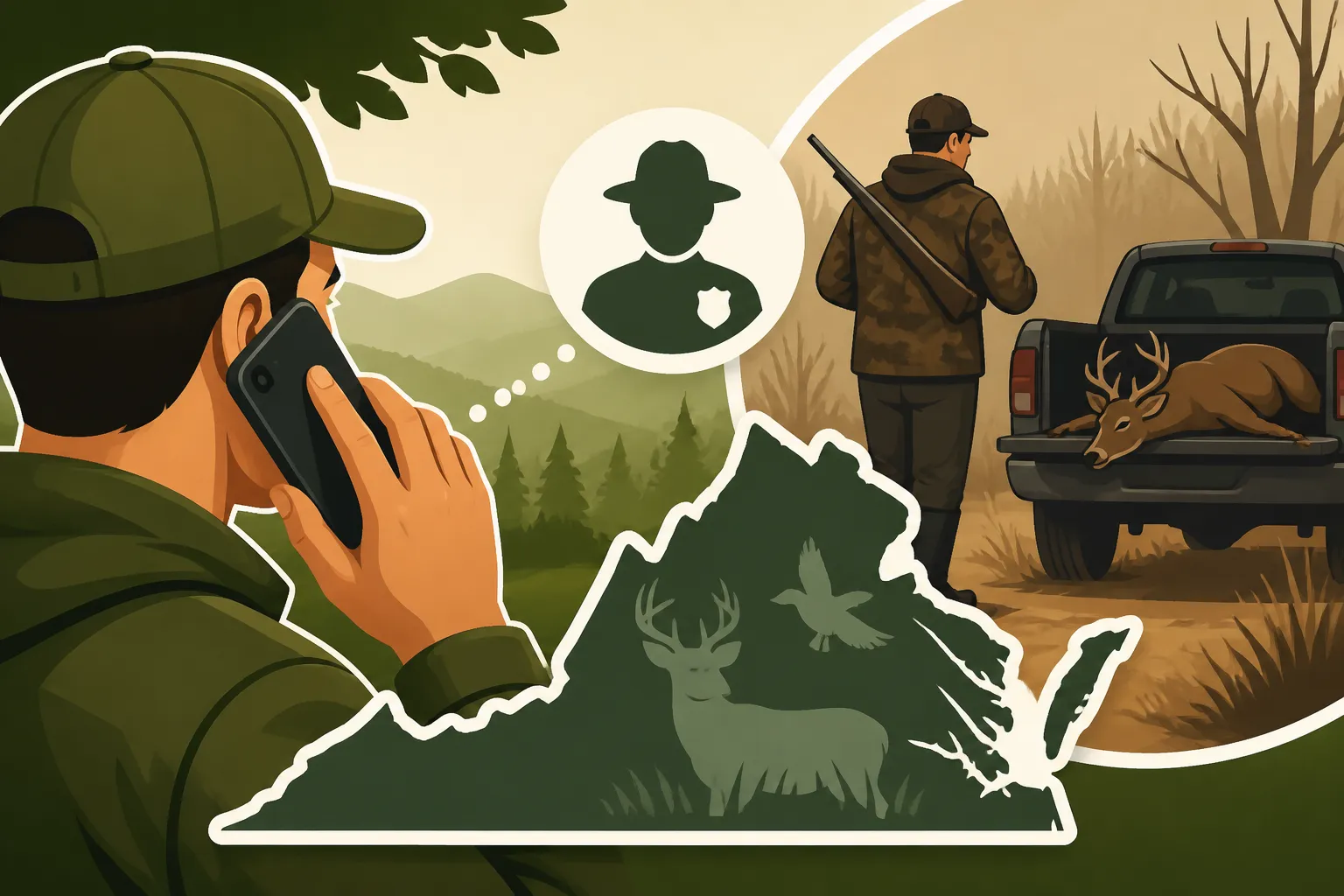
When you suspect poaching, your role is to be an accurate observer. Do not approach or confront the suspected poacher. Your safety is paramount. Instead, focus on collecting as many details as possible from a safe distance. Think of yourself as documenting a scene. The more specific information you can provide, the better the DWR conservation police officers can act on your tip.
Here’s a breakdown of the key information to gather:
| Information Category | Specific Details to Look For | Importance |
|---|---|---|
| Location | Street address, GPS coordinates, nearby landmarks, trail names, county | Pinpointing the exact spot for investigators. |
| Date & Time | Day of the week, specific time (e.g., "Tuesday, 8:45 PM") | Establishes timing relative to seasons/legal hours. |
| Description of Suspect(s) | Number of people, gender, age, height, build, hair color, clothing, any distinguishing features, weapons used (rifle, bow, spotlight) | Helps identify individuals. |
| Vehicle Information | Make, model, color, license plate number (state included), any unique features (dents, decals, lifted, tires), direction of travel | Critical for vehicle identification and tracking. |
| Activity Observed | What exactly were they doing? (Shooting, shining, retrieving game, setting traps, baiting) | Confirms the illegal act. |
| Game Involved | Species (deer, turkey, bear), quantity, size, any visible injuries, how it was transported | Identifies the target of poaching. |
| Evidence Left Behind | Spent casings, tire tracks, blood trails, discarded packaging, unusual baits, snares | Aids in corroborating the report. |
| Your Contact Info | Name, phone number, email (optional, for follow-up) | Allows DWR to ask for clarification if needed. |
Even if you can't get all of this, any piece of information is valuable. If you only get a partial license plate number or a general description of the vehicle, still report it. Many hunters use apps like GoHunt which have mapping features that can provide precise GPS coordinates, which is incredibly helpful. Tools like Scouting With the Virginia DWR App can also aid in pinpointing locations, even without cell service.
The Steps to Officially Report a Poacher in Virginia
Once you've observed something suspicious and gathered as much information as you safely can, it's time to make your report. Don't delay; timely reporting increases the chances of successful intervention. The DWR has several avenues for you to report poaching, ensuring accessibility and confidentiality.
Contacting the Virginia DWR
The Virginia Department of Wildlife Resources offers several ways to report poaching. Your immediate action can make a huge difference, especially if the illegal activity is ongoing.
-
Operation Game Thief Hotline: This is your primary and most direct line for reporting poaching. The hotline is staffed 24/7 and is specifically designed for wildlife violations.
- Phone Number: 1-800-237-5712.
- When to use it: Use this number for any suspected poaching incident, especially if it's happening right now or you have fresh information.
- What to expect: A dispatcher will take down your information. Be prepared to provide the details you gathered (location, time, suspect/vehicle description, what you observed). They understand the urgency and will dispatch a conservation police officer if appropriate.
-
Online Reporting: For less urgent situations, or if you prefer to type out your report, the DWR website often provides an online form for reporting violations.
- How to find it: Navigate to the DWR website (dwr.virginia.gov) and look for sections related to "Law Enforcement," "Report a Violation," or "Conservation Police."
- When to use it: This is suitable for historical incidents, less time-sensitive information, or if you have photographic/video evidence you want to submit digitally. While it might not lead to an immediate response like the hotline, it still gets the information to the right people.
- Pro Tip: Many hunters use mapping applications like those from GoHunt or the official Scouting With the Virginia DWR App to accurately mark locations. You can often export these coordinates to include in your online report for maximum precision.
-
Local Conservation Police Officer (CPO) Contact: If you know your local CPO, you can contact them directly. However, for immediate response, the hotline is usually faster as CPOs are often in the field.
- How to find it: DWR's website lists CPO contact information by county.
- When to use it: Best for non-urgent tips, general questions about regulations you suspect are being violated, or if you have an established relationship with a local officer.
What to Expect After Your Report
After you make a report, especially through the Operation Game Thief hotline, the process usually works like this:
- Dispatch and Investigation: Your information is relayed to the nearest available Virginia Conservation Police Officer. They will assess the urgency and decide on the appropriate course of action, which could range from immediate response to covert investigation at a later time.
- Anonymity: The DWR takes anonymity seriously. You can request to remain anonymous, and your name and contact information will not be shared with the suspect. We'll dive deeper into this below.
- No Immediate Feedback: Don't expect a call back with updates on the investigation. For legal and operational reasons, CPOs generally cannot share details about ongoing cases. This can be frustrating, as you might feel like your tip went into a black hole. However, rest assured that your report is taken seriously. Your role is to provide the information; the DWR’s role is to investigate.
- Potential Follow-Up: In some cases, a CPO might contact you if they need clarification on details you provided, or if your information leads to a breakthrough. But this is not guaranteed and often doesn't happen, so don't be discouraged if you don't hear back.
- The Power of Collective Action: Even if your single report doesn't immediately lead to an arrest, it might be one piece of a larger puzzle. Multiple reports on the same individuals or areas help the DWR build a stronger case and allocate resources more effectively.
Anonymity and Protection for Whistleblowers
One of the biggest concerns for individuals reporting illegal activity is their personal safety and remaining anonymous. It's a completely valid worry, and the Virginia Department of Wildlife Resources understands this. They have systems in place to protect those who come forward.
Virginia's Commitment to Confidentiality
When you call the Operation Game Thief hotline (1-800-237-5712) or use the DWR's online reporting system, you have the option to remain completely anonymous. This means your name, phone number, and any other identifying information will not be disclosed to the suspected poachers or any other unauthorized parties. The conservation police officers are trained to handle these reports with the utmost discretion.
It's crucial that you feel safe when making a report. The DWR’s priority is to protect wildlife and uphold the law, and they recognize that encouraging reporting often relies on guaranteeing the safety and privacy of concerned citizens. They want you to be a witness, not a target. This commitment to confidentiality is a cornerstone of effective wildlife law enforcement in Virginia. Remember, even if you provide your contact information for potential follow-up, it’s still kept confidential from the public and the alleged violators.
Avoiding Direct Confrontation
Under no circumstances should you ever confront a suspected poacher directly. Poachers are often engaged in illegal activities for a reason, and they may be armed, under the influence, or simply unpredictable. Your personal safety is far more important than any deer, turkey, or fish.
If you encounter someone actively poaching:
- Maintain Distance: Stay as far away as possible while still being able to observe and gather details.
- Do Not Engage: Avoid eye contact, verbal exchanges, or any action that might draw attention to yourself.
- Prioritize Safety: If you feel your safety is compromised, leave the area immediately and report what you saw from a secure location.
- Document Safely: Use your phone to take photos or videos if you can do so discreetly and without putting yourself at risk. However, a blurry photo from a safe distance is better than no photo at all if it means you remain out of harm's way. Be particularly mindful of your surroundings; knowing details about Wind and Thermals on a Blue Ridge Slope or how to approach quietly on your own hunt could inform how you safely observe suspicious activity without being detected.
- Call Immediately: The moment you are safely away from the situation, call the Operation Game Thief hotline. The sooner they get the information, the higher the chance of catching the violators.
Remember, your role is that of a responsible, ethical observer. Let the trained professionals, the Virginia Conservation Police Officers, handle the confrontation and enforcement. They are equipped and prepared to do so, and your detailed, safe report provides them with the tools they need to protect our wildlife. This applies whether you're observing questionable activity related to Virginia Sunday Hunting Rules or any other regulations.
Disclaimer
The information provided in this guide is for general informational purposes only and does not constitute legal advice. While we strive to provide accurate and up-to-date information, hunting regulations and laws are subject to change. Always consult the official Virginia Department of Wildlife Resources (DWR) regulations and website for the most current and authoritative information. Engaging in illegal activities, including poaching, can result in significant fines, loss of hunting privileges, and other legal penalties. Personal safety should always be your top priority when observing or reporting any suspicious activity.