How Wild Hogs Spread Across Virginia
Oh, feral hogs in Virginia. If you've spent any time scouting the edges of a crop field or navigating dense river bottoms here in the Commonwealth, you know they're more than just a nuisance; they're an invasive force that's completely changing the landscape for our native wildlife and even impacting local agriculture. It's truly frustrating to see their destructive rooting and hear about the damage they cause. This guide is all about peeling back the layers to understand how these highly adaptable animals have managed to spread so effectively across our beautiful state, and what we're facing in the ongoing battle to control them.
The Unwelcome Guest: Understanding Virginia's Feral Hog Problem
For many years, the idea of wild hogs running rampant in Virginia felt like something out of a southern state like Texas or Florida, not our own Appalachian foothills or coastal plains. But that's simply not the reality anymore. These opportunistic omnivores have firmly established themselves, bringing with them a host of environmental and economic headaches that impact everyone from farmers to wildlife enthusiasts. Their presence is a stark reminder of how easily non-native species can disrupt delicate ecosystems.
Origins and Early Sightings in the Commonwealth
The story of how wild hogs first arrived and started spreading in Virginia isn't as clear-cut as some might think. It's often a mix of factors, and pinpointing a single "Patient Zero" event is nearly impossible. Many of these animals are descendants of domestic pigs that either escaped from farms or, more disturbingly, were intentionally released into the wild for hunting purposes. In some cases, they might be "Russian boars" or hybrids, brought in for their perceived sporting value. Early sightings were often isolated, perhaps a small sounder in a specific county, but those initial populations were the seeds of what we see today. The critical turning point came when these isolated groups found each other, interbred, and established self-sustaining populations with no natural predators to keep them in check. Over time, these small pockets grew, eventually becoming the larger, more contiguous populations that now concern the Virginia Department of Wildlife Resources (DWR).
The Ecological and Economic Impact They Wreak
The havoc caused by feral hogs extends far beyond a few trampled rows of corn. Ecologically, they are incredibly destructive. Their incessant "rooting" behavior – digging up soil with their powerful snouts in search of tubers, insects, and small vertebrates – devastates agricultural fields, pastures, and delicate forest floor habitats. This rooting can destroy natural vegetation, impact soil stability, and contaminate water sources. They compete directly with native wildlife, like white-tailed deer and wild turkeys, for food sources such as acorns, berries, and fungi. Furthermore, wild hogs are known carriers of diseases that can be transmitted to domestic livestock, pets, and even humans, including brucellosis, leptospirosis, and pseudorabies. This disease risk is a significant concern for Virginia's agricultural community.
Economically, the cost of their destruction is staggering. Farmers bear the brunt of crop loss, fence damage, and the expenses associated with controlling populations on their land. Just imagine planting an entire field of soybeans, only to have a sounder of hogs tear through it overnight. It’s a devastating blow to a farmer's livelihood. Beyond agriculture, the damage extends to natural resources, requiring costly restoration efforts in some areas. From a hunter's perspective, the frustration is palpable when you see prime habitat for deer and turkey churned into a barren wasteland. The DWR estimates that the total economic damage caused by feral swine across the U.S. can reach into the billions annually, and Virginia certainly contributes to that unfortunate tally.
The Rapid Invasion: How Hogs Conquer New Territory
Understanding the underlying mechanisms of how wild hogs expand their footprint is crucial for any effective management strategy. These animals aren't just popping up randomly; there are distinct biological and behavioral reasons why their spread has been so relentless and successful across Virginia. It's a combination of their inherent traits and, unfortunately, human actions.
The Role of Reproductive Efficiency
One of the primary drivers behind the rapid spread of wild hogs is their incredible reproductive efficiency. Simply put, they breed early, often, and in large numbers. Sows can become sexually mature as early as six months of age, and they can produce multiple litters per year, often two to three in favorable conditions. Each litter can consist of anywhere from four to twelve piglets, sometimes even more. Imagine a handful of sows, each dropping a dozen piglets a couple of times a year. That exponential growth quickly spirals out of control.
This high reproductive rate means that even if a significant number of hogs are removed from an area through hunting or trapping, the remaining population can quickly rebound, often within a single breeding cycle. This makes population control a constant uphill battle. It's not just about removing individuals; it's about staying ahead of their ability to replenish their numbers, which is a major challenge for wildlife managers and landowners alike. Their ability to recover from pressure is truly remarkable and frustratingly effective.
Human-Assisted Translocation: A Major Contributor
While natural dispersal plays a role, human-assisted translocation is arguably the most significant factor in how wild hogs have spread so far and wide across Virginia and beyond. This isn't always malicious, but it's always impactful. Sometimes, it’s unwitting; a hog might hitch a ride in a livestock trailer without anyone knowing, escaping when the trailer reaches a new location. Other times, it's tragically intentional. Some individuals, for reasons completely baffling to responsible hunters, have illegally trapped and moved wild hogs to new areas to establish populations for hunting. This act, often referred to as "trap-and-transfer," is illegal in Virginia and is a primary accelerator of their range expansion.
When people move even a single sounder of hogs to a new, pristine area, they effectively bypass all the natural barriers and slow dispersal rates that might otherwise keep populations localized. A new population can take hold in an area that would have been naturally free of hogs for decades, if not centuries. This human element makes managing the spread incredibly complex, as it requires not just ecological strategies but also law enforcement and public education efforts. This is a battle that requires everyone to be vigilant and informed, and reporting suspicious activity is crucial. You can learn more about specific regulations in our guide on Virginia Feral Hog Regulations.
Natural Dispersal and Movement Patterns
Even without human intervention, wild hogs are capable of impressive natural dispersal. They are highly mobile animals, especially young boars looking for new territories and breeding opportunities. A single hog can travel many miles in a day, moving between different habitats in search of food, water, or mates. River systems, in particular, act as natural highways for their movement, allowing them to travel great distances along creek beds and through riparian corridors, often undetected. This is why you'll often hear about them spreading along major river basins in the Piedmont and through the valleys of Southwest Virginia.
Their nomadic behavior also means they aren't necessarily tied to a small home range, particularly when food sources become scarce or hunting pressure increases. They will opportunistically move into new areas that offer better forage or less disturbance. A small sounder that starts in one corner of a county can, over several seasons, expand its reach significantly, pushing outwards into adjacent properties and even crossing into new counties. This constant, incremental spread, combined with their rapid reproduction, explains how seemingly isolated populations can eventually merge and form a larger, more entrenched presence across the state. Using tools like the mapping features in GoHunt can help identify potential travel corridors, such as creek bottoms or dense timber, where hogs might be moving through.
Mapping the Spread: Where Wild Hogs Are Taking Hold
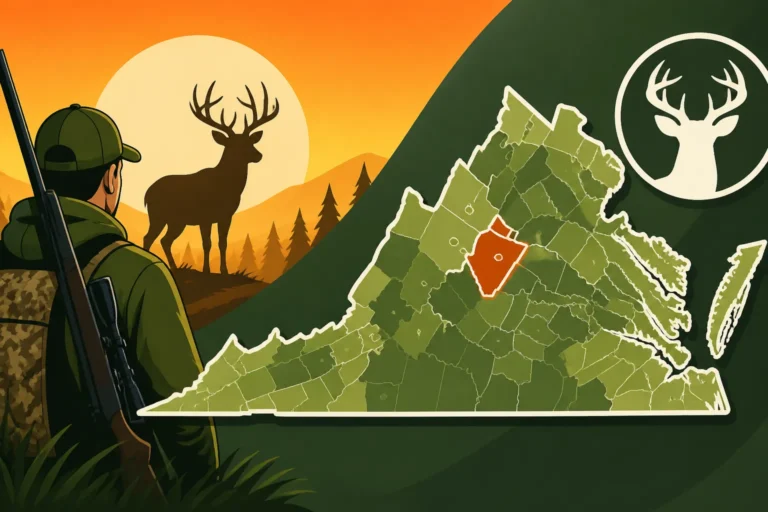
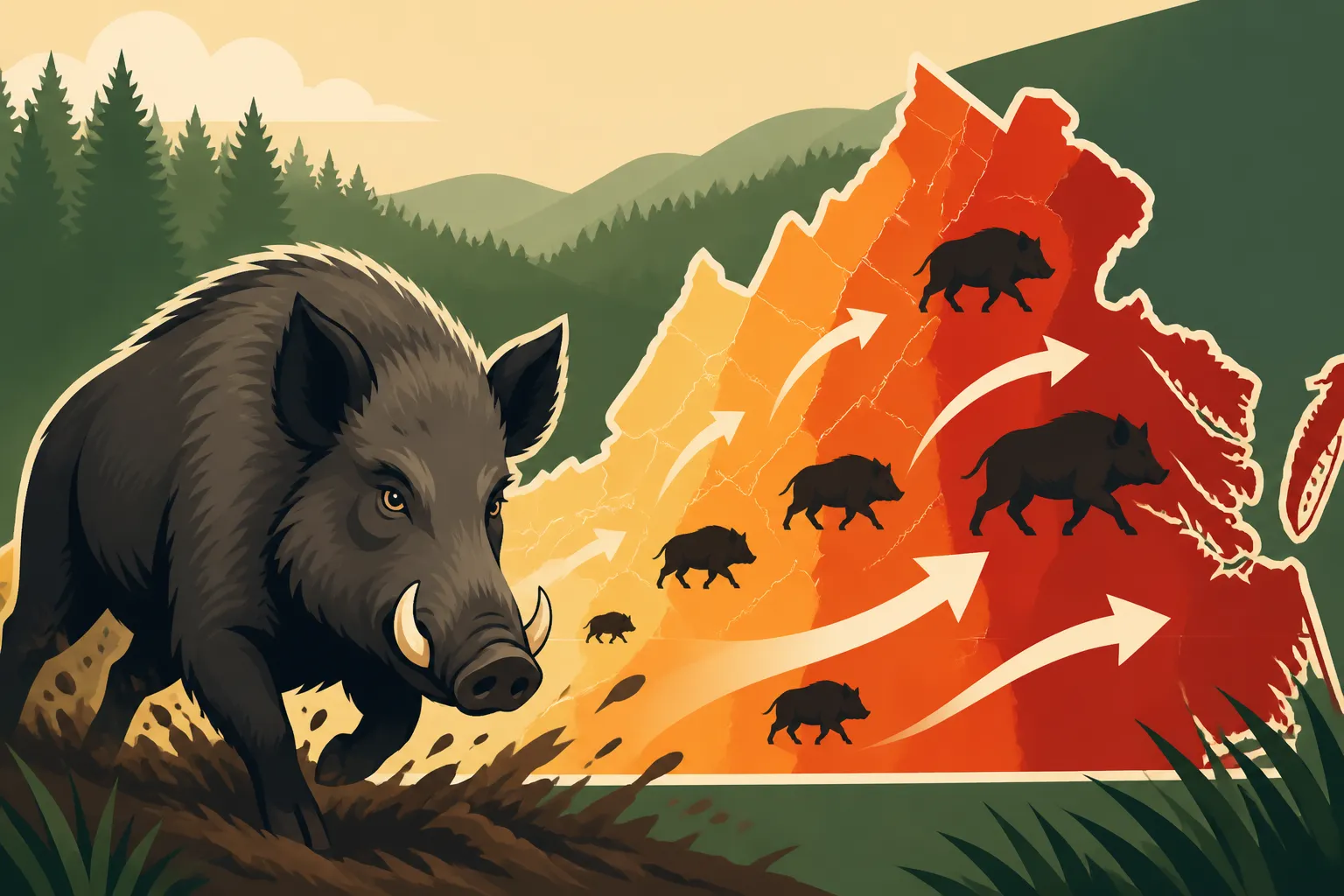
Understanding the geographical distribution of wild hogs in Virginia is essential for both management agencies and concerned citizens. Their presence isn't uniform across the state; certain regions have become hotspots, while others are still relatively unimpacted, though that can change quickly. It’s like watching a slow-motion invasion unfold on a map, with new red dots appearing every year.
Identifying High-Density Regions
Historically, and currently, some of Virginia's highest-density feral hog populations have been concentrated in the Piedmont region and the Southwest Virginia coalfields. The Piedmont, with its mix of agricultural lands, dense river bottomlands, and significant timber tracts, offers an ideal mosaic of food, water, and cover. Hogs thrive in these environments, rooting through crop fields at night and retreating to thick swamps or woodlots during the day. Counties in areas like the Blackwater River drainage or along the Roanoke River have seen persistent and expanding populations. This region provides ample opportunities for Hunting Virginia's Year-Round Feral Hogs.
In Southwest Virginia, particularly in the coalfield counties, the terrain is often rugged, with steep hills, dense timber, and remote hollows. This landscape provides excellent cover and makes detection and control efforts incredibly challenging. The network of small streams and dense regrowth from past logging operations also offers fantastic habitat. We've seen significant concerns and reports of Feral Swine Sightings in Southwest Virginia, where their rooting can destabilize reclaimed mine lands and impact fragile ecosystems. These high-density regions require sustained, coordinated efforts to prevent further spread and mitigate damage.
Factors Influencing Localized Spread
Several key factors contribute to why hogs establish and spread more readily in certain localized areas. Food availability is paramount; areas with abundant mast crops (like acorns), agricultural fields (corn, soybeans, peanuts), or even suburban areas with accessible garbage or garden produce become prime targets. Hogs are incredibly adaptable eaters, and they will exploit whatever food source is available. This adaptability makes them particularly good at colonizing new areas and puts pressure on native species.
Cover and water sources are equally critical. Dense thickets, river swamps, large tracts of timber, and even abandoned homesteads provide secure bedding areas where hogs can escape detection and raise their young. Proximity to reliable water sources, like creeks, rivers, ponds, and even drainage ditches, is also essential for their survival, particularly during hot Virginia summers. Finally, human population density and land use play a role. Areas with lower human population density and larger contiguous tracts of unmanaged land provide more undisturbed habitat for hogs to thrive and expand. Conversely, even suburban woodlots in less densely populated areas can become temporary homes for transient sounders, leading to frustration for homeowners and DWR alike. Understanding these micro-factors is crucial for effective hog management at the local level.
Challenges in Control: Why They're So Hard to Eradicate
If you've ever tried to hunt or trap wild hogs, you quickly realize these aren't your average game animals. They possess a unique blend of intelligence, adaptability, and sheer reproductive power that makes them incredibly difficult to control, let alone eradicate. It's an ongoing battle that often feels like two steps forward, one step back.
Their Intelligence and Adaptability
Wild hogs are remarkably intelligent creatures, often considered one of the most cunning game animals. They learn quickly from negative experiences, making them highly adept at avoiding traps and outsmarting hunters. If a trap is improperly set or a sounder has a bad encounter with it, they will often learn to avoid that particular setup, or even similar types of traps, indefinitely. This "trap shyness" or "trap education" can frustrate even the most experienced trappers. They also exhibit incredible adaptability to various environments, from the dense mountain forests of the Jefferson National Forest to the river bottoms of the Piedmont and even the fringes of suburban areas.
This adaptability extends to their diet and daily routines. They can switch food sources quickly based on availability, becoming nocturnal if pressure is high, or active during the day if undisturbed. This makes predicting their movements and patterns a constant challenge. They quickly learn to associate human presence, vehicles, and even certain sounds with danger, adjusting their behavior accordingly. This high level of intelligence means that any control effort must be equally intelligent and adaptable, constantly changing tactics to stay ahead of their learning curve. Many hunters find using scouting apps, like those provided by GoHunt, invaluable for identifying potential travel patterns and bedding areas before ever setting foot in the field, helping to combat the hogs' innate wariness.
The Limitations of Traditional Hunting Methods
While recreational hunting is an important component of wildlife management in Virginia and does contribute to hog removal, it rarely, if ever, is enough to control or significantly reduce feral hog populations on its own. The primary reason is that hunting typically removes only a small percentage of the total population, and often disproportionately targets individual boars, which doesn't address the core problem of high reproductive rates among sows. Many hunters are out for sport, not necessarily for comprehensive population reduction.
Furthermore, traditional hunting methods can inadvertently lead to "scatter" or "dispersal" effects. When a sounder is repeatedly shot at, the surviving individuals may split up and flee the area, inadvertently spreading to new, uninfected territories. While a single hunter might feel good about taking a hog or two, the overall effect on the population can sometimes be counterproductive if not part of a larger, coordinated strategy. This is why the Virginia DWR emphasizes that while hunting is allowed and encouraged year-round on private land, it should be viewed as one tool in a larger toolbox, not the sole solution. Understanding Virginia Feral Hog Regulations is key here, especially regarding night hunting or other specialized methods.
Coordinated Trapping Efforts as the Best Defense
Given the limitations of hunting and the intelligence of these animals, coordinated trapping efforts are widely recognized as the most effective method for significantly reducing and controlling feral hog populations. Trapping allows for the capture of entire sounders at once, including multiple sows and their offspring, which directly impacts their reproductive capacity. Modern hog traps are sophisticated, often large corral traps equipped with smart technology that allows hunters or managers to monitor activity remotely and trigger the gate closure once an entire sounder is inside.
These trapping operations require patience, knowledge, and strategic placement. Baiting with fermented corn for several days or weeks to habituate the hogs to the trap site is crucial. After a sounder has been consistently visiting, the trap is sprung, ideally catching all individuals. This approach is far more efficient than individual hunting efforts for population reduction. Many landowners are increasingly turning to dedicated trapping professionals or engaging in collaborative trapping programs to tackle their hog problems. If you're looking into this, our guide on Trapping Virginia Feral Hogs offers a deeper dive into effective techniques.
Hunter's Role and Management Strategies
As frustrating as the feral hog situation can be, hunters actually play a critical role in the broader management strategy here in Virginia. It’s not just about what the state agencies are doing; it’s about what we, as individuals and as a community, can do on the ground to mitigate their spread and impact.
Virginia DWR's Approach to Feral Hog Management
The Virginia Department of Wildlife Resources (DWR) views feral hogs as an invasive species that poses significant threats to agriculture, natural resources, and native wildlife. Their management approach is multi-faceted, focusing on eradication where possible and control elsewhere, rather than establishing them as a game species. This distinction is crucial because it informs regulations and strategies. Unlike deer or turkey, there are generally no closed seasons or bag limits for feral hogs on private land in Virginia, reflecting the DWR's desire to encourage their removal whenever encountered.
The DWR actively educates landowners, farmers, and hunters on effective control methods, emphasizing trapping over random hunting for population reduction. They also monitor populations and outbreaks, often using citizen reports to track new sightings and understand the extent of the spread. Collaboration with other agencies, like the U.S. Department of Agriculture (USDA), is also a key part of their strategy, especially for large-scale eradication projects. The focus remains on preventing further range expansion and reducing damage in established areas. For specific legalities, it's always wise to consult official sources and guides like Virginia Hog Hunting Permit Requirements.
What Hunters Can Do to Help
For us hunters, playing an active role in feral hog management isn't just a suggestion; it's a responsibility. First and foremost, if you encounter hogs while hunting legally on private land, harvest them. Every hog removed is one less animal destroying habitat and reproducing. Remember, there are no closed seasons or bag limits for feral hogs on private land in Virginia, and they can be hunted year-round. This is a chance to make a tangible difference.
Secondly, and perhaps most importantly, never, ever participate in or condone the intentional release or relocation of feral hogs. This illegal act is the primary driver of their spread and undermines all control efforts. Report any suspicious activity to the DWR. Thirdly, consider participating in or supporting organized trapping efforts. If you're a landowner with a hog problem, look into setting up large, corral-style traps to remove entire sounders. Even if you don't own land, educating yourself and others about the threats posed by feral hogs and the most effective control methods is a valuable contribution. Tools like GoHunt can help you scout and locate areas where hogs might be active on public or permitted private land, increasing your chances of an encounter. Remember, we're not just hunters; we're stewards of the land, and tackling this invasive species is a vital part of that stewardship.
Here’s a quick overview of some key aspects of feral hog management in Virginia:
| Aspect | Detail | Impact/Significance |
|---|---|---|
| Origins | Escaped domestic pigs, intentional releases, some European boar genetics | Led to initial, isolated populations that then expanded |
| Reproduction Rate | Early maturity (6-10 months), multiple litters/year (2-3), large litter size (4-12+) | Allows rapid population rebound and explosive growth |
| Primary Spread Method | Human-assisted translocation (illegal releases) | Accelerates spread to new, uninfected areas, bypassing natural barriers |
| Natural Dispersal | Highly mobile, especially young boars; utilize river systems as corridors | Contributes to incremental spread and population merging |
| Affected Regions | Predominantly Piedmont and Southwest Virginia coalfields | Areas with good cover, water, and food sources are ideal habitats |
| Ecological Impact | Rooting damage (soil/vegetation), competition with native wildlife, disease transmission | Devastates ecosystems, impacts native species, risk to livestock |
| Economic Impact | Crop destruction, fence damage, property damage, disease costs | Billions in annual damage nationwide, significant for VA agriculture |
| Control Effectiveness | Traditional hunting has limited impact; coordinated trapping is most effective | Trapping removes entire sounders, directly impacting reproduction |
| Hunter's Role | Harvest on sight (private land), report illegal releases, support trapping efforts | Critical for slowing spread and reducing localized populations |
Disclaimer: This guide is intended for informational purposes only and does not supersede current Virginia Department of Wildlife Resources (DWR) regulations. Always consult the official DWR website or publications for the most up-to-date hunting laws, seasons, and regulations before engaging in any hunting or trapping activities. Hunting and trapping methods, including those for feral hogs, are subject to change.