Virginia Bison History Before Settlement
It's easy to get caught up in the present-day hunting seasons and regulations here in Virginia, but sometimes, looking back at our wildlife history can offer a truly humbling perspective on the wildness that once defined this land. Many hunters today don't realize that massive bison herds once roamed the very mountains and valleys we now pursue deer and bear in. This guide will explore the fascinating, yet often overlooked, history of Virginia's bison population before European settlement, revealing a forgotten chapter of our state's natural heritage.
Virginia's Primeval Landscape: A Bison Domain
Imagine Virginia centuries ago, long before paved roads, bustling cities, or even widespread agriculture. Picture vast, open woodlands interspersed with natural clearings, cane brakes, and sprawling meadows, especially in the western parts of the state. This wasn't just a deer and bear paradise; it was a land shaped and grazed by immense herds of American bison, specifically the now-extirpated Eastern bison subspecies. These majestic creatures were an integral part of the ecosystem, powerful symbols of a wilderness that few of us can truly envision today. Their presence profoundly influenced the flora and fauna, carving paths through dense forests and maintaining grasslands with their constant grazing.
Early Accounts and Sightings
The earliest European explorers and settlers, pushing west into the untamed frontier of what would become Virginia, frequently encountered bison. Their journals and letters often speak of "buffalo," marveling at their size and numbers. One of the most famous early accounts comes from explorer John Lederer in the late 17th century, who documented bison herds in the Shenandoah Valley, describing them as numerous and widespread. He wrote of tracking them along their well-worn paths, noting their preference for the more open, grassy areas west of the Blue Ridge Mountains.
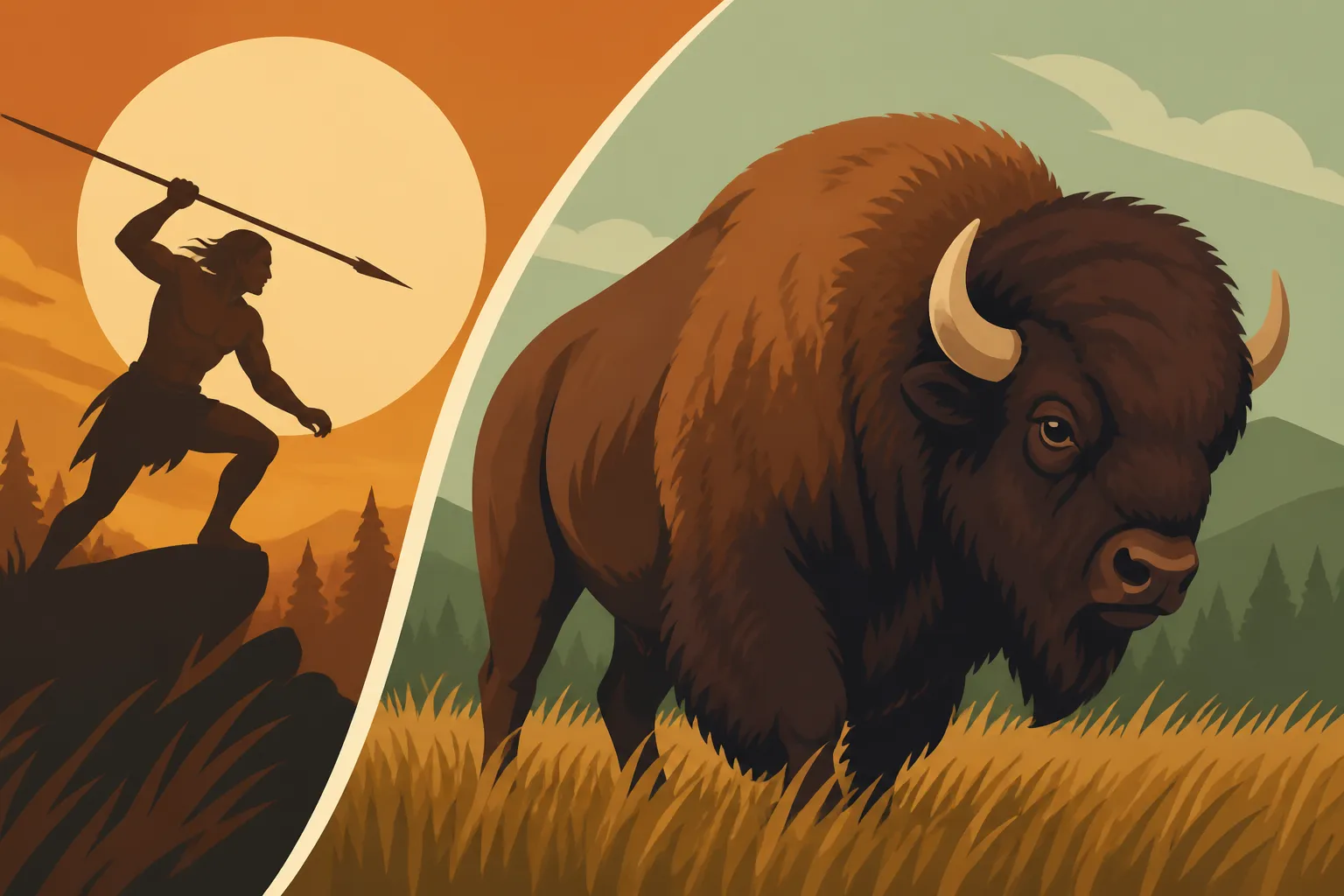
These weren't isolated sightings; rather, they pointed to established, thriving populations. Indigenous peoples, who had coexisted with bison for millennia, had a deep understanding of their movements and habits, relying on them for food, hides, and tools. Their stories and archaeological evidence further confirm the bison's significant role in the pre-colonial landscape, illustrating a complex web of life that included both humans and these massive herbivores. The sheer scale of these animals, easily dwarfing the white-tailed deer we are accustomed to, must have been an awe-inspiring sight for anyone witnessing them for the first time.
Evidence in the Land: Place Names and Trails
Even today, subtle clues hint at the former presence of bison in Virginia, etched into the very geography of our state. Numerous place names throughout Virginia, particularly in the western and southwestern regions, bear witness to the bison's historical range. You'll find names like "Buffalo Creek," "Buffalo Gap," or "Buffalo Mountain," scattered across the landscape. These aren't just quaint names; they often mark locations where bison were regularly sighted, forded rivers, or created natural passages through challenging terrain. These were significant landmarks for both indigenous people and early European settlers.
Moreover, the vast network of trails used by native peoples and later adopted by pioneers often followed ancient bison migration routes. These routes, beaten down over countless generations by the heavy hooves of thousands of animals, were the most efficient paths through the wilderness, connecting summer pastures with wintering grounds and reliable water sources. Even some of our modern roads might subtly trace the lines of these ancient animal highways. Understanding this historical context helps us appreciate how deeply intertwined the bison were with the very fabric of Virginia's natural and cultural history, leaving a legacy that persists in our maps and language.
The Eastern Bison's Ecology and Behavior
The Eastern bison (Bison bison pennsylvanicus) was not just a large animal; it was a keystone species, profoundly impacting the ecosystems it inhabited. Their presence created and maintained habitats essential for a myriad of other wildlife. While they were a subspecies of the American bison we know today, their specific adaptations and behaviors were tailored to the woodland-grassland mosaic of the East. They weren't creatures of vast, treeless prairies like their Western cousins; instead, they thrived in a more diverse environment of forests, open glades, and river bottoms, much like the terrain many of us hunt today.
Grazers and Landscape Engineers
Bison were nature's original landscape engineers, playing a vital role in shaping the Virginia wilderness. Their massive herds were constantly on the move, grazing on grasses, forbs, and even browsing on young woody vegetation. This continuous grazing pressure prevented forests from becoming too dense in certain areas, maintaining open glades and meadows that benefited other species, from deer to turkeys. By consuming vast quantities of plant material, they recycled nutrients back into the soil through their waste, enriching the land.
Furthermore, their wallowing behavior, where they would roll in dusty depressions, created temporary ponds or muddy areas that were crucial for insects, amphibians, and birds. These "buffalo wallows" became microhabitats, increasing biodiversity wherever the herds roamed. Think about the impact of a Virginia Deer Herd Size on the local browse, and then multiply that by a factor of ten or more in terms of sheer biomass and grazing intensity, and you start to get a sense of the bison's ecological footprint. They were an intrinsic part of the food web, a primary prey animal for large predators like wolves and potentially even Virginia's Black Bear Population.
Seasonal Movements and Habitats
Just like many of our modern game animals, Virginia's bison were not static creatures. They undertook seasonal movements, driven by the availability of forage and water. While they didn't have the epic migrations of the Western plains bison, they would shift their ranges between summer grazing areas and more sheltered wintering grounds. In the spring and summer, they likely dispersed into higher elevations and open fields, taking advantage of lush new growth. As winter approached, they would move into river bottoms, cane brakes, or more sheltered woodlands where forage might still be accessible.
These movements often followed established "buffalo paths" or "traces," which connected crucial resources. These paths were so well-worn that early settlers often remarked on them, sometimes even using them as natural roadways through dense wilderness. The Shenandoah Valley, with its fertile bottomlands and vast limestone-derived soils, was a particularly important habitat, as were the more open areas of the Piedmont and the western mountain valleys. Their ability to thrive in diverse habitats, from high mountain benches to low riverine areas, speaks to their adaptability before human pressures began to mount.
Drivers of Decline: The Vanishing Herds
The disappearance of bison from Virginia is a stark reminder of humanity's historical impact on wildlife populations. It wasn't a sudden event but a gradual erosion, driven by a combination of factors that ultimately led to the extirpation of the Eastern bison subspecies. This story is unfortunately echoed in the decline of other species, like the passenger pigeon or Why Red Wolves Vanished From Virginia. The sheer abundance described by early explorers eventually succumbed to unchecked exploitation and a rapidly changing landscape.
Subsistence and Market Hunting Pressures
One of the primary drivers of the bison's decline was unsustainable hunting pressure. While indigenous peoples hunted bison for millennia, their methods were generally sustainable, deeply intertwined with cultural reverence and a connection to the land. However, with the arrival of European settlers, a new paradigm emerged. Bison were hunted not just for subsistence but increasingly for commercial gain. Their hides were valuable commodities, and their meat, though difficult to transport long distances, was a vital food source for growing frontier populations.
As settlement expanded, hunting intensified. Market hunters, driven by profit, would take animals indiscriminately. Unlike the regulated hunting we see today, there were no bag limits, no seasons, and little thought for population management. A single hunter could kill multiple bison, using only what was practical, and often leaving much of the carcass to waste. This relentless pressure, combined with their relatively slow reproductive rates for such large animals, quickly began to decimate herds across the state. It highlights the critical importance of modern wildlife management and harvest reporting requirements, which protect species like White-Tailed Deer Across Virginia from similar fates.
Habitat Fragmentation and Agricultural Expansion
Concurrent with overhunting, the very landscape that sustained Virginia's bison began to change dramatically. As European settlements grew, forests were cleared for timber, and vast tracts of land were converted to agriculture. What were once contiguous bison ranges became fragmented patches, isolated by farms, fences, and human development. These agricultural lands also directly competed with bison for prime forage areas, especially in fertile river valleys and open meadows.
Bison, requiring large areas to roam and graze, found their traditional migratory routes blocked or destroyed. As their habitat shrunk and became segmented, their ability to find food, avoid predators, and find mates became increasingly challenging. This loss and fragmentation of habitat are recurring themes in wildlife conservation, affecting everything from Virginia Turkey Population Estimate to small game. The cumulative effect of relentless hunting and the relentless march of agricultural expansion proved to be an insurmountable challenge for Virginia's bison, pushing them towards their eventual demise.
A Lost Legacy: Echoes and Modern Efforts
The last wild bison was likely seen in Virginia in the early to mid-1800s, a somber end to a species that once thundered across much of the state. While they are no longer part of Virginia's wild fauna, their story serves as a powerful lesson in conservation and the profound impact humans can have on the natural world. It also inspires modern efforts to manage and, in some cases, reintroduce large native species.
The Last Known Virginia Bison
Pinpointing the exact moment the last wild bison vanished from Virginia is difficult, as their decline was a slow, agonizing process rather than a single dramatic event. However, historical records suggest that by the early 19th century, sightings became exceedingly rare. The very last individual or small, isolated groups would have been pushed into the most remote corners of the southwestern mountains, far from human settlement. Imagine being the last hunter to glimpse one of these magnificent beasts, not knowing you were witnessing the closing chapter of a species in our state.
By the mid-1800s, the Eastern bison was considered extirpated from Virginia, and indeed, the entire Eastern range. It's a sobering thought that within just a couple of centuries of intensive settlement, a species that had thrived here for thousands of years could be completely erased from the landscape. The loss of such a significant grazer undoubtedly altered the ecological dynamics of Virginia forever, changing the very composition of plant communities and the behaviors of remaining herbivores like our deer. It is a prime example of Game You Cannot Hunt in Virginia due to historical circumstances.
Learning from History: Conservation Today
The story of the Virginia bison, while tragic, holds invaluable lessons for modern conservation. It underscores the critical need for sustainable wildlife management, regulated hunting, and habitat preservation. Today, the Virginia Department of Wildlife Resources (DWR) employs science-based strategies to manage populations of deer, bear, and turkey, ensuring their health and abundance for future generations. We have come a long way from the unregulated exploitation that led to the bison's downfall.
Modern efforts, such as the Virginia Elk Restoration in the Coalfields in the southwestern part of the state, offer a glimmer of hope and a chance to right past wrongs. While these are Western elk, not Eastern bison, the principle is similar: bringing a large, native grazer back to a landscape where it once thrived. This project demonstrates a commitment to restoring ecological balance and providing new opportunities for wildlife viewing and, eventually, regulated hunting. Understanding the history of the Virginia bison reminds us that conservation is an ongoing process, a continuous commitment to protecting the wild heritage that defines our great state.
Bison's Impact on the Landscape – Then and Now
To truly grasp the impact of the Eastern bison, consider a comparison of the landscape's carrying capacity and vegetation structure.
| Feature | Pre-Settlement Virginia (with Bison) | Modern Virginia (without Bison) |
|---|---|---|
| Dominant Grazer | Eastern Bison, White-tailed Deer | White-tailed Deer, some livestock in managed areas |
| Vegetation Structure | More open glades, maintained grasslands, diverse plant communities | Denser forests, less natural open habitat, areas of agricultural monoculture |
| Trail Systems | Extensive, well-worn bison trails connecting resources (often used by humans) | Primarily human-made roads and trails, some deer trails |
| Ecological Role | Keystone species, landscape engineers, nutrient recyclers | Niche primarily filled by deer, requiring human intervention for habitat management |
| Cultural Significance | Central to indigenous life, awe-inspiring for early settlers | Known through historical accounts and place names |
This table helps illustrate the significant ecological shift that occurred with the loss of bison. While we don't have active wild bison herds in Virginia today, their legacy in place names and historical accounts reminds us of a truly wild past and influences modern conservation practices for species like Virginia Deer Population Estimate and Virginia's Recovering Bobcat Population.
Disclaimer
This article is for general informational purposes only and does not constitute professional advice. Laws, prices and regulations vary by location and change over time. Consult a qualified professional for guidance on your specific situation.