Virginia Ruffed Grouse Decline
It's heartbreaking, isn't it? To think of a time when the crisp autumn woods of Virginia echoed with the thunderous drum of a ruffed grouse, and now, those moments feel rarer than hen's teeth. Many of us who grew up chasing these ghost birds in the mountains have seen their numbers dwindle, and it leaves a profound ache. This guide isn't just about statistics; it's about understanding why this treasured bird is disappearing from our Virginia landscape and what we can do to help.
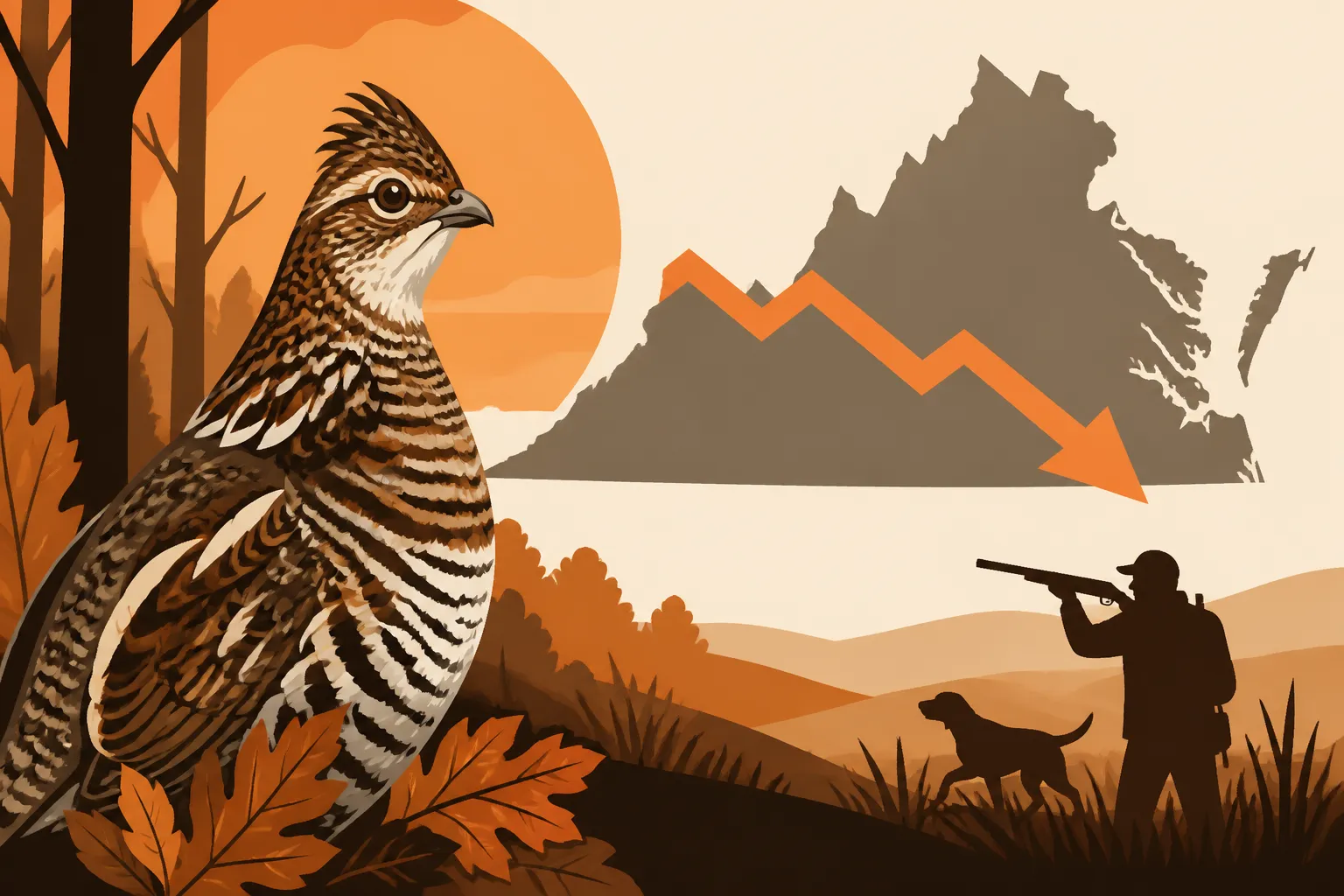
The Vanishing Drum: A Look at Virginia's Ruffed Grouse Population Trends
For many hunters, the ruffed grouse isn't just a game bird; it's a symbol of wild, untamed Appalachia. Its explosive flush from thick cover and the distinctive drumming call that vibrates through the forest are etched into the memories of generations. But for those of us who have spent decades tramping through Virginia's mountains, there's an undeniable and saddening truth: the grouse population isn't what it used to be.
Historical Abundance and Modern Scarcity
My grandfather, God rest his soul, used to tell stories of hunting grouse in the Shenandoah Valley back in the 1950s and '60s. He'd talk about days where he and his bird dog would flush a dozen or more birds, and while they weren't always easy to hit, the sheer number of encounters made for an exhilarating day afield. Those stories, for younger hunters today, almost sound like fables. We're living in a different era, one where just hearing a grouse drum, let alone flushing one, feels like a minor miracle.
Back then, the forests were often in different stages of growth. Logging, farming, and even natural disturbances created a mosaic of habitats—dense young saplings, reverting old fields, and mature timber – all the things grouse need. There was always a thicket of something, a transitional zone for them to thrive in. Today, when you walk those same mountains, you often find vast stretches of mature, unbroken forest with an open understory. It’s beautiful, no doubt, but it's not ideal grouse habitat. You might hike for hours through what looks like perfect cover, only to hear nothing but the crunch of leaves underfoot. It’s a stark contrast to the historical accounts and a real gut punch for those of us who remember better days or heard tales of them. The thrill of the chase is still there, but the expectation of consistent encounters has unfortunately shifted from hope to a long shot.
Where Grouse Used to Roam (and Where They Cling On)
Historically, ruffed grouse had a much wider distribution across Virginia, extending into the western Piedmont where suitable mountainous or hilly terrain with dense cover existed. They were found throughout the vast reaches of the Blue Ridge, Alleghany, and Cumberland Mountains, their ideal habitat being a mix of mature timber and dense, regenerating clearcuts or thickets. These areas, with their varied topography and cooler climates, provided the perfect conditions for them to thrive.
Today, while you can still find pockets of grouse, their range has largely contracted to the higher elevations and more remote sections of the western mountains. Think about the wild, rugged terrain within the George Washington National Forest Hunting or the deeper hollows and steep slopes of the Jefferson National Forest in counties like Bath, Highland, or Giles. These are the places where the remnants of the population hold on, often in isolated pockets where specific habitat conditions still exist. You'll find them clinging to brushy draws, laurel thickets, and regenerating timber stands that provide that crucial overhead cover and dense escape routes they need. A hunter might spend days exploring vast tracts of these public lands, relying on detailed topo maps and tools like GoHunt to pinpoint areas that might still hold a bird. It's not uncommon to walk miles in prime-looking territory only to realize how truly scarce these birds have become. It often feels like you're searching for a needle in an immense, beautiful haystack, hoping to connect with one of these magnificent birds.
Unraveling the Web of Decline: Key Factors Impacting Grouse Survival
The decline of the ruffed grouse isn't a simple story with a single villain. It's a complex tapestry woven from multiple environmental changes, each contributing to the challenges this species faces. Understanding these factors is crucial if we hope to see their numbers rebound.
Habitat Loss and Fragmentation
This is arguably the biggest piece of the puzzle. Ruffed grouse are "early successional" species, meaning they absolutely thrive in young, dense forests—think clearcuts, regenerating burns, or areas heavily impacted by storms. They need that thick, almost impenetrable cover provided by saplings, briars, and low-growing shrubs. This dense vegetation offers protection from aerial predators like hawks and owls, and ground predators like coyotes and foxes. It also provides food sources like buds, catkins, and insects.
The problem in Virginia is that much of our forest land has matured. We have vast, beautiful tracts of older growth timber, which is fantastic for many other species, but it lacks the dense understory grouse require. When you walk through a mature oak stand, for instance, the canopy might be closed, but the forest floor is often open and relatively clear. This makes grouse incredibly vulnerable. They don't have anywhere to hide or escape quickly. Furthermore, what young forest habitat does exist is often fragmented—small, isolated patches surrounded by unsuitable mature timber, agricultural fields, or even suburban development. This isolation makes it harder for grouse populations to connect and spread, and it can leave them stranded in inadequate habitat. It’s a tough situation, and it requires a long-term vision for forest management that includes creating and maintaining this critical young forest habitat, even if it might not always look "pretty" to every eye. It truly comes down to understanding the life cycle of the forest itself and managing for diversity, just like when we consider Virginia's Recovering Bobcat Population and how their habitat needs intertwine with other species.
Predation Pressure and Disease
While habitat loss weakens grouse populations, increased predation pressure and potential disease impacts can deliver further blows. In fragmented landscapes, generalist predators like coyotes, raccoons, opossums, and various raptors often thrive. These adaptable predators are very efficient at finding prey, and when grouse are forced into open, mature forests lacking proper cover, they become easier targets. Imagine a hawk soaring above an open understory, spotting a grouse on the forest floor, or a coyote easily navigating the sparse woods to ambush a bird. The balance is simply off.
Beyond direct predation, diseases can also play a role, though their full impact is still being studied. West Nile Virus (WNV) has been identified as a significant threat to grouse populations in other parts of their range, particularly in the Midwest. While extensive research specific to Virginia is ongoing, the possibility of WNV affecting our grouse is a concern. WNV is transmitted by mosquitoes, and infected birds can experience severe health issues, leading to mortality or making them more vulnerable to predators. It's a silent threat that's hard to quantify but could be contributing to the decline. The Virginia Department of Wildlife Resources (DWR) conducts Virginia Wildlife Disease Monitoring, and staying informed about their findings is important for understanding these subtle pressures on our game species. It highlights how complex wildlife management is, extending far beyond just hunting regulations.
Climate Change and Weather Patterns
The subtle, long-term shifts in our climate and local weather patterns also add layers of challenge for ruffed grouse. Warmer winters, for instance, can be detrimental. Grouse often roost in snow burrows, using the insulating properties of snow to protect them from extreme cold and predators. A lack of consistent, deep snow cover removes this vital survival tool, forcing them to spend more energy to stay warm and exposing them to predators.
More extreme weather events, such as unusually heavy spring rains or prolonged droughts, can also impact nesting success and chick survival. Cold, wet springs are particularly harsh on grouse chicks, which are vulnerable to hypothermia. If insect populations, a critical food source for growing chicks, are also affected by erratic weather, it further compounds the problem. Even shifts in the timing of bud break or insect emergence due to climate change could throw off the delicate balance of their reproductive cycle. It's a complicated interplay, and while we often think of hunting or logging as direct impacts, these broader environmental changes are slowly but surely reshaping the landscape and challenging species like the ruffed grouse in ways we're only beginning to fully comprehend. These environmental shifts can also impact other upland birds, as seen in the broader discussion around Virginia Quail Season Status.
The Ripple Effect: What the Grouse Decline Means for Virginia's Ecosystems and Hunters
The disappearance of a species, even one as elusive as the ruffed grouse, is never an isolated event. It sends ripples throughout the ecosystem and leaves a tangible void in the traditions of those who cherish Virginia's wild places.
Beyond the Bird: Ecological Indicators
Ruffed grouse are often considered an "indicator species." What does that mean? Well, when a species like the grouse—which requires very specific habitat conditions (those young, dense forests)—starts to decline rapidly, it often signals broader issues within that ecosystem. It tells us that the habitat quality and quantity for many other forest-dwelling species that also rely on early successional cover might be diminishing. Think about rabbits, woodcock, various songbirds, and even young deer, which all benefit from that thick, brushy growth. If the grouse are struggling, chances are, many of their neighbors are facing similar challenges, even if they're not as overtly noticeable.
A thriving grouse population indicates a healthy, diverse forest that includes a mosaic of growth stages, from regenerating clearcuts to mature timber. This diversity supports a wider range of biodiversity, from the insects that feed grouse chicks to the larger mammals that roam the same woods. When that diversity in forest age structure shrinks, the entire ecosystem becomes less resilient. The loss of the ruffed grouse is more than just the loss of a bird; it’s a red flag waving in the mountains, signaling that something fundamental about our forest health is out of balance. It's a stark reminder of the interconnectedness of nature, much like how a change in Virginia Turkey Population Trends can tell us about broader forest health.
A Fading Tradition: Impact on Virginia's Upland Hunters
For those of us who grew up with a passion for upland bird hunting, the decline of the ruffed grouse is deeply personal. It's not just about the numbers; it's about a fading tradition. There's a unique satisfaction that comes from hunting grouse: the silent, methodical walk through dense cover with a keen bird dog, the sudden, heart-stopping flush, and the split-second decision-making required for a clean shot. It's a challenging, rewarding pursuit that truly connects you to the wildness of the mountains.
As the birds become scarcer, so do the opportunities to experience this unique challenge. Hunters who once planned multi-day trips specifically for grouse now find themselves spending more time just trying to locate any sign, often coming up empty-handed. This impacts dog training, as young pointers and setters have fewer wild birds to learn from. It also shifts hunting focus, with many upland enthusiasts turning to more abundant species like Virginia Squirrel and Rabbit Populations or traveling out of state for grouse. The camaraderie of a grouse camp, the stories shared around a crackling fire after a day of busting brush—these are precious parts of our heritage. The decline threatens not just the bird, but the very culture that has grown up around pursuing it in the beautiful, rugged Virginia mountains. The impact on small, rural communities that used to see an influx of grouse hunters during the season is also palpable, as fewer hunters mean less business for local shops, restaurants, and lodging.
Efforts Towards Recovery: Hope for Virginia's Ruffed Grouse
While the challenges facing Virginia's ruffed grouse are significant, it's not a story without hope. Dedicated conservationists, wildlife agencies, and even private landowners are actively working to understand the decline and implement strategies for recovery. These efforts are often long-term investments, but they are absolutely essential for the future of this iconic bird.
Habitat Management and Restoration Initiatives
The most impactful way to help ruffed grouse is by restoring and creating the early successional habitat they so desperately need. This isn't about letting forests grow wild; it's about active, science-based forest management. One primary tool is carefully planned timber harvests, including clearcuts. Now, I know "clearcut" can sound jarring, but when done correctly and with wildlife in mind, it's incredibly beneficial for grouse. A well-managed clearcut regenerates quickly into a dense thicket of saplings, briars, and new growth that grouse love. These cuts are often strategically placed, varying in size and timing to create a mosaic of different age classes across the landscape.
Another important tool is prescribed burning, especially in areas where it mimics historical fire regimes. Controlled burns can clear out dense underbrush in some forest types, stimulating new growth that provides food and cover. Partnerships are absolutely vital here. Organizations like the Ruffed Grouse Society work hand-in-hand with state agencies like the Virginia Department of Wildlife Resources (DWR) and private landowners to implement these habitat projects. They provide expertise, funding, and education. You can often find information about specific projects or habitat work being done on public lands like Virginia's many Wildlife Management Areas by checking resources or maps that outline Habitat Work on Virginia WMAs or by using online mapping tools. These efforts are not just about grouse; they also benefit other species that rely on this dynamic forest environment.
Research and Monitoring: Understanding the Path Forward
Before we can effectively manage for grouse, we need to truly understand why they are declining and what factors are most critical in Virginia. This is where robust scientific research and ongoing monitoring come into play. Wildlife biologists are constantly studying various aspects of grouse ecology, including population dynamics, reproductive success, survival rates, and habitat use. They might track individual birds to understand their movements and preferred cover, analyze hunter harvest data (when available), and conduct drumming counts in the spring to estimate population trends.
Beyond just counting birds, research also delves into the more subtle threats, such as the prevalence of diseases like West Nile Virus and how climate change impacts grouse survival and breeding success. This data helps conservation managers make informed, data-driven decisions about where to focus habitat restoration efforts and what specific techniques might be most effective. It's a long game, requiring patience and consistent effort, but without this scientific foundation, our efforts would be based on guesswork. Keeping an eye on what GoHunt or the DWR publish regarding their ongoing studies and future plans can give hunters a better understanding of these complex challenges. It's a crucial component to ensure a future for species like the Ruffed Grouse in the Virginia Mountains.
What Hunters Can Do: Advocating for Grouse and Upland Habitat
As hunters, we have a unique perspective and a deep connection to the land and its wildlife. Our voices, our passion, and our actions can make a real difference in the fight to conserve ruffed grouse and their essential habitat. We're not just consumers of wildlife; we're stewards, and it's our responsibility to advocate for the future of these birds.
Support Conservation Organizations
One of the most direct and effective ways to help is by supporting organizations that are on the front lines of grouse and upland habitat conservation. Groups like the Ruffed Grouse Society and others dedicated to game bird and habitat preservation use membership dues and donations to fund crucial research, habitat restoration projects, and advocacy efforts. These organizations often work closely with state wildlife agencies and private landowners, leveraging their expertise and resources to make a tangible impact on the ground.
By joining these groups, you're not just giving money; you're becoming part of a collective voice that speaks for wildlife. Your membership shows that hunters care about more than just harvesting a bird—they care about healthy ecosystems and sustainable populations. These organizations often provide opportunities to volunteer for habitat projects, attend educational workshops, or simply stay informed about the latest conservation efforts. Every membership, every donation, no matter how small, contributes to a larger effort to ensure future generations can still experience the thrill of a flushing grouse. Think of it as investing in the future of our hunting heritage and the health of our forests.
Educate and Engage
Beyond financial support, individual hunters can play a vital role by becoming informed advocates and educators. Take the time to learn about the specific habitat needs of ruffed grouse and the challenges they face in Virginia. Read articles, attend DWR public meetings, and engage with biologists if you have the chance. The more you understand, the better equipped you'll be to explain the issues to others and dispel misconceptions, such as the idea that clearcutting is always bad for wildlife.
Share your knowledge with fellow hunters, landowners, and non-hunters alike. Talk about the importance of diverse forest management, including the need for young, dense cover. If you hunt public land, report your observations to DWR—whether it's grouse flushes, drumming activity, or even habitat concerns you notice. You can use tools like the Scouting With the Virginia DWR App to report sightings or learn about local habitat. If you have the opportunity, discuss habitat management with private landowners who might be willing to implement grouse-friendly practices on their property. Every conversation, every shared piece of information, helps to build a broader understanding and support for conservation. We, as hunters, are often the first to notice changes in wildlife populations, and our observations and advocacy are invaluable in protecting the future of Virginia's ruffed grouse.
Disclaimer
This article is for general informational purposes only and does not constitute professional advice. Laws, prices and regulations vary by location and change over time. Consult a qualified professional for guidance on your specific situation.