Feral Hogs Across Virginia
The sight of a feral hog tearing up a freshly planted field or leaving a wallow of destruction in a pristine stream bottom is enough to make any Virginia landowner or hunter frustrated. These invasive animals aren't just a nuisance; they're a serious threat to our ecosystems, agriculture, and native wildlife. This comprehensive guide will walk you through everything you need to understand about feral hogs in the Old Dominion, from their biology and spread to the most effective hunting and control strategies available.
Understanding the Feral Hog Problem in Virginia
Feral hogs are a true force of nature, and unfortunately, not in a good way. Their destructive habits and incredibly fast reproduction rates make them one of the most challenging invasive species to manage across the United States, and Virginia is no exception. It’s vital for anyone who spends time outdoors, whether hunting or simply enjoying nature, to understand what we're up against.
What Exactly is a Feral Hog?
When we talk about "feral hogs" in Virginia, we're referring to any pig that is not a domesticated animal and lives in the wild. This includes escaped domestic pigs, wild boars, and crosses between the two. In essence, they are pigs that have either escaped from farms and reverted to a wild state, or they are descendants of European wild boars brought over for sport hunting generations ago that also escaped or were intentionally released. Unlike their barnyard cousins, feral hogs are incredibly tough, intelligent, and perfectly adapted to survive and thrive in a variety of challenging environments. They quickly develop thick coats, formidable tusks, and an ingrained wildness that makes them completely different from a farm pig. Their physical appearance can vary wildly, from solid black to spotted, reddish-brown, or even striped like a "pineywoods rooter" piglet.
The Silent Invasion: How Hogs Arrived and Spread
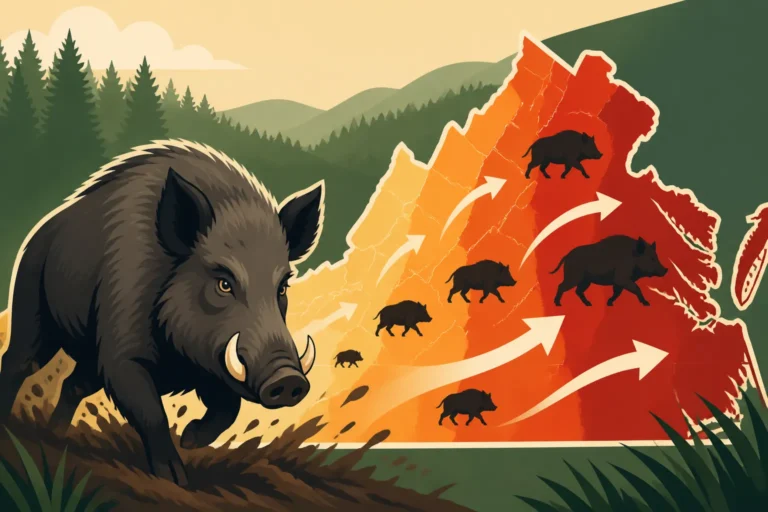
The presence of feral hogs in Virginia isn't a new phenomenon, but their spread has certainly accelerated in recent decades. Historically, pigs were brought to North America by early European settlers and often allowed to roam freely for foraging, leading to some becoming feral. More recently, however, the problem has been exacerbated by illegal translocation – essentially, people intentionally moving and releasing hogs, often for hunting purposes. This misguided practice has unfortunately introduced hogs to new areas where they previously didn't exist, rapidly expanding their range. Additionally, natural migration from neighboring states where populations are already established also contributes to their spread within Virginia's borders. These animals are incredibly mobile and can travel significant distances, especially when food sources are scarce or pressure is high. For a deeper dive into their origins, consider exploring our article on Virginia Feral Swine Genetics and Origin.
Ecological and Agricultural Damage Caused by Feral Hogs
The impact of feral hogs on Virginia's landscape is nothing short of devastating. Their constant rooting, wallowing, and foraging habits cause extensive damage to both natural habitats and agricultural lands. Imagine waking up to find a perfectly manicured lawn or a freshly planted cornfield completely rototilled overnight – that's the kind of destruction hogs can wreak. They obliterate native plant communities, contaminate water sources with their waste, and compete directly with native wildlife like deer, turkeys, and small game for food resources. Their diet is incredibly varied, consuming everything from acorns and roots to eggs of ground-nesting birds, fawns, and even small reptiles. This can have a cascading effect on local ecosystems. Farmers, in particular, bear the brunt of this damage, with significant crop losses and damage to fences, irrigation systems, and pastures. Understanding the true scope of Crop Damage Hogs Cause in Virginia is critical for appreciating the urgency of their control. The cost of this damage runs into the millions of dollars nationwide each year, and Virginia farmers are unfortunately part of that statistic.
Where Feral Hogs Roam in the Old Dominion
While feral hogs can pop up almost anywhere, there are definite hotbeds within Virginia where populations are more established and concentrated. Knowing these areas and being able to identify fresh hog sign are crucial for anyone looking to hunt or help manage these animals. Their ability to adapt to diverse environments means they can thrive in mountain forests, Piedmont farmlands, and even coastal plain swamps.
Virginia's Feral Hog Hotbeds
Historically, many of Virginia’s established feral hog populations have been concentrated in the southern and southwestern parts of the state, particularly along the borders with North Carolina, Tennessee, and Kentucky. These areas often provide ample cover, diverse food sources, and sometimes even the opportunity for migration from contiguous populations in neighboring states. For instance, counties in the Southwest Coalfields region, where dense timber meets agricultural plots, have seen an increase in sightings and localized populations. We've also observed populations spreading into parts of the Piedmont and even some coastal plain areas. The Virginia Department of Wildlife Resources (DWR) actively monitors reports, but pinpointing exact numbers for How Many Feral Hogs Virginia Has can be challenging due to their elusive nature and constant movement. However, anecdotal evidence and hunter reports often align with areas that have a mix of dense forest, agricultural fields, and ample water sources. It's often where the land provides both food and security that they truly dig in. Hunters looking for specific hotspots might want to consult DWR resources or local county extension offices for the most up-to-date information on Which Virginia Counties Have the Most Hogs.
Identifying Hog Sign in Different Habitats
Feral hogs leave a distinct trail of destruction wherever they go. Learning to read these signs is like understanding their language and is key to successful scouting. In wooded areas, look for "rooting" – areas where the ground has been torn up, often appearing as if a rototiller went through. They're searching for roots, tubers, and invertebrates. You might also find "wallows" – muddy depressions where hogs have rolled to cool off and remove parasites. These wallows are often near water sources and can be quite large, with mud rubbed off on nearby trees or rocks. Their tracks are distinct, with two prominent toes and often visible dewclaws, similar to deer but generally rounder and wider. Look for "rubs" on trees where they've scratched themselves, especially if there's mud or dried hair evident. In agricultural fields, beyond the obvious rooting damage, you might find flattened areas where they've bedded down or fed extensively. Don't forget their scat; it can vary but often looks like dog or deer droppings, only more irregular and often containing bits of vegetation or insects. Pay attention to fresh sign, as hogs are constantly on the move. Tools like GoHunt mapping applications can be incredibly useful for marking and analyzing these signs in relation to terrain features and water sources, helping you piece together their travel patterns.
Predicting Hog Movement and Preferred Areas
Hogs are creatures of habit, but also opportunists. Their movement is heavily influenced by food availability, water, and cover. They often travel along creek bottoms, dense brush lines, and thick timber to move between feeding and bedding areas. During warmer months, they tend to be more nocturnal, seeking the cool comfort of dense cover during the day and emerging to feed at night. In colder weather, they might be more active during daylight hours, especially if a good food source is available. Look for natural funnels – narrow strips of cover that connect larger blocks of habitat – as these can be high-traffic areas. Oak ridges with abundant acorns are like magnets for hogs in the fall and winter. Agricultural fields, especially corn, soybeans, and peanuts, are prime feeding grounds. Water sources are non-negotiable for hogs, so always focus your scouting around creeks, rivers, ponds, and swamps. Understanding Reading Virginia Mud for Fresh Deer Movement can also apply to hogs, as their tracks and rooting will be evident in soft, damp soil. Predicting their movements requires constant observation, good scouting, and an understanding of the local environment.
Virginia's Feral Hog Regulations: What You Need to Know
Hunting feral hogs in Virginia is less about traditional "seasons" and more about active population control due to their destructive nature. The Virginia Department of Wildlife Resources (DWR) views feral hogs primarily as an invasive species, and the regulations reflect this commitment to eradication rather than conservation. It's crucial to be aware of these rules before you head afield.
The "Year-Round, No Limit" Rule
This is perhaps the most critical regulation for anyone considering hunting feral hogs on private land in Virginia: there is generally a year-round open season with no bag limits on private property. This approach highlights the DWR's stance that feral hogs are an invasive threat that needs to be removed whenever and wherever possible. This means if you have permission to hunt on private land, and you encounter feral hogs, you are legally able to harvest them at any time of year. This differs significantly from how deer or turkey seasons are structured. However, always double-check the latest DWR regulations or the article Virginia's Year-Round Hog Rule on Private Land before going out, as rules can occasionally be updated. The goal here is to encourage landowners and hunters to remove these destructive animals without the constraints of typical game animal seasons. This freedom provides a huge advantage in managing localized populations effectively.
Hunting Hogs on Public vs. Private Land
While the "year-round, no limit" rule broadly applies to private lands, hunting feral hogs on public lands in Virginia comes with more specific restrictions. On most Virginia Wildlife Management Areas (WMAs) and National Forests (like George Washington National Forest or Jefferson National Forest), feral hogs may only be taken during the open firearms or archery seasons for other game species, primarily deer. This means you generally can't just go hog hunting on public land outside of an established deer season. The rationale behind this is often related to managing hunter pressure, ensuring public safety, and preventing conflicts with other hunting activities. Always consult the specific WMA or National Forest regulations, as well as the general Virginia DWR hunting regulations for the most current information. Obtaining proper licenses and permits, including any required for big game, is still necessary. On private land, however, the emphasis is on landowner discretion and eradication. If you have explicit landowner permission, you can generally hunt them more freely. This distinction is vital for avoiding potential legal issues. Our guide on Virginia Hog Hunting Permit Requirements provides further clarity on this.
Night Hunting and Electronic Call Regulations
Night hunting is a highly effective method for controlling feral hog populations, especially since hogs often become nocturnal in response to hunting pressure or warm weather. In Virginia, night hunting feral hogs is generally permitted on private land with the landowner's permission. This often involves the use of artificial lights, including spotlights, and can also extend to thermal and night vision devices. These tools are incredibly effective because hogs are often more active at night and less wary. When considering night hunting, always verify local ordinances, as some counties might have specific restrictions on discharging firearms at night or within certain distances of residences. Electronic calls are also legal to use for hunting feral hogs in Virginia. These calls can mimic hog vocalizations, such as distress calls or feeding sounds, to attract animals into range. Combining night hunting with electronic calls can be a potent strategy for increasing your success rate. For specific details on this tactic, you'll want to review our article on Night Hunting Hogs With Lights on Private Land, which covers the nuances of using these methods responsibly and legally. Remember, safety should always be your top priority, especially when hunting after dark.
Effective Strategies for Hunting Feral Hogs
Hunting feral hogs requires a different mindset than pursuing deer or turkeys. Due to their intelligence, adaptability, and explosive reproductive rates, aggressive and consistent tactics are often needed. This isn't just sport; it's a vital part of managing an invasive species that threatens our natural resources.
Spot-and-Stalk and Ambush Hunting
These are two of the most common hunting methods for hogs, especially for individual hunters. Spot-and-stalk involves actively searching for hogs, often by glassing open fields or clearings from a distance, and then carefully approaching once a group (a "sounder") or a lone hog is spotted. This method requires stealth, patience, and good wind awareness, as hogs have an excellent sense of smell. It's often most effective in areas with good visibility and varied terrain that offers cover for your approach. GoHunt's mapping features can be invaluable here, helping you identify potential travel corridors, bedding areas, and approach routes before you even step foot in the field. Ambush hunting, on the other hand, is more passive. It involves setting up in a strategic location where hogs are known to travel or feed, such as a field edge, a food plot, or a trail leading to a water source. This is similar to deer hunting from a treestand or ground blind. Baiting can be very effective for ambush hunting where legal, drawing hogs into a predictable spot. Corn is a common and highly effective bait. Whether you choose to spot-and-stalk or ambush, understanding their patterns, especially in relation to food and water, is paramount.
Trapping Feral Hogs: A Control Necessity
For comprehensive hog control, especially when dealing with larger sounders or trying to eradicate them from a specific area, trapping is hands down the most effective method. Hunting alone, while enjoyable, often only removes a small percentage of a sounder, and the remaining hogs quickly become "trap-shy" or disperse, making them even harder to target. Trapping, conversely, aims to capture an entire sounder at once. This typically involves large, sturdy corrals or box traps baited heavily with corn. Modern trapping systems often incorporate cellular trail cameras and remote-triggering mechanisms, allowing trappers to monitor the trap remotely and only drop the gate once the entire sounder is inside. This prevents partial captures, which can educate hogs and make them wary of future traps. Trapping Virginia Feral Hogs is a specialized skill that requires dedication and the right equipment, but it's essential for making a significant dent in local hog populations. Successful trapping often means moving traps strategically, pre-baiting for several days or weeks to establish a feeding pattern, and being patient enough to wait for the whole group to commit.
Hunting with Dogs: A Traditional and Effective Method
Hunting hogs with dogs is a deeply rooted tradition in many parts of the country, and it can be an incredibly effective way to locate and bay or catch feral hogs, particularly in dense cover where visibility is limited. This method typically involves "bay dogs" that locate and loudly bay (bark at) the hog, holding it in place until the hunter can arrive for a shot. Sometimes "catch dogs" are also used, which physically grab and hold the hog, allowing the hunter to move in. This is a highly active and often intense form of hunting that requires well-trained dogs, appropriate safety gear for both dogs and hunters (like cut vests for dogs), and a keen understanding of hog behavior. It’s also crucial to be aware of and comply with all Virginia DWR regulations regarding hunting with dogs, as specific rules apply to different game species and areas. While not for every hunter, those who practice it consistently report high success rates, especially in areas with thick cover that would be impenetrable for other hunting methods. However, it's a significant commitment in terms of dog training and equipment.
Utilizing Thermal and Night Vision Gear
Given that feral hogs are often most active during the low-light hours of dawn, dusk, and throughout the night, thermal and night vision optics have become game-changers for hog hunters. Thermal optics detect heat signatures, allowing you to "see" hogs even in complete darkness, thick brush, or fog where traditional optics would be useless. Night vision, on the other hand, amplifies ambient light, making it possible to see in very dim conditions. Both types of technology allow hunters to extend their effective hunting hours and capitalize on the hogs' nocturnal habits. As mentioned earlier, Night Hunting Hogs With Lights on Private Land is legal on private property in Virginia, making these tools incredibly valuable. They can be used for spotting and then for aiming, often mounted directly on a rifle. Using thermal or night vision requires practice to become proficient, as the visual landscape they present is very different from what you see with the naked eye. However, the advantage they provide in detection and target acquisition is undeniable, significantly increasing success rates, particularly in pressured areas where hogs have become primarily nocturnal.
Understanding Feral Hog Behavior and Biology
To truly combat the feral hog problem, you need to understand the enemy. These animals are incredibly resilient, intelligent, and driven by a few core instincts: eat, reproduce, and survive. Their biological makeup and social structures are what make them such formidable invaders.
Reproduction Rates and Population Dynamics
One of the most alarming aspects of feral hogs is their incredible reproductive capacity. Unlike many native game animals that reproduce once a year with a small litter, feral sows can breed at a very young age, sometimes as early as six months old. They can have multiple litters per year, often two, sometimes even three, with each litter consisting of 4-12 piglets. This means that a single sow can potentially contribute dozens of offspring to a population within a year. This biological fact is why simply "hunting them out" with traditional methods often isn't enough; their numbers can rebound incredibly quickly. Understanding Why Piedmont Hogs Reproduce So Fast is key to grasping the scale of the challenge. This exponential growth makes eradication programs incredibly difficult and emphasizes the need for consistent, aggressive removal efforts year-round. It's truly a numbers game where the hogs have a significant advantage unless constant pressure is applied.
Dietary Habits and Their Impact on Habitat
Feral hogs are opportunistic omnivores, meaning they will eat almost anything. Their diet typically consists of a wide range of plant matter (roots, tubers, acorns, fruits, seeds, agricultural crops) and animal matter (insects, earthworms, bird eggs, fawns, small mammals, carrion). This incredibly varied diet allows them to thrive in almost any habitat and adapt to seasonal changes in food availability. Their primary feeding method, "rooting," involves using their powerful snouts to dig up the soil in search of food. This rooting behavior is what causes so much damage to pastures, forests, and fields. They decimate native plant communities, destroy young tree saplings, and compete directly with native wildlife for vital food resources like acorns, which are crucial for deer, turkeys, and bears. They also carry diseases that can affect livestock and native wildlife. This incessant foraging pressure fundamentally alters ecosystems, often reducing biodiversity and changing the landscape dramatically. Their diet is a direct reflection of their destructive potential.
Social Structure and Group Dynamics
Feral hogs live in social groups called "sounders," which typically consist of several related sows and their offspring. Adult boars are often solitary, except when seeking to breed with a sounder. The sounder structure provides safety in numbers, aids in foraging, and helps protect the young. This social dynamic is important for hunters and trappers to understand. When you encounter a sounder, you're looking at a multi-generational family unit that moves and feeds together. If you only manage to harvest one or two animals from a sounder while hunting, the remaining hogs quickly become wary and may disperse, making them harder to locate. This is why trapping whole sounders is often the most effective control method – it disrupts the social structure entirely and removes a larger number of animals at once. Their intelligence within these groups is also notable; older, more experienced sows often lead sounders and can be incredibly adept at avoiding traps and hunters.
Gear and Equipment for Successful Hog Hunting
Having the right gear is essential for any hunting endeavor, but for feral hogs, specific choices can significantly increase your effectiveness. Given their toughness, nocturnal habits, and the environments they inhabit, your equipment needs to be up to the task.
Firearms and Ammunition Choices
When it comes to firearms for feral hogs, versatility and knockdown power are key. Hogs are notoriously tough animals, so a cartridge that can deliver sufficient energy is important. For rifles, popular calibers include .308 Winchester, .270 Winchester, 6.5 Creedmoor, and .30-06 Springfield. Even common deer calibers like the .243 Winchester can be effective with proper shot placement and appropriate bullet construction, but many hunters prefer something with a bit more punch. For close-quarters hunting in thick cover, shotguns loaded with slugs can also be very effective. Handguns are legal for hunting in Virginia, and larger calibers like .44 Magnum or .357 Magnum can be used at close range. When selecting ammunition, choose bullets designed for deep penetration and good expansion, such as bonded bullets or those with heavy jackets. For night hunting, a rifle equipped with thermal or night vision optics is ideal. Always prioritize ethical, clean kills by selecting the right caliber and ammunition for the conditions and ensuring you are comfortable and proficient with your chosen firearm. Our guide on Best Rifle Caliber for Virginia Deer can offer some transferable insights, as many calibers suitable for deer are also excellent for hogs.
Trapping Systems and Technologies
As we've discussed, trapping is often the most efficient way to control hog populations, especially entire sounders. Modern trapping systems have come a long way from simple box traps. Today's preferred setups are large, circular or rectangular corral traps, often constructed with sturdy hog panels and a single, remotely triggered gate. These traps are designed to hold an entire sounder once they enter. Key components include:
- Sturdy Panels: Heavy-duty hog panels or cattle panels, typically 4-6 feet tall, to prevent hogs from climbing or rooting out.
- Remote Triggered Gate: The most crucial component. These gates can be dropped via a cellular signal from your phone or a remote control once you confirm, often through a trail camera feed, that the entire sounder is inside.
- Cellular Trail Cameras: Essential for monitoring trap activity in real-time without disturbing the area. These cameras send photos or videos directly to your phone.
- Bait: Corn is the most common bait, often fermented to increase its attractiveness. Spread corn both inside and outside the trap to encourage hogs to enter.
Successful trapping involves patient pre-baiting, understanding hog travel routes, and selecting the right location. Brands like Jager Pro or Hog Slammer offer comprehensive trapping systems, but many effective setups can be built by resourceful landowners.
Optics and Lighting for Low-Light Conditions
Given the nocturnal tendencies of feral hogs, particularly those that have been pressured, specialized optics and lighting are indispensable.
- Thermal Optics: These devices detect heat signatures, making hogs stand out clearly against a cooler background, even in complete darkness, heavy fog, or thick brush. They are excellent for scanning large areas to locate hogs. Many come in monocular form for scanning, or as scopes for rifle mounting.
- Night Vision Optics: These amplify existing ambient light (starlight, moonlight) to create a visible image. While not as effective as thermal in absolute darkness or thick cover, they can offer a clearer, more detailed image for identification and aiming in dim conditions. Like thermal, they are available as monoculars, binoculars, or rifle scopes.
- Red or Green Lights: While some hunters prefer to use white lights, red or green lights are often favored because hogs (and many other animals) are less reactive to these colors, potentially making them less likely to spook. These lights can be handheld or weapon-mounted.
When choosing between thermal and night vision, consider your budget, the typical terrain you hunt, and the level of darkness you expect. Thermal is generally more expensive but offers superior detection in the toughest conditions. Night vision can be more affordable and provides good identification in areas with some ambient light. Always ensure any chosen lighting or optics comply with Virginia's specific regulations for night hunting, particularly on private land.
| Method | Pros | Cons | Ideal Scenario |
|---|---|---|---|
| Spot-and-Stalk | Active, engaging, covers large areas, good for mobile hunters. | Requires stealth and good wind, hogs have keen senses, can spook easily, limited effectiveness in thick cover. | Open agricultural fields, sparse timber, good visibility. |
| Ambush Hunting | Passive, allows for long waits, effective with bait, less physical. | Requires accurate scouting of travel routes, can be slow, hogs may become nocturnal or bait-shy. | Field edges, food plots, water sources, established hog trails. |
| Trapping | Most effective for population control, can remove entire sounders, less time-intensive once set up. | High initial cost for equipment, requires regular monitoring, can be labor-intensive to set up and move, requires understanding hog habits. | Areas with high hog density, for serious eradication efforts, protecting specific agricultural areas. |
| Hunting with Dogs | Excellent for dense cover, high success rate in locating and holding hogs, exciting. | Requires well-trained dogs, potential for dog injury, specific regulations, can be very physical, limited by terrain. | Thick swamps, dense forests, areas where hogs are hard to find otherwise. |
| Night Hunting | Capitalizes on nocturnal activity, can be highly effective with proper gear, less pressure on other game. | Requires specialized and often expensive thermal/NV gear, safety concerns with shooting at night, visibility challenges for tracking. | Any scenario where hogs are primarily nocturnal, especially over bait or in open fields. |
Processing and Utilizing Feral Hog Meat
Once you’ve successfully harvested a feral hog, the work isn't over. Proper field dressing, meat care, and cooking are crucial for ensuring you can enjoy the fruits of your labor. However, there are also important considerations regarding potential diseases that dictate careful handling.
Field Dressing and Meat Care in Warm Weather
Feral hogs, like any game animal, need to be field dressed promptly after harvest, especially in Virginia's often warm climate. The internal organs should be removed quickly to allow the carcass to cool down as fast as possible. This is paramount for preventing bacterial growth and ensuring good meat quality. If you're in the backcountry, consider the "gutless method" for easier transport, where you debone the animal in the field and pack out only the meat. If temperatures are high, bringing ice directly to the carcass or submerging game bags filled with meat in a cooler of ice water can drastically speed up cooling. Removing the hide quickly also helps with cooling. Flies can be a major issue, so having game bags (even clean pillowcases in a pinch) to cover the meat is essential. Transporting the animal quickly to a cooler or processing facility is ideal. The guidance for Field Dressing a Deer in Cold Weather applies somewhat, but the urgency for rapid cooling in warm weather for hogs is even greater.
Cooking and Preparing Feral Hog
Feral hog meat is lean and can be delicious, often described as having a richer, wilder flavor than domestic pork, similar to venison but with a pork-like texture. It's incredibly versatile and can be used in a variety of dishes. Many hunters enjoy it as roasts, chops, pulled pork, or ground for sausage. Because it's lean, cooking low and slow, especially with moisture, is often a good approach for tougher cuts (like shoulders or hams) to ensure tenderness. For leaner cuts like backstraps or tenderloins, quick searing or grilling works well. Always ensure feral hog meat is cooked thoroughly to an internal temperature of at least 160°F (71°C) to kill any potential parasites, particularly Trichinella spiralis. Marinating can also help tenderize and add flavor. Don't be afraid to experiment with your favorite pork recipes, adjusting for the leaner, wilder characteristics of feral hog.
Disease Concerns and Safe Handling
Feral hogs can carry a host of diseases that can potentially be transmitted to humans, livestock, and native wildlife. The most commonly known concern for humans is Trichinella spiralis, a parasitic roundworm that causes trichinosis. While rare in commercially raised pork today, it is still present in wild game. This is why thorough cooking (to 160°F/71°C) is absolutely essential. Other diseases include brucellosis, leptospirosis, and toxoplasmosis. While less common to transmit to humans, they highlight the need for careful handling. Always wear gloves when field dressing and processing feral hogs. Avoid getting blood or other fluids in your mouth or open cuts. Thoroughly wash all knives, cutting surfaces, and hands with hot, soapy water after handling. While Chronic Wasting Disease (CWD) is primarily a deer disease, the DWR recommends caution in areas where both hogs and CWD-positive deer exist. If you notice any signs of illness in a hog, such as unusual lesions, abscesses, or abnormal behavior, it's best to err on the side of caution and not consume the meat. Report any suspicious findings to the Virginia DWR, as outlined in our Virginia Wildlife Disease Monitoring guide, to help track the health of wild populations.
The Future of Feral Hog Management in Virginia
The battle against feral hogs is not one that can be won easily, or quickly. It requires sustained effort, collaboration, and a long-term perspective. The DWR and other agencies recognize the severity of the threat, but they can't do it alone.
Collaborative Efforts in Control
Effective feral hog management in Virginia is truly a team effort. The Virginia Department of Wildlife Resources (DWR) works closely with federal partners like the United States Department of Agriculture (USDA) Wildlife Services, local landowners, and hunter groups. USDA Wildlife Services often leads large-scale trapping and removal efforts, deploying significant resources and expertise to areas with established populations. They emphasize a comprehensive approach that includes surveillance, baiting, and large-scale trapping operations to remove entire sounders. Landowners play a crucial role by granting access, reporting sightings, and implementing control measures on their own properties. Without landowner participation, eradication efforts are severely hampered. Hunters, by proactively harvesting hogs where legal and reporting their sightings, also contribute significantly. These collaborative efforts are essential for tackling the problem across property lines and achieving any meaningful reduction in hog numbers. The DWR is actively engaged in monitoring Feral Swine Sightings in Southwest Virginia and other emerging areas to respond strategically.
Education and Awareness
Perhaps one of the most important aspects of long-term feral hog management is public education and awareness. Many people, including some hunters, are simply not aware of the ecological and agricultural damage caused by these animals or the unique challenges they pose. Educating landowners, farmers, and the general public about responsible hunting practices, the importance of reporting sightings, and the dangers of illegal hog translocation (releasing hogs for hunting purposes) is absolutely critical. Campaigns that highlight the "why" behind the year-round hunting regulations and the "how" of effective trapping methods can empower more individuals to become part of the solution rather than inadvertently contributing to the problem. Promoting responsible hunting ethics, particularly regarding disease awareness and meat handling, also falls under this umbrella. The more people understand the grave threat feral hogs represent to Virginia's natural heritage and agricultural economy, the more likely they are to engage in effective control and prevention. Hunters using platforms like GoHunt can also help spread awareness by sharing information about hog activity and management techniques.
Disclaimer
Please note that hunting regulations, seasons, and licensing requirements can change. Always consult the most current Virginia Department of Wildlife Resources (DWR) regulations or their official website before engaging in any hunting activities. This guide is for informational purposes only and does not supersede state or federal laws.