Virginia’s Historic Quail Decline
For anyone who remembers the glory days of chasing bobwhite quail across Virginia's fields, the current reality can feel like a punch to the gut. The distinctive "bob-white!" call, once a familiar sound echoing across fallow fields and brushy fencerows, is now a rare whisper, a nostalgic memory for many of us. This comprehensive guide will delve into the heartbreaking story of Virginia's historic quail decline, exploring the complex reasons behind their vanishing act, where we stand today, and what glimmer of hope exists for their future.
The Golden Age of Virginia Quail Hunting: A Fading Memory
There was a time, not so long ago in the grand scheme of things, when Virginia was a bobwhite quail hunter's paradise. If you grew up in the mid-20th century, you likely have vivid memories of crisp autumn mornings, the jingle of a bird dog's bell, and the heart-stopping explosion of a covey flushing from underfoot. It was a tradition deeply woven into the fabric of rural Virginia, a way of life that connected families and communities.
Abundance Before the Turn of the Century
Imagine stepping out into a mosaic landscape of small farms, where fields of corn and soybeans were bordered by thick, overgrown fencerows. Patches of broomstraw mingled with blackberry briars, and fallow fields were left to grow wild for a season or two. This was prime bobwhite country, and they thrived in it. Coveys of 15, 20, sometimes even 30 birds weren't uncommon, and a good dog could point several in a single morning. Hunters would proudly recount tales of full game bags and exhilarating flushes, each one a testament to the abundant wildlife that called Virginia home. It wasn't just a hunt; it was an experience, a cultural touchstone that defined autumn for many. These weren't just birds; they were a symbol of the wild, untamed beauty of our Commonwealth.
The sound of a covey rise was truly unforgettable – a thunderous roar of wings against the quiet morning air, birds scattering in all directions. It tested a hunter's reflexes and a dog's steadiness, making for thrilling and challenging sport. Even if you missed your shot, the sheer joy of seeing the covey erupt was enough reward. This was the landscape of our grandfathers, a testament to agricultural practices that, perhaps inadvertently, created perfect habitat for these iconic game birds. When you consider the sheer number of quail back then, it’s truly remarkable how much things have shifted, making conversations about Virginia Small Game Season Rules for quail feel much different today than they did decades ago.
Early Signs of Trouble
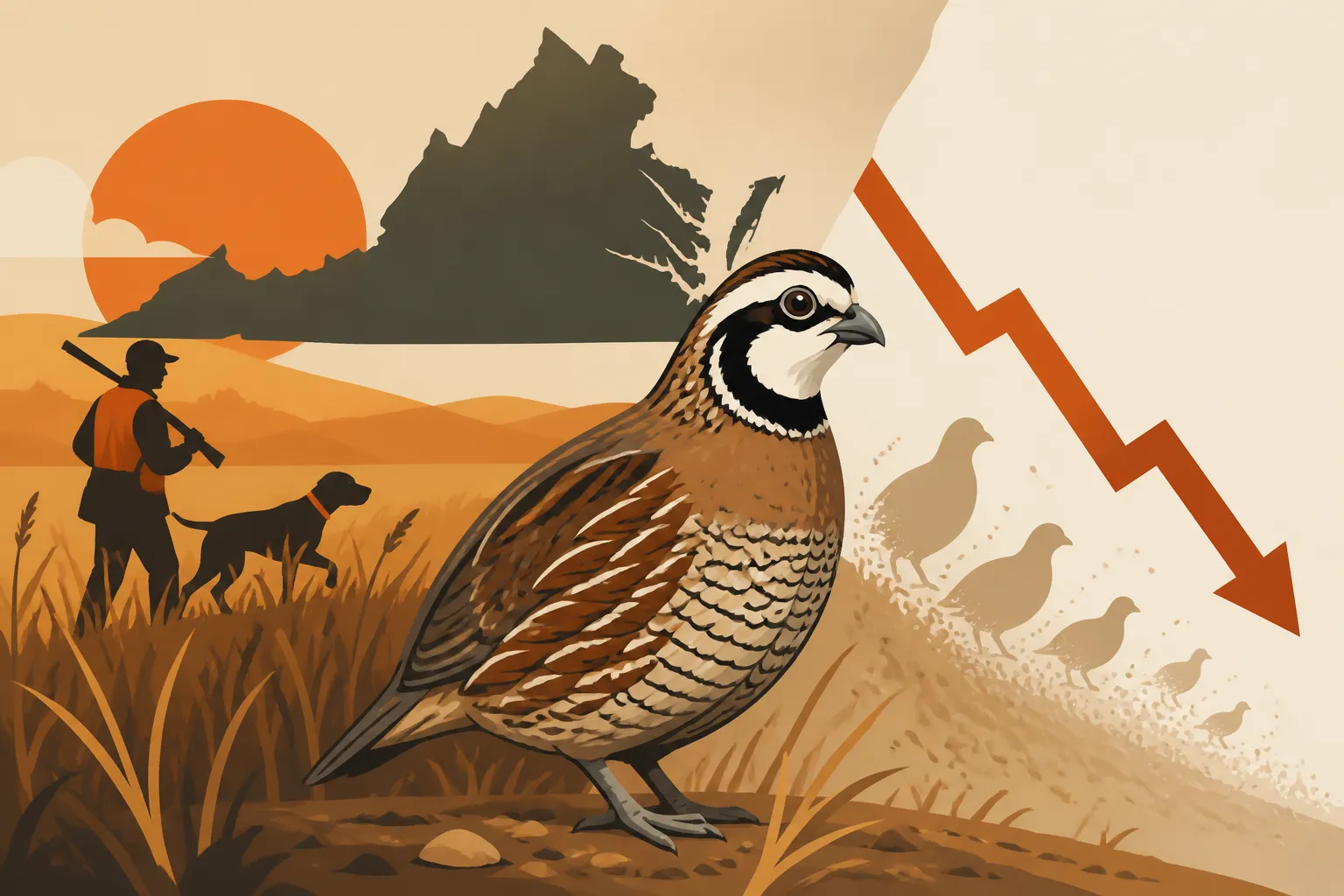
By the late 1960s and early 1970s, many seasoned hunters and landowners started to notice a subtle, yet undeniable, change. The covey counts began to dwindle. What was once a guaranteed five or six coveys in a morning hunt might now be two or three, or sometimes none at all. It wasn't a sudden crash, but a gradual, insidious decline that left many scratching their heads. Was it bad weather? Too many predators? Or was something more fundamental at play? The conversations around deer camp fires slowly shifted from boasts of plentiful birds to worried discussions about where all the quail had gone.
The signs were there for those who looked closely, or more accurately, those who spent countless hours in the fields. Fewer tracks in the dew-laden grass, less "bob-white!" calls from the distant woods, and longer stretches between points for even the most experienced bird dogs. It created a sense of unease, a gnawing feeling that something precious was slipping away. Hunters, ever observant of their environment, were the first to voice concerns, witnessing firsthand the incremental loss of a species that had once been so resilient and ubiquitous across the Virginia landscape.
Unpacking the Causes: Why Did the Quail Vanish?
The decline of the bobwhite quail isn't a simple tale with a single villain. Instead, it's a complex tapestry woven from multiple, interconnected factors that have reshaped Virginia's rural environment over the last several decades. Understanding these causes is crucial if we ever hope to bring these birds back.
Habitat Loss and Fragmentation
Hands down, the single biggest culprit in the quail's disappearance is habitat loss and fragmentation. Think about the old farmsteads: small, diverse fields, hedgerows lining every boundary, brushy creek bottoms, and patches of ungrazed woods. This "patchwork quilt" landscape provided everything a quail needed: nesting cover in tall grasses, escape cover in dense briars, and a banquet of insects and seeds.
Fast forward to today's agricultural landscape. Fields are massive, stretching for acres and acres, often planted in monocultures of corn or soybeans. Fencerows are clean-cut or removed entirely, and brushy areas are seen as "unproductive" land. Urban sprawl has eaten up thousands of acres of what was once prime quail habitat, turning fields and forests into housing developments and shopping centers. Even timber practices have shifted, often favoring dense pine plantations that offer little in the way of food or escape cover for quail, unless they are specifically managed for it. This transformation has left quail with nowhere to go, no place to raise their young safely, and no diverse food sources to sustain them. Tools like GoHunt can help modern hunters and conservationists identify these fragmented areas and target where restoration efforts might be most effective.
Predation Pressure
While often secondary to habitat loss, increased predation certainly plays a role, especially when quail populations are already stressed. The landscape changes mentioned above don't just reduce quail habitat; they also inadvertently boost predator populations and make quail more vulnerable. Think about it: a coyote, fox, or raccoons can move more easily through clean fields, spotting quail coveys without the old dense hedgerow cover to hide them.
Virginia's predator populations, particularly coyotes, have become more widespread over the years, and while they aren't the primary reason for the quail's decline, they certainly make it harder for small, isolated coveys to bounce back. Without enough dense nesting cover, eggs and chicks are easy pickings for snakes, opossums, and raccoons. A lack of secure escape cover means adult quail have fewer options when a hawk or owl swoops in. It’s a vicious cycle: less cover means higher predation success, which further reduces already struggling quail numbers. This is why discussions around managing wildlife populations need to be holistic, considering all factors affecting a species' survival.
Pesticides and Disease
Another subtle, yet significant, factor has been the widespread use of pesticides in modern agriculture. Quail chicks, in their first few weeks of life, are almost entirely reliant on insects for protein – think grasshoppers, crickets, and beetles. These tiny protein bombs are essential for their rapid growth and survival. When agricultural fields are regularly sprayed with insecticides, it decimates these insect populations, effectively starving young quail chicks. Even if a hen successfully nests and hatches a clutch, her chicks might not find enough food to survive the critical early stages of their lives.
While disease hasn't been identified as a primary driver of the broad-scale quail decline in Virginia, it's always a concern in wildlife populations, especially when they are already weakened by habitat loss and nutritional deficiencies. Stressed birds are more susceptible to parasites and illnesses, which can then spread more easily within a small, isolated covey. Though not as dramatic as a visible habitat change, the unseen impact of chemical use on the food chain for developing quail cannot be overstated, a factor often considered in Virginia Wildlife Disease Monitoring for other species.
Modern Farming Practices
The shift from diverse, small-scale farming to large-scale, intensive agriculture has been particularly devastating for quail. Old farming practices, with their patchwork fields, crop rotations, and livestock grazing, inadvertently created excellent quail habitat. Farmers would leave fields fallow, plant small grains that matured at different times, and maintain brushy field borders to prevent erosion and mark property lines. This provided a continuous supply of food, cover, and nesting sites throughout the year.
Today, "clean farming" is the norm. Farmers strive for maximum efficiency, which means cultivating every available acre, removing fencerows and hedgerows to accommodate larger machinery, and planting vast monoculture crops. Herbicides are used to eliminate "weeds" which, to a quail, are essential food sources and cover. The days of leaving a field fallow to recover are largely gone, replaced by continuous planting. Even if a quail manages to nest on a field edge, the constant disturbance from planting, spraying, and harvesting machinery often destroys nests or flushes birds, leaving them vulnerable. This complete overhaul of the rural landscape has left the bobwhite quail with virtually no place to thrive.
The Current State of Virginia's Quail Population
Today, the bobwhite quail in Virginia exists primarily in scattered pockets, mere ghosts of their former glory. The landscape has changed so dramatically that finding wild coveys is a rare and often accidental occurrence, a far cry from the days when they were a predictable part of any rural outing.
Scattered Pockets and Low Densities
If you’re hoping to find wild quail in Virginia today, you’re often looking at specific, highly localized habitats. These might be private lands where dedicated landowners have actively managed for quail, or in certain public lands where specific early successional habitat restoration projects are underway. You might find a small covey tucked away in an overgrown corner of a cow pasture, or along a brushy edge adjacent to a young pine stand that hasn't closed in yet. The Piedmont and certain parts of Eastern Virginia still offer some hope, but even there, densities are incredibly low. You're no longer talking about flushing multiple coveys in a morning; you're often thrilled to find a single covey in a week of dedicated searching.
The feeling of stumbling upon a wild quail covey now is akin to finding a rare treasure. It's often a moment of surprise and delight, mixed with a touch of melancholy for what once was. These surviving pockets are usually characterized by a mix of mature timber, young regenerating clear-cuts, and unmanicured field edges that offer both food and escape cover. The challenge is that these areas are few and far between, requiring extensive scouting and a deep understanding of habitat to locate them. This is precisely why information on Virginia Quail Season Status often focuses on these limited opportunities rather than widespread abundance.
Survey Methods and Data Trends
The Virginia Department of Wildlife Resources (DWR) keeps a close eye on small game populations, including quail, using various survey methods. These often include roadside call counts, where biologists listen for the distinctive "bob-white!" call during peak breeding season, and hunter surveys, gathering data on harvest success and observations. The data, unfortunately, paints a consistent picture: a long-term, significant decline in bobwhite quail populations across most of the state. While the rate of decline may have slowed in some areas due to focused conservation efforts, a broad recovery is still a distant dream.
The trends indicate that while the population might stabilize in areas with active habitat management, widespread recovery is incredibly difficult without a monumental shift in land use practices. For hunters trying to find these elusive birds, scouting tools and apps like those offered by GoHunt can be invaluable. These platforms allow hunters to overlay property lines, topographic maps, and satellite imagery, helping them pinpoint potential pockets of suitable habitat—dense thickets, creek bottoms, and regenerating clear-cuts that might still hold a covey. This type of detailed mapping is essential for anyone seriously pursuing quail in today's Virginia.
Hunter Perspectives and Expectations
For younger hunters, the idea of a dedicated quail hunt might seem almost mythical. Their experience is likely to be one of chance encounters, perhaps flushing a bird or two while primarily deer or turkey hunting. For older generations, the shift has been a somber one, transforming a cherished tradition into a nostalgic memory. The expectation of multiple covey flushes has been replaced by the realistic hope of any flush, a testament to the drastically reduced numbers.
This change in perspective is vital for educating new hunters. We can’t promise them the quail hunting of yesteryear, but we can teach them about the importance of habitat and conservation. The goal is to appreciate the few birds that remain and to actively participate in efforts to bring them back. Even without a full game vest, the joy of a good dog on point, even if it’s just for one bird, is still an incredible experience. Understanding these new realities is key to fostering realistic expectations for those venturing out, perhaps even to areas where they might expect to find other small game, as covered in Virginia Squirrel and Rabbit Season Rules.
Hope on the Horizon: Restoration Efforts and What You Can Do
Despite the challenges, there is a glimmer of hope for Virginia's bobwhite quail. Dedicated conservationists, landowners, and government agencies are working tirelessly to restore suitable habitat, proving that with concerted effort, these iconic birds can still find a place to thrive.
Managed Pine Forests and Prescribed Burns
One of the most promising strategies for quail restoration revolves around specific timber management practices, particularly in pine forests. Historically, fire played a crucial role in maintaining open, early successional habitats. Today, prescribed burns are being reintroduced to mimic those natural processes. When pine forests are managed correctly, with wider spacing between trees and regular burning, they create a perfect environment for quail. The sunlight penetrates the canopy, encouraging the growth of native grasses, legumes, and forbs that provide both food and nesting cover. The burning also helps to control dense undergrowth that chokes out beneficial plants and makes it difficult for quail to move.
It’s a misconception that all pine forests are bad for quail. It’s how they are managed that makes all the difference. Thinning, coupled with periodic prescribed fires, can transform a biological desert into a quail oasis. These efforts are not only beneficial for quail but also for a host of other wildlife species that rely on early successional habitats. The Virginia Department of Wildlife Resources (DWR) actively promotes and implements these practices on many public lands and through programs with private landowners. If you're interested in learning more, our guide on How Managed Pine Could Restore Virginia Quail offers a deeper dive into these exciting possibilities. Remember, sometimes Prescribed Burns and Virginia Hunting Closures go hand-in-hand with these vital habitat improvements.
Farmer Incentives and Conservation Programs
Private landowners, especially farmers, hold the key to widespread quail recovery, as most of Virginia's land is privately owned. Recognizing this, both federal and state governments offer a variety of incentive programs designed to encourage landowners to implement conservation practices beneficial to quail and other wildlife. Programs like the Conservation Reserve Program (CRP) or the Environmental Quality Incentives Program (EQIP) provide financial and technical assistance for practices such as establishing native warm-season grasses, planting hedgerows, creating filter strips along waterways, or simply letting certain field edges go un-mowed and un-sprayed.
These programs are vital because they help offset the economic costs that landowners might incur by dedicating land to wildlife habitat rather than agricultural production. By working together, farmers and conservation agencies can create habitat corridors and larger blocks of suitable land that are essential for quail populations to expand beyond isolated pockets. Many local DWR staff are available to offer personalized advice and connect landowners with these crucial resources, truly making a difference on the ground. This cooperative approach is essential for any significant comeback, touching on aspects of private land stewardship beyond just things like Virginia Landowner Deer Permit Rules.
Hunter Involvement and Advocacy
Hunters, perhaps more than any other group, have a vested interest in the future of wildlife, including quail. Organizations like Quail Forever are at the forefront of conservation efforts, providing resources, expertise, and funding for habitat restoration projects across the country, including here in Virginia. Getting involved with such groups, whether through volunteering for habitat work days, attending educational seminars, or simply becoming a member, can make a tangible difference.
Advocacy also plays a crucial role. Speaking up for sound wildlife management practices, supporting funding for conservation initiatives, and educating others about the importance of habitat are all ways hunters can contribute. Furthermore, simply adapting your scouting methods, even for other game, can help. Utilizing mapping tools, like those found in GoHunt, can help you not only plan your deer hunt but also identify potential areas where early successional habitat might be found—places that could benefit quail. Learning how to identify good habitat, perhaps even using techniques from Scouting Virginia Public Land Before Season, can help you recognize where quail could potentially thrive if given the chance.
Looking Ahead: Challenges and Opportunities
The path to restoring Virginia's bobwhite quail population is long and arduous, fraught with challenges. However, the passion and dedication of conservationists, landowners, and hunters also present significant opportunities for positive change.
Sustaining Momentum
One of the biggest hurdles in quail recovery is sustaining the momentum and long-term commitment required for habitat restoration. Creating and maintaining quality quail habitat isn't a one-time project; it's an ongoing process. Prescribed burns need to be conducted regularly, native grasses require management, and brushy cover needs to be maintained to prevent it from becoming too dense or being lost to succession. This requires consistent funding, labor, and a dedicated cadre of individuals and agencies willing to see the vision through for decades, not just years.
Furthermore, economic pressures on landowners can shift, making it harder to commit to long-term conservation agreements. Changes in agricultural markets or land values can influence decisions, sometimes prioritizing immediate economic gain over long-term ecological benefits. Overcoming these challenges will require innovative funding mechanisms, strong partnerships, and an unwavering commitment to the ultimate goal of bringing the bobwhite back. It’s a marathon, not a sprint, and every bit of sustained effort makes a difference, particularly on public grounds where Habitat Work on Virginia WMAs is actively managed.
Education and Outreach
Perhaps the most critical long-term opportunity lies in education and outreach. Many people, especially those disconnected from rural landscapes, simply don't understand the complex factors behind wildlife declines or the vital role that specific habitats play. Educating landowners about the benefits of quail-friendly practices, informing the public about the ecological value of early successional habitat, and engaging new generations in conservation efforts are paramount.
This includes fostering an appreciation for small game hunting and the conservation ethic it instills. Introducing youth to the outdoors, perhaps through initiatives like the Virginia Hunter Education Requirements, and teaching them about the importance of diverse ecosystems, can cultivate future stewards of the land. By showcasing successful restoration projects and sharing the stories of those working to bring the bobwhite back, we can inspire a broader movement of support. After all, the future of the bobwhite quail, like so much of our wildlife, ultimately rests on the collective understanding and commitment of the people of Virginia.
| Factor | Historic Landscape Impact (Good for Quail) | Modern Landscape Impact (Bad for Quail) |
|---|---|---|
| Field Size & Diversity | Small, varied fields, crop rotation | Large, monoculture fields |
| Fencerows & Borders | Thick, brushy hedgerows, field edges | Clean-cut, removed, barren |
| Tillage & Herbicide Use | Minimal, natural weed growth | Intensive, widespread herbicide use |
| Timber Management | Mixed forests, natural clearings | Dense, unmanaged pine plantations (often) |
| Predator Pressure | Balanced, ample escape cover | Increased, less escape cover |
| Insect Abundance (Chick Food) | High, diverse insect populations | Low, reduced by insecticides |
Disclaimer
This article is for general informational purposes only and does not constitute professional advice. Laws, prices and regulations vary by location and change over time. Consult a qualified professional for guidance on your specific situation.