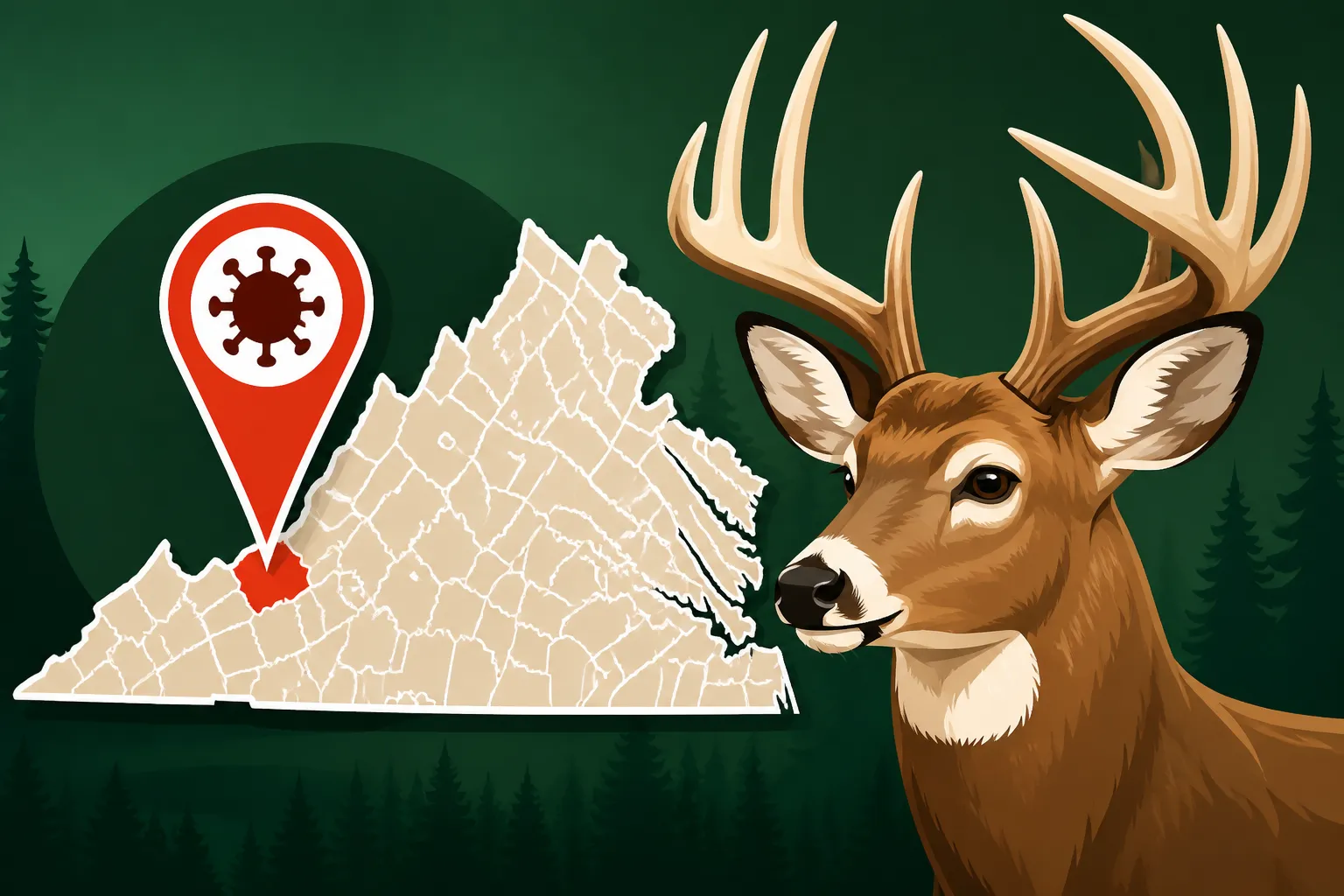
Which County Found Virginia’s First CWD Case
For any hunter in Virginia, hearing about Chronic Wasting Disease (CWD) strikes a chord of concern, creating anxieties about the future of our deer herds and the very traditions we hold dear. It's a gut-wrenching feeling to know this insidious disease is present in our beloved Old Dominion, and it prompts many crucial questions, not least among them being where it all began. This guide will take you back to that pivotal moment, exploring the county where Virginia's first CWD case was discovered, and delve into the ripple effects this finding has had on hunting, wildlife management, and the crucial role you play as a conscientious sportsman.
The Alarming Discovery: Virginia's First CWD Case
The news hit the Virginia hunting community like a cold front sweeping through the mountains: Chronic Wasting Disease had officially arrived. It wasn't a matter of if, but when, and that "when" finally came with a specific location attached. For many, it felt like a punch to the gut, a grim realization that this persistent threat to cervids was now on our home turf.
Tracing the Origin: When and Where It Happened
The very first confirmed case of Chronic Wasting Disease in Virginia was identified in Frederick County. This pivotal discovery occurred in the fall of 2009, sending a tremor through the wildlife management community and local hunters alike. Imagine the scene: a deer harvested during the season, seemingly unremarkable to the hunter, but then later tests reveal the presence of CWD. It's a moment that changes everything, shifting from a distant concern to a very real and immediate challenge right here in our state. The initial detection of CWD in Frederick County wasn't just a biological finding; it was a wake-up call, signaling that every hunter, every landowner, and every wildlife official now had a shared responsibility to confront this disease head-on.
This discovery immediately prompted intense scrutiny and the establishment of response protocols. Frederick County, nestled in the northern Shenandoah Valley, suddenly became the epicenter of Virginia's CWD management efforts. This geographic location, close to states where CWD was already established, raised concerns about how the disease might have crossed state lines and what that meant for potential spread within Virginia's own deer population. The immediate impact on hunting in that area was palpable, with many hunters feeling a mixture of apprehension and a determination to understand and comply with new regulations.
The Immediate Aftermath and Early Response
Following the confirmation in Frederick County, the Virginia Department of Wildlife Resources (DWR) sprang into action with a coordinated and strategic response. Their immediate priority was to assess the extent of the disease and prevent its further spread. This involved establishing a CWD Containment Area, which eventually evolved into what we now know as Disease Management Areas (DMAs). Suddenly, hunters in Frederick and surrounding counties were introduced to new terms and regulations, all aimed at understanding and mitigating the threat.
The DWR increased surveillance efforts significantly in Frederick County and adjacent areas, encouraging hunters to submit deer heads for testing and implementing check stations to gather vital data. Public awareness campaigns were launched to educate hunters and landowners about CWD, its risks, and the importance of compliance with new rules regarding carcass movement and feeding bans. For hunters, this meant a learning curve – understanding concepts like Virginia Carcass Movement Restrictions and the critical role they played in collecting samples. It was a challenging time, requiring patience and cooperation from everyone involved, but the shared goal of protecting Virginia's deer herd united many in the effort.
Understanding Chronic Wasting Disease (CWD)
Before we dive deeper into its spread and management, it's really important to grasp what CWD actually is. It’s not just another deer disease that comes and goes; it’s a persistent, fatal neurological condition that has profound implications for wildlife and hunting. You might hear about it, but truly understanding its nature helps you appreciate why wildlife agencies take it so seriously and why hunter cooperation is absolutely vital.
What is CWD and How Does It Affect Deer?
Chronic Wasting Disease is a transmissible spongiform encephalopathy (TSE), a mouthful that essentially means it's a fatal neurological disease affecting cervids, which include deer, elk, and moose. Unlike bacterial or viral infections, CWD is caused by abnormal proteins called prions. These prions essentially corrupt normal proteins in the animal's brain, leading to a slow, progressive degeneration of the brain tissue. Think of it like a slow, irreversible rot from the inside out. There is no vaccine, no treatment, and it is always fatal.
The symptoms in an infected deer are heartbreaking to witness, often leading to the common name "wasting disease." Affected animals gradually lose weight and body condition, becoming emaciated over time. You might also observe behavioral changes such as listlessness, a vacant stare, excessive drooling, increased thirst and urination, and a lack of coordination. Eventually, the deer lose their fear of humans and become extremely weak before succumbing to the disease or becoming vulnerable to other factors. These clinical signs can take a long time to develop after initial infection – sometimes years – which makes detection and control incredibly challenging.
Transmission and Spread in Virginia's Landscape
One of the most concerning aspects of CWD is how easily it can spread and its remarkable persistence in the environment. The disease is primarily transmitted through direct contact between animals, especially through saliva, urine, and feces. Imagine deer interacting at a communal food source, a scrape, or even just crossing paths – these are all potential transmission points. Unfortunately, the prions are also shed into the environment, contaminating soil, water, and vegetation. This means that an area where an infected deer once stood can remain infectious for a very long time, even after the animal is gone.
This environmental persistence is a huge hurdle for containment. Even if all infected deer were removed from an area, the prions could still be present, ready to infect new deer. This is why measures like Virginia's Twenty-Five-Mile Feeding Ban are so crucial; concentrating deer at artificial feed sites increases direct contact and the contamination of the environment. The varied terrain of Virginia, from the dense forests of the Blue Ridge to the open agricultural fields of the Piedmont, presents unique challenges in monitoring and controlling CWD. Deer populations are abundant and highly mobile, making it incredibly difficult to track every animal and prevent the slow, quiet march of this disease across the landscape.
The Expanding Footprint: CWD's Spread in Virginia
When CWD was first detected in Frederick County, it was a contained incident. But as we've learned with this disease in other states, it rarely stays put. The story of CWD in Virginia is one of diligent monitoring leading to the unfortunate but expected discovery of additional cases, steadily expanding the areas of concern and requiring an adaptive management strategy.
From a Single County to Disease Management Areas (DMAs)
From that initial case in Frederick County, continued surveillance efforts confirmed that CWD was not an isolated incident. Over time, additional positive cases emerged in neighboring counties, revealing a slow but steady geographic expansion. This pattern of spread led to the establishment of specific geographic regions known as Disease Management Areas, or DMAs. These DMAs are designated zones where CWD has been detected or is considered to be at high risk, and within which special regulations are implemented to help monitor and control the disease.
Today, if you check the DWR website or use a tool like GoHunt to scout areas, you'll see a clear picture of Virginia's Eighteen CWD Counties that are part of these DMAs. The expansion from that single point in Frederick County to encompass multiple counties in the northern Shenandoah Valley and beyond highlights the challenge. The DWR has meticulously tracked How Many Deer Have Tested CWD-Positive in Virginia each year, providing data that guides the boundaries and specific rules for each DMA. For instance, Why DMA1 Holds the Most Confirmed Cases is often attributed to it being the initial point of detection and having the longest period of surveillance, but it also underscores the difficulty of eradication once CWD gains a foothold.
Impact on Hunting Regulations and Hunter Behavior
The presence and spread of CWD have significantly altered hunting regulations and, consequently, hunter behavior across Virginia. For anyone hunting within a designated DMA, the rules are different, and your cooperation is not just helpful—it's essential. One of the most significant changes is the implementation of mandatory CWD testing. Hunters in DMAs are often required to bring their harvested deer to designated CWD sampling stations, particularly during opening weekends of firearms season. This is a critical step in monitoring the disease's prevalence and geographic spread.
Beyond testing, regulations regarding carcass movement have become stricter. Hunters are typically prohibited from moving whole deer carcasses or certain high-risk parts (like the brain and spinal cord) out of a DMA to prevent inadvertently transporting CWD prions to new areas. This requires hunters to learn how to properly process their deer within the DMA or transport only allowed parts, such as deboned meat, clean hides, and skull plates. It's a new layer of complexity, but one that is absolutely necessary. Tools like the GoHunt app become invaluable here, providing up-to-date maps of DMA boundaries and details on checking stations. Furthermore, feeding bans, like Virginia's Twenty-Five-Mile Feeding Ban, are often implemented around CWD-positive areas to prevent the congregation of deer at artificial food sources, which can facilitate disease transmission. Hunters have had to adapt, becoming more informed about disease management and taking on a more active role in protecting the future of Virginia's deer.
Living and Hunting with CWD: Hunter's Role and Responsibility
For many of us, hunting is more than just a pastime; it's a way of life, a deep connection to the land and its wildlife. The presence of CWD introduces a new layer of responsibility to this tradition. It asks us to be not just participants, but stewards, actively contributing to the health of the deer herd and the longevity of our hunting heritage. Your actions, especially within a CWD management zone, truly make a difference.
Mandatory Testing and Carcass Management
If you plan to hunt in or around a CWD-affected area, understanding and complying with mandatory testing is your first and most crucial step. The DWR provides detailed information on Virginia CWD Testing for Hunters, including locations of self-serve kiosks and staffed check stations, often highlighted on platforms like GoHunt. During key periods, usually the first few days of the general firearms season, testing may be mandatory for deer harvested within certain DMA counties. Even if not mandatory, voluntary testing is always encouraged and incredibly valuable for surveillance.
Proper carcass management is equally important. The core idea is to prevent the movement of CWD prions out of an infected area. This means you need to be prepared to debone your deer in the field or at a designated facility within the DMA. High-risk tissues, such as the brain, spinal cord, eyes, spleen, and lymph nodes, must be left behind or disposed of safely. This might mean adapting your traditional field dressing methods or investing in new gear to make in-field processing easier. It’s a challenge, sure, but it’s a direct way you can help slow the spread of CWD and protect deer populations in uninfected parts of the state.
Scouting, Strategy, and Public Land Considerations
CWD also subtly influences how we approach scouting and hunting strategy, especially on public lands where deer movement can be harder to track. While you might not see overt symptoms in every infected deer, being aware of signs like emaciation or unusual behavior can prompt you to report a sick animal. Reporting a Sick Animal in Virginia is vital, as early detection of new cases is critical for management. When using mapping tools like GoHunt, pay close attention to DMA boundaries and any specific public land regulations related to CWD.
Private landowners, too, play a crucial role. Their cooperation in testing and following feeding bans is paramount, as many deer spend considerable time on private parcels. For all hunters, adapting to this new reality means staying informed. Regularly checking the DWR website or using reliable apps like GoHunt that integrate DWR data is key to understanding the latest regulations, particularly concerning Virginia Deer Season Structure Explained and specific rules within different DMAs. It's about being proactive, responsible, and understanding that every hunter's choice contributes to the broader effort to mitigate the impact of CWD on Virginia's cherished white-tailed deer.
Here's a quick look at the origins of CWD in Virginia:
| Detail | Description | Importance |
|---|---|---|
| First Detected | Fall 2009 | Marks the official arrival of CWD in Virginia. |
| Initial County | Frederick County | The specific location where the first positive case was found. |
| Disease Type | Transmissible Spongiform Encephalopathy (TSE) | Explains the neurological, prion-based nature of CWD. |
| Key Transmission | Direct animal contact, environmental contamination (saliva, urine, feces, soil) | Highlights why CWD is difficult to contain and persists in the environment. |
| Initial Response | Increased surveillance, public education, establishment of containment areas | Shows immediate efforts to understand and manage the disease. |
Disclaimer
This article is for general informational purposes only and does not constitute professional advice. Laws, prices and regulations vary by location and change over time. Consult a qualified professional for guidance on your specific situation.