Virginia Ruffed Grouse Numbers Today
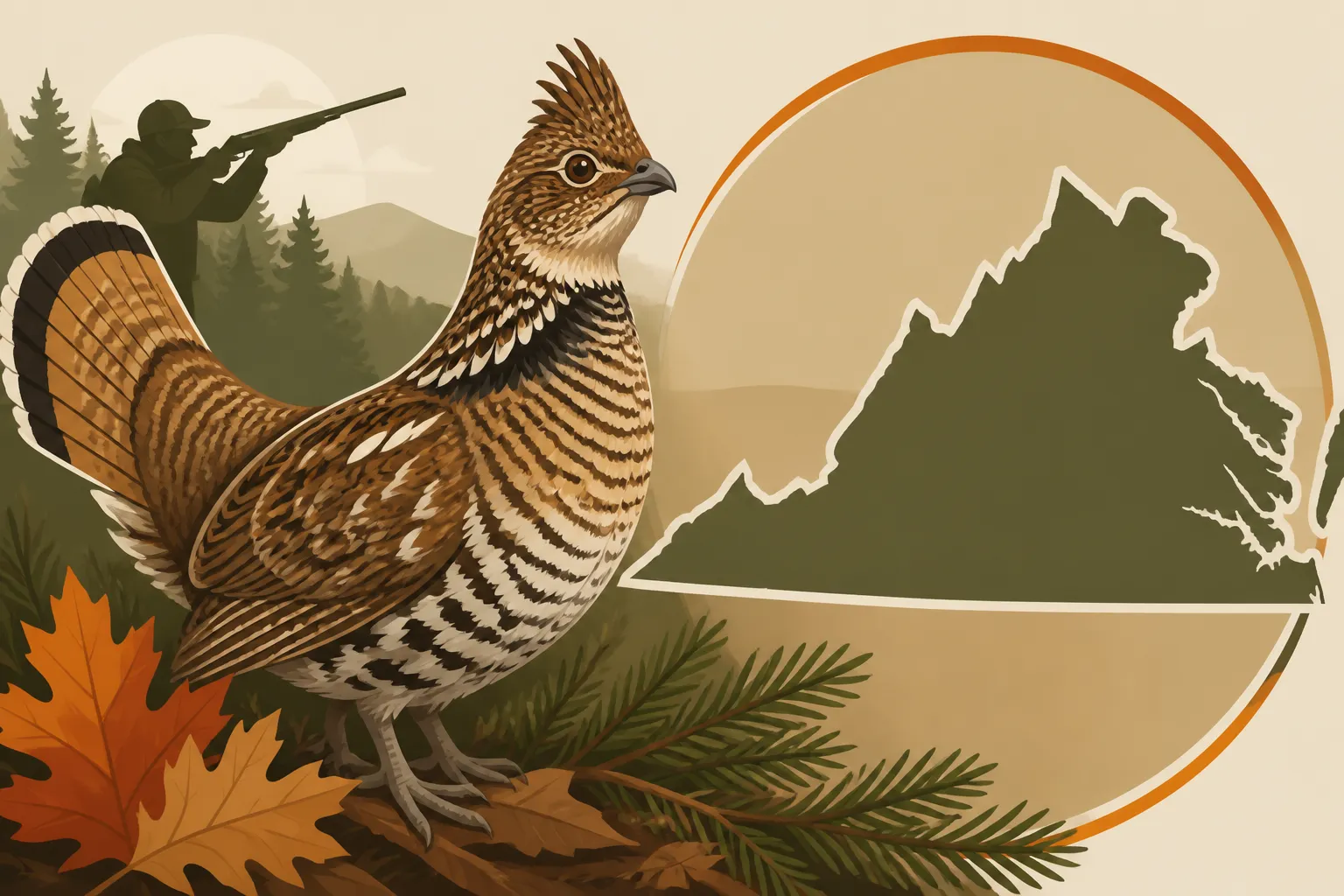
Oh, the ruffed grouse. For many of us who grew up chasing these incredibly elusive birds in Virginia's mountains, talking about their numbers today can feel like a punch to the gut. What was once a fairly common sound – the distinctive drumming on a crisp autumn morning – has become increasingly rare, leaving many of us wondering if we'll ever experience those thrilling flushes again. This guide aims to take an honest look at the current state of Virginia's ruffed grouse population, delving into the hard truths of their decline and exploring what's being done to give these forest ghosts a fighting chance.
The Shifting Landscape of Ruffed Grouse in Virginia
For decades, the ruffed grouse was a symbol of Virginia's mountain woodlands, an icon of autumn hunts and rugged outdoor pursuits. But the landscape, both literal and ecological, has shifted dramatically, directly impacting the viability of these beloved game birds. It’s not just an anecdotal feeling; the numbers reflect a deep-seated problem that has been building for years.
A Look Back: Historic Abundance and Decline
If you talk to any old-timer who hunted grouse in Virginia back in the 60s, 70s, or even early 80s, they’ll tell you stories of finding birds regularly, sometimes multiple coveys in a good day. The forests back then were often a mosaic of old growth, timber cuts, and successional habitats perfect for grouse. These birds thrive in young, regenerating forests – thick, brushy areas that offer cover from predators and plenty of food sources. Virginia, with its extensive timber industry and agricultural practices that once created these diverse habitats, naturally supported a robust grouse population. Hunters and researchers would describe areas of the George Washington and Jefferson National Forests as prime grouse country, with consistent drumming counts and reasonable harvest numbers.
However, somewhere along the line, the tide began to turn. The early signs of decline were often subtle, perhaps just a slight dip in the number of flushes during a season or a longer stretch between finding birds. But by the late 20th and early 21st centuries, the trend became undeniable. What was once a slight decline transformed into a precipitous drop, leaving many hunters to abandon grouse hunting entirely, simply because the effort no longer yielded consistent results. This wasn't unique to Virginia; states across the eastern U.S. began noticing similar patterns, sparking concern among wildlife biologists and avid grouse hunters alike.
Habitat Loss and Fragmentation: The Primary Culprit
When we talk about the struggles of the ruffed grouse, habitat is almost always the first and most critical piece of the puzzle. Grouse are incredibly particular about where they live. They need that dense, young forest growth – stands of aspen, birch, or oak that are regenerating after a timber harvest, fire, or other disturbance. This thick cover provides critical protection from aerial predators like hawks and owls, and terrestrial predators such as coyotes and foxes. It's also where they find their food: buds, catkins, leaves, and berries.
Unfortunately, much of Virginia's forest land has matured beyond this ideal "early successional" stage. As timber harvest practices changed, and forest management priorities shifted away from creating these diverse age classes, vast tracts of forest became older and more open. An older forest, while beautiful and ecologically valuable in many ways, just doesn't provide the dense understory a grouse needs to survive and raise its young. Imagine trying to hide a small bird in an open, park-like forest; it's simply not going to work. Furthermore, suburban sprawl and development have led to habitat fragmentation, breaking up what little suitable grouse habitat remained into smaller, isolated patches. This makes it harder for grouse populations to recover, as birds can't easily disperse to new areas. When you're Hunting West of the Blue Ridge or even Hunting East of the Blue Ridge, if you're not seeing that dense, new growth, you're likely not seeing grouse.
Understanding Current Population Estimates and Trends
Getting a precise count of ruffed grouse is notoriously difficult. These birds are camouflaged masters of their environment, preferring to hold tight and flush explosively, making them hard to spot even for experienced observers. However, wildlife agencies like the Virginia Department of Wildlife Resources (DWR) use several methods to try and gauge their populations and understand trends.
DWR Survey Methods and Challenges
The primary method for monitoring ruffed grouse populations is through drumming counts. This involves trained observers listening for the distinctive drumming sound made by male grouse during the spring breeding season. Males stand on a log or stump and rapidly beat their wings, creating a low-frequency sound that attracts hens and marks their territory. By conducting these counts along established routes year after year, biologists can track changes in the number of drumming males, which serves as an index of the overall population.
However, these surveys face significant challenges. Weather conditions can impact drumming activity, making consistent data collection difficult. The cryptic nature of the birds means that even when present, they might not be detected. And, of course, with declining populations, the chances of hearing a drumming bird become smaller each year, sometimes making it harder to get a robust data set. In addition to drumming counts, DWR also uses hunter harvest surveys to get a sense of how many birds are being taken, and indirectly, how many might be out there. While not a direct population count, a consistent decline in harvest numbers over decades strongly corroborates the drumming count data and hunter anecdotal reports. It's a tough picture to paint, and even with the best efforts, getting an exact number, or even a tight estimate, is incredibly challenging.
The Current State: A Regional Breakdown
Let's be blunt: Virginia's ruffed grouse numbers today are significantly lower than they were just a few decades ago. While specific statewide population figures are elusive due to the challenges of surveying, the trend is unequivocally downward. The best places to still find grouse are almost exclusively in the western part of the state, particularly within the vast tracts of the George Washington and Jefferson National Forests, and other mountainous public lands. These areas still contain pockets of suitable early successional habitat, though often not as widespread or contiguous as they once were. Hunters who manage to find birds are usually working specific logging cuts, old clearings, or areas impacted by recent natural disturbances that have created that crucial dense cover.
The Piedmont region, once home to some grouse populations, has seen an even more dramatic decline. Habitat fragmentation and development here have been far more extensive, pushing grouse out of many areas where they once thrived. For most hunters, a "grouse hunt" in the Piedmont is now a rarity, bordering on a ghost chase. Even in the historically productive mountain counties, numbers are considerably lower, and finding a covey can be the highlight of an entire season, rather than a common occurrence. It's a sad reality, but one that must be faced head-on if we hope to implement effective conservation strategies.
To give you a general idea of where things stand, here's a simplified look at regional presence:
| Virginia Region | General Ruffed Grouse Status | Habitat Type | Hunting Opportunity |
|---|---|---|---|
| Western Mountains | Low to Moderate Density, Declining | Mixed Hardwoods, Regenerating Forests | Limited, Requires Effort |
| Piedmont | Very Low Density, Highly Scarce | Fragmented Woodlands, Mature Forests | Extremely Rare |
| Coastal Plain/Tidewater | Absent | Swamp, Pine Forests, Agriculture | None |
When you're out there, tools like GoHunt can sometimes help you identify areas with differing forest types or recent timber activity that might hold suitable cover, though finding actual birds is another matter entirely.
Factors Beyond Habitat: Predators, Disease, and Climate
While habitat loss is undoubtedly the primary driver behind the decline in Virginia's ruffed grouse numbers, it's not the only factor at play. A complex web of ecological pressures also contributes to the challenges these birds face. Understanding these additional stressors is crucial for a holistic approach to conservation.
Predator Dynamics and Their Role
Predation is a natural part of any ecosystem, and grouse have always contended with a variety of predators. However, shifts in predator populations can certainly exacerbate the challenges faced by a species already struggling with habitat. Virginia has seen changes in its predator landscape over recent decades. For example, the coyote population has expanded dramatically across the state, and these adaptable predators are opportunistic hunters that will certainly take grouse if given the chance, particularly where cover is sparse. Other natural predators like bobcats, foxes, and various raptors (hawks and owls) also take their toll.
In a healthy, diverse habitat with plenty of escape cover, grouse can often evade these threats. But in fragmented, mature forests where dense undergrowth is lacking, grouse become much more vulnerable. A bird trying to cross an open forest floor to find food or a mate is an easy target compared to one that can disappear into a tangle of briars and young trees. So, while predators aren't the root cause of the decline, increased predator pressure in suboptimal habitats acts as a significant compounding factor, hindering the ability of remaining grouse populations to rebound. This is particularly true for ground-nesting birds, where eggs and chicks are vulnerable to a wide array of mammalian and avian predators.
Disease and Climate Change Considerations
Emerging diseases and the subtle, yet impactful, shifts in climate also cast a shadow over the future of ruffed grouse. One disease that has garnered significant attention in grouse conservation circles is the West Nile Virus (WNV). While research is ongoing and complex, studies in other states have shown a correlation between WNV outbreaks and localized grouse population declines. The virus, carried by mosquitoes, can impact grouse health and survival, particularly in areas where populations are already stressed. The exact prevalence and impact of WNV on Virginia's grouse are still being studied, but it remains a concern.
Beyond disease, climate change presents another layer of complexity. Ruffed grouse are essentially a northern forest species; Virginia represents the southern edge of their range. Subtle changes in temperature, precipitation patterns, and growing seasons can disrupt the delicate balance of their ecosystem. For instance, milder winters might lead to increased parasite loads, or altered snow cover could impact their ability to "snow roost" for warmth and concealment. Changes in insect populations, which are a vital food source for grouse chicks, could also have cascading effects. While these factors might seem less dramatic than clear-cutting a forest, their long-term, incremental impact can be just as devastating for a species already teetering on the edge.
Conservation Efforts and the Future of Virginia's Grouse
Given the grim picture of declining ruffed grouse numbers, it's natural to wonder if there's any hope for these magnificent birds in Virginia. The good news is that conservation organizations and wildlife agencies are acutely aware of the problem and are working on various fronts to try and reverse the trend. It's a long, uphill battle, but efforts are being made to restore what's been lost.
Habitat Management Initiatives
The most impactful way to help ruffed grouse is to address the core problem: habitat. DWR, in partnership with federal agencies like the U.S. Forest Service (which manages the George Washington and Jefferson National Forests), and private conservation groups, is actively engaged in habitat management projects aimed at creating and restoring early successional forest habitat.
These initiatives often involve strategic timber harvesting, known as "patch clear-cutting" or "regeneration cuts," in small, scattered blocks. The goal isn't to level vast areas but to create a mosaic of forest age classes. When a small area is cut, the sunlight hits the forest floor, stimulating the growth of dense saplings, shrubs, and briars – exactly what grouse need. These areas quickly become excellent cover and food sources. They also use prescribed burns in certain forest types to mimic natural fire cycles, which can also promote the growth of young vegetation.
Additionally, efforts are being made to establish wildlife corridors to connect existing patches of suitable habitat, allowing birds to move more freely and bolstering genetic diversity. The challenge is immense, as creating and maintaining these habitats requires significant resources, careful planning, and a long-term commitment. It also often involves balancing the needs of grouse with other wildlife species and public land uses. Hunters should stay informed about these projects, as they often represent the best opportunity to find grouse. You can often find details on DWR's website or through groups like the Ruffed Grouse Society, which is a major proponent of these efforts. When scouting, checking land management plans or using a mapping application like GoHunt can help you spot recently logged or managed areas that might be new grouse magnets.
Hunter Involvement and Citizen Science
Hunters have historically been, and continue to be, vital allies in wildlife conservation. For ruffed grouse, their involvement is more crucial than ever. One key way hunters can contribute is through reporting harvest data. When you check your game through Virginia's online system or app, providing accurate information helps DWR track trends and understand the distribution of grouse. Even if you don't harvest a bird, recording your efforts and observations (e.g., how many flushes you had, even if you missed) can be valuable informal data.
Beyond reporting, hunters can participate in citizen science initiatives. Organizations sometimes solicit volunteers for drumming counts or other observational surveys. Getting involved directly helps biologists gather more comprehensive data, especially in remote or less-frequently monitored areas. Furthermore, supporting conservation organizations dedicated to ruffed grouse and their habitat, like the Ruffed Grouse Society, through membership or donations, directly funds the habitat projects mentioned above. It's a way to put your passion for these birds into action, helping ensure that future generations might still hear the thundering flush of a Virginia ruffed grouse. Remember, every piece of information, every pair of boots on the ground, helps paint a clearer picture of Virginia Ruffed Grouse Numbers Today and informs the path forward.
The path to recovery for Virginia's ruffed grouse is undoubtedly challenging, but it's not without hope. By understanding the historical context, acknowledging the current struggles, and actively engaging in conservation efforts, we can all play a part in trying to secure a future for these incredible birds in the Old Dominion.
Disclaimer
This article is for general informational purposes only and does not constitute professional advice. Laws, prices and regulations vary by location and change over time. Consult a qualified professional for guidance on your specific situation.