Where Virginia Bobcats Are Rebounding
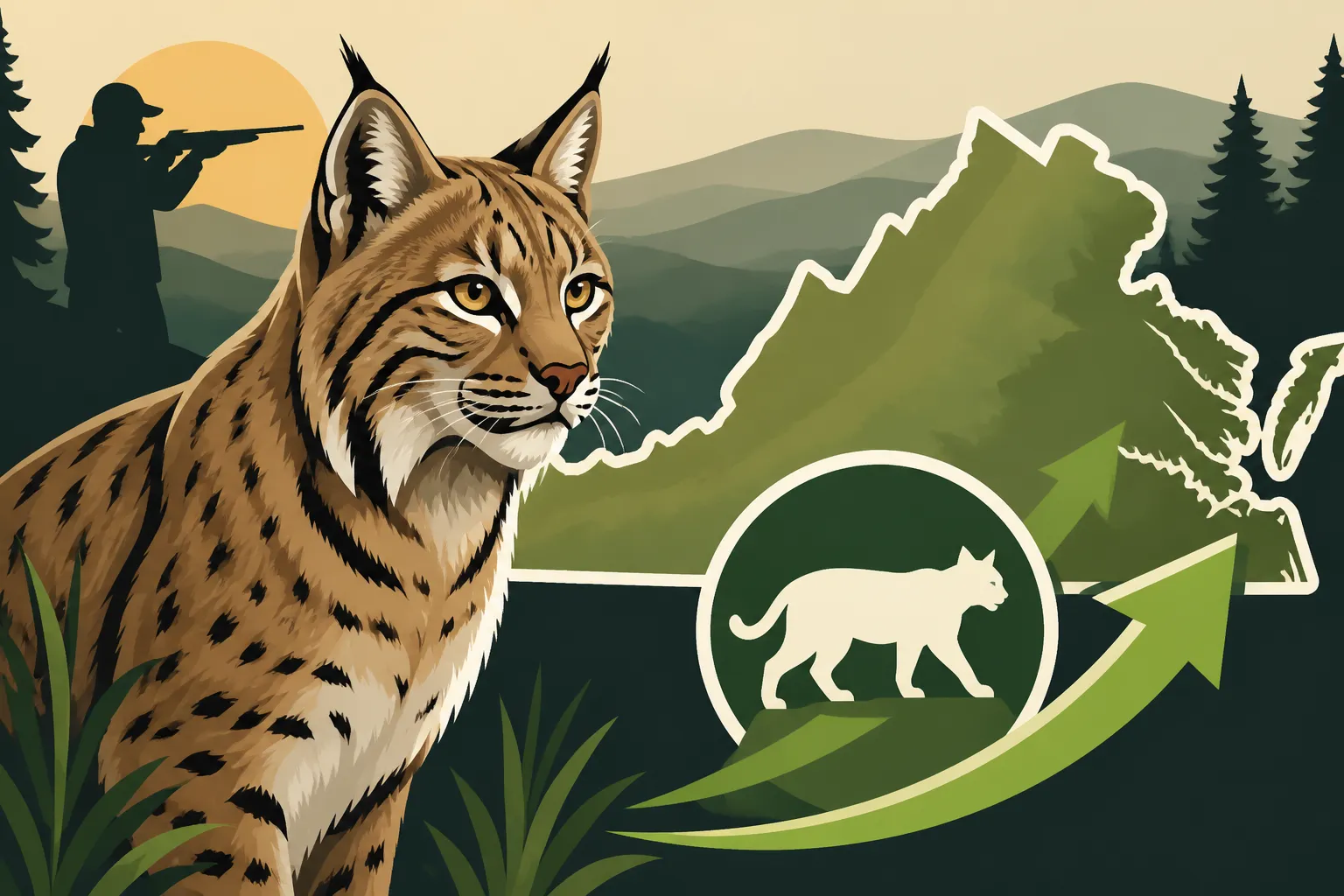
It's a genuine thrill, isn't it? To know that some of our most elusive native wildlife, after facing some truly tough times, are making a strong comeback. For years, sighting a bobcat in Virginia felt like winning the lottery – a rare, fleeting glimpse for the incredibly lucky. But I'm here to tell you, folks, that Virginia's bobcat population is on a definite upswing, and this guide is all about helping you understand where these magnificent, stealthy felines are thriving and how we can better appreciate their presence in our wild spaces.
The Remarkable Comeback of Virginia's Bobcats
There was a time, not so long ago, when the idea of consistently encountering a bobcat in Virginia seemed like a distant dream. Decades of habitat fragmentation, unregulated hunting and trapping pressure, and a general misunderstanding of their ecological role pushed these beautiful cats to the brink in many areas. It's a testament to their adaptability and to evolving conservation efforts that we're now seeing a very different picture.
From Near Vanishment to Thriving Populations
For much of the 20th century, bobcats were often viewed as pests or varmints. Their secretive nature made them difficult to study, leading to assumptions about their numbers that were often pessimistic. As forests were cleared for agriculture and development, the dense, undisturbed cover these cats require dwindled. Trapping for their valuable fur, sometimes with little regulation, also took its toll. It’s hard to imagine now, but there were periods where a bobcat was a truly rare sight outside of the most remote corners of the Old Dominion.
Thankfully, land-use patterns began to shift. Marginal farmlands reverted to forest, creating new tracts of suitable habitat. Stricter regulations on hunting and trapping, coupled with a greater scientific understanding of their population dynamics, allowed these resilient felines to slowly but surely recover. It wasn't an overnight success, but a gradual, quiet resurgence that speaks volumes about nature's ability to heal when given a chance. Today, their population density is much healthier, and they are spreading into areas where they haven't been seen in generations.
Key Factors Driving Their Resurgence
So, what exactly has spurred this incredible comeback? A major factor is the regrowth of mature and mixed forests, particularly in the western and central parts of the state. Bobcats prefer dense undergrowth, rocky outcroppings, and thickets that provide cover for hunting and denning. As these habitats have expanded, so too have the opportunities for bobcats to establish territories and raise young. Think about the countless acres of Public Hunting Land in Virginia now offering prime cover.
Another significant driver is the abundance of their prey base. While bobcats are opportunistic hunters, their primary diet consists of small mammals like rabbits and rodents, as well as ground-dwelling birds. Virginia's Virginia Squirrel and Rabbit Populations are generally robust, providing a consistent food source. They're also known to take wild turkeys and, occasionally, deer fawns, all of which are plentiful across much of the state. This strong prey availability ensures that bobcats have the caloric intake needed to reproduce successfully and maintain healthy populations. Improved wildlife management practices by the Virginia Department of Wildlife Resources (DWR) have also played a crucial role in balancing predator and prey dynamics, further supporting the bobcat's recovery.
Prime Habitats: Where Bobcats are Concentrated Today
While bobcats are now distributed across most of Virginia, their populations aren't evenly spread. Certain regions, offering optimal habitat and less human disturbance, serve as true strongholds, while others show promising signs of expansion. Understanding these geographical preferences is key to appreciating their presence.
Mountainous Western Strongholds
If you're looking for the heartland of Virginia's bobcat population, you'd do well to head west into the Appalachian and Blue Ridge Mountains. Areas like the George Washington National Forest Hunting and Jefferson National Forest Hunting provide expansive, unbroken tracts of rugged terrain. Here, the landscape is a mosaic of dense hardwood forests, rocky slopes, thick laurel and rhododendron patches, and remote hollows. This varied topography offers abundant cover for stalking prey, secluded den sites, and numerous vantage points.
These western counties have always been the last bastions for bobcats during their leanest times, and it's from here that their resurgence largely began. Hunters and hikers in counties such as Bath, Highland, Augusta, and Smyth often report sightings or, more commonly, signs of bobcat activity. The remoteness means less human traffic, allowing these wary animals to flourish relatively undisturbed. When you're out scouting for deer or bear in these areas, always keep an eye out for tell-tale bobcat tracks in the mud along a remote logging road.
Expanding into the Piedmont's Mixed Landscapes
Perhaps the most exciting aspect of the bobcat's comeback is their noticeable expansion into the Piedmont region. Once thought to be far less suitable due to more agricultural land and denser human populations, bobcats have demonstrated a remarkable ability to adapt. In the Piedmont, you'll find them utilizing creek bottoms, riparian zones, timber company lands, and large private tracts with mixed woodlands and brushy fields. Hunting the Virginia Piedmont increasingly means sharing the woods with these secretive felines.
Counties like Albemarle, Fluvanna, Nelson, and even areas closer to more developed centers are reporting more consistent bobcat sightings. They've learned to navigate fragmented landscapes, using corridors of trees, overgrown fencerows, and even suburban green spaces to travel and hunt. While their presence here might be more "patchy" than in the mountains, it's undeniable they're making a strong foothold. This adaptability highlights their resilience and intelligence, proving they're more than just wilderness creatures. When planning your next outing, consider using a mapping application like GoHunt to pinpoint those promising pockets of thick cover and transitional habitats in Piedmont counties.
Sparse but Present in Eastern and Coastal Plain Regions
While less numerous, bobcats are certainly not absent from Virginia's Eastern and Coastal Plain regions. Their presence here tends to be highly localized, centered around large, contiguous blocks of suitable habitat like extensive swamps, pine plantations, and vast river bottomlands. Think of places like the Great Dismal Swamp or the large timber tracts found in counties south of the James River.
In these areas, the habitat might be vastly different from the mountains or even the rolling Piedmont, but the core needs remain: dense cover, water, and a reliable food source. They'll prey on marsh rabbits, rodents, and even some waterfowl. Sighting a bobcat in these regions is still a rare event, often a fleeting shadow glimpsed at dawn or dusk. However, their persistence in these specialized habitats speaks to their incredible ability to carve out a living even where conditions might seem less than ideal at first glance.
How to Find and Observe Virginia Bobcats
Spotting a bobcat in the wild is truly a privilege, and often a challenge, even with their rebounding populations. These are incredibly stealthy and secretive animals. However, by knowing what to look for and where, you can significantly increase your chances of detecting their presence, even if a direct sighting remains elusive.
Recognizing Tracks, Scat, and Scratch Marks
The most common way to confirm a bobcat's presence is through their sign. Their tracks are unmistakable once you know what to look for. Bobcat tracks typically show four toes with no claw marks visible, as their claws are retractable just like a house cat's. The track itself is usually rounder than a dog's and shows a distinct heel pad. Look for these tracks in soft mud along creek beds, sandy trails, or freshly fallen snow. Learning to differentiate them from domestic cat prints (which are smaller) or canine prints (which usually show claw marks and are more oval) is key. You can practice this skill by learning to identify general animal movement, much like you would be Reading Virginia Mud for Fresh Deer Movement.
Scat (feces) is another useful indicator. Bobcat scat is typically segmented, tubular, and often contains visible hair and bone fragments from their prey. They'll often deposit scat in prominent locations, sometimes on logs or rocks, as a form of territorial marking. Additionally, bobcats will make scratch posts or scrapes, particularly males. These are areas where they've raked their claws on a tree trunk or scraped the ground to leave a scent mark. Look for these alongside well-used game trails or near prime hunting spots. Using a GPS mapping tool, like the one offered by GoHunt, can be invaluable for marking where you find sign, helping you piece together a pattern of activity over time.
Best Times and Locations for Sightings
Bobcats are primarily crepuscular, meaning they are most active during dawn and dusk. This is when their prey animals are also active, and the low light provides excellent cover for their ambush hunting style. During the day, they often rest in dense cover or rocky dens, though they may move on overcast days or during the breeding season. Winter, with its bare trees and sometimes snow-covered ground, can offer better visibility and clearer tracking conditions.
To increase your odds of a sighting, focus your efforts on the edges of dense cover, especially where it meets more open areas like old logging roads, power line cuts, or field edges. Creek bottoms and riverine habitats are also hotspots, as they provide travel corridors, water, and often dense vegetation. Setting up trail cameras in these pinch points or along suspected travel routes can be incredibly effective. Make sure your cameras are placed on public land according to regulations or with landowner permission on private property. Patience is paramount, as bobcats are masters of remaining unseen.
Understanding Bobcat Ecology and Conservation in Virginia
The bobcat's return isn't just a feel-good story; it's a vital one for the overall health of Virginia's ecosystems. As a native predator, they play a crucial role in maintaining balance within the food web. Understanding their place in the environment and the ongoing conservation efforts is important for anyone who spends time in Virginia's outdoors.
Diet and Their Role in the Ecosystem
Bobcats are efficient and adaptable predators. Their diet in Virginia is quite diverse, but heavily relies on abundant small game. Rabbits, especially cottontails, are often a staple, alongside squirrels, mice, voles, and other rodents. They'll also readily prey on game birds like wild turkeys and Ruffed Grouse in the Virginia Mountains, particularly during nesting season or when poults are vulnerable. While they can take larger prey, it's less common. They might opportunistically target a weak or sick deer fawn, but they are not significant predators of adult deer, whose populations are more influenced by other factors such as human hunting and Coyotes and Predators in Virginia.
By preying on these species, bobcats help regulate their populations, preventing overgrazing and the spread of disease within prey herds. They also perform a natural "clean-up" service, often targeting the weakest or most vulnerable individuals, which helps to maintain the overall health and vigor of prey populations. Their presence is a sign of a healthy, functioning ecosystem, indicating a diverse and plentiful prey base below them.
Management and Living Alongside These Elusive Felines
Virginia has a well-managed bobcat population, with regulated hunting and trapping seasons that are carefully monitored by the DWR to ensure sustainable numbers. This allows for both responsible harvest and continued population growth in appropriate areas. For those interested in trapping or hunting furbearers, understanding these regulations is crucial. The DWR conducts surveys and studies, often relying on citizen reports and harvest data, to track bobcat numbers and distribution. You can often find details about this on the DWR website or through publications that discuss Virginia Small Game and Furbearers.
Living alongside bobcats means respecting their wild nature. While they are generally shy and avoid humans, common-sense practices are always wise. Don't approach or attempt to feed a bobcat, and keep pets secure, especially at night, if you know they are active in your area. Report any unusual or aggressive bobcat behavior to the DWR, though such incidents are exceedingly rare. Their success story is a prime example of effective wildlife management and a changing public perception, allowing a truly iconic native species to reclaim its rightful place in Virginia's diverse wildlife landscape. For those passionate about wildlife, keeping an eye on broader trends like Virginia Wildlife Disease Monitoring can also help contextualize regional population health for species like bobcats.
| Region | Key Habitat Types | Primary Prey | Sighting Likelihood (Direct) | Primary Detection Method |
|---|---|---|---|---|
| Western Mountains | Dense forests, rocky slopes, thick undergrowth | Rabbits, squirrels, mice, grouse, deer fawns | Moderate | Tracks, scat, trail cameras |
| Piedmont | Mixed woodlands, creek bottoms, brushy fields | Rabbits, rodents, turkeys | Low to Moderate | Tracks, scat, occasional sighting |
| Eastern/Coastal Plain | Swamps, large pine plantations, river bottomlands | Marsh rabbits, waterfowl, rodents | Very Low | Tracks, scat, specialized surveys |
Disclaimer
This article is for general informational purposes only and does not constitute professional advice. Laws, prices and regulations vary by location and change over time. Consult a qualified professional for guidance on your specific situation.