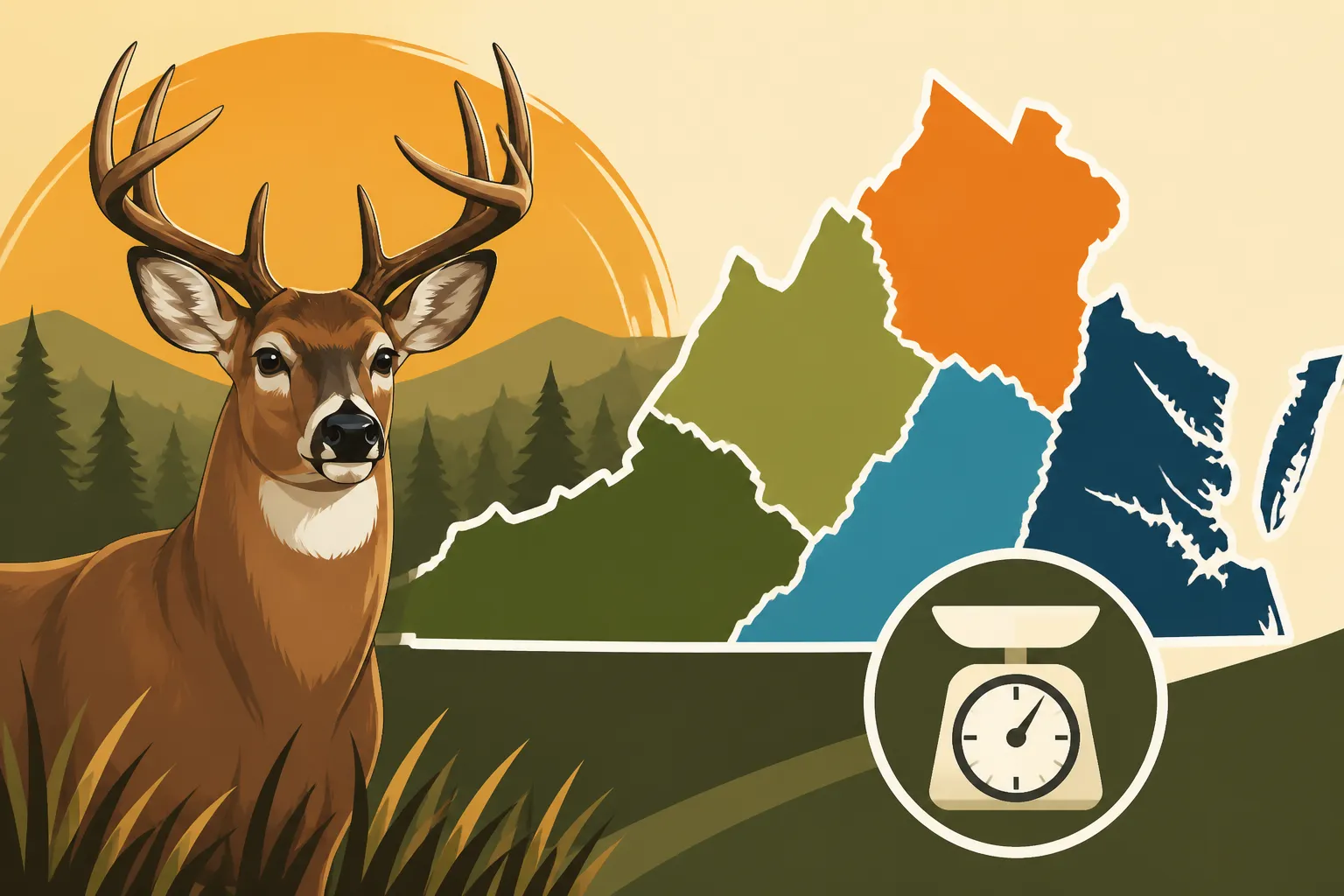
Virginia Deer Weight Averages by Region
It's completely natural to wonder about the size of deer you might encounter here in Virginia. Whether you're dreaming of that wall-hanger buck or just curious about how much venison you'll fill your freezer with, the actual weight of a deer can vary wildly depending on where you're hunting in the Commonwealth. This guide is going to walk you through the average weights of Virginia deer across different regions, and just as importantly, explore the reasons why those differences exist, helping you understand what to expect when you're out in the woods.
Understanding Virginia's Deer Regions and Their Impact on Weight
Virginia is a state of incredible topographical diversity, stretching from the sandy shores of the Atlantic to the rugged peaks of the Appalachian Mountains. This varied landscape directly influences everything from soil quality to food availability, and in turn, has a profound effect on the health, size, and weight of our deer herds. It’s not just a matter of east versus west, though that's certainly a major factor; even within those broad categories, you’ll find significant differences.
The Eastern vs. Western Divide
The most significant geographical division for Virginia deer hunting is arguably the Blue Ridge Mountains. This natural barrier effectively separates the state into two distinct ecological zones, often referred to simply as "East of the Blue Ridge" and "West of the Blue Ridge." These zones are so different that even our state's deer management strategies, including antler point restrictions and bag limits, are often tailored to them.
East of the Blue Ridge, you'll find primarily the Piedmont and Coastal Plain. This landscape is generally rolling hills, extensive agricultural fields, and large tracts of mature timber, mixed with suburban developments. The soils tend to be richer, and agricultural crops like corn, soybeans, and peanuts provide a consistent, high-calorie food source for deer. This abundance of nutrition means deer often grow larger, healthier bodies and can reach their maximum genetic potential more easily. Conversely, West of the Blue Ridge encompasses the Ridge and Valley, and Appalachian Plateau regions. Here, the terrain is much more mountainous, with steep slopes, dense forests, and less agriculture. While deer here are certainly hardy, their diet often consists more of mast crops (acorns, hickory nuts) and browse, which can be less consistently available or as nutritionally dense as agricultural crops. This difference in forage can lead to generally lighter body weights, especially in the more rugged, remote areas. For a broader look, check out our guide on Deer Density East and West of the Blue Ridge.
Beyond the Divide: Piedmont, Coastal Plain, and Mountain Influence
While the East/West divide is a good starting point, it's worth delving into the sub-regions for a more nuanced understanding of deer weights. The Piedmont, for instance, which lies just east of the Blue Ridge, is often lauded as the region for larger-bodied and antlered deer. This is where you'll find a fantastic mix of hardwood forests and rich agricultural fields. Deer in these areas often have access to abundant food year-round, leading to optimal growth.
Moving further east into the Coastal Plain and Tidewater regions, you still have agricultural influences, but also more swampy, low-lying areas. Deer in these areas might contend with different types of forage, and while still generally robust, their specific weights can vary depending on local habitat. In contrast, the deer deep in the George Washington and Jefferson National Forests, particularly in the steepest, most remote sections, are often leaner. They spend their lives traversing difficult terrain and feeding on more sparse browse. This isn't to say big deer don't come out of the mountains – they absolutely do – but on average, the body weights tend to be a bit lower than their Piedmont cousins. Understanding these subtle differences can really help shape your expectations when Hunting East of the Blue Ridge or Hunting West of the Blue Ridge.
Factors Influencing Deer Weight: More Than Just Geography
While the general region plays a huge role in the average weight of a Virginia deer, it's far from the only factor. A deer's individual health, its age, and even the pressures it faces from its own population can all contribute significantly to how much it weighs when it finally hits the ground. It’s a complex dance of nature and management, and every piece of the puzzle matters.
Age, Nutrition, and Genetics
At the individual level, the single biggest determinant of a deer's weight is its age. Fawns are, of course, the lightest, and yearlings start to put on significant weight. Bucks typically don't reach their peak body weight until they are 4.5 to 6.5 years old, sometimes even older. Does follow a similar trajectory, though their peak weight is often reached a year or two earlier than bucks, as they don't have the energy drain of antler growth. Younger deer simply haven't had enough seasons to put on the muscle and fat reserves that older animals accumulate.
Nutrition is another monumental factor. A deer that consistently has access to high-quality forage – think lush clover plots, abundant acorns in a mast year, or protein-rich soybeans – will almost always outweigh a deer in an area with sparse, low-quality food. A poor acorn year, for instance, can lead to deer entering winter in poorer condition and thus weighing less the following season. This is a critical reason why areas with diverse habitat, often including agricultural lands, produce heavier animals. While genetics are harder to pinpoint, certain localized herds may possess genetic predispositions for larger body sizes, though nutrition and age almost always trump pure genetics in a wild setting.
Population Density and Hunting Pressure
Here's where herd management truly comes into play. If a deer population becomes too dense for the available habitat, every deer suffers. Overpopulation leads to intense competition for food, which means individual deer don't get enough to eat, resulting in smaller body weights, poorer antler growth, and reduced overall health. In these scenarios, even older deer might struggle to reach impressive weights. This is a major reason why the Virginia Department of Wildlife Resources (DWR) encourages antlerless harvests, particularly in areas with high deer numbers, to keep the herd in balance with the habitat.
Conversely, areas with balanced populations, where hunting pressure helps keep numbers in check, often see healthier, heavier deer. Less competition means more food per animal. Hunting pressure itself can influence weights indirectly; in heavily hunted areas, deer might be more nocturnal or less likely to spend extended periods feeding in open areas, which could slightly impact their nutritional intake. Disease outbreaks, like Epizootic Hemorrhagic Disease (EHD), can also drastically affect average weights by reducing overall herd health and numbers. Knowing when and where to scout can give you an edge; consider Scouting Virginia Public Land Before Season to understand local conditions.
Virginia's Regional Weight Averages: What to Expect
Let's get down to the numbers, or at least the general expectations, for what you might encounter in Virginia's diverse hunting landscapes. Keep in mind that these are averages, and deer, like people, come in all shapes and sizes. You might encounter an exceptionally large deer in a region where averages are lower, or a smaller one in a region known for giants. The key is to have realistic expectations based on the general trends.
Eastern Virginia (Piedmont and Coastal Plain)
In the rolling hills of the Piedmont and the flatter expanses of the Coastal Plain, you generally find some of the heaviest deer in the state. Thanks to the agricultural bounty and fertile soils, these deer often have consistent access to high-energy food sources. A mature buck in these regions (say, 3.5 years old and up) will often tip the scales in the 160-200 pound live weight range, with some true monsters pushing well past that. Dressed weights for these bucks commonly fall between 120 and 160 pounds.
Does in Eastern Virginia are also typically robust. A mature doe might weigh anywhere from 90 to 130 pounds live, dressing out around 70 to 100 pounds. These areas, particularly those bordering rich farmlands, consistently produce heavier animals. For instance, areas around counties like Fauquier, Culpeper, and Amelia Wildlife Management Area are known for their strong deer populations. When using scouting tools like GoHunt, you'll often see anecdotal reports and harvest photos from these regions showing significant body mass. Why the Piedmont Grows Big Bucks delves deeper into this phenomenon.
Western Virginia (Blue Ridge and Southwest Mountains)
When you move west of the Blue Ridge, into the mountains, the averages tend to shift a bit. The terrain is tougher, the forests are denser, and while mast crops can be fantastic in good years, the consistent agricultural caloric input isn't as widespread. Deer here work harder for their food and often have to navigate much more challenging landscapes. A mature buck in the Blue Ridge or Southwest Mountains might average 140-180 pounds live weight, with dressed weights typically in the 100-140 pound range.
It's important to remember that these are still substantial animals, and their lean, muscular build from navigating steep slopes is impressive. Does in the western regions might average 80-110 pounds live, dressing out around 60-90 pounds. While statistically lighter on average, mountain deer are incredibly tough and make for fantastic hunting. Hunters exploring areas like the George Washington National Forest or the Jefferson National Forest should prepare for a good drag if they tag a mature animal.
Interpreting Harvest Data for Your Area
While general averages are helpful, nothing beats local intelligence. The Virginia Department of Wildlife Resources (DWR) publishes annual harvest data that can provide insights into regional trends, including age structures and, sometimes, general health indicators. However, getting precise weight averages down to a specific county or public land tract can be challenging.
This is where digital scouting tools can really shine. Platforms like GoHunt allow users to access property information, topographic maps, and often, user-submitted harvest data or community forums. While not official DWR statistics, these tools can provide valuable anecdotal evidence. For example, if you're scouting a particular public land block, reviewing what other GoHunt users have shared about their successful hunts can give you a more granular idea of the size and condition of deer being taken in that specific area. Remember, the goal isn't just about the biggest deer, but about understanding the local ecosystem and what's healthy and normal for that particular piece of ground. For more specific scouting information, check out Reading Aerial Photos for Piedmont Deer.
| Region | Average Live Weight (Buck) | Average Dressed Weight (Buck) | Average Live Weight (Doe) | Average Dressed Weight (Doe) | Primary Habitat Influence |
|---|---|---|---|---|---|
| Eastern Virginia | 160-200 lbs | 120-160 lbs | 90-130 lbs | 70-100 lbs | Agriculture, hardwood forests, rich soils |
| Western Virginia | 140-180 lbs | 100-140 lbs | 80-110 lbs | 60-90 lbs | Dense forests, mountains, mast crops |
Note: These ranges represent mature, adult deer (typically 3.5+ years old) and can vary based on individual deer, local conditions, and yearly mast crops.
Practical Considerations for the Virginia Hunter
Knowing the average weight of deer in your hunting area isn't just about curiosity; it's a practical consideration that affects everything from how you prepare for a hunt to how you handle your hard-earned venison after the shot. From field dressing to the actual physical task of getting your deer out of the woods, having a realistic expectation of its size will make your hunt safer and more successful.
Field Dressing and Meat Yield
When we talk about "deer weight" in the field, we're often thinking about "dressed weight" – that's the weight of the animal after the internal organs have been removed. This is significantly less than the "live weight" or "on the hoof" weight. Generally, a deer's dressed weight is about 70-75% of its live weight. So, a 200-pound live weight buck might dress out at 140-150 pounds. This is the weight you'll be dealing with for dragging, loading, and eventually butchering.
The actual meat yield will be even less than the dressed weight, usually around 40-50% of the live weight, depending on how you butcher it. A 200-pound live weight buck might yield 80-100 pounds of boneless venison. This is why managing your expectations for how much meat you'll get is important. If you're planning on processing the deer yourself, having the right tools for Meat Care Gear for Virginia Hunters can make a huge difference. Knowing these percentages helps you plan for freezer space and manage your expectations for how many meals you'll get from a successful hunt.
Planning for Recovery and Transport
Recovering a deer, especially a heavy one, is often the hardest part of the hunt. In rugged mountain terrain, a 150-pound dressed buck feels like a ton. If you're hunting in areas known for larger deer, or planning to target mature animals, you must factor recovery into your hunt plan. This means considering how far you're willing to drag, if you'll need assistance, or if you'll employ tools like deer carts or game sleds.
In areas like the national forests, where vehicle access is limited and terrain can be steep, even a seemingly average deer can present a monumental challenge. I've spent hours Dragging a Deer Out of a Mountain Hollow more times than I care to admit! Quartering a deer in the field using the "gutless method" can drastically reduce the weight you need to transport, allowing you to carry the meat out in game bags within a pack frame. When using a scouting app like GoHunt, pay close attention to the topographic maps and access roads. Planning your extraction route before the hunt, especially when anticipating a heavy animal, is just as crucial as planning your approach to the stand. Think about Field Dressing a Deer in Cold Weather and how that might impact your process.
Disclaimer
This article is for general informational purposes only and does not constitute professional advice. Laws, prices and regulations vary by location and change over time. Consult a qualified professional for guidance on your specific situation.