Binocular Power for Mountain Hunting
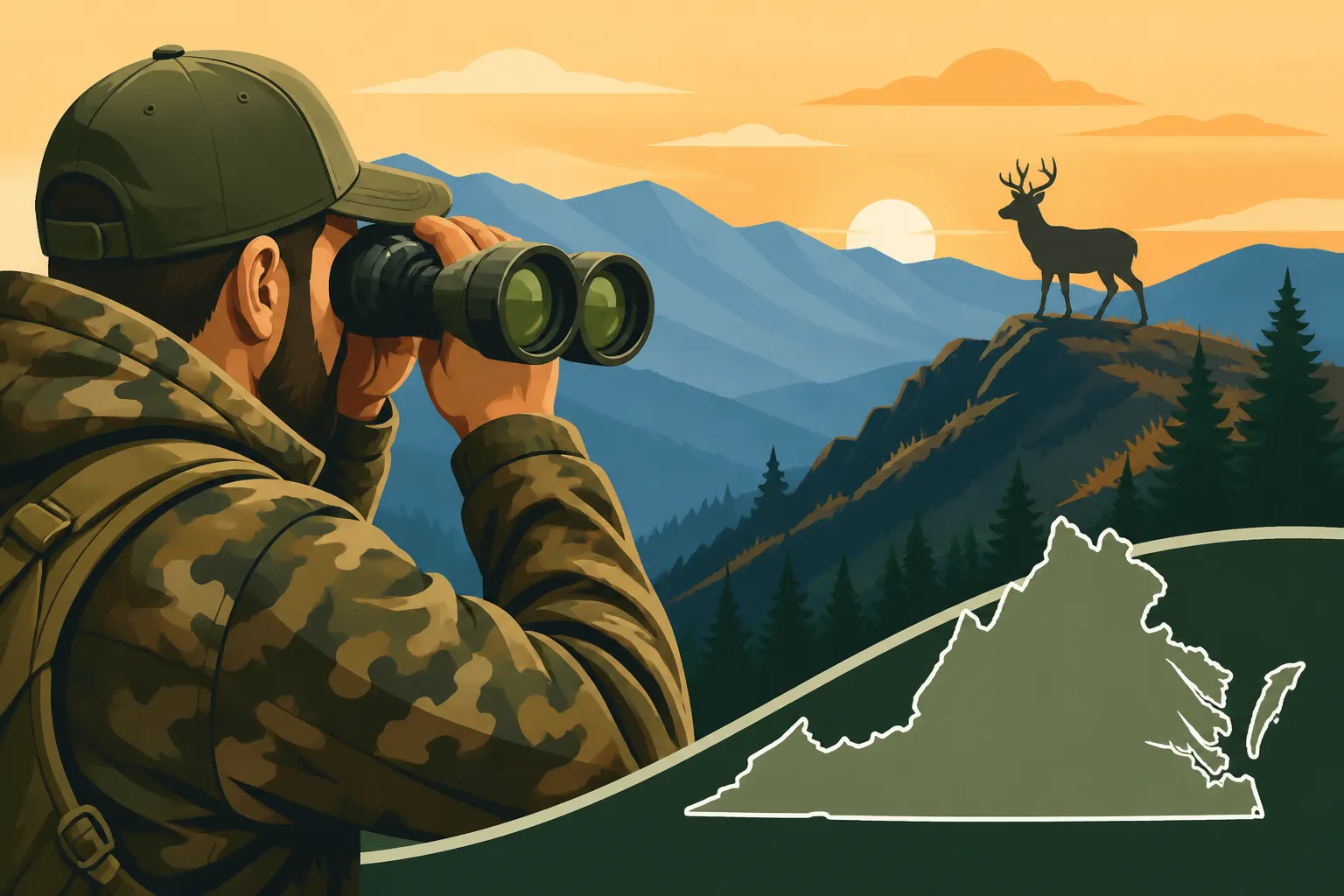
One of the biggest head-scratchers for us Virginia hunters, especially when we're heading into those majestic mountains, is figuring out what kind of binoculars we actually need. It's easy to get overwhelmed by all the numbers and fancy features, leaving you wondering if you're carrying too much glass or not enough to spot that elusive buck on a distant ridge. This guide will walk you through the ins and outs of binocular power, helping you choose the perfect pair to maximize your chances and enhance your experience while hunting the challenging terrain of Virginia's mountains.
Understanding Binocular Magnification and Objective Size for Mountain Hunting
When you look at a pair of binoculars, you'll see two numbers, like "8×42" or "10×50." The first number, followed by an 'x', is the magnification power. The second number, in millimeters, is the diameter of the objective lens – that's the big lens at the front of the binoculars. Both of these numbers play a huge role in how well you'll see in the varied conditions of the Virginia mountains.
Magnification: How Close Do You Really Need to Be?
Magnification tells you how many times closer an object appears through the binoculars than with your naked eye. An 8x binocular makes an object appear eight times closer, while a 10x makes it appear ten times closer. On paper, 10x sounds like the obvious winner, right? More power, more better! But it's not always that simple, especially when you're navigating steep, rugged terrain or trying to spot movement in dense timber.
Higher magnification often comes with a narrower field of view, meaning you see less of the surrounding area. It also amplifies hand shake, making it harder to hold steady, which can be a real pain when you've just climbed a thousand feet and your heart is pounding. For much of the Appalachian range in Virginia, from the Jefferson National Forest Hunting to the George Washington National Forest Hunting, deer are often found in thick cover, and you're typically not glassing across miles of open prairie. An 8x might offer a wider field of view and a steadier image, which can be a huge advantage for quickly scanning a mountainside or picking apart brush piles.
Objective Lens Diameter: Gathering the Light
The objective lens diameter dictates how much light the binoculars can gather. A larger objective lens gathers more light, which translates to a brighter image, especially in low-light conditions like dawn, dusk, or deep timber. So, a 42mm objective lens will gather more light than a 32mm, and a 50mm will gather even more.
In the mountains, where shadows can be long and deep, and deer are often most active during those prime low-light hours, having good light-gathering capability is crucial. Think about trying to pick out a deer against a dark backdrop in a steep hollow just before legal shooting light – that extra bit of brightness can make all the difference. However, a larger objective lens also means more weight and bulk, which is a consideration when you're packing for a long day of climbing and descending. It's a delicate balance between performance and portability that every mountain hunter has to weigh.
Factors Influencing Your Binocular Choice in Virginia's Mountains
Picking the right binocular power isn't just about the numbers; it's about understanding the specific challenges and conditions you'll face Hunting West of the Blue Ridge or even on the eastern slopes. Virginia's mountain terrain is diverse, and what works perfectly for one hunter might be less ideal for another.
Terrain and Vegetation: Where Will You Be Hunting?
The type of terrain you hunt most often is a primary driver for binocular choice. If you spend most of your time in the dense, tangled thickets and rhododendron patches of the higher elevations, an 8x binocular with its wider field of view and greater stability might be your best friend. It allows for quick target acquisition and makes it easier to track movement in close quarters. You're trying to pick out a leg or an ear in a sea of branches, not count antler points a mile away.
On the other hand, if your preferred method involves sitting on an overlook or a ridge-top saddle, glassing across powerline cuts, clear-cuts, or distant slopes for longer periods, then a 10x or even 12x might give you that extra reach to identify game. Even within the same hunt, you might transition from tight timber to a more open, rocky face, making a versatile optic or careful consideration of your primary hunting style paramount. When Reading a Ridge for Blue Ridge Deer, that little bit of extra magnification can help you spot subtle movements or shapes that might otherwise blend into the background.
Light Conditions and Time of Day
As mentioned, mountain hunting often means dealing with significant variations in light. Dawn breaks slowly over eastern ridges, and dusk settles quickly into deep valleys. The amount of available light directly impacts how effectively your binoculars perform. Lower magnification binoculars (like 8x) generally have a larger exit pupil (the circle of light you see when holding the binoculars away from your eyes), which can make them perform better in truly dim conditions, assuming the objective lens is also reasonably sized (e.g., 8×42).
If you frequently find yourself hunting during those crucial low-light periods, prioritizing a binocular setup that gathers and transmits light efficiently is wise. This isn't just about spotting an animal; it's about making a positive identification and assessing the animal's size and legal status before making a move. It's a key part of responsible hunting and a safety consideration, ensuring you clearly see your target.
Personal Stability and Weight Considerations
This is where the rubber meets the road, or more accurately, where your hands meet the optics. Higher magnification binoculars are notoriously harder to hold steady, especially after a strenuous climb or on a cold morning when your hands are shaking. Even a slight tremor is magnified, turning your crisp view into a jittery mess. If you struggle with a steady hand, or if you plan to do a lot of handheld glassing without a tripod or other support, an 8x might offer a much more comfortable and usable experience.
The weight of your binoculars also matters. Every ounce counts when you're tackling steep ascents and descents with a full pack. While a larger objective lens (like a 50mm) offers superior light gathering, it adds weight and bulk. An 8×32 or 10×32 might be incredibly lightweight and compact, perfect for staying mobile, but you'll sacrifice some low-light performance. A common sweet spot for many mountain hunters is an 8×42 or 10×42, offering a good balance of light gathering, magnification, and manageable weight. It's all about finding that personal comfort zone that doesn't leave you feeling like you're carrying a brick around your neck. Consider how much you value a clear, steady image versus shedding a few ounces from your gear.
Practical Applications and Scenarios for Different Binocular Powers
Let's break down how different binocular powers might play out in real-world Virginia mountain hunting scenarios. It’s not a one-size-fits-all situation, and what works for your buddy might not be the best fit for your hunting style.
The 8x Binocular: A Versatile Mountain Workhorse
For many Virginia mountain hunters, an 8x binocular, especially in an 8×42 configuration, hits a sweet spot. Its wider field of view is a massive advantage when you're trying to quickly scan a mountainside or pick apart a thick laurel patch. You'll cover more ground with less panning, and it's much easier to find and track an animal that suddenly steps out of cover.
Scenario: Imagine you're still-hunting a ridge in the Hunting a High Elevation Mountain Bench zone. The woods are relatively open in spots, but pockets of dense timber lurk. You hear a rustle and quickly bring your 8x42s up. The wide field of view allows you to pick up movement, and the stability means you can quickly confirm if it's a deer, and if so, what kind. You're not struggling to keep a distant object in view; instead, you're efficiently identifying what's close and potentially moving fast. This power is also fantastic for folks who use Saddle Hunting in Virginia Hardwoods setups, as it allows for quick, stable views from an elevated position without excessive movement.
The 10x Binocular: When Reach Matters
A 10x binocular, often in a 10×42 or 10×50 configuration, is excellent when you anticipate longer-range glassing. If your hunting involves spending time overlooking large clear-cuts, gas lines, or open slopes where deer might be feeding or traveling significant distances away, the extra magnification can be incredibly useful. It allows you to resolve finer details at greater distances, potentially identifying antler points or assessing a bear's size before you commit to a long, arduous stalk.
Scenario: You've hiked to a prominent point overlooking a vast valley in the Clinch River area of Southwest Virginia. Your plan is to glass distant bedding areas or food sources. With a 10x binocular, you can systematically break down that distant landscape, picking out subtle movements or shapes that an 8x might struggle to resolve. You might use a brand like GoHunt to mark potential travel corridors or bedding areas on your map app, then use your 10x binoculars to thoroughly check those spots from afar. However, the trade-off is often a narrower field of view and increased hand shake, making a tripod adapter a valuable accessory for prolonged glassing sessions, especially on windy days where Wind and Thermals on a Blue Ridge Slope can make holding steady a real challenge.
Higher Magnification (12x and Beyond): Specialized Tools
While less common for general mountain hunting in Virginia, some hunters opt for 12x or even 15x binoculars, particularly if they plan to spend almost all their time stationary, glassing extremely vast, open areas, which are rarer but not impossible to find in certain mountain regions or during specific seasons when vegetation is down. These often demand a tripod for any practical use. For most Virginia mountain scenarios, where quick, stable, handheld use is paramount, going beyond 10x can often be more of a hindrance than a help.
Choosing Your Mountain Binocular: A Comparison
Here's a quick table to help you compare the practical aspects of 8x and 10x binoculars for Virginia mountain hunting:
| Feature | 8x Magnification (e.g., 8×42) | 10x Magnification (e.g., 10×42) |
|---|---|---|
| Field of View | Wider, easier to scan and find targets quickly. | Narrower, more focused on specific areas. |
| Stability | More stable, less prone to hand shake, easier handheld. | Less stable, more prone to hand shake, tripod often helpful. |
| Brightness | Generally brighter in low light (with similar objective). | Slightly dimmer in low light (with similar objective). |
| Detail at Range | Good for moderate distances. | Better for resolving fine details at longer distances. |
| Portability | Often lighter and more compact (e.g., 8×32). | Can be heavier with larger objective (e.g., 10×50). |
| Best For | Thick timber, still-hunting, quick target acquisition, low-light. | Open country, long-range glassing from a fixed position, scouting. |
Care and Maintenance of Your Mountain Optics
No matter what power you choose, your binoculars are an investment, and proper care is crucial to ensure they perform reliably season after season in the often-harsh mountain environment. A little preventative maintenance goes a long way.
Protecting Your Lenses
The most vulnerable parts of your binoculars are the objective and ocular (eyepiece) lenses. Always use lens caps when not actively glassing. A good binocular harness isn't just for comfort; it protects your optics from bumps and scrapes as you navigate through brush and over rocks. You want to avoid any deep scratches that can degrade image quality.
When cleaning, always start by blowing off any loose dirt or dust with a can of compressed air or a soft brush. Then, use a specialized lens cleaning solution and a microfiber cloth. Never use harsh chemicals or abrasive materials like your shirt sleeve, which can scratch delicate lens coatings. After a wet day of hunting, make sure to let your binoculars dry out thoroughly before storing them to prevent mold or mildew from forming inside. Just like you'd carefully select Clothing for a Virginia Late Season, you should treat your optics with the same respect for durability.
Storage and Transport
When you're done for the season, store your binoculars in a dry, temperature-controlled environment, ideally in their original case or a dedicated binocular case. Avoid leaving them in extreme heat or cold, like in a vehicle for extended periods, as this can damage seals and internal components. For transport in your pack, ensure they are secured and not rattling around where they could be damaged. Many hunters use specialized padded cases or even wrap them in a soft cloth within their pack for extra protection during those long treks up the mountain.
Investing in a quality set of binoculars that matches your hunting style and the specific conditions of Virginia's mountains will significantly enhance your experience and success. Whether you opt for the versatility of an 8x or the reach of a 10x, clear vision is priceless in the deer woods.
Disclaimer
This article is for general informational purposes only and does not constitute professional advice. Laws, prices and regulations vary by location and change over time. Consult a qualified professional for guidance on your specific situation.