Sleds and Drags for Mountain Country
There are few feelings as rewarding as making a successful shot on a big Virginia whitetail, but that triumph can quickly turn into a grueling challenge when you realize your quarry has expired in the most inaccessible, steepest, and rockiest part of the George Washington National Forest. Dragging a deer out of the mountains isn't just hard work; it can be downright dangerous and often feels impossible without the right tools. This comprehensive guide is dedicated to helping you understand, choose, and effectively use game sleds and drags to make those tough mountain recoveries a manageable reality, ensuring your hard-earned venison makes it back to camp.
The Unique Challenge of Mountain Recovery
When you're hunting in Virginia's mountains, especially in areas like the Jefferson National Forest, the landscape itself becomes a significant part of the challenge. It’s not like recovering a deer from a flat crop field in the Piedmont. Here, gravity is both your friend and your formidable foe, and preparation is key to turning a potential nightmare into a successful, albeit still strenuous, recovery.
Virginia's Varied Mountainous Terrain
Virginia's mountainous regions, primarily the Appalachian and Blue Ridge ranges, present a diverse and often unforgiving landscape for hunters. You might be navigating steep, rocky slopes covered in dense mountain laurel thickets one moment, only to find yourself scrambling down a scree field the next. The terrain is often a mosaic of hardwoods, rhododendron tangles, and boulder-strewn creek bottoms. Game animals, especially deer and bear, are incredibly adept at finding refuge in these challenging areas, and that often means that's exactly where they'll decide to expire after a shot.
Consider a scenario where you've just taken a beautiful buck on a high bench overlooking a deep hollow. The shot was perfect, and you tracked it to where it fell, a hundred yards down a 45-degree slope, nestled amongst a stand of thick, thorny greenbrier. Getting yourself there was tough enough. Now imagine trying to pull 150-200 pounds of dead weight back up that same incline, through the brush, without proper equipment. It's not just the grade, but the uneven footing, slippery leaves, downed timber, and the sheer distance to the nearest trail or road that compound the difficulty. It’s enough to make even the most seasoned hunter consider leaving a deer until morning, or worse, abandoning it altogether if the terrain is too daunting, which is heartbreaking.
Why Conventional Methods Fall Short Here
For many years, the standard approach to deer recovery was a simple rope, perhaps a friend or two, and a whole lot of grit. While this might work reasonably well for a short drag across open woods or a field, it quickly becomes inadequate—and even dangerous—in mountain country.
Picture this: you're trying to pull a deer with just a rope over a pile of fallen logs. The deer snags, the rope digs into your hands, and you slip on the wet leaves, nearly twisting an ankle. Now multiply that effort and risk by a quarter-mile of similar terrain. A bare rope means all the deer's weight is concentrated on a small point, causing it to dig into the ground, get caught on every obstacle, and require immense effort to move. The friction is incredible. Your hands ache, your back screams, and your boots lose purchase. Furthermore, trying to drag a deer without elevating its body at least slightly means it's constantly collecting dirt, leaves, and debris, which isn't ideal for meat care. The standard methods often lead to exhaustion, frustration, and sometimes injury, making the recovery less about celebrating a successful hunt and more about enduring a punishing ordeal. This is precisely why specialized tools like sleds and drags were developed – to make those Dragging a Deer Out of a Mountain Hollow situations more manageable.
Understanding Game Recovery Sleds
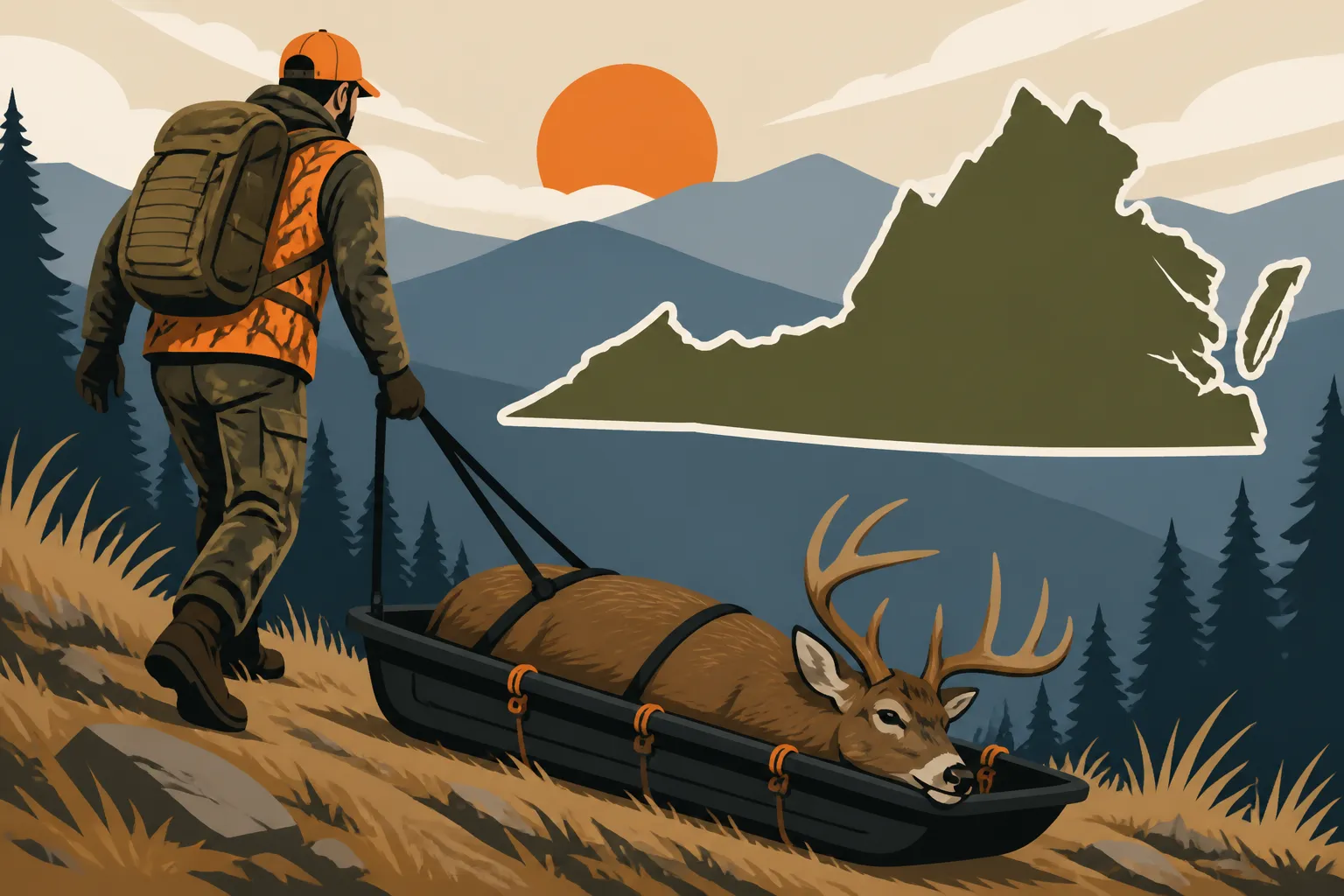
Game sleds are a game-changer, literally, when it comes to extracting big game from difficult terrain. They essentially create a smooth, low-friction surface for your animal, allowing it to glide over obstacles rather than snagging on them.
Types of Sleds and Their Construction
When we talk about game sleds, we're generally looking at a few primary designs, each with its own advantages.
-
Rigid Plastic Sleds: These are often made from heavy-duty, high-density polyethylene (HDPE) or similar durable plastics. They are typically shaped like a large, shallow canoe or toboggan, with a slightly raised nose and often molded-in grooves on the bottom to help them track straight. Brands like GoHunt often have users sharing tips on their forums about which sleds hold up best in rugged terrain. The rigid construction means they won't fold or collapse, providing a stable platform for even the largest deer or bear. They usually have pre-drilled holes or reinforced grommets around the edges for attaching ropes or a harness system. The beauty of these is their incredible durability; they can take a beating from rocks, stumps, and sharp branches without puncturing. However, their rigidity also means they don't fold up, making them cumbersome to carry to the animal if you're deep in the backcountry. You often see hunters stashing these near common recovery points or bringing them in on an ATV where permitted.
-
Flexible Fabric Sleds/Drags: These are often made from heavy-duty tarpaulin material, Cordura, or reinforced PVC. Think of them as a heavy-duty tarp with reinforced handles or loops around the edges. They are incredibly lightweight and can fold or roll up into a compact package, easily fitting into a hunting pack for those long walks into remote areas. Once at the animal, you simply lay it out, roll the deer onto it, and gather the corners or sides to create a "cocoon" around the animal. A rope is then attached to the reinforced handles. While not as rigid as plastic sleds, the thick fabric still provides a slick surface that significantly reduces friction. They are generally more affordable and easier to transport. The downside is that they can be more prone to tearing on sharp rocks or snags if not handled carefully, and they don't offer the same level of protection for the animal's hide as a rigid sled might.
-
Purpose-Built Backpack/Sled Hybrids: Some innovative designs combine a flexible sled with a lightweight internal frame, allowing it to be carried like a backpack and then deployed as a sled. These are often more expensive but offer the best of both worlds for the solo mountain hunter needing to pack in deep. The idea is to make the journey to the animal less burdensome, anticipating a heavy load on the way out.
Advantages of Using a Sled
The benefits of a game sled, especially in the rugged Virginia mountains, are numerous and often become obvious only after you've experienced a tough recovery without one.
Firstly, reduced friction is the primary advantage. A slick plastic or heavy-duty fabric sled allows the animal to slide over obstacles that would typically snag a bare carcass. Instead of dragging hide directly on rocks and roots, the sled acts as a barrier, effectively floating the weight across the terrain. This makes a massive difference in the energy expenditure required, especially when you're going uphill or across uneven ground.
Secondly, sleds offer protection for the game. Dragging a deer without a sled can damage the hide, pick up dirt and debris, and potentially even bruise the meat, especially if you're pulling it over sharp rocks or stumps. A sled provides a clean, protective barrier, keeping your hard-earned venison in better condition from the field to the cooler. This is particularly important for those who plan to cape their animal for a mount.
Thirdly, they greatly improve leverage and ergonomics. Many sleds are designed to accept specialized harnesses (either shoulder straps or waist belts), which distribute the pulling weight across your entire body, rather than concentrating it on your hands, arms, and lower back. This significantly reduces strain and the risk of injury. When you're Recovering a Deer From a Mountain Hollow, every ounce of mechanical advantage counts.
Finally, sleds can accommodate larger animals or multiple smaller ones. While a single deer is often the target, if you're hunting in a region with generous antlerless limits or small game, a sled can be used to transport multiple animals simultaneously, making one trip instead of several.
Limitations and Considerations
While game sleds are fantastic tools, they aren't without their considerations.
The most significant limitation for a mountain hunter is often portability. Rigid plastic sleds, while incredibly effective, are bulky. Trying to haul one several miles into deep mountain country, especially through thick brush or up steep ascents, is simply not practical. This is where a flexible sled that folds into a pack becomes a clear winner. If you're hunting areas accessible by ATV/UTV (where permitted) or have a very short drag from a vehicle, a rigid sled shines. For extensive backcountry hunts, the effort of getting the sled to the animal must be factored in.
Maneuverability can also be an issue, particularly with longer, rigid sleds in very dense cover. Trying to navigate a 6-foot plastic sled through a tight rhododendron thicket or around sharp switchbacks on a steep game trail can be challenging. It's often a two-person job in such scenarios.
Cost is another factor. While a simple drag tarp is relatively inexpensive, a high-quality rigid sled or a specialized sled/backpack hybrid can represent a significant investment. However, when you consider the physical toll and potential for injury saved over years of hunting, many hunters find it well worth it.
Finally, snow or ice can affect performance. While snow generally makes sledding easier, extremely icy conditions can make controlling a heavily loaded sled on a downhill slope incredibly difficult and dangerous. Always prioritize safety, and consider an ice axe or walking poles for stability if you're recovering in slick, wintery conditions.
Exploring Game Drags and Harness Systems
Sometimes a full sled isn't practical, or the terrain dictates a more minimalist approach. This is where various drag ropes and harness systems come into play, offering alternatives or complements to sled use.
Simple Rope Drags vs. Advanced Harnesses
At its most basic, a game drag is a sturdy rope attached to the animal. For generations, this was the go-to method, and it still has its place, particularly for shorter drags or when you don't anticipate extreme terrain.
-
Simple Rope Drags: This usually involves a strong rope (at least 3/8-inch diameter and 6-10 feet long is good) tied around the deer's neck or antlers. Some hunters prefer to make a loop and put it around the chest, just behind the front legs, which can help distribute the pull and keep the head from getting hung up. The benefit is simplicity and portability—a rope can be coiled and stored in any pack. The drawbacks, however, are significant in mountain terrain. The rope concentrates all the force, digging into your hands, and the deer itself provides all the friction. It snags on every rock and branch, making for an incredibly arduous pull. Your back and shoulders take a beating, and the animal's hide can get chewed up. This method is generally best reserved for very short distances, flat ground, or as a last resort.
-
Advanced Harness Systems: This is where modern innovation truly helps the hunter. These systems are designed to distribute the pulling force across your strongest muscle groups—your core, legs, and back—rather than just your arms and hands.
- Shoulder Harnesses: These resemble backpack straps, often with a padded yoke, that attach to a rope or directly to a sled. They allow you to lean into the drag, using your body weight and leg drive, which is far more efficient and less taxing than arm-pulling.
- Waist/Hip Belt Harnesses: Similar to backpacking hip belts, these wrap around your waist and have attachment points for a drag rope. They transfer the load to your hips and legs, freeing up your hands for balance or carrying a rifle. These are excellent for solo hunters.
- Combination Harnesses: Some systems offer both shoulder and waist straps, allowing for maximum weight distribution and pulling power. These are ideal for very large animals or extremely steep ascents.
- Two-Person Harnesses: For team recoveries, a two-person drag system allows two hunters to pull in tandem, greatly multiplying the effective force and sharing the burden. This is often the best option when you've got a buddy and a long, uphill drag.
Many hunters use products from brands like Hunters Specialties or Allen, which offer various drag ropes and harnesses. The key is to look for durable materials, comfortable padding, and strong attachment points.
When a Drag is the Better Option
While a sled is often superior, there are specific scenarios where a simple or advanced drag system might be preferred:
- Solo Hunter, Deep Backcountry: If you're hunting alone, several miles into a wilderness area like parts of the George Washington National Forest Hunting or Jefferson National Forest Hunting, carrying a bulky rigid sled might be out of the question. A lightweight, packable drag harness and a good rope or flexible drag sheet that folds up small is a much more practical choice. The less you carry to the animal, the more energy you have for the recovery.
- Very Steep, Technical Terrain: In areas with extremely steep pitches, cliff bands, or dense, rocky obstacles where a sled might get hung up or be difficult to control, a direct drag with a harness can offer more precise maneuverability. You can lift and maneuver the animal more directly, picking your way through tight spots. For instance, if you're trying to navigate a narrow chute or a very tight game trail, a flexible system can conform better.
- Minimalist Hunting: Some hunters prefer a truly minimalist approach, wanting to carry as little gear as possible. A sturdy rope is the lightest option and can be used for a multitude of tasks beyond just dragging a deer.
- Downhill Glides (Controlled): On long, gradual downhill slopes with minimal obstacles, a simple drag can be quite effective. The animal's weight works with gravity, and you mostly act as a guide and brake. However, always be cautious not to lose control on steeper declines.
DIY Solutions and Commercial Products
For those who enjoy a bit of ingenuity, there are many effective DIY solutions for game drags.
- PVC Pipe Handles: You can thread a rope through a short section of PVC pipe to create a comfortable handle that prevents the rope from digging into your hands. This is a simple but effective upgrade for a basic rope drag.
- Old Backpack Straps: If you have an old, worn-out backpack, you can cut off the shoulder straps and hip belt and adapt them with carabiners and strong webbing to create a functional pulling harness.
- Fire Hose: Sections of old fire hose are incredibly durable and flexible. They can be flattened and used as a drag "sled" for smaller animals, or cut and adapted as durable handles for ropes.
However, for reliability and ergonomic design, commercial products often offer superior comfort and durability. Brands like Allen, Hunters Specialties, and even some specialty hunting gear companies offer well-engineered game drags and harness systems. These typically feature robust stitching, padded straps, and high-strength hardware designed to withstand hundreds of pounds of pulling force over rough terrain. They are an investment in your safety and physical well-being. Using an app like GoHunt for scouting can help identify potential drag routes before you even leave home, allowing you to choose the best recovery tool for the anticipated terrain.
Practical Strategies for Mountain Recovery
Even with the best sled or drag, recovering an animal from mountain country requires more than just brute strength. It demands careful planning, smart strategy, and often, teamwork.
Scouting for Recovery Routes before the Shot
This is perhaps the most overlooked, yet most critical, aspect of mountain game recovery. Before you even head out, or as you scout a new area, always be thinking about how you'd get an animal out. This is where tools like onX Layers for Virginia Land Status or the GoHunt app truly shine.
When you're studying topo maps or aerial photos, look for:
- Contour Lines: Identify areas with gentler slopes, even if they're a bit longer. A longer, less steep drag is often easier than a shorter, incredibly steep one. Look for benches, saddles, and gradual ridge lines that might offer a less strenuous path.
- Logging Roads and Old Skidder Trails: These are golden! Even overgrown ones can provide a relatively clear, albeit often steep, path. Many of Virginia's public lands, particularly the National Forests, have a network of old logging roads. Mark these on your GPS Units Versus Phone Apps before you go.
- Creek Beds: Sometimes, a shallow, dry creek bed can offer a surprisingly clear path, especially downhill. However, be wary of deep washes, large boulders, or thick riparian vegetation.
- Natural Funnels and Pinch Points: Deer often use these, and they can sometimes lead to more open terrain. If you're setting up a stand, consider access to these features for both hunting and recovery.
- Vehicle Access Points: Note where you can legally and safely get a vehicle, even an ATV or UTV, reasonably close to where you expect to be hunting. This might be a forest service road, a public access point near a WMA like Amelia Wildlife Management Area, or a field edge on private land.
When you're actually in the woods, take mental notes. "If I shoot a deer here, I'd probably drag it down that gentle slope to the old logging road, then out to the north." Having a plan, or at least a few potential routes, can save you hours of effort and a lot of frustration when the moment comes. Always consider Scouting Virginia Public Land Before Season with recovery in mind.
Teamwork and Shared Burden
While solo hunting is a rewarding endeavor, recovering a large animal from mountain terrain is often a job best shared.
- Two is Better Than One (or More): Having a hunting partner or two makes an astronomical difference. With two people, you can employ a two-person harness system, which distributes the weight and doubles the pulling power. One person can lead, clearing obstacles and scouting the immediate path, while the other pulls. For a very heavy bear or a large buck in extremely steep terrain, three or even four people can make the recovery significantly safer and faster.
- Rotation: If you have multiple people, establish a rotation. Each person takes a turn on the lead ropes for a set distance or time, then rotates to clear obstacles, scout ahead, or simply rest. This keeps everyone fresher and maintains morale.
- Communication: Clear communication is vital, especially on steep slopes. "Stop!" "Left a little!" "Watch that rock!" "Ready to pull!" Ensure everyone knows the plan and is working in sync.
- Designated Roles: Assign roles. One person might be the "lead scout," another the "primary puller," and another the "rear anchor" (especially on steep descents to help control speed).
- Gear Sharing: If only one person has a sled or harness, make sure everyone knows how to use it effectively. If you're planning a multi-day hunt, discussing recovery gear as part of Virginia Deer Camp Traditions can ensure everyone is prepared.
Never underestimate the power of collective effort when faced with the challenge of Recovering a Deer From a Mountain Hollow.
Essential Safety Tips for Steep Terrain
Mountain recoveries are inherently risky. Fatigue, uneven footing, poor light, and heavy loads can all lead to accidents.
- Go Slow and Steady: Rushing is when mistakes happen. Take frequent breaks. Conserve your energy. Even if it takes longer, getting out safely with your game is the priority.
- Footing is Paramount: Always be aware of your footing. Loose rocks, slippery leaves, wet moss, and downed logs are common hazards. Wear sturdy, ankle-supporting boots with good traction. Avoid walking directly downhill if possible; traverse slopes or zig-zag to maintain better control.
- Stay Hydrated and Fueled: Even in cold weather, strenuous activity leads to dehydration. Carry plenty of water and high-energy snacks. A tired body makes poor decisions.
- Headlamps (Charged!): If there's any chance you'll be recovering after dark, a reliable headlamp is non-negotiable. Carry spare batteries or a backup light. Trying to navigate rough terrain in the dark with a heavy load is a recipe for disaster.
- First Aid Kit: Always carry a well-stocked First Aid Kits for Remote Mountain Ground. Sprains, cuts, and scrapes are common, and being able to address them promptly can prevent a minor issue from becoming a major problem.
- Avoid Solo Extremes: If the terrain is truly treacherous, or the animal is exceptionally large, seriously reconsider a solo recovery, especially if you're deep in the wilderness. It's better to make two trips, or even call for help, than to risk serious injury.
- Control on Descents: When dragging downhill, gravity is working with you, but it can also quickly get out of control. Use a rope wrapped around a tree or a sturdy partner as an anchor to slowly lower the sled or animal. Never let go of the rope and expect to catch it.
- Check Weather: Adverse weather (heavy rain, snow, ice) will significantly increase the difficulty and danger of a recovery. If a storm is rolling in, sometimes the safest option is to quarter the animal, cache the meat in game bags, and return another day with more help and better conditions.
Advanced Techniques and Tools
Beyond the basic sleds and drags, a few additional strategies and pieces of gear can further streamline mountain game recovery.
Using ATV/UTV Access Points (Where Permitted)
In many parts of Virginia's public lands, particularly some Wildlife Management Areas (WMAs) and certain forest service roads in the National Forests, ATV or UTV use is permitted on designated trails or roads. This can drastically cut down on recovery time and effort.
- Know the Rules: Before you even consider this, know the specific regulations for the area you're hunting. Virginia DWR and National Forest Service rules on ATV/UTV use are very strict and vary by location. Never assume access; always verify. Penalties for illegal ATV use on public land can be severe.
- Designated Trails: Stick only to marked and designated trails or roads. These are often old logging paths or administrative roads. Do not create new trails or venture off-road.
- Strategic Placement: If you know you'll be hunting near an area with ATV access, plan your hunt to try and move game towards these points. For example, if you're still-hunting along a ridge Still-Hunting Jefferson Forest Ridges that parallels an old forest road a few hundred yards below, consider how you might get a downed deer down to that road.
- Vehicle-Mounted Winches: If you have a UTV or an ATV equipped with a winch, this is an invaluable tool for pulling heavy game up steep embankments or out of deep ditches that would be impossible by hand. Ensure you have proper tree straps or anchors to use with the winch to avoid damaging trees.
- Game Carts: While not sleds or drags, game carts with large, all-terrain wheels can be incredibly useful once you reach a relatively flat trail or road. They allow one person to easily move a heavy animal that would otherwise take two to drag. However, they are generally not suitable for truly rugged, rocky, or steep mountain terrain where wheels can't roll freely.
Integrating GPS and Mapping for Efficient Extraction
Modern technology, specifically GPS devices and smartphone mapping apps, have revolutionized the way hunters navigate and, by extension, how they plan and execute game recoveries.
- Pinpointing the Kill Site: As soon as you find your downed animal, drop a waypoint on your GPS or phone app. This is crucial. In thick cover or changing light conditions, it's incredibly easy to lose track of the exact spot. This waypoint serves as your home base for the entire recovery process.
- Marking the Drag Route: As you begin the drag, periodically mark waypoints along your chosen recovery path, especially at junctions, turns, or difficult spots. This creates a virtual breadcrumb trail, ensuring you can find your way back if you need to scout ahead, get more help, or retrieve forgotten gear. It's also helpful if you decide to quarter the animal and need to make multiple trips.
- Terrain Analysis in the Field: Apps like GoHunt allow you to view detailed topographic maps and satellite imagery right on your phone, even without cell service (if you've downloaded maps beforehand). You can use this to identify the path of least resistance in real-time. Zoom in, look at contour lines, and identify potential draws, benches, or clearings that might lead to an easier drag. This is especially useful if your initial pre-hunt scouting didn't cover the exact area where the animal fell.
- Measuring Distance and Elevation: Knowing the exact distance you need to drag and the total elevation gain/loss can help you pace yourself and make informed decisions. A simple glance at your GPS Units Versus Phone Apps can tell you if that "short cut" is actually a 500-yard, 400-foot vertical climb you want to avoid.
- Coordinating with Help: If you need to call in friends or family for help, being able to provide precise GPS coordinates for the animal's location and your planned extraction point is invaluable. It saves precious time and prevents lost helpers. Imagine trying to explain, "He's down past the big oak, by the three rocks, after the second laurel thicket…" versus "He's at Lat: 38.xxxx, Lon: -79.xxxx, and we're dragging him towards the forest road at 38.yyyy, -79.yyyy." The latter is infinitely more efficient.
Comparing Sleds and Drags
To help you decide which tool might be best for your next Virginia mountain hunt, here's a quick comparison:
| Feature | Game Sled (Rigid Plastic) | Flexible Fabric Sled/Drag (e.g., tarp) | Rope Drag (with/without handle) | Advanced Harness System (e.g., shoulder/hip) |
|---|---|---|---|---|
| Portability | Poor (bulky, heavy) | Excellent (rolls/folds small, lightweight) | Excellent (coils small, very lightweight) | Good (packable, integrates with existing gear) |
| Friction | Very Low (glides over obstacles) | Low (slides over obstacles) | Very High (animal snags on everything) | Variable (depends on method, but improves efficiency) |
| Animal Protect. | Excellent (contains and protects carcass) | Good (contains, protects from dirt/abrasions) | Poor (direct contact with ground, can damage hide) | None (protects you, not the animal directly) |
| Effort | Significantly Reduced | Significantly Reduced | Very High | Greatly Reduced (efficient power transfer) |
| Terrain Suit. | Best for moderate slopes, open woods, snow, short drags | Good for varied terrain, dense cover, long distances | Short, flat drags; last resort in mountains | Best combined with a sled/flexible drag for mountains |
| Cost | Moderate to High | Low to Moderate | Very Low | Moderate to High |
| Best Use | ATV access areas, vehicle-side, snow, open hardwoods | Deep backcountry, steep/rocky terrain, solo/team hunts | Emergency, short distance, very flat ground | Enhances sled/drag pulling, critical for mountain work |
Ultimately, the best approach for a Virginia mountain hunt might be a combination: a lightweight, packable flexible drag sheet, carried in your pack, paired with a comfortable, ergonomic harness system. This setup offers the best balance of portability, efficiency, and protection for challenging backcountry recoveries. Remember, hunting doesn't end when the shot breaks; it ends when the meat is safely in the cooler, and having the right tools makes all the difference.
Disclaimer
This article is for general informational purposes only and does not constitute professional advice. Laws, prices and regulations vary by location and change over time. Consult a qualified professional for guidance on your specific situation.