Climbing Sticks for Rough Bark
For any Virginia hunter, there's a unique frustration that arises when you finally find that perfect pinch point, that ideal oak, or that killer funnel for your treestand, only to realize the bark on the tree is so gnarled and rough that your climbing sticks just don't feel secure. It's a common challenge in our diverse Virginia woods, but with the right gear and techniques, you can overcome it. This guide will dive deep into selecting and using climbing sticks effectively on even the roughest bark Virginia can throw at you.
The Unique Challenges of Virginia's Trees for Climbing Sticks
Hunting in Virginia means encountering an incredibly diverse array of trees, and with that comes an equally diverse range of bark textures. What works perfectly on a smooth-barked beech might be a nightmare on an old, craggy oak. Understanding these differences is the first step to ensuring your safety and stealth in the stand.
Understanding Virginia's Diverse Tree Species and Their Bark
Picture yourself deep in the George Washington National Forest Hunting or navigating the hardwoods of the Piedmont. You're likely to encounter a mix of species, each presenting its own distinct set of challenges for climbing sticks.
Think about the majestic white oaks, with their deeply furrowed, almost blocky bark that offers plenty of nooks and crannies, but also uneven surfaces that can make a stick wobble. Then there are the shagbark hickories, famous for their peeling, shaggy strips that seem to defy any secure attachment. Maple trees, while often smoother in younger stages, can develop rough, cracked bark as they age. Even pines, common in many parts of the state, especially east of the Blue Ridge, can have thick, scaly bark that provides an inconsistent surface for your stick straps. All these variations mean that a one-size-fits-all approach to climbing sticks is often going to leave you feeling uneasy, or worse, put your safety at risk. The key is to be prepared for the tree, not just the hunt.
Why Standard Climbing Sticks Can Struggle on Rough Bark
Many climbing sticks are designed with a general-purpose approach, which often means they excel on relatively smooth, uniform bark. However, when you introduce the complexities of Virginia's older, rougher trees, these standard designs can fall short in several critical ways. The primary issue is often uneven pressure distribution. On a smooth trunk, a stick's stand-offs (the parts that push against the tree) make even contact. But on rough bark, these stand-offs might only make contact with a few high points, leading to concentrated pressure that can dig into the bark, shift, or even cause the stick to pivot under your weight.
Beyond stability, there are other concerns. Rough bark can abrade straps over time, weakening them and reducing their lifespan. The act of forcing a stick into an unstable position can also create unwanted noise – a grinding or creaking sound that will instantly alert every deer in the vicinity, ruining your stealth before you even get settled. The cumulative effect of these struggles isn't just a frustrating climb; it's a genuine safety hazard and a major blow to your hunting success.
Key Features to Look for in Climbing Sticks for Rough Bark
When you're trying to get a stand hung in a prime location, especially if you're Hanging a Stand on a Jefferson Forest Ridge where trees can be old and gnarly, having climbing sticks specifically designed for rough bark can make all the difference. It's not just about getting up the tree; it's about doing it safely, quietly, and efficiently.
Advanced Attachment Systems and Strap Design
The heart of any climbing stick's security lies in its attachment system. For rough bark, you need more than just a basic cam buckle and a thin strap. Look for systems that offer wider straps, often made from a durable, non-stretch material like heavy-duty polyester webbing, which can distribute pressure more effectively across uneven surfaces. Some manufacturers incorporate a grippy material on the tree-side of the strap itself, which helps bite into the bark without causing damage.
The buckle mechanism is also crucial. Advanced cam buckles, often with a more aggressive tooth pattern or a longer lever arm, allow for much greater tensioning, ensuring the stick is pulled tightly into the tree. Some sticks feature a double-strap system or a unique cleat design that engages the bark more comprehensively. The goal is to maximize the surface area contact and prevent any micro-movements, which are amplified on rough bark. A secure, well-designed strap system prevents the dreaded "bark creep" that can happen when sticks slowly shift downwards as you climb.
Stand-Offs and Tree-Contact Points Engineered for Stability
The stand-offs, the components that actually touch the tree, are often overlooked but are paramount for rough bark. Many standard sticks have small, pointed stand-offs that can dig into soft bark or simply slide between the ridges of rough bark. What you want are stand-offs designed to conform or grip.
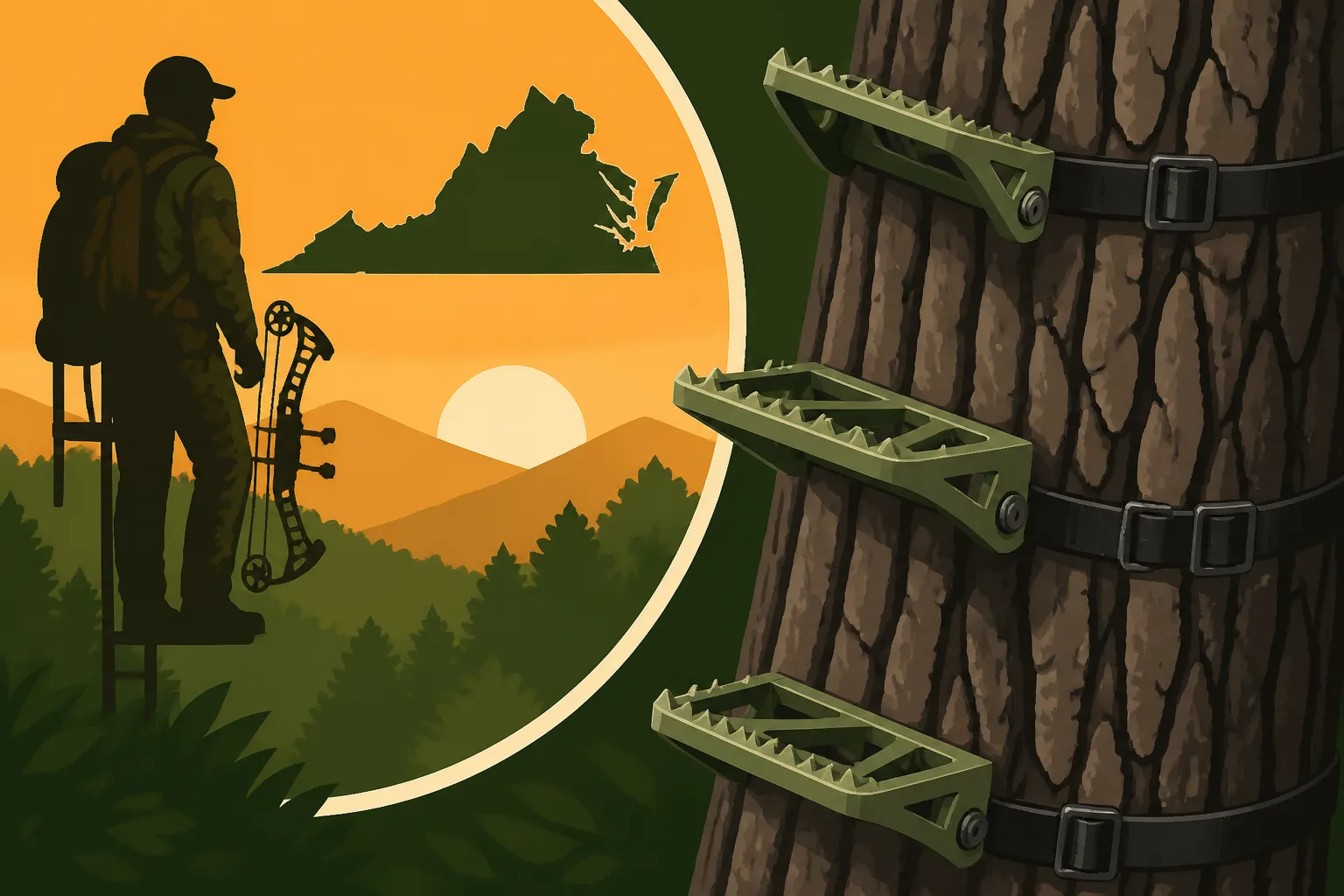
Look for sticks with wider, more aggressively angled stand-offs, sometimes coated with rubber or a textured polymer. These broader contact points help distribute the pressure more evenly across the irregular bark surface, preventing the stick from digging in or pivoting. Some designs incorporate a V-shaped or U-shaped stand-off that cradles the trunk, increasing surface contact. Other innovative designs feature a "cup" or "claw" system that grabs the contours of the bark. These specialized designs are built to maintain maximum contact and stability, ensuring that each stick remains rock-solid as you ascend, even when the tree bark looks like a topographical map. This becomes incredibly important when you're moving with a pack on your back, trying to maintain balance.
Material Durability and Weight Considerations
While the attachment system and stand-offs are crucial, the overall construction and material choice of your climbing sticks also play a significant role, especially when you're navigating rugged Virginia terrain. You need sticks that are robust enough to handle the stresses of climbing, yet light enough to carry comfortably, perhaps as part of your Packs for a Jefferson Forest Day Hunt.
Most quality climbing sticks are made from either aluminum or steel. Aluminum sticks are favored for their light weight, which is a huge advantage when you're hiking long distances to your hunting spot. However, they need to be constructed with thicker tubing or reinforced welds to maintain stiffness and prevent flex, particularly when dealing with the uneven pressure points created by rough bark. Steel sticks, while heavier, offer superior strength and rigidity, often making them feel more stable on the climb. The trade-off is the extra weight you'll be lugging. When considering durability, also examine the paint or coating on the sticks. A quality, chip-resistant finish will protect the metal from the elements and the constant friction against bark, prolonging the life of your investment. It's all about balancing that need for bomb-proof security with the reality of carrying gear into the woods.
Techniques for Securely Attaching Climbing Sticks to Rough Bark
Even with the best climbing sticks engineered for rough bark, proper technique is absolutely essential. You can have top-of-the-line gear, but if you don't know how to use it right, you're still creating unnecessary risk and noise. Getting it right ensures a safe, silent climb every time.
Pre-Season Scouting and Tree Selection
The climb often begins long before you even leave your truck. Effective pre-season Scouting Virginia Public Land Before Season is paramount, especially when you anticipate challenging tree conditions. When you're out there, map out potential stand locations using a tool like GoHunt or other mapping apps. As you locate promising areas, like a Hunting a Funnel Between Two Hollows or a strategic saddle, actually go in and visually inspect the trees. Don't just pick the first tree that looks good from a distance.
Look for trees that, while perhaps having rough bark, don't have excessively loose bark, protruding knots, or branches that will interfere with your ascent. Sometimes, moving just ten feet to another tree in the same general area can make all the difference. Pay attention to trunk diameter – trees that are either too small or too large can be difficult to secure sticks to, regardless of bark texture. The ideal tree offers a relatively straight ascent path and bark that, while rough, is consistent enough for your stand-offs to get a solid purchase. Using the GoHunt app, you can often mark potential trees and even add notes about their bark conditions for future reference.
Step-by-Step Attachment Process
Once you've selected your tree, the actual attachment process needs to be methodical and precise. Don't rush it, especially when dealing with rough bark.
- Clear the Path: Before attaching your first stick, clear away any loose bark, small twigs, or anything else that might interfere with a solid connection. A quick brush with your gloved hand is usually enough.
- Position the First Stick: Start low. Ensure the stick's stand-offs make the best possible contact with the tree's bark, trying to seat them firmly into any natural depressions or against solid ridges. Avoid placing them directly on a large, protruding knot if possible.
- Tighten the Strap Securely: This is critical. Pull the strap as tight as you possibly can. On rough bark, you might need to lean into the stick and use your body weight to help compress the stick against the tree while you cinch the strap. The stick should feel absolutely rock-solid with no discernible wiggle or shift.
- Climb and Repeat: Attach your safety harness to your tree as soon as possible, ideally even before leaving the ground. Use your climbing method to ascend to the next stick's height. Before attaching the next stick, test the one you just climbed from by putting your full weight on it and giving it a gentle shake. If it moves, reposition and re-tighten. Repeat this process for each stick, alternating sides of the tree if it helps maintain balance and securement. Always remember your Treestand Safety Gear for Steep Ground is your last line of defense.
- Final Check: Once all sticks are in place, re-check the tightness of the bottom sticks, as they can sometimes loosen slightly from the vibrations of climbing.
Minimizing Noise and Maximizing Stealth
Rough bark doesn't just present a challenge for stability; it's also a prime culprit for noise. Every scrape, grind, or clank can echo through the quiet woods and blow your chances.
To minimize noise, consider wrapping your climbing sticks with non-adhesive camo tape or self-clinging wraps in key areas where they might contact each other during transport or deployment. Pay particular attention to the stand-offs and steps themselves. When you're actually attaching the sticks, move slowly and deliberately. Don't let the sticks bang against the tree or against each other. When pushing the stick into position, try to "seat" it rather than "slamming" it.
Think about how the stick is making contact – is it scraping across a prominent bark ridge? Try adjusting its angle slightly to avoid that direct friction. The goal is to make the ascent as silent as a whisper. Even small details, like having quiet boot soles or wearing soft clothing, contribute to the overall stealth. Your presence should be felt, not heard, long before you even reach your stand.
Maintenance and Safety Practices for Longevity
Investing in quality climbing sticks, especially those designed for challenging bark, is only half the battle. Proper maintenance and unwavering adherence to safety practices ensure your gear lasts for years and, most importantly, keeps you safe season after season. Neglecting these aspects can lead to equipment failure and serious injury.
Regular Inspection and Care for Your Sticks
Just like any critical piece of hunting gear, your climbing sticks need routine attention. Before each season, and ideally before every hunt, give your sticks a thorough once-over.
- Check Straps and Buckles: Inspect straps for any signs of fraying, cuts, or excessive wear, particularly where they rub against buckles or rough bark. Ensure buckles are clean, operate smoothly, and show no signs of corrosion or deformation. A worn strap is a critical failure point.
- Examine Welds and Rivets: Look closely at all weld points and rivets for cracks, bends, or loose connections. Aluminum sticks can develop stress cracks over time, especially after repeated use on difficult trees.
- Inspect Stand-Offs and Steps: Check that the stand-offs are intact and firmly attached. If they have rubber coatings, ensure they aren't torn or peeling. Make sure all steps are straight, secure, and show no signs of bending or weakness.
- Clean and Lubricate: After a dirty or wet hunt, wipe down your sticks to remove mud, sap, or moisture. If your buckles have moving parts, a light spray of silicone lubricant can keep them functioning smoothly, but avoid getting it on the strap webbing itself, as it could reduce grip.
- Proper Storage: Store your sticks in a dry place, away from extreme temperatures and direct sunlight, which can degrade straps and coatings over time.
A little proactive care goes a long way in ensuring your sticks are always ready for action, whether you're climbing a smooth pine or a gnarly oak.
Combining Sticks with a Reliable Safety Harness
No discussion of climbing sticks, regardless of how advanced they are, is complete without emphasizing the absolute necessity of a full-body safety harness and a proper lifeline or ascent/descent system. Falling from a treestand, or during the climb itself, is a leading cause of serious hunting injuries.
Never, under any circumstances, should you climb without being attached to the tree from the moment your feet leave the ground until they touch back down. Use a lineman's belt to stay tethered as you ascend, attaching each stick. Once in your stand, immediately attach your tether to the tree at shoulder height, ensuring there's no slack to allow for a large drop. Practice using your harness and lifeline at ground level before you ever take it into the woods. Understand how to properly wear it, how to attach your tether, and what to do in the event of a fall. Brands like Hunter Safety System, for instance, offer comfortable and easy-to-use harnesses.
Remember that even the most secure climbing stick can fail if bark gives way unexpectedly, or if you simply lose your footing. Your Climbing Sticks for Rough Bark are designed for secure ascent, but your safety harness is designed to save your life. They work in tandem, not independently. Make it a non-negotiable part of your hunting routine, every single time you go aloft.
Climbing Stick Feature Comparison for Rough Bark
Choosing the right climbing sticks can feel daunting with so many options. Here's a simplified comparison of features that are particularly beneficial when dealing with Virginia's rough-barked trees.
| Feature Type | Standard Climbing Sticks (General Purpose) | Advanced Sticks for Rough Bark (Specialized) | Benefit for Rough Bark |
|---|---|---|---|
| Strap Material | Basic nylon or polyester webbing, narrower | Heavy-duty, wider polyester webbing, often with grippy texture | Better pressure distribution, resists abrasion, less slip |
| Buckle Design | Basic cam buckle, minimal teeth | Aggressive cam buckles, double-cinch systems, longer levers | Stronger tensioning, holds firm against uneven surfaces |
| Stand-Offs | Small, round, or simple flat contact points | Wider, V-shaped, U-shaped, or rubber-coated stand-offs | Maximizes contact area, prevents digging in/pivoting |
| Weight | Varies, often moderate | Can be slightly heavier due to reinforced features, but modern aluminum options are light | Durability without excessive weight for hiking |
| Noise Reduction | Minimal, relies on careful use | Integrated silencing features, material coatings, robust attachment | Prevents bark-to-metal noise, crucial for stealth |
| Flex/Stability | Can flex on uneven surfaces, relies on strap tension | Designed for minimal flex even with uneven pressure | More secure feel, less wobble under foot |
The challenges of hunting Virginia's diverse timber are part of what makes it so rewarding, but they also demand preparation and the right gear. By selecting climbing sticks specifically designed with rough bark in mind, and by diligently practicing safe and silent climbing techniques, you'll be well on your way to a more successful and secure hunting experience, no matter what kind of tree you choose for your perfect stand location.
Disclaimer
This article is for general informational purposes only and does not constitute professional advice. Laws, prices and regulations vary by location and change over time. Consult a qualified professional for guidance on your specific situation.