Hunting an Urban Archery Cul-de-Sac Woodlot
Navigating the world of hunting in Virginia can sometimes feel like you need vast tracts of untouched wilderness, but for many of us living near developed areas, those opportunities are few and far between. The good news is, urban archery seasons open up incredible possibilities, even for those seemingly tiny woodlots tucked away behind a cul-de-sac. This guide will walk you through the unique challenges and surprising rewards of hunting these overlooked gems, helping you maximize your success while being a responsible neighbor.
Understanding the Urban Archery Landscape
Hunting within an urban environment, especially small, isolated patches of woods in residential areas, is a completely different ballgame than heading to the mountains or a large Wildlife Management Area. It requires a distinct mindset, a focus on precision, and a deep respect for both the game and the human residents. Many hunters dismiss these areas, but they often hold a surprising number of deer that have adapted remarkably well to living alongside people.
What Defines an Urban Archery Zone?
Virginia's urban archery zones are designated areas, usually within or bordering cities and towns, where specific archery-only deer seasons are permitted. These seasons often run for an extended period, starting earlier and ending later than the statewide archery or general firearms seasons. The intent is to help manage deer populations in areas where traditional hunting methods might be impractical or unsafe due to population density. For a comprehensive look at the rules, checking out Virginia's Urban Archery Season Rules is a great starting point.
What makes these zones unique is the combination of their rules and the environment itself. We're talking about suburbs, often with busy roads, residential homes, and small green spaces. Deer in these areas become incredibly accustomed to human presence, which can be both an advantage and a disadvantage. They might tolerate closer proximity, but they are also experts at using the available cover, no matter how small, to remain unseen. These zones are not always obvious; sometimes, they're patchwork quilt areas defined by county or city limits, which makes detailed scouting even more critical.
Challenges and Unique Opportunities of Cul-de-Sac Hunting
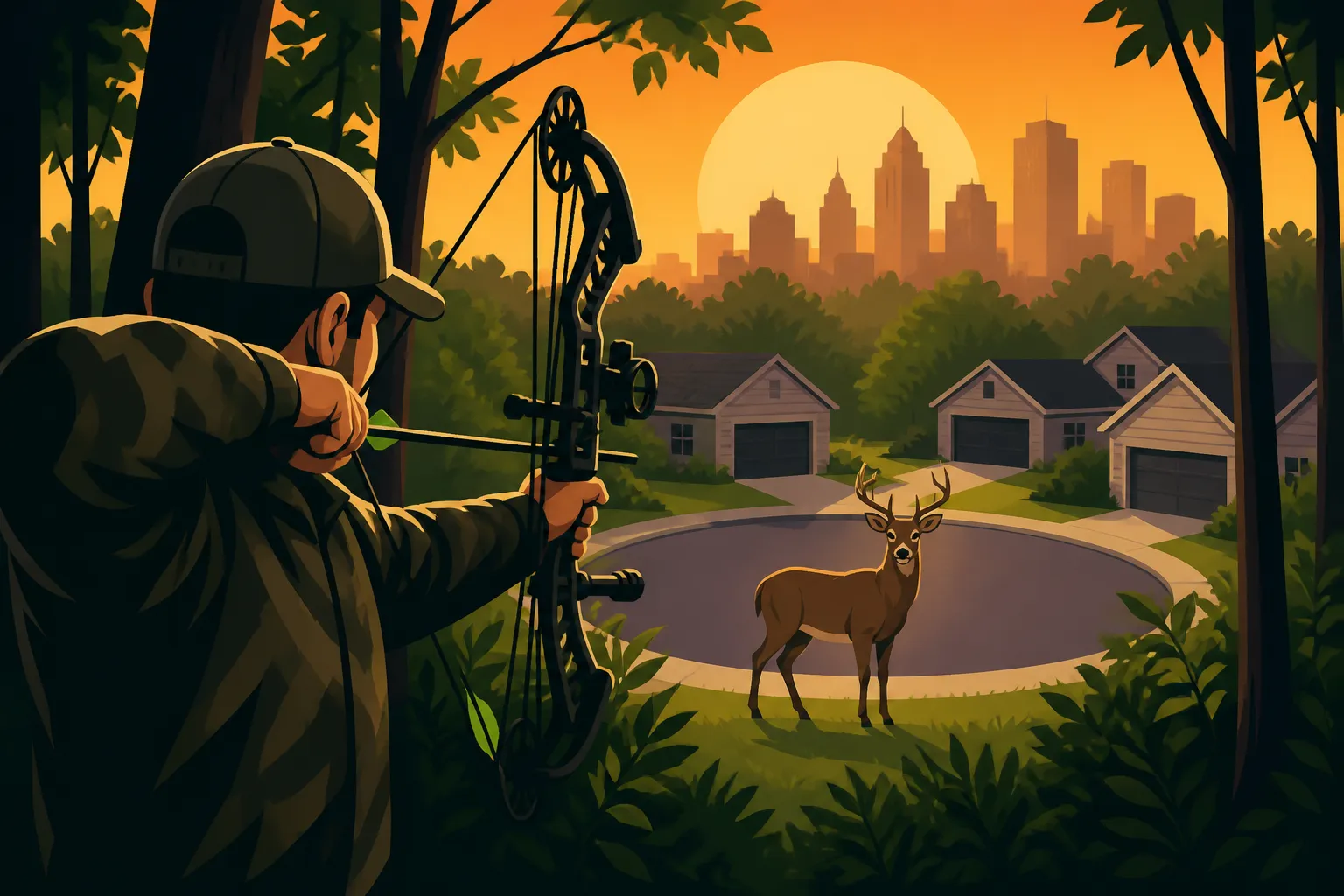
The idea of hunting a "cul-de-sac woodlot" probably conjures images of a postage stamp-sized patch of trees. And often, that's exactly what it is! This presents immediate challenges: limited space, close proximity to homes, noise from neighbors, and the constant smell of human activity. Your shot opportunities will likely be very short-range, and your margin for error almost nonexistent. Recovery of game can also be a major concern, as a deer running off onto a neighbor's manicured lawn is a scenario every urban hunter dreads.
However, these challenges also create unique opportunities. Deer, especially mature bucks, often seek out these overlooked pockets of cover as sanctuaries. They learn quickly that large public hunting areas are pressured, but these small, private patches are often left undisturbed. They might feed in nearby yards at night, then bed down in these woodlots during the day. The sheer lack of hunting pressure can make deer in these specific spots more predictable and, at times, less wary of a carefully concealed hunter. You're not competing with dozens of other hunters, and the deer population within these tiny oases can be surprisingly robust because they're safe havens.
Scouting and Accessing Cul-de-Sac Woodlots
Successful urban archery hunting, particularly in these micro-environments, hinges on meticulous scouting and, perhaps even more importantly, securing proper access. You can have the best gear and tactics in the world, but without a place to hunt, it's all just theory.
How to Identify Suitable Woodlots
Identifying a promising cul-de-sac woodlot starts long before you ever set foot on the property. Begin with digital reconnaissance. Tools like satellite imagery from Google Maps or specialized hunting apps are your best friends here. You’re looking for small, wooded areas that might serve as bedding cover or travel corridors for deer. Pay close attention to how these woodlots connect to larger green spaces, even if those are golf courses, parks, or utility easements. Deer often use these linear features as safe passage through developed areas.
Look for key features within the woodlot itself: dense thickets for bedding, mature mast-producing trees (oaks, persimmons), or even subtle elevation changes that can offer a vantage point. Don't be fooled by the size; a dense, brushy quarter-acre could be more valuable to a deer than a sparsely wooded acre. Water sources, even small ones like drainage ditches or low-lying areas that hold moisture, can also be attraction points. Remember, deer are creatures of habit, and in urban settings, their habits are often dictated by the safest, most convenient paths between food, water, and cover, no matter how fragmented those resources might be. This is where understanding Reading Aerial Photos for Piedmont Deer can be really beneficial, even if you're not in the Piedmont, as the principles of identifying travel corridors and cover apply across different landscapes.
The Crucial Step of Getting Landowner Access
This is, without a doubt, the most important and often most daunting part of urban archery hunting: getting permission to hunt. Unlike public land, every cul-de-sac woodlot is owned by someone, or an association, and you absolutely must have explicit permission. There's a fantastic guide on Getting Landowner Access in an Urban Archery Zone that covers this in detail, and I highly recommend reading it. The key takeaways are: be respectful, be professional, and be prepared.
Start by identifying the landowner. County parcel maps, often available online through local government websites or specialized mapping software like GoHunt, will show you who owns what. Once you have a name, craft a polite letter or prepare a brief, friendly introduction for an in-person visit. Emphasize the benefits to the landowner: deer population control, reduction of property damage, and safety. Reassure them about your experience, safety protocols, and commitment to a low-impact hunt. Offer to share venison. Bring references if you have them. It might take multiple attempts, and you'll face rejection, but persistence and professionalism often pay off. Always get permission in writing, detailing the exact parcel, dates, and any specific conditions.
Using Mapping Tools for Precision Scouting
Once you’ve identified potential areas and started the access process, mapping tools become invaluable for precision scouting. Apps like GoHunt, or even the basic mapping features on the Virginia DWR app, provide a wealth of information at your fingertips. You can overlay aerial imagery with property lines, topography, and even public land boundaries. This allows you to identify not just the woodlot itself, but also how deer might enter and exit it from surrounding yards or connecting green spaces.
I personally rely on these tools heavily to pinpoint subtle funnels, pinch points, and bedding areas within these small patches. You can mark potential stand sites, entry and exit routes that minimize disturbance, and even potential shot lanes. Using the GPS features in these apps on the ground helps you verify what you saw from above and ensure you're on the correct property lines. When you're dealing with such small areas, every foot matters, and these digital maps provide the precision you need to plan your hunt down to the smallest detail. For more insights on digital scouting, consider looking into Scouting With the Virginia DWR App.
Strategic Setup and Tactics
Hunting these small, urban woodlots demands a level of stealth and precision that might surprise even experienced hunters. Deer here are living amongst humans every day; they are acutely aware of their surroundings and any changes to their environment. Your strategy needs to be built around minimizing your footprint and predicting hyper-localized deer movement.
Choosing Stand Locations for Limited Space
In a cul-de-sac woodlot, your stand placement is critical because you often have very few options, and every option comes with trade-offs. You're trying to achieve several things simultaneously: stay concealed, get within bow range of a travel corridor or bedding area, and have a safe shooting lane away from homes. Look for the densest cover within the woodlot – often a cluster of pines, a thicket of briars, or even a fallen log with new growth around it. Deer will use these spots for cover, and you can use them for yours.
Your entry and exit routes are paramount. You need to be able to get to and from your stand without alerting deer or, just as importantly, without alarming neighbors. Consider approaches that utilize existing fences, hedgerows, or even ditches that offer natural concealment. Think about the sun's position – you generally want it at your back in the morning and facing you in the evening, to make it harder for deer to pick you out. Also, consider the prevailing wind. Even in small spaces, thermals can play a role, especially if there's any elevation change or a nearby water feature. Since shots will be close, you don't need a huge shooting lane, just a clear path to the vitals within 20-30 yards. Often, finding a tree that breaks up your outline against the skyline is more important than having a perfect 360-degree view.
Scent Control for Close-Quarters Hunting
If scent control is important in the big woods, it's absolutely non-negotiable in an urban cul-de-sac woodlot. Deer in these areas live with human scent daily, but they recognize novel human scent – that of a hunter – as a threat. They've likely patterned the regular routines of residents. You absolutely must minimize your scent. This means showering with scent-free soap, washing your hunting clothes in scent-free detergent, and storing them in airtight containers. Dressing in the field, wearing rubber boots, and using scent elimination sprays are all critical steps. For an in-depth dive, check out Scent Control Gear for Urban Archery Hunts.
Beyond personal scent, think about your equipment. Don't leave anything on the property that can carry your odor. If you're setting up a ground blind, brush it in thoroughly and give it a few days to air out before hunting. If using a treestand, clean it. Even more so, consider the wind direction as meticulously as possible. In a small woodlot, a swirling wind can quickly bust you. Having multiple stand locations for different wind directions, even in a small area, will drastically increase your success rate. A single puff of air in the wrong direction can send every deer within that woodlot scurrying without you ever knowing they were there.
Understanding Deer Movement in Suburban Areas
Deer in suburban areas often behave differently than their wilderness counterparts. They are more nocturnal, moving mostly under the cover of darkness. During the day, they will often stick to the densest cover available, which is exactly what a small cul-de-sac woodlot provides. Their travel patterns are highly influenced by human activity – they'll often move when there are fewer people out, like early mornings or late evenings. They've learned to use fences, drainage ditches, small creek beds, and even brush lines between houses as covert travel corridors.
Look for subtle signs of movement. Don't expect huge scrapes or rubs, though you might find them. Instead, look for faint trails through thick brush, fresh droppings, or beds in dense cover. Pay attention to how they get to and from nearby food sources, which could be anything from oak trees in a neighboring yard to ornamental shrubs. Their movements might be very slow and deliberate, especially if they are trying to remain undetected by humans. Learning to read these subtle cues is key. A deer that walks 100 yards through open hardwoods in a national forest might only move 20 yards through dense urban cover, making every step count.
Equipment and Safety Considerations
When hunting in such a unique environment, your equipment choices and, crucially, your safety protocols take on heightened importance. You're not just thinking about a successful hunt; you're thinking about public perception, landowner trust, and the well-being of everyone in the vicinity.
Bow and Arrow Selection for Urban Archery
Given the close-quarters nature of urban archery in a cul-de-sac woodlot, your bow setup needs to prioritize quietness, accuracy at short range, and sufficient kinetic energy for a quick, humane kill. A compound bow or crossbow is ideal. When it comes to compounds, focus on a smooth draw cycle and a quiet shot. Any loud twang or vibration can alert nearby deer or, worse, draw unwanted attention from neighbors. For detailed information on setups, you might find our guide on Bow and Crossbow Setups for Virginia helpful.
For arrows, choose ones that are well-matched to your bow's draw weight and length, ensuring maximum penetration. Broadheads are where you'll want to pay close attention. Fixed-blade broadheads are generally preferred by many for their reliability and consistent penetration, which is vital for quick kills. Mechanical broadheads can also be effective if you're confident in their deployment at short ranges, but ensure they are reliable. The goal is always a clean pass-through for maximum blood trail, should tracking be necessary. Practice extensively at the exact distances you expect to shoot – often 15-30 yards, sometimes even less. Your ethical responsibility is to make the cleanest shot possible.
Safety Protocols and Communication with Landowners
Safety is paramount, not just for you, but for everyone around you. In an urban environment, this means strict adherence to all regulations and constant communication. Always confirm the specific boundaries of your hunting area with the landowner and mark them clearly. Use a tree stand that is secure and always wear a safety harness. Never take a shot where you are unsure of what lies beyond your target, especially in a residential area. Your arrow can travel farther than you think.
Before each hunt, inform the landowner of your presence and planned hunting times. This transparency builds trust and prevents misunderstandings. Discuss emergency procedures: what if you wound an animal that runs onto a neighbor's property? Have a plan in place. For instance, you might agree that you'll contact the landowner immediately, who will then coordinate with the neighbor. Being upfront about these possibilities shows responsibility and builds confidence. You are not just a hunter; you are a steward of their property and a representative of the hunting community.
Urban Archery Equipment Considerations
Beyond your bow, there are several pieces of equipment that are especially helpful for urban archery:
| Equipment Item | Why it's Critical for Urban Archery |
|---|---|
| Full Scent Control System | Eliminates human odor, essential for close-range, wary deer. |
| Quiet Bow/Crossbow | Minimizes sound that could alert deer or neighbors. |
| Durable, Sharp Broadheads | Ensures quick, humane kills and pass-throughs for tracking. |
| Safety Harness | Non-negotiable for elevated stands, especially on smaller, less forgiving trees. |
| Rangefinder | Confirms exact distances for precise shots in tight spaces. |
| GPS/Mapping App (e.g., GoHunt) | Defines property lines, tracks movement, and aids in game recovery. |
| Small, Portable Treestand/Saddle | Allows for quick, quiet setup and mobility between micro-stands. |
| Rubber Boots | Minimizes ground scent and provides quiet movement. |
| Headlamp with Red Light | For discreet entry/exit in low light without spooking game or drawing attention. |
| Small, Sharp Field Dressing Knife | For efficient, discreet field dressing. |
This isn't an exhaustive list, but these items directly address the unique challenges of close proximity, stealth, and safety inherent in urban cul-de-sac hunting.
Ethical Considerations and Community Relations
Hunting in an urban environment comes with a unique set of ethical responsibilities and a heightened need for positive community relations. You are essentially operating under a microscope, and your actions reflect not just on you, but on all hunters.
Being a Responsible Urban Hunter
Being a responsible urban hunter means going above and beyond the minimum legal requirements. It starts with respect – for the landowner, for the neighbors, and for the wildlife. Always maintain a low profile. Dress in camo, but avoid walking through populated areas with a bow in hand. Transport your equipment discreetly. If you encounter a non-hunter, be polite and respectful, even if they express negative views about hunting. You are an ambassador for our sport.
After a successful hunt, your responsibility continues. Field dress quickly and discreetly. If possible, remove the animal from the property as quietly as possible, perhaps after dark if the landowner allows, or using a game cart to minimize visible dragging. Consider donating any extra venison to local food banks; this can be a powerful way to turn a successful hunt into a positive community contribution. Remember, you might be the only hunter some residents ever see, so make that impression a positive one.
Managing Public Perception
Public perception is everything in urban archery zones. One negative incident can lead to bans or increased restrictions that impact all hunters. Therefore, proactive management of public perception is vital. This means adhering to local ordinances, like specific hours for hunting or retrieving game, if they exist. It means ensuring that your stand is not visible from neighboring properties, or at least not easily identifiable as a hunting stand.
Educate neighbors or community members if they express curiosity in a friendly way. Explain the role of deer management, the benefits of controlled populations (like reduced vehicle collisions or landscaping damage), and your commitment to safety. Always be prepared to explain why you are hunting and how you are doing it safely and ethically. Avoid any actions that could be construed as dangerous, reckless, or disrespectful. Your goal is not just to harvest a deer, but to maintain and even enhance the social license for urban hunting in your community.
Reporting Requirements and Local Ordinances
Virginia's Department of Wildlife Resources (DWR) has specific reporting requirements for harvested deer, no matter where they are taken. It's crucial to report your deer promptly and accurately. The DWR's Go Outdoors Virginia app makes this process straightforward. Check out Reporting a Deer Through Virginia's App for guidance on how to do this. This data is vital for wildlife managers to track populations and ensure healthy herds.
Beyond state-level regulations, you absolutely must be aware of any local ordinances or county-specific rules that might apply to urban archery in your specific area. Some localities may have additional restrictions on discharge of arrows, setback distances from dwellings, or even specific permit requirements. Always double-check with your local DWR office, county administrator, or city clerk to ensure you are in full compliance. Ignorance of local law is no excuse, and violating these rules can jeopardize not only your hunting privileges but also future urban archery opportunities for everyone.
Disclaimer
Please be aware that hunting regulations, seasons, and licensing requirements can change. Always consult the most current Virginia Department of Wildlife Resources (DWR) regulations before engaging in any hunting activity. This guide is for informational purposes only and does not substitute for official DWR publications or local ordinances. Ensure you have all necessary licenses and permits and strictly adhere to all safety guidelines.