Hunting Tidewater Swamp Edges
Hunting the Tidewater swamp edges in Virginia can feel like stepping into an entirely different world compared to chasing deer in the mountains or rolling Piedmont hills. The dense, wet environment presents unique challenges, from navigating knee-deep water and impenetrable thickets to deciphering deer patterns that are heavily influenced by tides and seasonal flooding. This guide is designed to help you understand these complex ecosystems and develop effective strategies to successfully hunt the elusive whitetails that call Virginia's Tidewater swamps home.
Understanding the Tidewater Swamp Environment
The Tidewater region of Virginia, stretching along the coastal plain, is defined by its low elevation, proximity to major rivers and the Chesapeake Bay, and an abundance of swampy, marshy terrain. This isn't your typical upland timber hunting; here, water dictates everything. If you've ever found yourself struggling to find dry ground or wondering why deer aren't where you expect them, it's often because you haven't fully grasped the nuances of this aquatic landscape.
Unique Habitat Characteristics
Tidewater swamps are a mosaic of bald cypress, water tupelo, red maple, and various wetland shrubs, often intertwined with dense briar thickets and cane breaks. This vegetation creates incredible cover, offering deer a safe haven from predators and hunters alike. The ground itself is often soft, muddy, or submerged, making travel difficult for both man and beast. However, within this challenging landscape are subtle variations – slightly elevated hummocks, old logging roads that have become raised causeways, or even natural levees along creeks and rivers. These higher, drier spots become critical travel corridors and bedding areas, especially during periods of high water.
What makes these areas particularly fascinating is the blend of terrestrial and aquatic ecosystems. You'll find a mix of food sources that include various acorns from water oaks, muscadine grapes, and a range of browse that thrives in moist soil. Deer in these regions are incredibly adapted to their environment, moving with an almost ghost-like silence through the dense undergrowth and wading effortlessly through shallow water. Unlike the predictable ridge lines of the Blue Ridge, the "terrain" here is often defined by water depth and vegetation density. Understanding these features is the first step to unlocking the secrets of hunting these areas.
Seasonal Water Level Fluctuations
One of the biggest factors influencing deer movement in the Tidewater is water. Rivers swell with rain, tides ebb and flow, and seasonal deluges can turn a walkable swamp edge into a vast, shallow lake overnight. This constant flux forces deer to adapt their patterns, and as hunters, we must do the same. During periods of low water, deer have access to a wider range of food sources and travel routes within the swamp itself. They might venture deeper into the thicker cover, leaving the "edges" we typically think of.
Conversely, when water levels rise, deer are pushed to the highest available ground. This is where those subtle hummocks, elevated banks, and transition zones between swamp and agricultural fields or pine plantations become absolute magnets. A slight rise of even a foot can be the difference between dry bedding and wading, and deer will gravitate towards these spots like clockwork. Keeping an eye on weather forecasts, river gauges, and local tide charts is almost as important as scouting for sign. A tool like the GoHunt app can be invaluable here, offering detailed topographical maps that help identify these subtle elevation changes, even if they're only a foot or two above the surrounding marsh. These water level changes can also impact when and where you can effectively apply tactics like those detailed in Hunting a Clear-Cut Regrowth Edge or Working River Cane Thickets for Deer, as accessibility and deer behavior will shift dramatically.
Deer Movement and Behavior in Swamp Edges
Deer in the Tidewater don't act like their mountain cousins. Their behavior is dictated by the availability of dry ground, thick cover, and scattered food sources within a constantly changing, watery world. If you expect them to stick to open timber or obvious funnels, you're likely to be disappointed. Instead, you need to learn to think like a swamp deer.
Why Deer Use Swamp Edges
Swamp edges are prime real estate for whitetails for several compelling reasons. Primarily, they offer unparalleled security. The dense vegetation and often difficult terrain act as a natural fortress, deterring many predators and human intrusion. A deer can disappear into a briar patch or cypress stand with astonishing speed, making it incredibly difficult to track or push them out. These areas also provide thermal cover, protecting deer from harsh winter winds or scorching summer sun.
Beyond security, swamp edges serve as critical travel corridors. Deer often use the transition zones between dry uplands (like agricultural fields or pine forests) and the water-logged swamp as their highways. They can quickly access food sources in the fields under the cover of darkness, then melt back into the swamp's security at dawn. Elevated fingers of land that extend into the swamp, or narrow strips of slightly higher ground along a creek, become natural funnels where deer movement is concentrated. Understanding these patterns is key to successfully Hunting a Funnel Between Two Hollows, even if "hollows" are replaced by "wetlands." Furthermore, these edges often present a diverse food buffet, from acorns dropping on slightly higher ground to various browse plants and aquatic vegetation within reach.
Identifying Key Sign and Travel Corridors
Scouting in a Tidewater swamp edge is a unique challenge. Forget easy-to-read dirt trails; here, deer paths might be subtle depressions in the mud, or barely visible tunnels through dense cane. Look for rubs and scrapes on trees along slightly elevated banks or islands within the swamp. Pay close attention to crossing points over narrow ditches or creeks – these can be fantastic ambush spots. One of the best ways to pinpoint these travel corridors is through extensive boot-on-the-ground scouting during low water periods. This is where sturdy Rubber Boots for Swamp Walking become an absolute necessity.
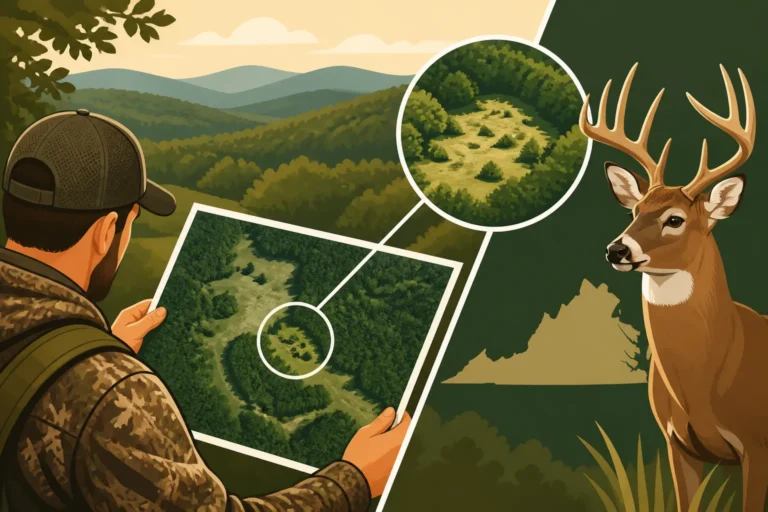
Aerial imagery, like what's available through GoHunt, is an absolute game-changer for Tidewater scouting. You can identify subtle changes in vegetation density, pinpoint those small islands of high ground, and map out potential travel routes that would be invisible from the ground. Look for darker green areas (thicker cover), lighter green patches (more open water or marsh grass), and follow the contours of the land, even if it's just a foot of elevation change. Understanding Reading Aerial Photos for Piedmont Deer can be directly applied here, just with a different landscape in mind. Sometimes, you'll find obvious trails where deer have broken through the vegetation, especially where a swamp transitions to a field edge. These are golden opportunities. Also, be mindful of wind and thermals; while mountains have predictable patterns, swamp thermals can be tricky, often influenced by water temperature and thick canopy.
Effective Hunting Strategies for Tidewater Swamps
Hunting Tidewater swamp edges demands patience, adaptability, and often, a willingness to get a little wet and dirty. The strategies that work here are a blend of classic whitetail tactics applied to a very specific, challenging environment.
Scouting and Stand Placement
Effective scouting in these unique areas is paramount. Start by studying maps, especially aerial and topographic maps. Identify potential high ground, transition zones, and areas of dense cover adjacent to food sources. As mentioned, GoHunt can be invaluable for this, letting you mark potential hotspots from the comfort of your home. Once you have a few promising locations, it's time for boots on the ground. During the off-season or a dry spell, walk the edges. Look for old trails, rub lines, and scat. Pay attention to how deer are navigating the water and the thick cover. Where are they crossing? Where are they bedding?
When it comes to stand placement, concealment is king. Deer in these areas are used to thick cover, so a stand that's tucked deep into a cypress or a dense clump of hardwoods will offer much better concealment than a sky-lined stand on an isolated tree. Look for trees that offer a clear shooting lane into a travel corridor or a small opening where deer might browse. Consider using ground blinds, especially if you can brush them in effectively. Using a Ground Blind on Virginia Public Land provides excellent tips for maximizing concealment, which is doubly important in the dense swamp. Often, a well-placed ground blind can offer better concealment and flexibility in these difficult environments than a treestand. Remember to consider the sun's position and prevailing winds – scent control is crucial, as the thick cover can sometimes trap and swirl your scent.
Still-Hunting and Driving Tactics
Still-hunting can be incredibly effective in Tidewater swamps, especially if you're comfortable moving slowly and silently through dense cover. The key is to move at a snail's pace, pausing frequently to scan for movement or the flick of an ear. Utilize the thick vegetation to your advantage, moving from one patch of cover to the next. Focus on those subtle high ground ridges or edges where deer are likely to be moving. A good pair of binoculars, even at close range, can help you pick apart the dense foliage. This isn't about covering a lot of ground; it's about seeing the deer before it sees you. You might walk only a hundred yards in an hour, but if you're moving through a prime travel corridor, that's time well spent.
Deer drives can also be highly productive in Tidewater swamps, especially with a small group of hunters. The dense cover makes it difficult for deer to circle back, and the limited escape routes can funnel them towards standers. The trick is understanding how the deer will move given the water and vegetation. Don't try to push too large an area. Focus on pushing small, manageable blocks of cover, always considering where the deer will naturally want to go (usually towards thicker cover or along a defined edge). Communication is crucial during a drive, as is safety. For tips on coordinating drives, even with fewer hunters, check out Deer Drives With Three or Four Hunters. Just remember that the terrain will be much more challenging than typical timber, so adjust your pace and expectations accordingly.
Using Calls and Scents Effectively
Deer calls can be quite effective in the dense Tidewater cover, especially during the rut. Grunt tubes and bleat calls can help pinpoint deer or draw them closer in areas where visibility is limited. A mature buck might be just out of sight in a thicket, and a well-timed grunt could bring him into range. Rattling antlers, however, might need a slightly different approach. In dense cover, the sound doesn't carry as far, so you might need to be more aggressive or ensure you're in a prime travel corridor. The concept behind Rattling Volume in Thick Mountain Cover can be adapted here – sometimes less is more, but other times you need to make some noise to cut through the stillness.
As for scents, they can be a double-edged sword. On one hand, the thick, damp air can hold scent longer, potentially drawing deer from a distance. On the other hand, the constant swirling thermals near water can make scent dispersal unpredictable. Use dominant buck scents or estrous doe scents on mock scrapes or drippers along known travel routes. Set them up where the wind is most likely to carry the scent into the areas where deer are moving. However, always be mindful of how your own scent might be swirling back to you or directly into a bedding area. Scent elimination practices, from specialized clothing to sprays, are more critical than ever in these challenging environments.
Gear and Safety Considerations for Swamp Edge Hunting
Hunting Tidewater swamps isn't just about strategy; it's also about having the right gear and prioritizing safety in a challenging, sometimes unforgiving, environment. Forget your hiking boots and lightweight upland gear; here, durable, waterproof equipment is your best friend.
Essential Clothing and Footwear
Your choice of clothing and footwear will make or break your Tidewater hunting experience. You'll be dealing with water, mud, briars, and potentially biting insects, so come prepared.
- Waders or Knee Boots: This is non-negotiable. Whether you opt for chest waders or high-quality knee-high rubber boots, staying dry is paramount. You'll be slogging through standing water, crossing shallow sloughs, and navigating muddy banks. For more detailed insights, Waders for Cattail Marsh Hunting can offer some excellent points on choosing the right pair. Look for options that are puncture-resistant, as briars are everywhere.
- Durable Outerwear: Your pants and jacket need to withstand constant abrasion from briars, sticks, and rough vegetation. Heavy-duty canvas, brush pants, or thorn-resistant materials are highly recommended. A waterproof outer layer is also critical, not just for rain, but for pushing through wet brush.
- Layering: Despite the often humid conditions, mornings can be cool, especially in late season. Layering is key to adapting to changing temperatures and your activity level. You'll heat up quickly when slogging through mud and thickets, so having layers you can shed easily is vital.
- Head Protection: A wide-brimmed hat or cap can help keep the sun and rain off your face, and protect you from low-hanging branches. A bug net might also be a lifesaver during warmer periods when mosquitoes and other biting insects are prevalent.
Remember, comfort and functionality should guide your choices. You'll be spending long hours in difficult conditions, and poorly chosen gear can quickly lead to misery.
Navigational Tools and Emergency Preparedness
Getting lost in a Tidewater swamp is a real and dangerous possibility. The dense cover, lack of distinct landmarks, and often winding, indistinguishable paths can quickly disorient even experienced woodsmen.
- GPS or Phone App: A reliable GPS unit or a hunting app on your phone (like GoHunt) is absolutely essential. Download offline maps before you go, as cell service can be spotty or non-existent deep in the swamp. Mark your entry point, stand locations, and any significant landmarks. Use it to track your path in and out. The detailed satellite imagery on GoHunt is particularly useful for identifying those subtle elevation changes and open water bodies that can guide you.
- Compass and Map: Always carry a physical compass and a waterproof topographic map as a backup. Batteries die, phones get wet, and electronics can fail. Knowing how to use these traditional tools could save your life.
- First Aid Kit: A small, well-stocked first aid kit is critical. Cuts, scrapes, and insect bites are common in the swamp. Include snake bite bandages or a small venom extractor kit, as venomous snakes are common in these wetlands.
- Whistle and Signaling Device: If you get lost or injured, a loud whistle can help others locate you. A small mirror or flashlight can also be used to signal for help.
- Water and Snacks: Dehydration can set in quickly, especially when exerting yourself in humid conditions. Carry ample water and high-energy snacks.
- Communication Device: Consider carrying a personal locator beacon (PLB) or a satellite messenger, especially if you're hunting alone in remote areas. Cell phones might not work, but these devices can send an SOS signal.
- Buddy System: Whenever possible, hunt with a partner or at least let someone know exactly where you're going and when you expect to return. This is especially crucial when venturing into challenging environments like Tidewater swamps.
Hunting Tidewater swamp edges offers a truly unique Virginia hunting experience. It's tough, it's challenging, but the rewards of outsmarting a swamp whitetail in its own domain are incredibly satisfying. Be prepared, be patient, and embrace the wildness of it all.
Disclaimer
Hunting is an inherently dangerous activity. Always follow all applicable local, state, and federal laws and regulations. Ensure you have the proper licenses and permits. Prioritize safety, including wearing appropriate blaze orange (where required), using tree stand safety harnesses, and knowing your firearm or archery equipment thoroughly. This guide is for informational purposes only and does not substitute for professional instruction or official Virginia Department of Wildlife Resources (DWR) regulations. Be aware of your surroundings and respect wildlife and private property.