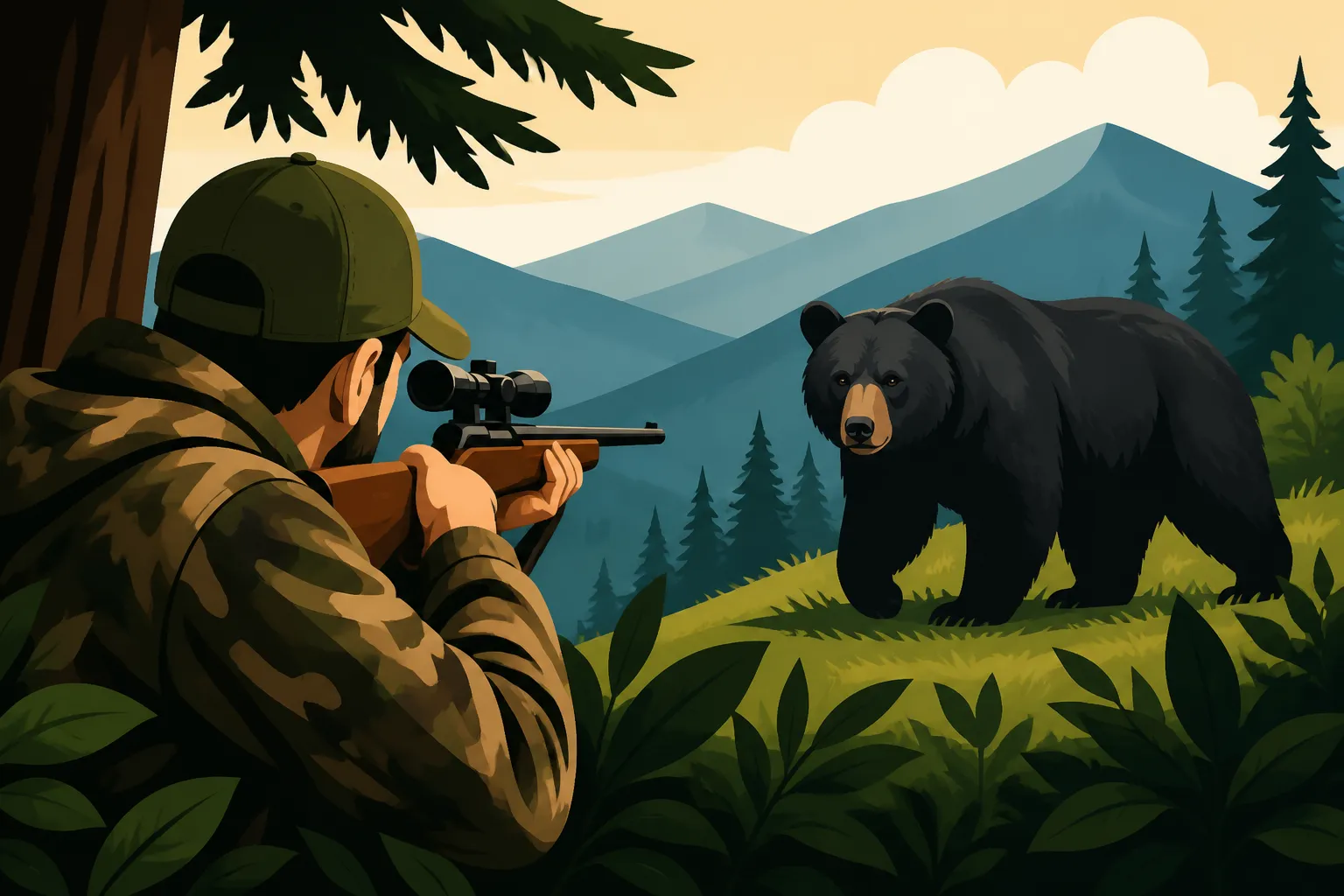
Mount Rogers Ranger District Bear Hunting
Bear hunting in the rugged, expansive terrain of the Mount Rogers Ranger District presents a unique and often daunting challenge for even the most seasoned hunters. It's a land of steep climbs, dense cover, and unpredictable weather, where the bears are truly wild and earned. This guide aims to demystify some of the complexities, offering insights into effective strategies, essential gear, and crucial preparation to help you pursue black bears successfully in this remarkable part of Virginia.
Understanding the Mount Rogers Ranger District for Bear Hunting
The Mount Rogers Ranger District, a significant portion of the Jefferson National Forest, is not just any patch of woods; it's a vast, wild landscape that truly tests a hunter's mettle. When you head into this country, you're stepping into an environment where the terrain dictates much of the strategy, and the bears are masters of their domain.
Geography and Terrain Challenges
Imagine mile after mile of steep ridges, deep hollows, and a seemingly endless sea of mixed hardwoods and thick rhododendron thickets. That's the Mount Rogers Ranger District in a nutshell. We're talking about elevations that swing wildly, from creek bottoms to exposed peaks, meaning you'll be constantly climbing and descending. This isn't flatland hunting where you can stroll along a logging road; it's physically demanding work. The sheer verticality of the landscape can make a simple 500-yard stalk feel like a marathon, especially when you're loaded down with gear. Expect uneven footing, slick leaves, and hidden rocks, all conspiring to challenge your every step. It’s the kind of place where a bear can vanish into a rhododendron slick right before your eyes, only to reappear a thousand feet higher, seemingly effortlessly. It really highlights the importance of being in good physical shape before you even think about hitting these woods.
The dense cover, particularly the rhododendron and mountain laurel, creates fantastic security for bears but can be an absolute nightmare for hunters. Visibility often shrinks to mere yards, forcing you to rely more on sound and subtle cues than sight. Even in open hardwoods, the constant undulation of the land means you rarely have a long-range view, making quick decisions and close-range shooting skills paramount. Navigating this dense, steep terrain also means slower travel, which directly impacts how much ground you can cover in a day. You might have a hot lead on bear sign, but if it's across a deep hollow and up another mountain, you'll need to factor in hours, not minutes, to reach it. This isn't just about finding the bears; it's about being able to physically get to them and get them out.
Bear Population and Habitat
Virginia's black bear population has seen a remarkable resurgence, and the mountainous regions, including the Mount Rogers Ranger District, are truly their stronghold. These bears thrive in the vast, undeveloped forest lands that offer abundant natural food sources and plenty of undisturbed habitat. The district provides everything a bear needs: diverse mast crops like acorns and hickory nuts, wild berries in the summer, and a labyrinth of thick cover for denning and bedding. You'll find bears across the entire district, but their concentrations will often correlate directly with seasonal food availability.
During the fall, when acorns drop, bears will shift their patterns dramatically to focus on these high-energy food sources. They'll often concentrate on oak ridges, sometimes even traveling considerable distances to find the heaviest mast crops. Understanding this seasonal movement is absolutely critical to locating bears. Virginia's Black Bear Population outlines more about these impressive animals. Beyond food, water sources are always important. While the mountains have numerous creeks and springs, knowing where these are, especially during drier periods, can give you an edge. Bears are incredibly smart and will use the terrain to their advantage, often traveling along natural funnels, benches, and saddles between steep points. These travel corridors are exactly what you should be looking for when scouting, as they represent predictable patterns in an otherwise unpredictable landscape.
Seasonality and Regulations
Bear hunting in the Mount Rogers Ranger District, like the rest of Virginia, is governed by specific seasons and regulations set by the Virginia Department of Wildlife Resources (DWR). These rules are designed to manage the bear population sustainably and ensure safe hunting practices. Generally, there's an early archery and muzzleloader season, followed by the general firearms season, though specific dates can vary by county and management unit. It's crucial to consult the current DWR regulations every year, as changes can occur. For a deeper dive into statewide rules, check out Virginia Bear Season Rules.
One major consideration in bear hunting is the method of take. While archery and firearms are standard, hunting with hounds is a traditional and highly effective method in mountainous regions like Mount Rogers, where legal. However, the use of hounds has specific regulations, including licensing for dogs, training periods, and limitations on where and when they can be used. It's not a method to be undertaken lightly, requiring specialized equipment, well-trained dogs, and a deep understanding of hound hunting ethics. Regardless of your chosen method, understanding the annual bear bag limit, checking requirements, and any specific regulations pertaining to baiting or feeding (which are generally prohibited in public lands like national forests) is paramount. Remember, legal compliance isn't just about avoiding penalties; it's about respecting the resource and contributing to responsible wildlife management.
Essential Scouting and Planning Strategies
Successful bear hunting in the Mount Rogers Ranger District isn't about luck; it's about meticulous planning and thorough scouting. The sheer scale and ruggedness of the terrain demand that you do your homework long before you ever step foot in the woods with a weapon.
Utilizing Mapping Tools for Reconnaissance
Before you ever pack your boots, your most valuable tool for Mount Rogers bear hunting is a robust mapping application like onX Hunt or GoHunt. These digital platforms transform your phone or GPS device into an invaluable scouting assistant. Start by studying topographical maps to identify potential areas of interest: steep, secluded hollows, dense thickets of cover, oak ridges, and natural funnels created by the terrain. Look for areas with diverse habitat features—places where a bear might find food, water, and bedding cover all within a reasonable distance.
Beyond topography, these apps often overlay public land boundaries, parcel ownership, and even forest road systems. This allows you to plan your access points, identify potential parking areas, and understand any private land adjacent to public ground. You can mark potential stand locations, game trails you spot on aerial imagery, and likely bedding areas. Many serious hunters even drop pins for specific oak flats or berry patches they've noted in previous seasons. Being able to visualize the terrain, even from your living room, helps you strategize entry and exit routes that minimize disturbance and capitalize on wind direction. When you finally hit the ground, you’ll have a much better idea of where to focus your efforts rather than just wandering aimlessly through the vastness.
Identifying Key Bear Sign and Travel Corridors
Once you're physically in the woods, your mission shifts to finding actual bear sign. This isn't always easy, as bears are incredibly secretive. Look for tracks in soft soil near water sources, along creek beds, or in muddy patches on logging roads. Bear tracks are distinctive, showing five toes and often heavy claw marks. Fresh tracks, especially those with clear paw pads, are a strong indicator of recent activity. Beyond tracks, scat is another excellent sign. The appearance of scat can tell you a lot about a bear's diet and how recently it's been in the area. If it's full of berry seeds, you know what they're eating; if it's mostly mast, you know they're hitting the oaks.
Another crucial sign is claw marks on trees, particularly on soft-barked species like beech or even larger pines. Bears use these "bear trees" for communication, marking their territory, or simply to stretch. Scratches, rubs, and even bite marks can indicate consistent bear activity. Look for overturned rocks or logs where bears have rooted for grubs, or broken branches in berry patches. Following these subtle clues, piecing together a bear's daily routine, and identifying their primary travel corridors—the pathways they consistently use between feeding, bedding, and watering areas—is key. These corridors might be old logging roads, game trails along a bench, or even routes through thickets that only a bear would bother to push through. Finding these high-traffic areas gives you a much better chance of intercepting a bear.
Understanding Hunting Pressure and Access Points
Mount Rogers is public land, and that means other hunters will be out there. Understanding hunting pressure is vital for success, especially during peak seasons like the firearms opener. Areas easily accessible from major roads or parking lots tend to see the most foot traffic. While you might find sign there, the bears in these spots are often more nocturnal and wary. To find less-pressured bears, you often have to go where others won't—meaning deeper into the woods, across more rugged terrain, and further from obvious access points.
Consider planning routes that involve a longer, more strenuous walk, or approaching from an unexpected direction. Remember, bears are very sensitive to human presence. If they're constantly bumped, they'll seek refuge in the thickest, most inaccessible parts of the forest. Using your mapping tools like onX Hunt or GoHunt, identify remote sections of the district, areas with minimal roads or trails, and plan how you'll get there. This often means embracing the bushwhack, pushing through tough cover, and relying on your compass and GPS to navigate. The reward for this extra effort is often the chance to hunt bears that are less wary and more likely to follow their natural patterns during daylight hours.
Mount Rogers Bear Hunting Tactics
Hunting black bears in the vastness of the Mount Rogers Ranger District requires a blend of patience, persistence, and strategic thinking. Different tactics suit different hunters and conditions, but all demand a deep respect for the terrain and the animal.
Still-Hunting and Spot-and-Stalk Approaches
Still-hunting involves moving slowly and deliberately through the forest, pausing frequently to observe, listen, and scan your surroundings. In the dense cover of Mount Rogers, this means taking a few steps, then stopping for several minutes, allowing your eyes to adjust and your ears to pick up subtle sounds. Look for flickers of black, the rustle of leaves that isn't wind, or the tell-tale snap of a twig that signifies something heavy moving through the undergrowth. This method is incredibly effective when you're in an area with good bear sign, as it allows you to cover ground while remaining stealthy. The constant ups and downs of the mountain terrain can work in your favor here, as you can often use small rises or depressions for cover as you move.
Spot-and-stalk, on the other hand, is generally more effective in areas with more open visibility, such as clear-cuts or higher, less-dense ridges, where you can glass large areas for feeding bears. While Mount Rogers is heavily timbered, there are always opportunities to use high vantage points, especially ridges or rock outcroppings, to scan opposing slopes during early morning or late afternoon hours. Once a bear is spotted, the stalk begins. This is where the terrain becomes both a challenge and an ally. You'll need to use every fold, tree, and thicket for cover, constantly monitoring the wind and the bear's behavior. A successful spot-and-stalk demands extreme patience, keen observation, and the ability to move silently through very difficult country. For more on tactical approaches, consider Spot-and-Stalk Tactics for Mountain Bears.
Stand Hunting Considerations
While stand hunting might not be the first thing that comes to mind in the vast mountains, it can be a highly effective tactic, especially if you've done your homework and found a consistent food source or travel corridor. The key is to identify a bottleneck, a natural funnel, or a consistently used feeding area (like a productive oak flat) and set up an ambush point. Portable treestands or ground blinds are often used on public land, and it's essential to know the specific rules about their placement and removal in the national forest. Treestand Setups in George Washington National Forest offers valuable context that applies broadly to national forest practices, even if it's a different district.
When choosing a stand site, wind direction is paramount, as bears have an incredible sense of smell. You'll want to position yourself downwind of where you expect the bear to appear. Entry and exit routes should be planned to minimize disturbance, arriving before dawn and leaving after dark, if possible. Because bear activity can be sporadic, stand hunting often requires long, patient sits. While it removes the physical exertion of still-hunting, it demands mental fortitude. The dense cover also means your shooting lanes will likely be limited, so practicing short- to medium-range shots from your stand is crucial. This method works best when you've pinpointed a very specific, high-probability area where bears are reliably moving through or feeding.
Hunting with Hounds Where Virginia Allows It
Hunting black bears with hounds is a time-honored tradition in many mountainous parts of Virginia, including significant portions of the Mount Rogers Ranger District where it is permitted. This method is often the most effective way to harvest bears in the rugged, thick terrain where other methods prove challenging. It involves releasing a pack of trained bear dogs on a fresh track, allowing them to pursue the bear until it either "trees" (climbs a tree) or "bays" (stands its ground) on the ground. This method requires specialized knowledge, a significant investment in well-trained dogs, and often a team of hunters working together to keep track of the dogs and the bear.
The role of the hunter, in this case, is to manage the dogs, track their progress (often via GPS collars), and be prepared for a strenuous chase across incredibly difficult terrain. Once the bear is treed or bayed, the hunter must approach cautiously, assess the situation, and make an ethical shot. This method can be incredibly intense and physically demanding, as dogs can lead you miles into remote country. It also has specific regulations regarding dog licensing, training seasons, and hunting hours. If you're considering this method, it's highly recommended to join an experienced hound hunting club to learn the ropes and understand the dedication and skill involved. For more on this traditional method, read Hunting Bears With Hounds Where Virginia Allows It.
Gear and Preparation for Rugged Mountain Terrain
Hunting in the Mount Rogers Ranger District is an endurance test, and your gear can make or break your trip. You're not just hunting; you're often backpacking, climbing, and navigating unforgiving terrain.
Rifle and Ammunition Considerations
When it comes to bear hunting in Mount Rogers, your rifle needs to be reliable, accurate, and chambered in a cartridge powerful enough to humanely take down a large animal. Bears are tough, and a well-placed shot is absolutely critical. Many hunters opt for popular deer cartridges like the .30-06, .308, or .270, which are perfectly adequate with appropriate bullet selection. However, for those seeking more punch, calibers like the .300 Winchester Magnum or .338 Winchester Magnum offer increased energy, which can be reassuring when facing a large bear in thick cover. The key isn't necessarily the biggest caliber, but rather using a bullet designed for large, tough game that will penetrate deeply and reliably expand.
Bullet construction is far more important than caliber for bears. Look for premium, controlled-expansion bullets such as those with bonded cores or monolithic construction. These bullets retain their weight and penetrate deeply, maximizing energy transfer. Practice shooting from various positions—standing, kneeling, and even simulating off-hand shots after a strenuous climb—because you rarely get a perfect bench rest opportunity in the mountains. Your rifle should be sighted in precisely, and you should be comfortable taking ethical shots within the typical engagement ranges you expect in thick timber, usually under 150 yards. Remember, a lighter rifle might feel better during a long hike, but it might also be harder to shoot accurately, so find a balance that suits your physical capabilities and shooting proficiency. Rifle Calibers for Virginia Bear can give you more details on popular choices.
Essential Optics and Navigation Tools
In the expansive and often densely vegetated landscape of Mount Rogers, quality optics and reliable navigation tools are non-negotiable. A good pair of binoculars, usually 8×42 or 10×42, is essential for picking apart distant ridgelines, identifying movement in thick cover, and confirming bear sign. Look for binoculars with good low-light performance, as bears are most active during dawn and dusk. A rangefinder is also incredibly useful, especially if you anticipate shots over variable terrain, helping you make precise ethical decisions.
For navigation, a GPS unit or a smartphone with a robust mapping app (like onX Hunt or GoHunt) is absolutely indispensable. Cell service is notoriously spotty or nonexistent in many parts of the district, so make sure your maps are downloaded for offline use. Carry a physical compass and a paper map as a backup—batteries die, and electronics fail. Knowing how to use them can literally be a lifesaver. Mark your vehicle, trailheads, and any key features like water sources or distinct terrain changes. The mountains can be disorienting, especially when tracking a bear or retrieving a downed animal, and getting lost is a serious concern. A headlamp with fresh batteries, or even two, is also crucial for early morning starts or late evening exits, as you'll often be walking in the dark.
Clothing, Footwear, and Safety Gear
The climate in the Mount Rogers Ranger District can be unpredictable, swinging from warm early fall days to freezing late-season temperatures, often within the same hunt. Layering is the golden rule of mountain hunting. Start with a moisture-wicking base layer, add insulating mid-layers (fleece or wool are excellent choices), and top it off with a waterproof and windproof outer shell. Wool is particularly favored by many mountain hunters because it insulates even when wet and is naturally quiet. Blaze orange or pink is required during firearms seasons, so ensure you have enough to meet legal requirements, which is typically 500 square inches visible from 360 degrees. Virginia Blaze Orange Requirements has the full details.
Footwear might be the single most important gear choice for this terrain. You need sturdy, waterproof boots with excellent ankle support and aggressive tread for traction on steep, uneven ground. Broken ankles or severe slips are common hazards. Consider boots that are well-broken in before your hunt to prevent blisters. Beyond clothing, a first-aid kit, a whistle for emergencies, a fire starter, extra food and water, and a sharp knife are all essential. If you're hunting alone, consider carrying a satellite communication device for emergencies, as cell service is unreliable. A durable hunting pack is also critical for carrying your gear, extra layers, and potentially packing out meat.
Post-Harvest Considerations in the Mountains
Successfully harvesting a bear in the Mount Rogers Ranger District is a monumental achievement, but the work isn't over. The challenge of getting the animal out and ensuring its proper care is often as demanding as the hunt itself.
Field Dressing and Meat Care in Remote Areas
Once a bear is down, the clock starts ticking, especially if temperatures are mild. Field dressing quickly is paramount to preserving the meat. Bears have a thick layer of fat, and their body heat, combined with this insulation, can spoil meat rapidly if not cooled down. Begin by gutting the animal promptly, removing all internal organs. Some hunters even quarter bears in the field to allow for faster cooling and easier packing. If you’re not familiar with quartering or the "gutless method," practice at home or watch tutorials beforehand.
Given the remoteness of much of Mount Rogers, you might be miles from your vehicle. Consider carrying game bags—lightweight, breathable cloth bags—to protect the meat from dirt, insects, and flies once it's quartered. Hang the meat if possible, allowing air to circulate around it to aid in cooling. If you have a long pack out and the weather is warm, bringing out the hide and skull separately and cooling the meat aggressively becomes even more important. Remember, a bear is a substantial animal, and even a medium-sized one will yield a significant amount of meat and fat. Proper care will ensure you bring home high-quality table fare.
Recovering a Bear from Steep Terrain
This is arguably the most physically grueling part of a Mount Rogers bear hunt. Bears are heavy, muscular animals, and retrieving one from a deep hollow or steep mountainside is an immense task. Unless you've managed to down a bear very close to a forest road, you should expect a challenging recovery. Depending on the size of the bear and the terrain, you may need to completely quarter the animal and pack it out in multiple trips using a sturdy frame pack. Dragging a Deer Out of a Mountain Hollow provides some relevant strategies, though a bear is considerably heavier.
Teamwork is often essential for bear recovery. Hunting with a partner or a small group means you have extra hands for field dressing, quartering, and packing out meat. Dragging a whole bear, even with multiple people, is exceptionally difficult in steep country due to friction and the sheer weight. Consider using game carts or sleds only if the terrain allows for it, which is rare off major trails or old logging roads in the district. Plan your recovery route before you even touch the animal, looking for the path of least resistance, even if it adds a little distance. Safety is also paramount; carrying heavy loads on steep, uneven ground can lead to falls and injuries. Take your time, rest frequently, and stay hydrated.
Reporting Requirements and CWD Awareness
Virginia has mandatory reporting requirements for all harvested bears. After a successful hunt in the Mount Rogers Ranger District, you are legally required to report your bear to the Virginia DWR within a specified timeframe, usually within 24 hours. This can typically be done online via the DWR website or app, or by phone. You’ll need to provide details such as the county of kill, sex of the bear, and the date. This data is crucial for wildlife biologists to monitor the bear population and set future hunting regulations.
Furthermore, hunters must also be aware of Chronic Wasting Disease (CWD), a fatal neurological disease affecting cervids (deer, elk, moose). While CWD primarily affects deer, the DWR actively monitors for any potential spread and has established Chronic Wasting Disease Management Areas (DMAs). Although Mount Rogers itself might not be a primary CWD hotspot for deer, it's always good practice to check if any special regulations or mandatory testing requirements apply to any game species or specific counties within or near your hunting area. If you harvest a bear in a CWD-affected county or near one, always check for any specific DWR guidelines regarding carcass movement or mandatory testing. Staying informed on these regulations helps protect Virginia's wildlife.
Table: Mount Rogers Bear Hunting Tactics Comparison
Here's a quick look at the pros and cons of common bear hunting tactics in the Mount Rogers Ranger District:
| Tactic | Pros | Cons | Best Suited For |
|---|---|---|---|
| Still-Hunting | Covers ground, highly engaging, stealthy approach to bedding areas | Extremely physically demanding, low visibility in thickets, requires intense focus and patience | Active bears, areas with fresh sign, diverse habitat |
| Spot-and-Stalk | Efficient if visibility allows, covers large areas visually, exciting | Limited by dense cover, requires high vantage points, success dependent on bear movement/visibility | Open clear-cuts, high ridges, early morning/late evening |
| Stand Hunting | Less physically demanding, can be highly effective in specific spots | Requires extensive scouting, long periods of inactivity, susceptible to wind shifts, lower mobility | Consistent food sources (mast), natural funnels, travel corridors |
| Hunting w/ Hounds | Highly effective in dense cover, traditional method, often yields results | Requires specialized dogs/equipment, significant investment, physically demanding chase, specific regulations | Extremely thick cover, large tracts of public land, team hunting |
Disclaimer
This article is for general informational purposes only and does not constitute professional advice. Laws, prices and regulations vary by location and change over time. Consult a qualified professional for guidance on your specific situation.