Spot-and-Stalk Tactics for Mountain Bears
The rugged, breathtaking mountains of Virginia offer an unparalleled challenge for any hunter daring enough to pursue black bears using spot-and-stalk tactics. It's a method that pits your skill, patience, and woodsmanship directly against one of the Old Dominion's most formidable creatures. Unlike sitting in a treestand or relying on the relentless drive of hounds, this approach demands keen observation, silent movement, and an intimate understanding of bear behavior. If you've ever felt the frustration of dense cover obscuring your view or the struggle of closing the distance on an animal that seems to melt into the landscape, you know the unique hurdles this method presents. This guide aims to break down the complexities, providing you with the tactical insights, gear recommendations, and safety protocols necessary to elevate your success when spot-and-stalking mountain bears in Virginia.
Understanding Virginia's Mountain Bears and Their Habits
Successfully spot-and-stalking a black bear in Virginia's mountains begins long before you ever step foot in the woods with your weapon. It starts with an in-depth understanding of the bear itself – its seasonal routines, its preferred dining spots, and the subtle signs it leaves behind. These aren't creatures of habit in the way a deer might be; their movements are often far more dictated by the ever-changing availability of food.
Seasonal Movements and Food Sources
Virginia's black bears are opportunists, constantly on the move to find the richest food sources. Understanding this annual foraging cycle is paramount to predicting where they might be. As spring transitions into summer, bears emerge from their dens, initially seeking out nutrient-rich green-up, emerging forbs, and any grubs or insects they can find by turning over rocks and logs. Think lush creek bottoms or sun-drenched, south-facing slopes where vegetation greens up earlier. As the days lengthen, their diet shifts to soft mast – a bounty of blackberries, raspberries, serviceberries, and wild grapes that ripen throughout the summer. Targeting areas with these berry patches, especially those tucked into secluded clearcuts or along old logging roads, can be incredibly productive.
But when fall arrives, everything changes. The undisputed king of fall bear food in Virginia's mountains is hard mast. Acorns, especially from white oaks and then red oaks, hickory nuts, and beechnuts become absolute magnets. Bears will travel significant distances and spend concentrated time in areas offering abundant hard mast, sometimes moving down from higher elevations to find these calorie-dense treasures. A poor mast year, however, means bears might spread out more, moving into lower agricultural areas or even showing up in suburban fringes in search of alternative sustenance, like cornfields or even bird feeders. Knowing how to identify these key mast trees and assess the current year's crop is a critical component of your pre-hunt strategy, allowing you to focus your efforts. For an even deeper dive into this, you might find our guide on Hunting Bears Over Natural Mast in the Mountains particularly helpful.
Bear Sign and Scouting Smart
Even without seeing a bear, the woods are often littered with clues if you know what to look for. Scouting for bear sign is like reading a story written on the forest floor, and it’s a crucial step for the spot-and-stalk hunter. What kinds of stories are we looking for? Start with scat. The size and contents can tell you a lot – fresh scat full of berry seeds or acorn husks indicates a recent presence and what they’ve been eating. Tracks are another obvious sign; bear tracks are much larger and often show a distinct heel-toe pattern compared to a deer's cloven hoof. Look for a wider, more ponderous stride.
Beyond the obvious, keep an eye out for rub trees, often saplings or small trees where bears have rubbed their backs, sometimes leaving hair or even chewing on the bark. Claw marks on trees, especially larger ones, can indicate a bear has climbed to access a bird's nest or some high-up mast. Turned-over rocks and logs are classic signs of a bear digging for insects or grubs. Broken branches on berry bushes or fruit trees are also strong indicators of a feeding bear. Before the season opens, take advantage of the milder weather to hike and explore, using good optics to glass distant slopes, clearcuts, and benches. Tools like the Virginia DWR app or online mapping platforms like GoHunt can be invaluable here. They allow you to study topo maps to identify potential bedding areas (often dense laurel thickets on north-facing slopes for coolness) and travel corridors (ridge saddles, creek bottoms) that connect feeding and bedding sites. Remember, even when scouting, your scent can alert game, so practice good scent control.
Essential Gear for Spot-and-Stalk Success
Spot-and-stalk hunting for bears in Virginia's mountains isn't just about stealth and patience; it's also about having the right tools for the job. The gear you carry needs to be rugged, reliable, and contribute to your ability to see, move, and execute a shot effectively in challenging terrain. Every item in your pack should serve a purpose, as extra weight will quickly become a burden on long mountain traverses.
Optics and Rangefinding
When you're trying to spot a black shadow against a dark, timbered hillside, high-quality optics are your best friend – truly non-negotiable. A pair of 10×42 or even 12×50 binoculars are essential for meticulous, slow scanning of distant clearcuts, power lines, and open hardwood flats. You're looking for subtle movements, a shimmer of black fur, or the tell-tale shape of a bear against the background. Brands like Vortex, Leupold, and Maven offer excellent clarity and low-light performance, which is crucial during those dawn and dusk hours when bears are most active. While a spotting scope can offer even more magnification, its added weight and bulk might not be practical for fast-moving, rugged spot-and-stalk hunting, unless you're setting up for long, stationary glassing sessions from a vantage point.
A reliable rangefinder is equally critical, perhaps even more so in the mountains. The broken terrain and varying elevations can play tricks on your eyes, making it incredibly difficult to accurately judge distance, especially with steep angles involved. Many modern rangefinders also offer angle compensation, providing the "shoot-to" distance rather than the line-of-sight distance, which is vital for precise shot placement on uphill or downhill shots. Practice with your rangefinder before the season, familiarizing yourself with its use in varying light conditions. For more on choosing the right glass for your hunt, check out our piece on Optics for Blue Ridge and Piedmont Hunting. When using a mapping tool like GoHunt, you can even pre-mark potential glassing points and estimate ranges to key features, giving you a head start.
Footwear and Clothing for Stealth
Your feet are your foundation in the mountains, and your footwear needs to be up to the task. Investing in high-quality, lightweight yet supportive hunting boots is paramount. Look for models with excellent ankle support to prevent twists on uneven ground, a stiff sole for stability on rocky slopes, and waterproof construction to keep your feet dry during stream crossings or damp mornings. Brands like Kenetrek and Crispi are popular for their durability and performance in rugged terrain. For a more detailed look, our article on Boots for Virginia Swamps and Ridges might offer some good insights, even though bears aren't typically in swamps, the emphasis on rugged terrain applies.
When it comes to clothing, layering is the name of the game. Mountain weather can change dramatically throughout the day, so you need to be able to add or shed layers to regulate your body temperature. Crucially, choose quiet fabrics like wool or soft fleece that won't rustle or snag loudly on brush as you move. Avoid anything that creates noise with movement. Your outer layer should offer good camouflage that blends with the typical Virginia mountain environment – shades of green, brown, and grey. A durable, lightweight backpack is also essential to carry your water, food, extra layers, first-aid kit, and importantly, enough space and capacity for packing out bear meat, which can be a substantial load. A sturdy trekking pole can be a game-changer, providing stability on steep ascents and descents, helping to break your fall, and reducing fatigue. For longer hunts where you might be packing in more gear or staying out all day, consider the advice in Packs for a Jefferson Forest Day Hunt.
Mastering the Spot-and-Stalk Approach
This is where the rubber meets the road—or rather, where your boots meet the quiet forest floor. Spot-and-stalk hunting is a chess match, a delicate dance of observation, calculated movement, and unyielding patience. It requires a meticulous approach, from the moment you glass a distant ridge to the final seconds before the shot.
Locating Bears from a Distance
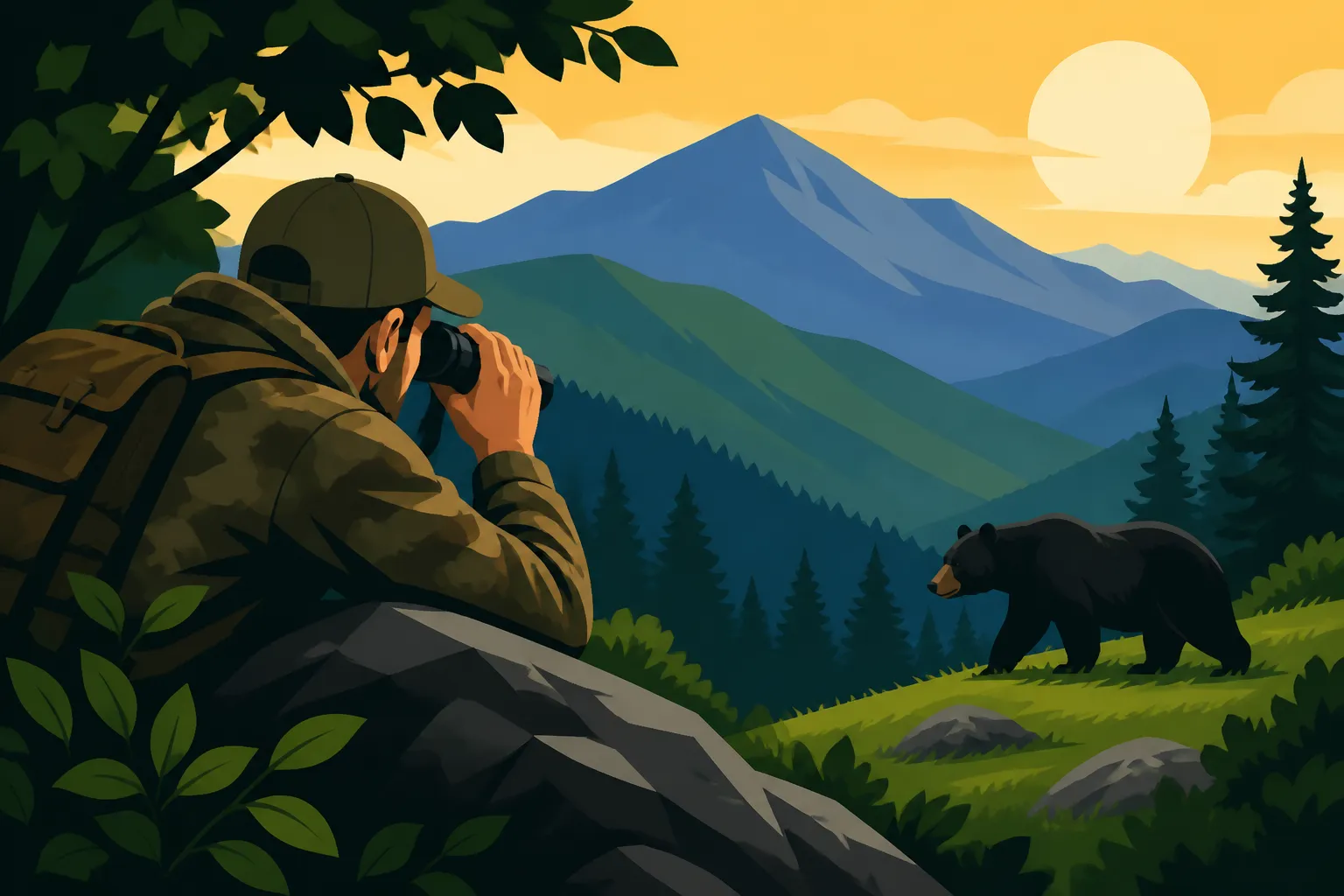
Effective glassing is an art form. It's not about quickly sweeping your binoculars across a landscape; it's about methodical, slow, and deliberate scanning. Find a vantage point, perhaps a ridgetop or an elevated knoll, that allows you to survey large areas of potential bear habitat—clearcuts, power line rights-of-way, old logging roads, or mast-laden slopes. Use your binoculars to pick apart every shadow, every odd shape, every movement, no matter how subtle. Bears often blend in perfectly, looking like a burnt stump or a dark rock, so you're looking for anything that seems out of place.
The best times for spotting bears are typically early morning and late evening. During these cooler periods, bears are most active, moving between bedding and feeding areas. Pay close attention to how thermals affect scent movement; in the morning, air typically rises, carrying your scent uphill, while in the evening, it falls, carrying scent downhill. This knowledge, discussed further in Wind and Thermals on a Blue Ridge Slope, is critical for planning your approach. Consider using mapping platforms like GoHunt to pre-identify potential glassing points and to mark areas of known mast or dense cover. Having a clear understanding of the topography before you even step out of the truck can significantly reduce the amount of blind wandering you do, focusing your efforts on high-probability areas.
The Art of the Approach
Once you've spotted a bear, the real work begins. Your immediate priority is to assess the situation: the bear's exact location, its direction of travel (if any), the wind direction, and the available cover between you and your target. Your approach must be planned meticulously. Always try to stay downwind or crosswind of the bear. Bears have an incredible sense of smell, and a single puff of your scent can send them bolting.
Utilize natural contours of the land, thickets, large rocks, and changes in elevation to mask your movement. Move incredibly slowly, taking deliberate steps, placing your feet carefully to avoid snapping twigs or rustling dry leaves. Think of yourself as part of the forest, flowing with its natural rhythm. Stop frequently, use your binoculars to re-locate the bear, and re-evaluate its behavior. Sometimes, a bear will suddenly lay down for a nap, offering a perfect window to close the distance. Patience is not just a virtue here; it's a necessity. If you encounter a sow with cubs, identifying your target correctly is crucial; never target a sow with cubs, as it is illegal and unethical in Virginia. Be prepared to wait, sometimes for hours, for the bear to move into a more favorable position for an approach or a shot. This meticulous method is a far cry from the faster pace of deer drives, as explored in Deer Drives With Three or Four Hunters, requiring absolute stillness and focus.
Shot Placement and Follow-Up
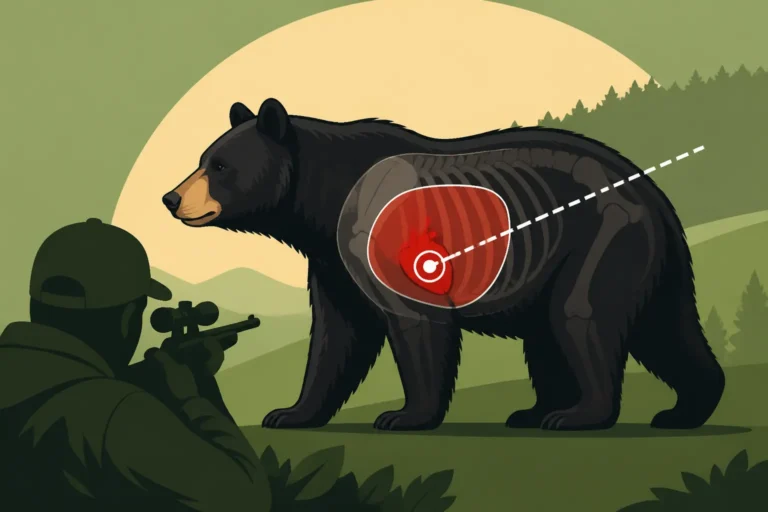
When you finally close the distance and have a clear, ethical shot opportunity, shot placement on a bear is critical. Bear anatomy is different from a deer's, and their heavy bone structure and thick fat layers can absorb poorly placed shots. The ideal shot is generally through the shoulder, targeting the lungs and heart. Aim for a point about one-third of the way up the body, just behind the front leg when the bear is broadside. Practice shooting from various field positions—kneeling, sitting, prone, or resting your rifle over your pack—as you might not have the luxury of a perfect standing shot. A solid rest is paramount for accuracy. For specific guidance, our article on Shot Placement on a Virginia Black Bear offers in-depth details you won't want to miss.
After the shot, immediately mark the exact spot where the bear was standing and its direction of travel. Bears are incredibly tough animals and can cover significant ground even with a fatal wound. Resist the urge to rush in. Give the bear ample time, at least 30 minutes to an hour, especially if you suspect a gut shot, to expire. This patience drastically increases your chances of recovery. When you begin tracking, move slowly and deliberately, looking for blood, broken branches, disturbed leaves, and tracks. Be cautious; a wounded bear can be dangerous, so stay alert and approach the final location carefully. If the tracking gets tough, remember that bears often head downhill or toward water when wounded. The skills for trailing a deer, discussed in Tracking a Deer Through Virginia Leaf Litter, can be adapted here, but expect a much larger and more formidable animal.
Safety and Ethics in Mountain Bear Hunting
Hunting black bears in the mountains offers an incredible adventure, but it comes with significant responsibilities, both for your personal safety and for the ethical treatment of the animals and the environment. These are powerful, wild creatures, and encountering them can be an intense experience, especially when you're actively pursuing them.
Bear Encounter Preparedness
While Virginia's black bears are generally shy and avoid humans, unexpected encounters can happen, particularly when you're moving silently through their habitat. Always carry bear spray and know how to use it. It's a non-lethal deterrent that can save your life in a close-quarters situation. When walking through dense cover where visibility is limited, make occasional noise—talk to yourself, sing a little—to avoid surprising a bear at close range. Most bears will hear you and move away before you ever see them.
If you do encounter a bear that hasn't noticed you, back away slowly and quietly, giving it plenty of space. If the bear notices you but remains non-aggressive (e.g., stands on its hind legs to get a better look), make yourself appear as large as possible, talk in a calm but firm voice, and slowly back away. Never run, as this can trigger a chase response. If a bear shows signs of aggression—huffing, bluff charges, paw swatting—it's crucial to stand your ground, continue to appear large, and if it makes contact, fight back aggressively, aiming for the face and nose. Remember, never get between a sow and her cubs, as a mother bear will be highly defensive.
Ethical Considerations and Regulations
Responsible hunting means adhering to all regulations set by the Virginia Department of Wildlife Resources (DWR). This includes knowing the exact dates for Virginia Bear Season Rules, bag limits, and legal hunting hours in your specific county or management area. It's critical to positively identify your target; never shoot a bear that appears to be a sow with cubs, even if the cubs are not immediately visible. This is both illegal and profoundly unethical.
Beyond the regulations, uphold the "leave no trace" principle. Pack out everything you pack in, including any spent casings or trash. Respect for the animal extends to proper field dressing and meat care. Bears have a thick layer of fat, and if the weather is warm, proper and quick cooling of the meat is essential to prevent spoilage. This might involve quartering the bear in the field and getting it to ice as quickly as possible. For guidance on post-harvest care, our article on Handling a Bear After the Shot provides valuable tips. Remember to check your bear at an official DWR check station or report it through the DWR's online system or app, as required by law. This data is vital for wildlife management.
Spot-and-stalk hunting for bears in Virginia's mountains is a challenging yet deeply rewarding pursuit. It connects you to the wilderness in a profound way, demanding a level of skill and respect that elevates the entire hunting experience.
Spot-and-Stalk Bear Hunting Checklist
Here’s a quick reference to ensure you're prepared for your next spot-and-stalk bear hunt in Virginia's rugged mountains.
| Phase | Key Actions | Critical Considerations |
|---|---|---|
| Scouting | Identify mast crops, water sources, thick cover. | Look for rub trees, scat, tracks. Utilize GoHunt for mapping. |
| Glassing | Slow, methodical scanning of open areas. | Use high-quality 10x+ optics, check wind direction & thermals. |
| Assessing | Determine bear's location, movement, wind. | Positively identify target (no sows/cubs), plan approach route. |
| Stalking | Move slowly, silently, using natural cover. | Stay downwind, avoid snapping twigs, watch every single step. |
| Shooting | Find a solid rest, aim for vitals (shoulder/lungs). | Practice field positions, account for angle, know bear anatomy. |
| Recovery | Wait before tracking, mark last seen spot. | Be cautious of a wounded bear, follow blood trail, prepare for tough drag. |
| Safety | Carry bear spray, make noise in thick cover. | Know bear encounter protocol, never run, fight back if attacked. |
| Ethics | Know DWR regulations, proper meat care. | Pack it in/pack it out, report harvest, respect the animal and land. |
Disclaimer
Hunting is an inherently dangerous activity. This guide provides information for educational purposes only and is not a substitute for professional training, personal responsibility, or adherence to all local, state, and federal hunting laws and regulations. Always prioritize safety, respect wildlife, and obtain the necessary licenses and permits before engaging in any hunting activity. The author and publisher are not responsible for any accidents, injuries, or legal issues that may arise from the use of this information.