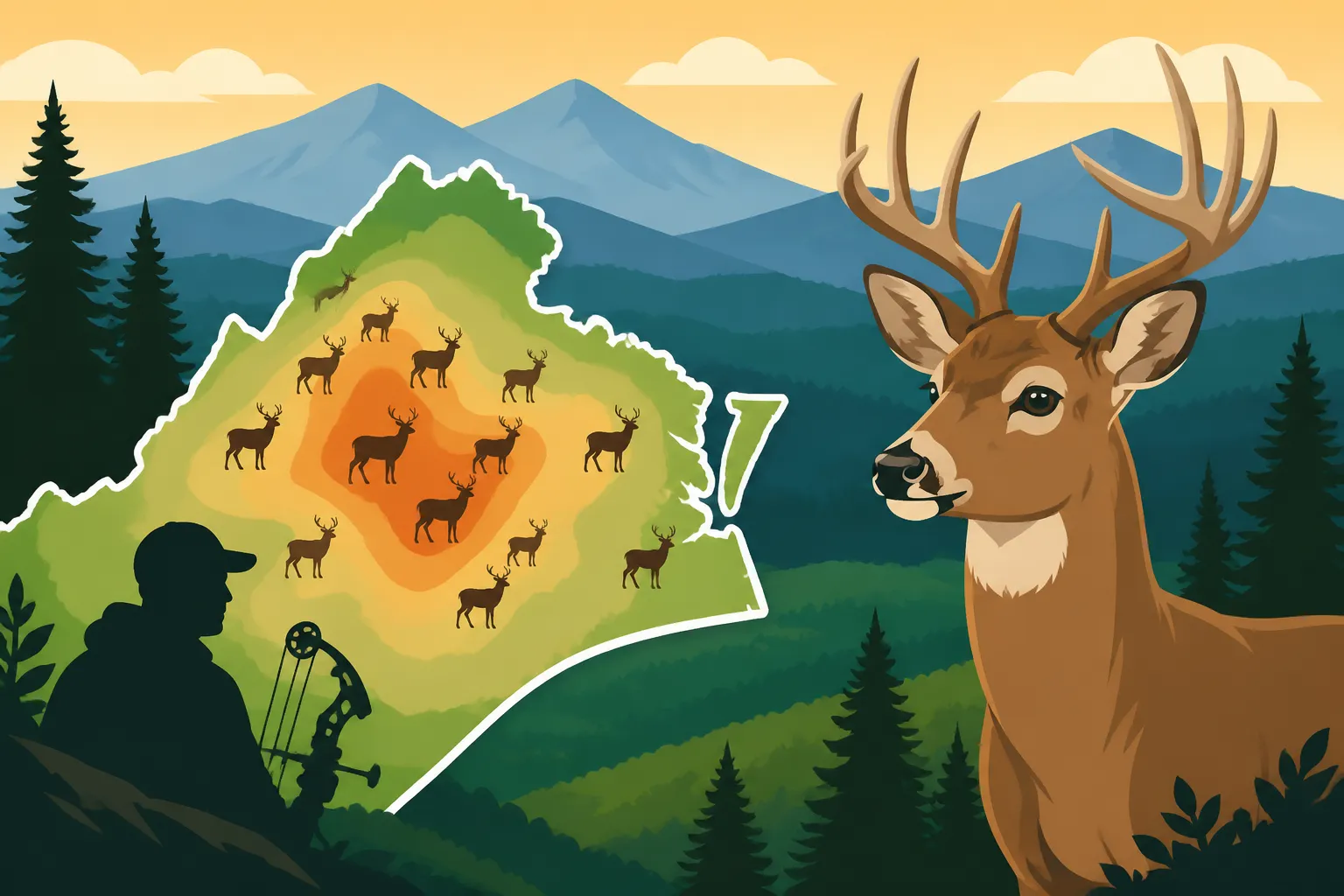
Mountain Region Deer Density
Hunting in Virginia's vast mountain regions can feel like a completely different world compared to the rolling hills of the Piedmont or the flatlands of the Eastern Shore. If you've ever found yourself wondering why deer seem abundant in one mountain hollow but scarce in another, or why the overall numbers feel lower than what you're used to, you're not alone. This guide aims to shed light on the unique factors influencing mountain region deer density in Virginia, helping you understand the landscape and adapt your hunting strategies for better success in the rugged terrain of the Blue Ridge and Alleghany Mountains.
Understanding Deer Density in Virginia's Mountain Regions
The phrase "mountain region deer density" often conjures images of sparse deer herds compared to the crop fields of the low country, and there's a good reason for that perception. While Virginia boasts a robust statewide deer population, the mountainous western portions of the Commonwealth, including the George Washington and Jefferson National Forests, generally support fewer deer per square mile than the agricultural powerhouses to the east. This isn't due to a lack of effort from the Department of Wildlife Resources (DWR) or a sudden collapse in the herd, but rather a complex interplay of habitat, food availability, terrain, and historical factors.
Deer populations, like any wildlife, are inextricably linked to their environment's carrying capacity – the maximum number of individuals that a given environment can sustain indefinitely without degradation. In the mountains, this carrying capacity is often naturally lower. The terrain is steeper, the soil less fertile in many areas, and the hardwood forests, while beautiful, don't always offer the same high-calorie food buffet that a Piedmont farm provides. Therefore, understanding this baseline difference is the first step to becoming a more effective mountain hunter. You're simply playing a different game with different rules, and success often comes from adjusting your expectations and tactics accordingly.
The Role of Habitat and Food Sources
When we talk about habitat in the mountains, we're largely discussing expansive hardwood forests with a mix of oak, hickory, and other mast-producing trees. These areas can be fantastic for deer, especially during good mast years when acorns and other nuts carpet the forest floor. However, mast production can be cyclical, leading to boom-and-bust years that directly impact deer health and numbers. A poor acorn year can force deer to travel farther, utilize less nutritious browse, and generally stress the population.
Beyond mast, mountain deer rely heavily on natural browse — the tender shoots, leaves, and twigs of various plants and shrubs. However, older, mature forests, while providing cover, can sometimes lack the dense, low-growing vegetation that deer prefer. Clear-cuts, timber thinnings, and areas recovering from wildfires can temporarily create excellent browse, acting as magnets for deer. Knowing how to read aerial photos for Piedmont deer or in this case, mountain deer, can help identify these pockets of prime habitat. Understanding these nuanced habitat features is crucial for locating deer, as they will gravitate towards areas offering the best combination of food and cover, which isn't always evenly distributed across a mountain landscape.
Terrain Challenges and Deer Movement
The sheer ruggedness of Virginia's mountain terrain plays a massive role in deer density and where deer choose to live. Steep slopes, rock outcroppings, and dense laurel thickets can make travel difficult for both deer and hunters. However, deer are masters of efficiency and will often utilize benches, saddles, and subtle contours that offer easier travel routes. These natural funnels and travel corridors become vital for hunters to identify.
While deer might not be as densely packed as in other regions, their movement patterns in the mountains are often more predictable once you understand the lay of the land. They will traverse ridge lines, drop into hollows to escape wind, and follow the paths of least resistance to access food and water. Hunting a funnel between two hollows or focusing on trails leading up to a ridge-top saddle for rutting bucks can be incredibly effective. The challenge for hunters is less about finding any deer, and more about finding the key areas where those deer concentrate, often moving more frequently and predictably than their Eastern counterparts.
How Virginia DWR Monitors Mountain Deer Populations
The Virginia Department of Wildlife Resources (DWR) employs a variety of methods to keep tabs on deer populations across the state, and the mountain regions are no exception. It's a challenging job, covering vast, often inaccessible tracts of land, but the data collected is essential for setting seasons, bag limits, and overall management strategies. For those of us who spend countless hours in the woods, understanding these efforts can provide valuable insight into the "why" behind certain regulations and help us interpret what we're seeing on the ground.
You might wonder how a state agency counts deer in places like the George Washington National Forest Hunting areas or the rugged terrain of the Jefferson National Forest. It's not like counting sheep in a pasture, that's for sure. They combine data from hunter harvests, specialized surveys, and habitat assessments to build a comprehensive picture. This data allows them to track trends in Virginia Deer Population Estimate and assess the health of the herd, rather than just raw numbers.
Harvest Data and Hunter Reporting
One of the most crucial pieces of the puzzle comes directly from us, the hunters. Virginia has mandatory deer reporting, where every harvested deer must be checked in through the Go Outdoors Virginia app, online, or by phone. This data is painstakingly compiled and analyzed by DWR biologists. They look at overall harvest numbers, of course, but also more nuanced metrics like the age structure of harvested bucks, the antlerless harvest (does and fawns), and the Virginia Buck-to-Doe Ratio by Region.
For mountain regions, harvest data might show lower total numbers compared to some eastern counties, but it can reveal important trends. For instance, if the average age of harvested bucks is increasing, it might indicate that hunters are passing up younger deer, or that there's simply less hunting pressure, allowing bucks to mature. Conversely, a high percentage of yearlings in the harvest might signal a robust fawn crop from a few years prior or increased hunting pressure on younger animals. Every reported deer contributes to this collective knowledge, which is why it's so important to accurately report your harvest; it directly impacts future management decisions in our hunting grounds.
Spotlight Surveys and Aerial Reconnaissance
While harvest data provides a solid foundation, DWR biologists also conduct various field surveys to get a more direct measure of deer presence and health. Spotlight surveys, for example, involve driving set routes at night with powerful spotlights to count deer. These surveys are typically done in areas with accessible roads, which can be limited in the most remote mountain terrain, but they offer an independent assessment of deer numbers and can track changes over time.
In addition to ground surveys, aerial reconnaissance, especially using thermal imaging technology, is becoming more prevalent. Flying over large tracts of land, particularly after leaf-fall, allows biologists to count deer and identify concentrations. This is especially useful in vast public lands like the Jefferson National Forest Hunting, where ground access is difficult and deer can be widely dispersed. While these methods aren't perfect and have their limitations, they provide critical data points to corroborate harvest statistics and help DWR refine their understanding of how DWR counts the Virginia deer herd in these challenging environments.
Factors Affecting Deer Health and Recruitment
Beyond just numbers, the health of the deer herd and its ability to reproduce and recruit new fawns into the population are vital indicators of mountain region deer density. Factors like disease, predator presence, and the availability of quality nutrition all play a role in Virginia fawn survival rates and the overall vitality of the herd. When deer are stressed due by a lack of food or disease, their reproductive success can decline, impacting future generations.
One significant factor that can influence deer health and density is the occasional outbreak of diseases like Epizootic Hemorrhagic Disease (EHD). While EHD tends to hit hardest in areas with high deer densities and abundant water sources, mountain regions are not immune. A localized EHD die-off can temporarily reduce the deer population in a specific drainage or hollow, and understanding EHD die-offs in Virginia deer can help explain fluctuations in local numbers. DWR also monitors Virginia predator impact on fawn recruitment, acknowledging that predators like coyotes and bears can exert pressure on young deer, especially in areas with dense cover. Balancing these natural factors with human hunting pressure is a delicate act of wildlife management.
Navigating Lower Densities: Strategies for Mountain Hunters
Hunting in Virginia's mountain regions requires a different mindset and different tactics than hunting the agricultural lowlands. While the sheer numbers of deer might be lower, the quality of the hunting experience – the challenge, the solitude, the satisfaction of outsmarting a truly wild animal – is often amplified. If you're used to seeing dozens of deer on a food plot hunt, you might need to adjust your expectations. However, with the right approach, mountain hunting can be incredibly rewarding.
The key is to focus on quality over quantity and to accept that success often comes down to hard work, patience, and a deep understanding of the subtle nuances of the mountainous environment. You're not just looking for "a deer"; you're looking for the right deer in the right place, and that often means covering more ground and digging deeper into scouting. Hunters often find themselves hunting west of the Blue Ridge in vast areas, which can feel daunting, but it also means there are always pockets of undisturbed deer if you're willing to find them.
Scouting Smart and Hard
Given the expansive terrain and lower deer densities, scouting becomes paramount in the mountains. This isn't just a pre-season activity; it's an ongoing process. E-scouting with tools like GoHunt can help you identify potential funnels, benches, and likely bedding areas from your computer screen. You can mark promising areas, analyze topography, and even identify historical timber cuts that might be producing vital browse. This digital legwork saves countless hours on the ground.
Once you have some potential spots, put boots on the ground. Look for fresh sign: rubs, scrapes, tracks, and droppings. Pay close attention to subtle changes in elevation, natural bottlenecks, and areas where cover meets a food source. Often, deer will use specific trails or areas consistently, even if overall numbers are low. Don't be afraid to scouting Virginia public land before season extensively; the more you know about your chosen area, the better your chances. Focus on finding those pinch points or benches where deer movement is concentrated, rather than just hoping to stumble upon them in vast timber.
Patient Still-Hunting and Stand Placement
In areas with lower deer density, aggressive stand hunting on a single food source might not be the most effective strategy. Instead, consider still-hunting, slowly and deliberately moving through promising areas, pausing frequently to glass and listen. This allows you to cover ground while remaining stealthy, increasing your chances of encountering a deer on the move. When still-hunting Jefferson Forest ridges, use the wind and thermals to your advantage, moving slowly up or down slopes as conditions dictate.
If you opt for a stand, placement is critical. Instead of just picking a random tree, strategically locate your stand on a travel corridor, a saddle, or an overlooked bench where deer are likely to pass through. Think about natural funnels, like a narrow strip of timber between two clear-cuts or a crossing point on a creek. Remember that deer in the mountains are often more wary due to natural pressures and the sheer size of their territory, so minimizing your entry and exit impact is also vital. A well-placed stand in a low-density area can be just as effective as one in a high-density area if it capitalizes on consistent deer movement patterns.
Adapting to Regional Regulations and Bag Limits
Virginia's DWR acknowledges the differences in deer populations across the state, which is why there are different antlered buck limits for the Eastern and Western regions. Hunters in the mountains, which fall under the Western region, face slightly different regulations regarding buck harvest. It's crucial to be intimately familiar with these rules, especially the Western Region Antlered Buck Limits, to ensure you're hunting legally and contributing positively to the management goals for mountain deer.
These limits are designed to manage the herd appropriately for the unique conditions of the mountain habitat. They aim to promote a healthier age structure and balance the deer population with the land's carrying capacity. While it might seem restrictive at first, adhering to these guidelines helps ensure a sustainable deer population for future generations of mountain hunters. Always double-check the current regulations for your specific county before heading afield, as rules can occasionally have county-specific nuances within the broader regional framework.
| Factor | Eastern Region (Piedmont, Coastal Plain) | Western Region (Mountains, Valley) |
|---|---|---|
| Deer Density | Generally Higher | Generally Lower |
| Primary Habitat | Agriculture, Mixed Forests, Suburbs | Vast Hardwood Forests, Steep Terrain, Public Lands |
| Food Sources | Abundant Crops, Acorns, Browse, Planted Food Plots | Natural Mast (Acorns, Hickory), Browse, Clear-cuts |
| Hunting Pressure | Variable, often higher near population centers | Can be high in accessible areas, but drops dramatically with distance |
| Buck Bag Limit | Generally higher (check specific counties) | Generally lower (e.g., one antlered buck per year) |
| Challenge Level | Moderate to High | High, due to terrain and lower density |
Embracing the Mountain Experience
Ultimately, hunting in Virginia's mountain regions is about more than just filling a tag; it's about the experience. It's about the quiet solitude of the forest, the challenge of navigating rugged terrain, and the satisfaction of earning your deer. You might have to work harder, walk farther, and hunt smarter than in other parts of the state. You might spend more time glassing a distant slope, meticulously reading a ridge for Blue Ridge deer, or picking your way through a rhododendron thicket.
The rewards, however, are immense. A mountain buck, earned through effort and skill in its natural, rugged environment, holds a special place in any hunter's memory. Even without a harvest, a day spent in the vastness of the Blue Ridge or Alleghany Mountains, observing wildlife and immersing yourself in nature, is a profound experience. So, pack your sturdy boots, hone your scouting skills, and embrace the unique challenge and beauty that Virginia's mountain deer hunting has to offer.
Disclaimer
This article is for general informational purposes only and does not constitute professional advice. Laws, prices and regulations vary by location and change over time. Consult a qualified professional for guidance on your specific situation.