Virginia Predator Impact on Fawn Recruitment
It’s a frustration many Virginia deer hunters share: you put in the scouting time, you dial in your gear, you even pass on smaller bucks hoping for a future big one, only to wonder if all those efforts matter when something else is impacting the herd. Specifically, we often find ourselves asking, "Where are the fawns?" It’s easy to point fingers, and often, those fingers land squarely on predators. This guide will dive deep into the real impact predators have on fawn recruitment in Virginia, exploring the complex dynamics that shape our deer herd and what it truly means for hunters like us.
The Dynamics of Fawn Recruitment in Virginia
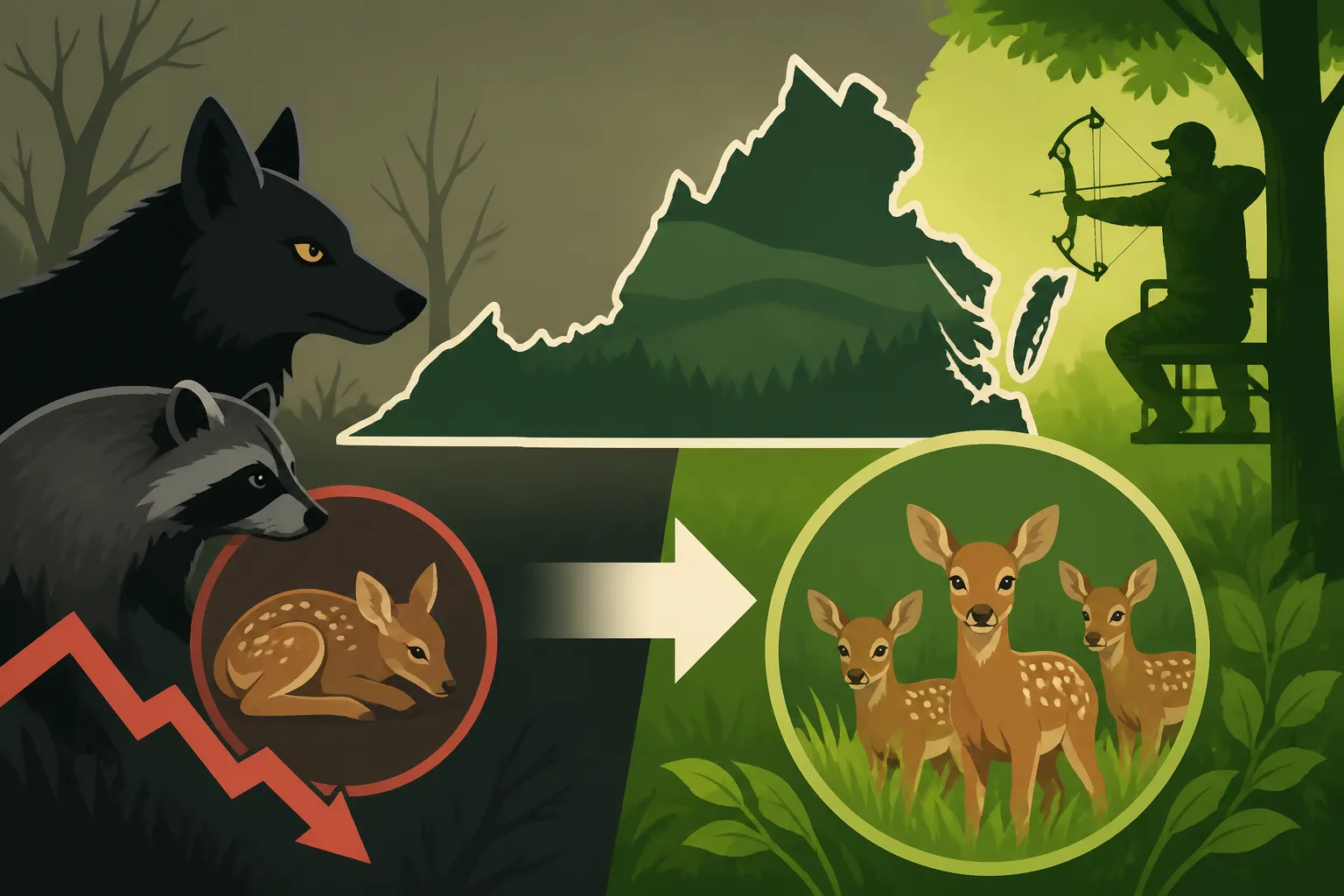
When we talk about the health of Virginia's deer herd, one of the most critical factors is something called "fawn recruitment." It sounds like a fancy, scientific term, but at its heart, it’s quite simple: it’s about how many fawns born each spring actually survive to become yearlings and contribute to the breeding population. This number is the lifeblood of our deer herd, dictating future population trends and, ultimately, our hunting success. If recruitment is low, the herd shrinks, or at best, stagnates. If it’s robust, the herd grows, offering more opportunities and a healthier age structure.
What is Fawn Recruitment, Anyway?
Fawn recruitment isn't just about how many does drop fawns; it’s about the number of those fawns that make it through their perilous first year of life. Imagine a hundred fawns born in May and June across a section of the Appalachian foothills or the Piedmont farmlands. By the time deer season rolls around, how many of those fawns are still alive? And then, critically, how many are still around a year later, ready to breed themselves or be harvested as young deer? That survival rate is what wildlife biologists measure when they talk about recruitment. It’s a dynamic figure, changing year to year and region to region, influenced by a multitude of factors, not just predators. Hunters often feel this deeply – a year with noticeably fewer young deer can feel like a punch to the gut after years of watching the herd thrive.
Natural Threats Beyond Predators
While predators often get the lion's share of attention, fawns face a gauntlet of natural threats even before a coyote or bear enters the picture. Think about a late-spring cold snap with driving rain. A newborn fawn, still wet and wobbly, can succumb to hypothermia rapidly. Poor maternal health can also play a huge role; a doe that didn't get adequate nutrition through the winter, or one that’s battling disease, might give birth to smaller, weaker fawns, or even struggle to produce enough milk. Habitat quality is another colossal factor. Areas with sparse cover make fawns easy targets, regardless of predator numbers. Conversely, areas with thick, diverse undergrowth offer excellent hiding spots. Disease, like epizootic hemorrhagic disease (EHD), can also hit fawns hard, though it's more commonly associated with adult deer die-offs. Even something as seemingly benign as human disturbance – farmers haying fields or hikers off-trail – can accidentally separate a fawn from its mother, leaving it vulnerable. These "hidden" threats are often harder to quantify but are constantly at play, silently chipping away at those precious recruitment numbers.
Key Predators and Their Impact on Virginia's Fawns
In Virginia, several predator species interact with the deer herd, and their impact on fawns varies significantly. While all predators are opportunistic, their strategies and typical prey sizes mean some have a more pronounced effect on fawn survival than others. It's a complex ecological web, not a simple villain-and-victim story.
Coyote: The Primary Player
Let’s not beat around the bush: coyotes are often seen as public enemy number one for fawns, and there's a good reason for that perception. Since they established widespread populations in Virginia decades ago, coyotes have become incredibly adept at hunting. They are highly intelligent, adaptable, and incredibly efficient predators. A significant portion of a coyote’s diet, especially during late spring and early summer when fawns are born, can consist of young deer. Coyotes are opportunistic, meaning they’ll take the easiest meal available, and a newborn fawn, often left alone by its mother in thick cover, is a relatively easy target. They’re also prolific, with litters of pups needing to be fed, which increases hunting pressure during the fawn-rearing season. You can hunt coyotes year-round in Virginia, and many hunters take advantage of that, using calls or even Night Hunting Rules for Virginia Coyotes to try and reduce their numbers, especially on private land. While hunting coyotes can be a blast, remember that a temporary reduction in coyote numbers in one area can often be quickly filled by others moving in. It's a constant effort.
Black Bears: An Overlooked Factor
While bears might not be the first animal that comes to mind when you think of fawn predators, Virginia’s thriving Virginia's Black Bear Population definitely plays a role. Bears are true omnivores, and during the spring and early summer, they are constantly searching for easily accessible, high-protein food sources. A newborn fawn, especially one hidden in dense cover, can be just that. While it's not their primary food source, and they certainly don't specialize in fawn predation like coyotes might, a bear that stumbles upon a fawn will almost certainly take advantage of the easy meal. This impact is more localized, obviously occurring where bears are present and densest, primarily in the western and northern parts of the state, as well as some expanding Piedmont areas. The larger a bear population becomes, the more likely these opportunistic encounters will be. Hunters need to recognize that managing bear numbers, where seasons and quotas allow, can also indirectly contribute to better fawn survival.
Bobcat and Other Smaller Predators
Beyond coyotes and bears, we have bobcats, foxes, and even domestic dogs that can impact fawn recruitment. Bobcats are native predators, stealthy and efficient, but their overall impact on the deer herd, especially fawns, is generally considered much less significant than that of coyotes. They're more likely to prey on rabbits, squirrels, and small rodents, but a young, vulnerable fawn certainly isn’t off their menu if the opportunity arises. Foxes, particularly red foxes, are also opportunistic. While they primarily hunt smaller prey, a very young, defenseless fawn could be taken, especially by a vixen feeding her kits. And we can't forget about feral or unrestrained domestic dogs. These dogs can be incredibly destructive to deer populations, including fawns, simply through harassment, chasing, and direct predation. Responsible pet ownership is a critical, often overlooked, aspect of wildlife conservation in many areas. While their individual impact might be smaller than a coyote, the cumulative effect of these various predators contributes to the overall challenge of fawn survival.
Understanding the Science: How DWR Monitors Impact
It's not just hunters observing the woods and making educated guesses about fawn numbers. The Virginia Department of Wildlife Resources (DWR) employs scientific methods to monitor deer populations, including recruitment rates. This data is crucial for understanding the health of the herd and making informed management decisions, which ultimately impacts our hunting seasons and bag limits. It's a careful balancing act of science and observation.
Research Methods and Data Collection
How do biologists actually figure out how many fawns survive? It's a meticulous, often labor-intensive process. One common method involves radio-collaring newborn fawns. Biologists will locate fawns shortly after birth, often with the aid of trained dogs or through intensive searching in known fawning areas, then carefully fit them with tiny, expandable radio collars. These collars allow researchers to track the fawn’s movements and, crucially, to determine its fate. When a collar’s signal indicates immobility, researchers can quickly investigate the site to determine the cause of death. This often involves necropsies (animal autopsies) to identify specific predators or other factors, like disease or starvation. This hands-on, boots-on-the-ground work provides invaluable direct evidence of predation events and helps quantify the impact of different predator species. Without this kind of direct, empirical data, much of our understanding would be anecdotal. This is where tools like GoHunt can come in handy for hunters looking at historical data and general trends, though the deep scientific work happens at the state level.
Interpreting Recruitment Rates
Once the data is collected, interpreting fawn recruitment rates is key. For example, if a study shows that only 30% of fawns survive to six months of age in a particular area, that’s a significant piece of information. This rate is often compared to a baseline or to historical averages for that region. Consistently low recruitment rates might signal a problem: perhaps overpopulated predators, poor habitat, or persistent disease issues. Conversely, high rates suggest a healthy, growing herd. Biologists also look at ratios like the fawn-to-doe ratio observed during late summer or early fall surveys. While not as precise as radio-collar studies, these field observations provide a broader snapshot. For instance, if you're out scouting and using your GoHunt app to mark deer sign, and you consistently see does without fawns, it could be an indicator of a recruitment issue in that specific locale. This kind of data, alongside other metrics like Virginia Deer Population Estimate and Virginia Annual Deer Harvest, informs DWR’s decisions on antlerless deer tags, season lengths, and special hunts, all aimed at maintaining a sustainable, healthy deer population for future generations of hunters.
What Hunters Can Do: Managing Habitat and Predator Populations
As hunters, we often feel a strong connection to the land and its wildlife. When we worry about fawn recruitment, it’s not just about our own hunting success; it’s about the health and future of the herd we cherish. While large-scale wildlife management rests with the DWR, there are tangible steps we can take, especially on private lands, to influence fawn survival.
Habitat Improvement for Fawn Survival
One of the most impactful things a hunter or landowner can do for fawn recruitment is to improve habitat. Think about it: fawns need dense cover to hide from predators in those critical first few weeks. Areas with thick brush, tall grasses, clear-cuts with abundant regrowth, or dense stands of saplings provide ideal fawning cover. For a doe to raise healthy fawns, she also needs good nutrition. This means having access to quality forage, especially during late gestation and lactation. Planting specific food plots, managing timber to promote browse, or even simply leaving certain areas to grow wild can provide both food and cover. For example, creating hinge-cut thickets can offer immediate, low-level cover for fawns and bedding for does. Consult resources on Hunting a Clear-Cut Regrowth Edge or Reading Aerial Photos for Piedmont Deer to identify areas that might be prime for fawning cover or could be enhanced. Providing secure fawning cover reduces the chances of a fawn becoming an easy meal, even if predators are abundant.
The Role of Predator Management
Predator management, particularly for coyotes, is a strategy many hunters employ to try and boost fawn survival. As we've discussed, coyotes are efficient fawn predators. Active coyote hunting and trapping, especially during late winter and early spring before fawns drop, can potentially reduce local coyote populations and, in turn, lessen predation pressure on fawns. This isn't about eradication, which is neither feasible nor desirable, but about localized population control. Many hunters enjoy Predator Hunting in Virginia as a challenging and year-round pursuit. Using calls, setting traps (with proper Virginia Trapping License Requirements), or participating in organized hunts can make a difference on a smaller scale. While the science on how much predator control truly impacts overall deer numbers in the long term is still debated among biologists, there's no denying that removing a fawn-eating coyote from an area before fawning season gives local fawns a better chance. Every little bit can help, and it’s an active way to engage in game management.
Hunter Data and Observation
Finally, your observations as a hunter are incredibly valuable. When you’re out scouting, hunting, or just enjoying the woods, pay attention to what you see. Are you seeing plenty of fawns with does in late summer? Are there fewer than usual? Are you finding evidence of predation, like fawn remains? Reporting these observations, especially anything unusual, to the DWR can contribute to their understanding of local herd health. When you use scouting tools, like GoHunt's mapping features, to mark deer sightings, consider also noting fawn numbers. This collective hunter knowledge, combined with scientific studies, paints a more complete picture of what's truly happening with fawn recruitment across Virginia. Understanding that predator impact is just one piece of a much larger, more intricate puzzle helps us to be more informed and effective stewards of Virginia’s cherished deer herd.
Disclaimer
This article is for general informational purposes only and does not constitute professional advice. Laws, prices and regulations vary by location and change over time. Consult a qualified professional for guidance on your specific situation.