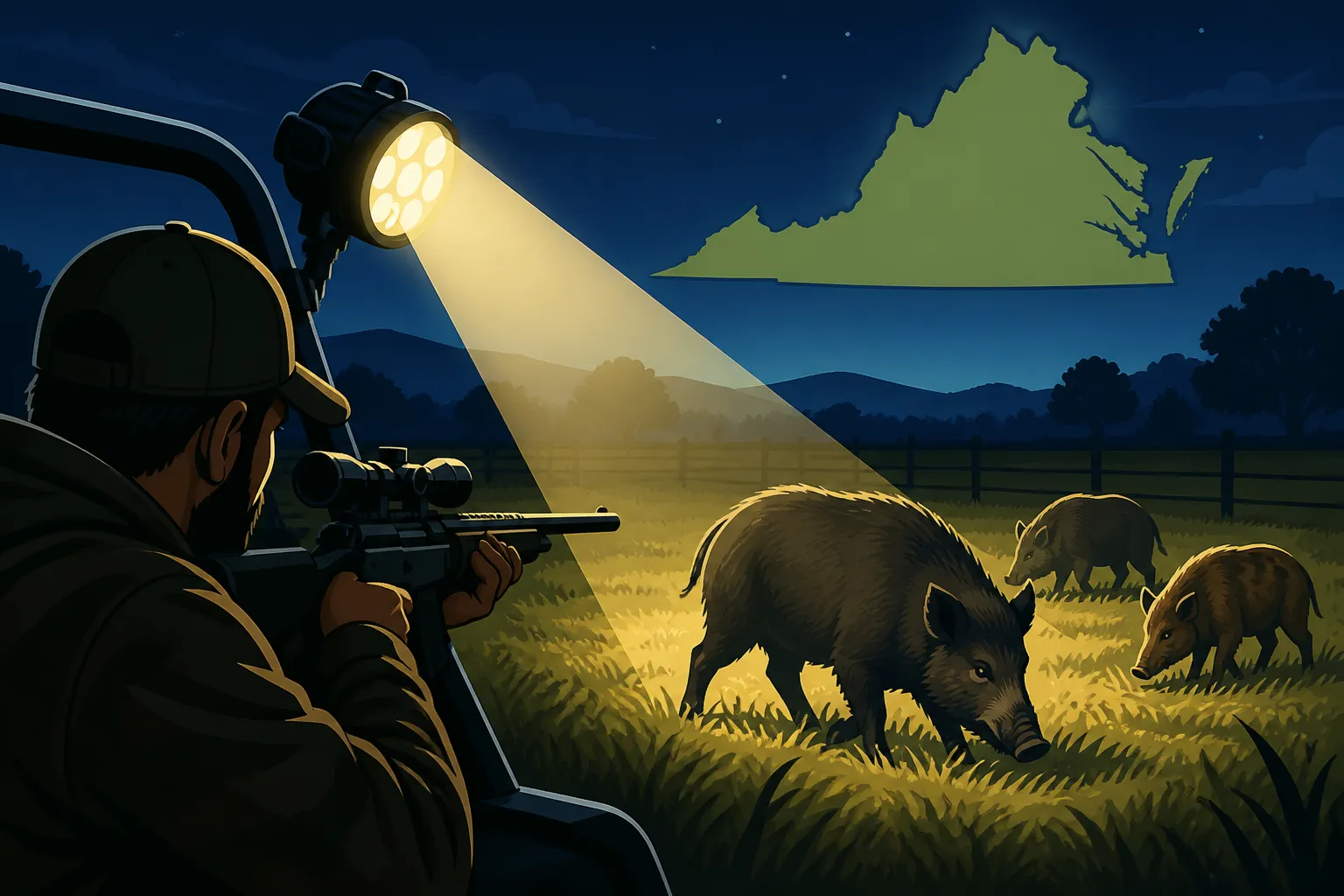
Night Hunting Hogs With Lights on Private Land
Feral hogs are a real headache for Virginia landowners, tearing up fields, destroying crops, and causing immense ecological damage. They're intelligent, elusive, and reproduce at an astonishing rate, making traditional daytime hunting a constant uphill battle. This comprehensive guide will walk you through everything you need to know about effectively night hunting hogs with lights on private land in Virginia, helping you reclaim your property from these destructive invaders.
Understanding Virginia's Regulations for Night Hunting Hogs
Before you even think about stepping out after dark, it’s absolutely critical to understand the legal framework surrounding night hunting feral hogs in Virginia. The rules can be a bit nuanced, and you want to ensure you're always operating within the law to avoid any unpleasant surprises. Trust me, navigating wildlife regulations can feel like deciphering ancient texts sometimes, but it's essential.
Legalities of Night Hunting and Lights
In Virginia, hunting feral hogs is generally permitted year-round on private land, and this includes at night. This is largely due to their status as an invasive species that causes significant agricultural and environmental damage. The good news is that the Virginia Department of Wildlife Resources (DWR) allows for the use of artificial lights, including spotlights, vehicle lights, or night vision/thermal imaging devices, when hunting feral hogs on private land. This is a crucial distinction, as using lights for deer or turkey at night is strictly prohibited. For species like coyotes, there are specific seasons and rules for night hunting, but for hogs, the regulations are much more permissive due to the intense need for population control.
However, even with these permissions, it's vital to stay informed. Regulations can change, so always double-check the latest DWR hunting regulations or use resources like the GoHunt app, which often provides up-to-date summaries and direct links to official sources. There’s nothing worse than thinking you’re doing everything right, only to find out a small detail has shifted. You’ll want to be familiar with the broader Virginia Feral Hog Regulations to ensure you're compliant in all aspects of your hunting activities.
Private Land Requirements and Permissions
The "private land" aspect of night hunting hogs with lights cannot be stressed enough. This method is only permissible on private property. This means you must either own the land yourself, or, more commonly for many hunters, have explicit, written permission from the landowner. A verbal agreement is a good start, but having something in writing protects everyone involved and removes any ambiguity. This permission should clearly state that you are allowed to hunt feral hogs, specifically at night, and with the use of artificial lights or night/thermal optics.
Never assume. Even if you've hunted deer on a property for years, that doesn't automatically grant you permission for night hog hunting with lights. Landowners are often more than happy to grant such permission due to the damage hogs inflict, but you still need to ask and get it in writing. This is especially true if you're bringing in specialized equipment like thermal scopes or powerful spotlights, as the landowner needs to be fully aware of the activities taking place on their property after dark. Always remember the critical steps for Getting Private Land Permission in Virginia.
Weaponry and Ammunition Considerations
When it comes to the type of weapon you can use for night hunting hogs, Virginia regulations generally follow the same rules as daytime hunting for big game, provided you are on private land. This means you can use rifles, shotguns, muzzleloaders, and even archery equipment. However, the unique challenges of night hunting often favor specific setups. For instance, the sheer power and accuracy required to dispatch a hog, often in fleeting opportunities and low light, usually makes modern sporting rifles chambered in calibers like .223/5.56, .308, or 6.5 Creedmoor popular choices. These calibers offer a good balance of accuracy, range, and knockdown power for hogs, which can be surprisingly tough animals.
Ammunition choice is also paramount. You want reliable, expanding bullets that will deliver maximum energy transfer and ensure a quick, ethical kill. Full metal jacket (FMJ) rounds are generally not recommended for hunting as they tend to pass through without sufficient expansion, leading to wounded animals and difficult tracking jobs in the dark. Hollow points or soft points are usually a better option. Remember that shot placement is always king, regardless of your equipment. A poorly placed shot from a powerful rifle is less effective than a well-placed shot from a less powerful one.
Why Night Hunting is So Effective for Feral Hogs
If you've ever tried to hunt hogs during the day, you know how incredibly difficult it can be. They're often ghost-like, appearing and disappearing as if by magic. Night hunting, however, dramatically shifts the odds in your favor, turning the tables on these nocturnal nuisances.
Hog Behavior and Nocturnal Habits
Feral hogs are predominantly nocturnal, especially in areas with human activity or hunting pressure. They spend much of the daylight hours bedded down in thick cover – dense briar patches, swamp edges, or deep timber – where they feel safe and undisturbed. As dusk approaches, they emerge from their sanctuaries to feed, often traveling considerable distances under the cloak of darkness. This nocturnal preference is a survival mechanism. They’ve learned that daytime means danger, while nighttime offers a safer window to forage for food, wallow, and move across open fields without detection.
This is precisely why night hunting with lights or thermal/night vision equipment is so effective. You're hunting them during their most active periods, capitalizing on their natural tendencies. Think about it: during the day, you're constantly fighting against their inherent caution and their ability to detect threats from afar. At night, they’re often more focused on feeding, and the element of surprise is heavily skewed towards the hunter. Understanding How Wild Hogs Spread Across Virginia also gives insight into how these adaptable animals adjust their behaviors to thrive, making night hunting a necessary counter-measure.
The Element of Surprise and Reduced Pressure
One of the biggest advantages of night hunting is the overwhelming element of surprise it provides. When you're glassing a field with thermal optics, you can often spot entire sounders (groups of hogs) that are completely oblivious to your presence. The darkness, combined with the often-dense cover they frequent, makes it incredibly difficult for them to detect a hunter. Their eyesight isn't their strongest sense, and while their hearing and smell are phenomenal, a careful approach under darkness can often negate these advantages.
This reduced pressure is key. Hogs that have been hunted heavily during the day become incredibly wary, often becoming entirely nocturnal and avoiding human scent trails or familiar food sources if they sense danger. By hunting them at night, you're tapping into a time when they feel relatively secure, allowing you to get closer and take more ethical, higher-percentage shots. This isn't just about bagging more hogs; it's about making a significant impact on their population and mitigating the Crop Damage Hogs Cause in Virginia.
Maximizing Success on Wary Sounders
Dealing with an entire sounder of hogs requires a different approach than targeting a single deer. Hogs are social animals, and they often travel in groups ranging from a few individuals to dozens. When you engage a sounder at night, your goal often isn't just to take one animal, but to impact as many as possible to disrupt their breeding and social structure. Night hunting allows for this. With the right setup and a coordinated approach (if hunting with a partner), you can often get multiple shots off before the sounder fully understands what's happening and scatters.
The use of lights or thermal optics allows for rapid target acquisition and follow-up shots that would be impossible in pitch-black conditions. You can quickly identify sows (females), which are the key to population control due to their rapid reproductive rates. Removing multiple sows from a sounder can have a much more significant long-term impact than just taking a boar or a single juvenile. This strategic approach, facilitated by night hunting, is crucial for truly making a dent in the expanding hog population.
Essential Gear for Night Hunting Hogs with Lights
Night hunting isn't your grandfather's deer stand setup. It requires specialized equipment to effectively navigate the darkness, locate your quarry, and make an ethical shot. Investing in the right gear is paramount for both success and safety.
Illuminating the Night: Lights and Optics
When we talk about "lights," we're really discussing a spectrum of illumination and vision-enhancement tools. Traditional spotlights or weapon-mounted lights are one option. These can be powerful LED lights with a focused beam, often capable of illuminating targets hundreds of yards away. Green or red lights are popular choices as many animals, including hogs, are less reactive to these colors compared to white light. However, using a visible light source can sometimes spook wary hogs, especially if they've been pressured before.
This is where advanced optics come into play. Night vision devices (NVDs) amplify ambient light (starlight, moonlight) to create a greenish image. They're excellent for navigating and observing in low light, making things visible that are otherwise impossible to see. Thermal imaging, on the other hand, detects heat signatures, displaying them as different colors or shades. Thermal is arguably the most effective tool for locating hogs in thick cover, as their body heat stands out dramatically against a cooler background, even through brush. Consider how your Optics for Blue Ridge and Piedmont Hunting might need an upgrade for effective night hog control.
Thermal vs. Night Vision: A Comparative Look
Choosing between thermal and night vision often comes down to budget, specific hunting conditions, and personal preference. Both have their distinct advantages and disadvantages.
| Feature | Thermal Imaging | Night Vision |
|---|---|---|
| Detection | Excellent (detects heat signatures) | Good (amplifies ambient light) |
| Identification | Moderate (can struggle with fine details) | Good (clearer image for recognition) |
| Visibility | Works in absolute darkness, fog, light cover | Requires some ambient light (starlight, moon) |
| Cost | Generally higher | Generally lower |
| Battery Life | Can be shorter, depending on model and features | Often longer with newer generations |
| Terrain Use | Excellent for scanning large areas, thick cover | Better for navigation, detailed observation |
| Hog Reaction | Hogs generally don't react to thermal signature | Can be detected if a visible illuminator is used |
For pure hog detection, especially in challenging environments like thick woods or dense fields, thermal imaging often reigns supreme. It's like having X-ray vision for heat. However, for precise shot placement and identifying specific features of an animal, high-quality night vision can offer a clearer picture. Many serious night hunters will use a combination: thermal for scanning and locating, and then either switch to night vision or use a weapon-mounted white/colored light for the final shot. Knowing the Thermal and Night Vision Rules in Virginia is also paramount before making a purchase. The GoHunt app can be a great resource for understanding the specific nuances of these technologies in the field and for ensuring you’re compliant with all regulations regarding their use for hog hunting.
Firearms and Accessories for Low-Light Engagements
Your choice of firearm for night hunting hogs needs to be reliable, accurate, and capable of quick follow-up shots if needed. As mentioned earlier, AR-platform rifles are incredibly popular due to their modularity, capacity, and ease of use in low-light conditions. Pairing your chosen firearm with the right accessories will greatly enhance your effectiveness.
A high-quality weapon-mounted light or a weapon-mounted thermal/night vision scope is a must. If using a visible light, ensure it has a remote pressure switch so you can activate it only when needed, minimizing the chance of spooking animals prematurely. A good sling is essential for comfortable carrying, especially during long stalks in the dark. Muzzle devices, such as compensators or suppressors, can also be incredibly beneficial. Suppressors (which require a federal tax stamp and state approval) reduce muzzle blast and recoil, making follow-up shots faster and quieter, and minimizing disturbance to other sounder members. However, always check Virginia Legal Firearms for Deer Hunting and apply similar principles to hog hunting for safety and effectiveness.
Strategic Approaches to Night Hunting Hogs on Private Land
Effective night hunting isn't just about having the right gear; it's about smart strategy. Hogs are cunning, and even at night, they won't simply walk into your crosshairs. You need to outthink them, understand their movements, and set yourself up for success.
Scouting and Identifying High-Activity Areas
Even though you’re hunting at night, thorough daytime scouting is absolutely critical. You need to know where the hogs are feeding, rooting, and bedding during their active hours. Look for tell-tale signs: extensive rooting in fields, destroyed crops, fresh tracks around water sources, wallows (muddy depressions where they cool off), and rub trees where boars mark their territory. Pay particular attention to transition areas – where dense cover meets open fields, or along creek bottoms and drainage ditches. These are natural travel corridors.
Using aerial photos from mapping apps like GoHunt can be a game-changer for identifying potential hot spots and travel routes from above. You can overlay property lines, topo maps, and satellite imagery to pinpoint funnel points, isolated woodlots, or field corners that hogs might frequent. Understanding how to Read Aerial Photos for Piedmont Deer can easily be adapted to scouting for hog sign and movement. The more you know about their daytime haunts and nighttime destinations, the better you can position yourself for an ambush.
Stand Placement and Ambush Tactics
Once you’ve identified high-activity areas, the next step is determining your ambush point. For night hunting with lights, you're often looking for areas that offer a good field of view, allow for a clear shot, and provide a safe backdrop for your rounds. Elevated stands, like treestands or enclosed box blinds, are excellent choices as they provide a wider vantage point, help disperse your scent, and allow you to shoot downward, which is generally safer for bullet trajectory.
When setting up, consider the prevailing wind direction. Hogs have an incredible sense of smell, and even at night, they can bust you if your scent carries into their approach path. Position your stand downwind of expected travel routes or feeding areas. If using a ground blind, ensure it's brushed in effectively and positioned to break up your silhouette against the night sky. Remember that Using a Ground Blind on Virginia Public Land has specific rules, but the principles of concealment apply universally.
Incorporating Baiting and Attractants
Baiting is a common and highly effective tactic for concentrating hogs and drawing them into a predictable location for night hunting. In Virginia, baiting for feral hogs is legal on private land. Corn is the classic bait, often fermented or soured to make it even more irresistible. You can simply broadcast it in an area, or use automatic feeders that dispense corn at specific times, creating a routine that hogs will quickly learn.
Other attractants, such as commercially available hog lures (often strong-smelling liquids designed to mimic hog hormones or food sources), can also enhance your bait site. The key is consistency. Once you start baiting, continue to refresh the site regularly to keep the hogs coming back. Over time, you’ll establish a pattern, making it easier to predict when and where they will show up, maximizing your night hunting opportunities. For an alternative strategy or a complementary one, you might also look into Trapping Virginia Feral Hogs, as traps can be highly effective in reducing populations over time.
Safety First: Critical Considerations for Night Hunters
Night hunting, by its very nature, carries increased risks compared to daytime hunting. Reduced visibility means greater potential for accidents if you're not meticulous about safety. As responsible hunters, our first priority must always be safety—for ourselves, our hunting partners, the landowner, and any other people or property in the vicinity.
Prioritizing Hunter and Property Safety
The most crucial rule in night hunting is to positively identify your target and what lies beyond it before taking any shot. This is where high-quality thermal and night vision optics truly shine, allowing for clear identification of hogs. Never shoot at a "blob" or a heat signature without absolute certainty. In Virginia, it is illegal to shoot from a vehicle, across a public road, or within 100 yards of a dwelling without permission. These rules are even more critical to adhere to at night when visual confirmation of these boundaries can be difficult.
Always hunt with a partner if possible, and ensure both of you are aware of each other's positions, especially if moving through the woods. Establish clear communication methods, whether through radios or hand signals. Carry a powerful flashlight (in addition to your weapon-mounted light) for navigating to and from your stand, and for safely recovering animals. Inform the landowner when and where you will be hunting. This level of communication ensures everyone knows what's happening and minimizes the chance of accidental encounters or misidentification.
Ethical Considerations and Shot Placement
Ethical hunting dictates that we strive for a clean, quick kill. At night, this means being even more disciplined with shot placement. While hogs are notoriously tough, a well-placed shot to the vitals (heart and lungs) will still bring them down efficiently. The darkness and excitement can lead to rushed shots, but resist the urge. Take a breath, steady your aim, and ensure you have a solid, ethical shot opportunity.
If using a visible light, avoid "blinding" the hog for an extended period before the shot, as this can cause undue stress and make them bolt. Aim to flip on the light, identify, and shoot within a short timeframe. With thermal or night vision, you can observe the animal without alerting it until the moment you choose to engage. Respect for the animal, even an invasive species, means making every effort for a humane harvest.
Post-Harvest Procedures and Carcass Management
Once a hog is down, the work isn't over. Recovery in the dark can be challenging, especially if the animal runs into thick cover. Mark the last known location of the hog immediately after the shot. If it's not a clean kill and the animal runs, give it time before tracking, just as you would with deer. However, be cautious; a wounded hog can be extremely dangerous. Always approach a downed animal from behind and be prepared for anything.
In Virginia, Virginia Feral Hog Regulations do not require you to report feral hog harvests to the DWR, unlike deer or bear. However, proper carcass management is important. Hogs can carry diseases like brucellosis and pseudorabies, though human infection is rare. Always wear gloves when handling a carcass, and thoroughly wash your hands and tools afterward. If you plan to consume the meat, ensure it's properly field dressed, cooled, and cooked to appropriate temperatures. Dispose of unwanted carcasses ethically and according to local regulations, which usually means burying them or taking them to a designated disposal site, far from water sources or populated areas.
Disclaimer
Please note that hunting regulations, seasons, and licensing requirements can change. Always consult the most current Virginia Department of Wildlife Resources (DWR) regulations before engaging in any hunting activity. This guide is for informational purposes only and does not supersede official DWR regulations.