Night Hunting Rules for Virginia Coyotes
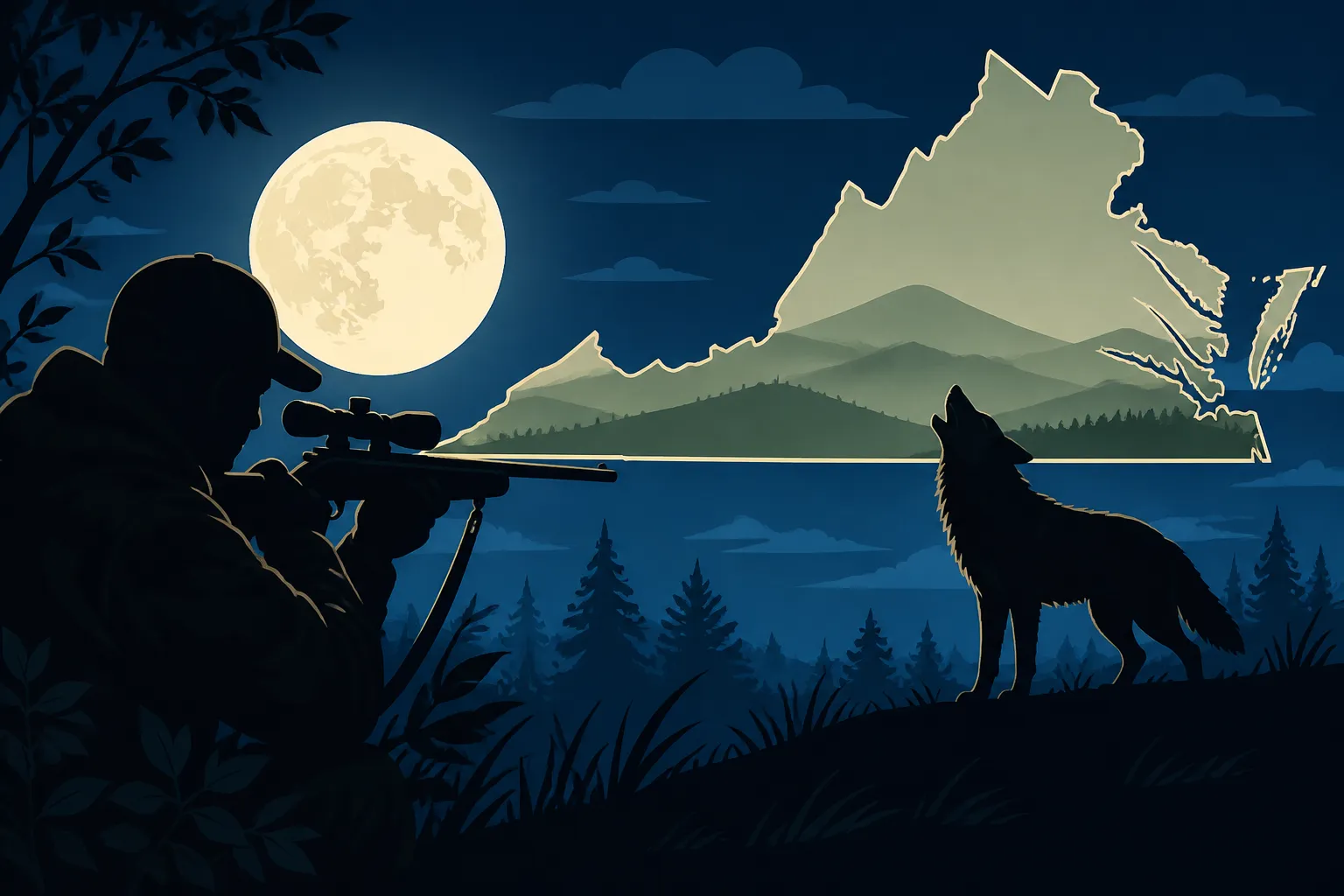
For many Virginia landowners and hunters, the incessant problem of coyote predation on deer, turkeys, and even livestock can feel like a relentless battle. It's a real frustration to see fawn recruitment suffer or smaller game populations decline, and often, the most effective time to address these cunning predators is under the cover of darkness. This guide aims to clear up the often-confusing rules around night hunting coyotes in Virginia, helping you understand the legal landscape, permitted methods, and critical safety considerations to effectively manage these adaptable canines.
Understanding Virginia's Night Hunting Regulations for Coyotes
Navigating the rules for hunting after dark can be tricky, especially when it comes to a specific species like coyotes. Unlike deer or turkeys, which have strict daylight hunting hours, coyotes are often more active at night, making evening hours a prime time for management. However, the Virginia Department of Wildlife Resources (DWR) has specific regulations that dictate what you can and cannot do, and these rules are primarily designed with public safety and fair chase in mind. It's not a free-for-all, and understanding the nuances is key to staying legal and safe.
General Legal Framework for Coyote Hunting
First things first: coyotes are considered a nuisance species in Virginia, and as such, they have very liberal hunting regulations compared to other game animals. This means no closed season on private lands and no daily bag limit. This flexibility is a direct response to their increasing population and the impact they have on native wildlife and agricultural interests. However, even with these relaxed rules, the method of take, especially at night, is where things get specific. You can hunt coyotes year-round on private land during daylight hours with standard hunting methods. The game changes significantly once the sun goes down, and that's where many hunters get confused or run afoul of the law. You can't just apply your daytime hunting license and tactics to night hunting without understanding the added layers of regulation.
One of the most crucial distinctions is between hunting on private land versus public land. The vast majority of night hunting for coyotes in Virginia occurs on private property because public lands, like our National Forests or Wildlife Management Areas (WMAs), typically have much stricter, if not outright prohibitory, rules against hunting after legal daylight hours. Before you even think about heading out after dark, it’s imperative to confirm the specific regulations for your intended hunting spot. The DWR website is your best friend here, but sometimes an app like GoHunt, with its detailed public land overlays and regulation summaries, can make checking these critical boundaries and rules a lot quicker and more intuitive, especially when you're in the field.
Specifics of Night Hunting on Private Land
For those with access to private land, night hunting for coyotes becomes a viable option, but it still comes with a very specific set of requirements. The main hurdle is the use of artificial lights. Virginia law generally prohibits the use of artificial lights to cast a beam upon a wild animal, with some very specific exceptions. Coyotes fall under one of these exceptions, but only under certain conditions.
You are allowed to use an artificial light to hunt coyotes on private land at night, provided you also have an electronic call (sometimes referred to as an "electronic predator call"). This combination is critical. You cannot simply spot a coyote with a light and shoot it; the electronic call must be actively in use. This regulation is designed to prevent "spotlighting" of other animals, particularly deer, and ensures that hunters are actively engaging in predator calling, rather than just cruising fields looking for eyes. The light can be attached to your firearm or used separately. This is a common point of confusion, so let's be clear: electronic call and artificial light. Without the call, your light is illegal for hunting.
It's also worth noting that Sunday hunting for coyotes is generally permitted on private land in Virginia, even at night. This is another area where coyote rules differ from big game, offering hunters more flexibility. However, always double-check local ordinances, as some very specific county rules might occasionally apply, though these are rare for coyotes. Always carry your valid Virginia hunting license, even when predator hunting, as it's a fundamental requirement for any hunting activity. You can review Virginia's standard license options by checking out our guide on Virginia Hunting Licenses and What They Cost.
Permitted Methods and Equipment for Night Coyote Hunting
Once you're clear on the legal framework, the next step is to understand what tools and tactics are most effective and, more importantly, legal, for night hunting coyotes. This isn't your grandfather's deer rifle in a treestand setup; night hunting demands specialized gear and a different approach. The goal is to maximize your chances of success while adhering strictly to DWR regulations, especially concerning lights and calling devices.
Artificial Lights and Electronic Calls
As we just discussed, the electronic call is the lynchpin for legal night hunting of coyotes with artificial light on private land. These calls mimic a variety of prey animals (like rabbits in distress, fawn bleats, or bird distress calls) or even other coyote vocalizations. The idea is to draw the coyote into range, allowing you to use your light for target acquisition. Brands like Foxpro and Primos are popular choices, offering a wide array of sounds and often remote-control operation, which is incredibly useful for setting the call away from your position to draw the coyote's attention elsewhere.
When it comes to artificial lights, the options are plentiful. You can use handheld spotlights, headlamps, or weapon-mounted lights. Many night hunters prefer weapon-mounted lights because they illuminate exactly where your firearm is pointed, simplifying target acquisition in the dark. Red or green lights are often favored over white light as they are believed to be less alarming to coyotes, though there's ongoing debate among hunters about their true effectiveness. Some even integrate thermal optics, though their use is governed by slightly different rules, which we'll touch on later. Whatever light you choose, ensure it's robust enough to handle recoil if weapon-mounted and has sufficient battery life for your hunt.
Firearm and Ammunition Choices
For coyotes, especially at night, shot placement is paramount. You want a firearm that offers good accuracy and sufficient knockdown power to ensure a quick, ethical kill. Many hunters opt for popular rifle calibers like .223 Remington, .22-250 Remington, or .204 Ruger. These cartridges offer flat trajectories and high velocities, which are excellent for coyotes that might respond quickly to calls and present fleeting targets. The .223, for instance, is highly versatile and offers a good balance of accuracy, availability, and recoil management. For those who prefer shotguns, especially in areas with thicker cover or where shots will be closer, a 12-gauge loaded with buckshot or heavy predator loads can be very effective.
Consider the terrain you'll be hunting. In open fields, a flatter-shooting rifle is often the best choice, but in brushier areas, a shotgun might be more appropriate. Always consider your backdrop and know your safe zone of fire, especially at night when visibility is limited to what your light illuminates. If you're pondering specific rifle options, our guide on Rifle Setups for Virginia Deer Hunting might offer some relevant insights into calibers and optics, though specific coyote rounds would differ.
Other Essential Gear
Beyond the lights, calls, and firearms, several other pieces of gear are crucial for a successful and safe night hunt.
- Optics: While lights illuminate the target, good binoculars (even low-power ones) or a monocular can help you scan the darkness for eyes before turning on your brighter shooting light. Thermal monoculars are becoming increasingly popular for initial scanning, as they can detect heat signatures well beyond what a visible light can illuminate, without spooking game. However, using thermal for shooting is still restricted by specific DWR regulations, so verify current rules before considering a thermal scope.
- Camouflage and Scent Control: Just because it's dark doesn't mean coyotes can't see or smell you. They have incredibly keen senses. Dark clothing or camouflage is still important for breaking up your outline, and scent control measures (sprays, carbon clothing) can help minimize your human odor, especially if the wind shifts.
- Safety Gear: This is non-negotiable. Always carry a reliable headlamp with red light options for navigating to and from your stand without blowing out your night vision. A first-aid kit, fully charged cell phone (though don't rely solely on it for navigation if cell service is spotty), and perhaps a two-way radio if hunting with a partner are also vital.
- Mapping Tools: Even on familiar private land, knowing your exact position, property lines, and potential shooting lanes is critical at night. An app like GoHunt can be invaluable here, allowing you to mark stand locations, property boundaries, and potential travel corridors for coyotes. This digital mapping capability helps you stay oriented and safe, especially when focused on a responding coyote. You can even pre-load maps for areas with no cell service.
Here's a quick reference table for commonly used night hunting gear:
| Equipment Type | Specific Examples | Virginia Legality (Private Land, Night) | Notes |
|---|---|---|---|
| Firearms | .223, .22-250, .204 rifles, 12-gauge shotgun | Legal | Ensure sufficient caliber for humane kill; check local ordinances. |
| Ammunition | Varmint rounds, buckshot, predator loads | Legal | Use appropriate loads for target and range. |
| Artificial Lights | Weapon-mounted lights, spotlights, headlamps | Legal with electronic call | Red/green light often preferred; must be used with an e-call. |
| Electronic Calls | Foxpro, Primos, ICOtec | Legal | Required to use artificial light for hunting coyotes at night. |
| Optics | Binoculars, thermal monoculars (scanning) | Legal for scanning, check DWR for shooting | Thermal scopes for shooting may have specific restrictions. |
| Camouflage/Scent | Dark clothing, scent sprays, carbon suits | Recommended | Coyotes have excellent vision and smell. |
| Safety | Headlamp, first-aid kit, fully charged phone | Essential | Never compromise on safety. |
| Mapping | GPS unit, GoHunt app, paper maps | Recommended | Critical for navigation, property lines, and stand marking at night. |
Safety and Ethical Considerations for Night Hunting
Hunting at night introduces a whole new layer of safety considerations that daylight hunting doesn't. Visibility is drastically reduced, and it's easy to become disoriented or make mistakes if you're not meticulous in your planning and execution. Beyond safety, maintaining ethical hunting practices is crucial, ensuring a quick, clean kill and respecting the animals you pursue.
Identifying Your Target and Backdrop
This is arguably the most critical safety rule for night hunting: positively identify your target and know what's beyond it. In the darkness, eyeshine from a coyote can look similar to other animals, or even reflections. Never, ever shoot at just eyeshine. You must confirm it's a coyote before squeezing the trigger. This is where your powerful light comes into play, giving you a clear view of the animal. Sweep the area with your light, confirm the animal's identity, and ensure there are no unintended targets in your line of fire.
Furthermore, always be aware of your backdrop. Are there buildings, roads, livestock, or other hunters behind your target? Night obscures these details, so thorough scouting during daylight hours is non-negotiable. Use your GoHunt app or other mapping tools to mark potential hazards or no-shoot zones. A bullet travels a long way, and at night, that distance feels even more unpredictable. This vigilance is even more important if you're hunting near suburban areas, a practice that's becoming more common as coyotes adapt to human proximity.
Communication and Hunting with Partners
If you're hunting with a partner or a group, clear and consistent communication is paramount. Establish hand signals or verbal commands for identifying targets, signaling "safe" or "stop," and confirming positions. Two-way radios are excellent for this, as they allow for discrete communication without shouting and potentially spooking game or alerting others. Always know where your hunting partners are located, and maintain a safe zone of fire away from them. Never swing your firearm across another hunter. Discuss your plan before you head out: who will call, who will shoot, where everyone will be positioned, and what to do in case of an emergency. Our guide on Deer Drives With Three or Four Hunters emphasizes the importance of communication in group settings, and those principles apply equally, if not more so, to night hunting.
Minimizing Disturbance and Respecting Landowners
While coyotes are a nuisance species, respecting the land you're hunting on and minimizing disturbance to neighbors is a sign of a responsible hunter. Be mindful of noise, especially if you're using loud firearms. Avoid shining lights into homes or across public roads. If you're on private land, ensure you have explicit permission from the landowner for night hunting and understand any specific requests they might have, such as areas to avoid or times to refrain from shooting. Being a good steward of the land and a respectful neighbor helps ensure future hunting opportunities for everyone. For tips on gaining access, refer to Getting Private Land Permission in Virginia.
What to Do After the Shot
After you've taken a shot at a coyote, proceed with caution. Just like any other animal, a wounded coyote can be dangerous. Give the animal time before approaching, and do so with your light on and your firearm ready. Follow up any blood trails with your light, which will reveal details that would be invisible in total darkness. If you lose the trail, mark your last known spot in your GoHunt app and consider returning in daylight, if conditions allow and it's safe to do so. Our guide on Blood Trailing After Dark in Virginia offers valuable advice that applies directly to this situation, emphasizing patience and methodical searching. Even with coyotes, a clean, swift recovery is part of ethical hunting.
Public Land Night Hunting Restrictions
It's critical to reiterate that night hunting for coyotes (or any animal with artificial lights) is generally prohibited on public lands in Virginia, including state forests, national forests like the George Washington and Jefferson National Forests, and most Virginia Wildlife Management Areas. These areas have specific legal hunting hours, typically from one-half hour before sunrise to one-half hour after sunset. There are rare exceptions for specific, DWR-approved management programs, but these are highly regulated and not open to the general public. Always consult the DWR regulations specific to the public land unit you intend to hunt. Assuming that private land rules apply universally is a common and costly mistake. For detailed information on specific public areas, you can always check out guides like Public Hunting Land in Virginia or George Washington National Forest Hunting.
Understanding these rules and best practices ensures not only your safety and legal compliance but also contributes to the positive perception of hunters in Virginia. Night hunting can be a challenging but rewarding way to manage coyote populations effectively when done correctly.
Disclaimer
The information provided in this guide is for general informational purposes only and does not constitute legal advice. Hunting regulations in Virginia can change frequently. It is the hunter's responsibility to consult the most current Virginia Department of Wildlife Resources (DWR) regulations and all applicable local ordinances before engaging in any hunting activity. Always prioritize safety and ethical hunting practices.