Running a Trapline in Rural Virginia
Venturing into the world of trapping in rural Virginia can feel like stepping back in time, connecting with a tradition that's as old as the hills themselves. But let's be honest, in today's landscape, it's not as simple as just grabbing a trap and heading into the woods. Navigating the maze of regulations, understanding ethical practices, and knowing where to even begin can be incredibly frustrating. This guide is here to cut through the confusion, offering a realistic, in-depth look at running a successful and responsible trapline across the Old Dominion.
Understanding Virginia's Trapping Regulations and Ethics
Before you even think about setting steel, it’s absolutely paramount to get a firm grasp on Virginia’s trapping regulations. These aren't just suggestions; they're the law, and they're designed to ensure both the sustainability of furbearer populations and the responsible conduct of trappers. Ignoring them can lead to hefty fines, loss of privileges, and a black eye for the trapping community as a whole. It's a journey that requires diligence and a commitment to doing things the right way.
Licensing Requirements and Seasons
The first step in any legal trapping endeavor in Virginia is securing the proper licenses. It's not a "one-size-fits-all" situation, so you'll need to understand what applies to you. For residents, a basic hunting license is often a prerequisite, and then you'll need a specific trapping license. Non-residents face slightly different fee structures. You can easily purchase these through the Virginia Department of Wildlife Resources (DWR) website, or through authorized vendors. Always keep proof of your licenses on your person when afield; a digital copy on your phone through an app like the Go Outdoors Virginia app often suffices, but a physical copy never hurts.
Beyond licenses, understanding season dates is critical. Trapping seasons in Virginia are generally structured around furbearer populations and breeding cycles, aiming to maximize pelt quality while ensuring healthy numbers for the future. For instance, the season for foxes and bobcats typically runs from October through February, but these dates can shift slightly year-to-year or even by county. You’ll find specific details on the DWR website. Knowing these windows is essential to avoid accidental catches out of season, which can lead to legal issues. You'll need to check the official Virginia DWR Hunting & Trapping Regulations yearly, as dates and rules are subject to change. For a deeper dive into specific furbearer seasons, check out articles like "Virginia Fox and Bobcat Trapping Season" and "Virginia Raccoon Season Dates" for current dates.
Legal Sets and Permitted Equipment
Virginia DWR has specific rules about the types of traps you can use, where you can set them, and how often they must be checked. Generally, snares are permitted for certain species under specific conditions, and foothold traps (leg-holds) are a common tool, but they have size restrictions. For example, foothold traps are usually limited to certain jaw spreads for land sets to prevent injury to larger, non-target animals like deer or bears. Conibear traps (body-gripping traps) are also widely used, particularly for semi-aquatic furbearers like beaver and muskrat, but they often have restrictions on where they can be set, especially near public roads or paths, to prevent accidental entanglement of pets or people.
One of the most crucial regulations is the daily trap check. In Virginia, all traps must be visited at least once every 24 hours. This isn't just a rule; it's a fundamental ethical practice. It minimizes the stress and suffering of caught animals and allows for quick dispatch or release of non-target species. Imagine catching a valuable bobcat only to have it perish in the trap due to exposure or predation because you didn't check your line. Beyond the legal mandate, it's simply good husbandry. Additionally, traps set on land must typically be tagged with the trapper’s DWR identification number. This ensures accountability and allows wildlife authorities to identify the owner if there are issues or questions. Understanding these nuances, including the specific "Virginia Muskrat and Mink Trapping Trends" can help you choose the right gear.
Ethical Considerations and Best Practices
Trapping isn't just about adherence to the law; it's also about a deep respect for the animals you pursue and the environment you operate in. Ethical trapping practices go beyond the written rules and delve into the spirit of responsible wildlife management. One of the most important aspects is target selectivity. Modern trappers often utilize methods and trap types that are highly selective for the intended furbearer, reducing the likelihood of catching non-target animals. For example, a properly set dirt-hole set with appropriate lure is very effective for fox and coyote, while a specific cubby set is ideal for raccoons, minimizing risks to other species.
Another critical ethical consideration is the humane dispatch of animals. Trappers are expected to quickly and humanely dispatch any legally caught animal. This often involves a single, well-placed shot from a small-caliber firearm or a swift blow to the head, ensuring minimal suffering. Furthermore, if you catch a non-target animal, such as a domestic dog or cat, you are ethically and legally obligated to release it unharmed if possible. This means carrying tools for safe release, like a catchpole. Beyond the immediate act of trapping, ethical trappers strive to minimize their impact on the landscape. This includes leaving no trash, camouflaging sets effectively, and avoiding damage to private property. Using mapping tools like the ones available through GoHunt can help you plan your line to minimize disturbance in sensitive areas and ensure you're on legal ground.
| Species | Primary Season (General) | Recommended Trap Types | Check Frequency | Notes |
|---|---|---|---|---|
| Raccoon, Opossum, Skunk | Oct. – Feb. | Foothold (No. 1.5-2), Cage traps, DPs (Dog Proof) | Every 24 hours | Often found near water, field edges, and suburban areas. DPs are excellent for minimizing non-target catches. |
| Fox (Red/Gray) | Oct. – Feb. | Foothold (No. 1.5-1.75), Enclosed foothold | Every 24 hours | Dirt hole sets and flat sets are common. Require good scent control. |
| Bobcat | Oct. – Feb. | Foothold (No. 1.75-3), Snare | Every 24 hours | Often found in more remote, brushy areas. Blind sets and cubbies can be effective. |
| Beaver | Nov. – Mar. | Conibear (330), Snare, Foothold (No. 3-4) | Every 24 hours | Aquatic sets are most common. Requires specialized knowledge of beaver behavior and dam/lodge structures. |
| Muskrat, Mink | Nov. – Mar. | Conibear (110, 160), Foothold (No. 1-1.5) | Every 24 hours | Found in marshes, streams, and ponds. Requires careful water sets. |
Note: Always consult the current Virginia DWR Hunting & Trapping Regulations for exact dates, county-specific rules, and legal trap sizes, as these are subject to change.
Scouting and Setting Up Your Trapline in Rural Virginia
Once you've got your licenses and a solid understanding of the regulations, the real adventure begins: scouting. This isn't just a casual stroll through the woods; it's a methodical detective process that lays the groundwork for a successful trapline. A poorly scouted line is a wasted effort, leading to frustration and empty traps. You've got to think like the furbearers you're pursuing, anticipating their movements and identifying the natural funnels and food sources that dictate their daily lives.
Identifying Prime Furbearer Habitat
Understanding what makes good furbearer habitat is the cornerstone of effective trapping. Each species has its preferences, but there are some common denominators. Think about water sources – creeks, rivers, ponds, and swamps are magnets for muskrats, mink, and raccoons. Look for sign along these waterways: tracks in the mud, scat on logs, disturbed vegetation, or even denning sites under banks. For canines like fox and bobcat, look for edges: where fields meet woods, old logging roads, powerline cuts, or the fringes of clear-cuts. These areas provide cover, travel corridors, and access to prey. The "Virginia Coyote Hunting Season Status" is a good read, as coyotes often share similar habitats with other canines.
Beyond general habitat, zoom in on specific "pinch points" or travel corridors. These are areas where the landscape funnels animals into a smaller space, increasing the likelihood they'll encounter your trap. This could be a narrow strip of woods between two large fields, a fence line, or a fallen log crossing a small stream. Pay close attention to food sources too; persimmon patches for opossums and raccoons, or areas with high rodent populations for foxes. Aerial maps, readily available through apps or services like GoHunt, are incredibly valuable for identifying these features from a bird's-eye view, helping you visualize potential travel routes before you ever step foot on the ground. This kind of detailed scouting is similar to what you'd do when "Reading Aerial Photos for Piedmont Deer," looking for those subtle clues from above.
Choosing the Right Trap Locations
Once you've identified prime habitat, the next challenge is selecting the exact spot for each trap. This is where art meets science. For foothold traps targeting canines, a classic "dirt hole set" mimicking a rodent den is highly effective. You'll want to place this set near a game trail, at the base of a tree, or along an edge where you've found fresh sign. The key is subtlety and blending the set into the natural environment. For raccoons, a "cubby set" using a small, enclosed space with bait works wonders, often placed near water or along a field edge. Dog-proof (DP) traps, designed to exclude non-target animals, are also excellent for raccoons and can be set directly along trails or under low-hanging branches.
When choosing a location, consider the prevailing winds. You want your lure or bait scent to carry downwind into an animal's travel path. Also, think about concealment; camouflage your traps and disturb the area as little as possible. For aquatic furbearers like beaver, understanding their dam and lodge structures is paramount. Conibear traps are often placed in channels where beavers swim through, or at "slides" where they exit the water. Remember, public land trapping may have additional restrictions on where you can place traps. Even on private land, ensure you have explicit permission from the landowner, as detailed in "Getting Private Land Permission in Virginia," and always respect property boundaries.
The Importance of Trap Preparation and Scent Control
You've got your locations picked out, but setting a trap straight out of the box is a recipe for failure, especially for wary furbearers. Trap preparation is a meticulous process that removes human scent and conditions the metal. New traps should be degreased by boiling them in a lye solution or dish soap, then dyed (often with logwood dye) and waxed. The dye helps camouflage the trap, and the wax protects it from rust and further seals in the absence of human odors. This process also ensures the trap fires smoothly and reliably, even in cold or wet conditions.
Scent control extends beyond just the traps themselves. When you're setting your line, wear clean gloves and dedicated trapping clothes. Avoid smoking, using strong colognes, or anything that could leave an unnatural odor at your set. Carry all your tools, bait, and lure in a dedicated trapping bucket or bag. Even your boots can carry scent, so consider washing them thoroughly or wearing rubber boots when checking and setting traps. For sensitive species like fox and bobcat, any unnatural scent can cause them to skirt your set. Thinking about the subtle ways animals detect danger, like described in "Reading Virginia Mud for Fresh Deer Movement," can help you appreciate how crucial scent control is in trapping.
Targeting Common Furbearers and Managing Your Line
Once your trapline is set, the real work begins: maintaining it daily and understanding the specific behaviors of the furbearers you're targeting. This isn't a "set it and forget it" endeavor; it requires consistent effort, observation, and adaptability.
Strategies for Raccoon, Opossum, and Skunk
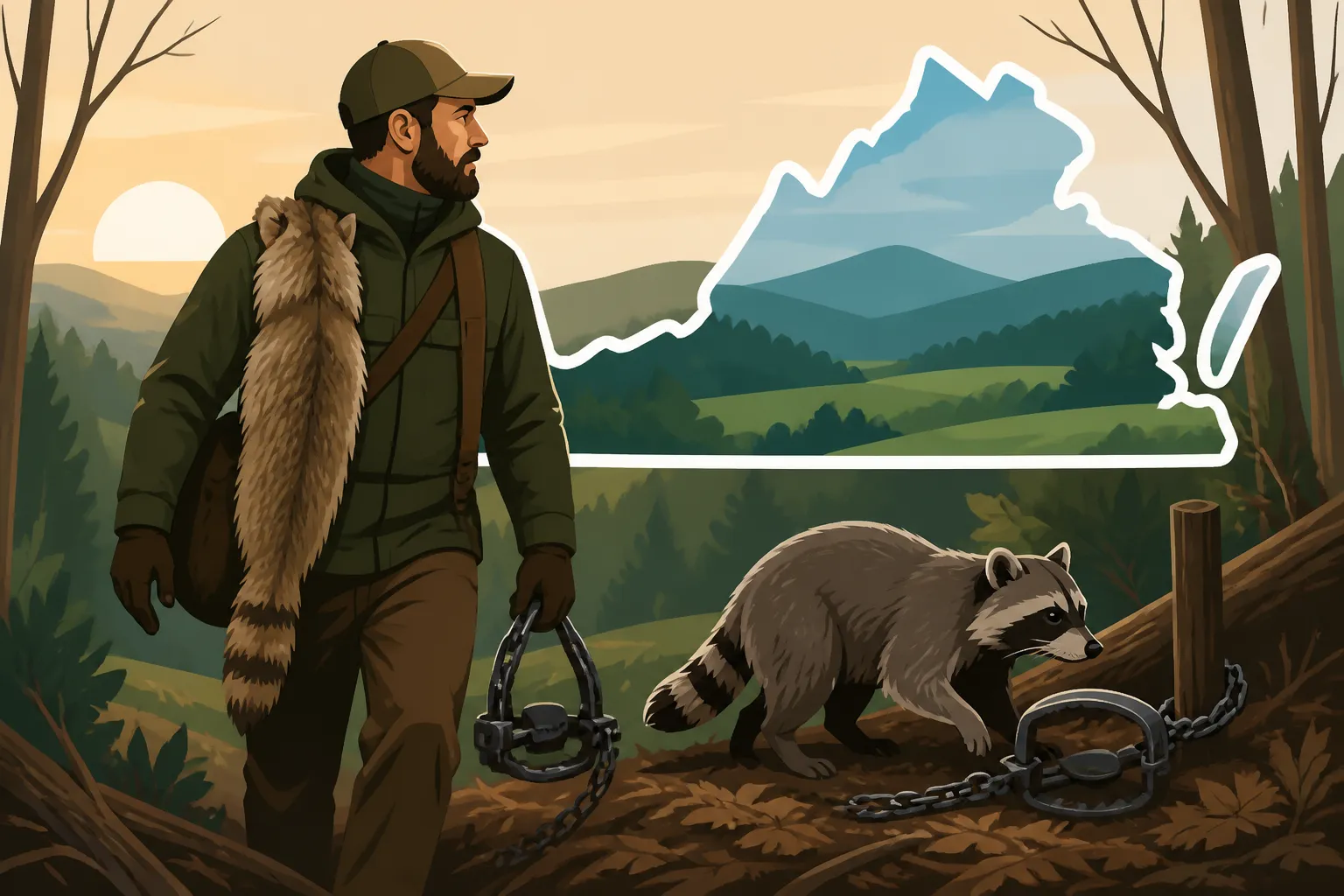
These three species are often found in similar habitats across rural Virginia, especially near water sources, agricultural fields, and even the fringes of suburban areas. Raccoons, with their insatiable curiosity and love for sweet treats, are relatively easy to catch. Dog-Proof (DP) traps, like the popular Duke or Coon Dagger brands, are excellent for raccoons. Bait them with marshmallows, dry cat food, or commercial Coon Catcher lures. Place DPs along creek banks, field edges, or near culverts. Cubby sets with sardines or fruit are also highly effective.
Opossums are opportunistic scavengers and will readily enter almost any set intended for raccoons or fox. They are less wary, making them a common incidental catch. Skunks, while a less desirable catch due to their potent defense, are also common around farmsteads and wooded edges. For both opossums and skunks, the same baits and trap types used for raccoons will often work. However, when dealing with skunks, consider setting cage traps if you wish to minimize scent dispersal upon dispatch. If you do catch a skunk in a foothold, approach it cautiously and humanely dispatch it quickly from a distance to minimize the chance of being sprayed. Learning "Virginia Opossum and Skunk Trapping" can refine your approach to these ubiquitous species.
Tactics for Fox and Bobcat
Foxes (both red and gray) and bobcats are more challenging and require a higher degree of skill and attention to detail. These animals are naturally more wary and have an excellent sense of smell. For foxes, the classic dirt hole set is king. Dig a small hole at an angle, place bait (sardines, commercial predator bait, beaver castor) at the back, and carefully bed a foothold trap (size 1.5-1.75) about 6-8 inches in front of the hole. Use a sifter to cover the trap and chain with fine dirt, blending it seamlessly into the surroundings. Lure, such as a strong gland lure or urine, is typically applied above the hole to draw their attention.
Bobcats, while sometimes caught in dirt hole sets, often respond better to more visual sets and those designed for their natural curiosity and predatory instincts. Rub sets (where a visual attractant like feathers or fur is hung above the set) and cubby sets with a large chunk of meat are highly effective. Foothold traps (size 1.75-3) are commonly used. Bobcat travel heavily along ridge lines and through thick cover, so placing sets in natural funnels or along game trails in dense sections of the George Washington National Forest or Jefferson National Forest can be particularly productive. Patience, impeccable scent control, and a deep understanding of their movements are crucial for consistently catching these elusive furbearers. More detailed strategies can be found in "Virginia Fox and Bobcat Trapping Season."
Daily Line Checks and Animal Care
This cannot be stressed enough: daily trap checks are mandatory in Virginia and are the cornerstone of ethical trapping. Every single trap on your line must be visited at least once every 24 hours, ideally at first light. This allows you to quickly dispatch any caught animals, minimizing their stress and exposure to the elements or predators. It also allows you to release any non-target animals that may have been caught.
When approaching a set, do so quietly and observe from a distance first. If you have an animal in the trap, approach carefully and calmly. For furbearers intended for harvest, a quick and humane dispatch is vital. For non-target animals, such as domestic dogs or cats, you must attempt to release them unharmed. Carry a catchpole or a sturdy stick to safely restrain the animal for release. After dispatching an animal, quickly process it to prevent spoilage, especially if temperatures are warm. This includes skinning and cooling the pelt. Always re-bait and re-set your traps carefully, ensuring they are camouflaged and functioning correctly. Over time, you'll develop a routine, learning to read the land and adjust your sets based on animal movement and weather conditions, embodying the traditional knowledge of a seasoned trapper.
Disclaimer
Please be aware that hunting and trapping regulations in Virginia can change. This article provides general information and should not be considered a substitute for the official Virginia Department of Wildlife Resources (DWR) regulations. Always consult the most current DWR rulebook and local ordinances before engaging in any hunting or trapping activities. Safety and ethical conduct are paramount.