Roost Hunting Virginia Gobblers
There are few things more frustrating in spring turkey hunting than busting your butt for hours, hearing nothing, or getting hung up by a tom that just won't commit. Virginia gobblers, especially those that have been pressured a bit, can be incredibly cagey on the ground, making it feel like you're playing a game of chess against a master. But what if you could tip the scales in your favor right from the start? This guide is all about mastering the art of roost hunting in Virginia, giving you the upper hand by knowing exactly where that bird is before he even thinks about flying down. We'll dive deep into everything from scouting to silent approaches, helping you get set up for success before the first rays of dawn even paint the sky.
Understanding Virginia Gobbler Roosting Behavior
Before you can effectively hunt a gobbler on the roost, you really need to understand why and how they choose their overnight accommodations. It's not just random; there's a method to their madness, driven by survival and comfort. Virginia's diverse landscape, from the sprawling hardwoods of the mountains to the dense pine thickets of the Piedmont and Tidewater, offers a variety of roosting options, and understanding these can make all the difference.
Why Gobblers Roost Where They Do
Gobblers are smart, and their roosting choices are primarily about safety and visibility. Think of it from a turkey's perspective: when you're perched high above the ground, you're relatively safe from most nocturnal predators like coyotes, bobcats, or even foxes, which are serious threats once the sun goes down. They want to be able to see and hear anything approaching from a distance, giving them ample warning to make a quick escape or simply stay put and undetected.
Beyond predator avoidance, visibility from the roost is also key for locating hens and other gobblers come morning. A dominant tom wants to be heard, and he wants to hear what other birds are doing around him. They often choose a spot that offers a good vantage point, allowing their morning gobble to carry as far as possible. This can mean a tree on a ridge point, overlooking a valley, or a tall pine near a creek bottom where sound travels well. The terrain plays a massive role here, with birds in mountainous regions often preferring high benches or spurs, while those in flatter agricultural areas might pick the tallest tree in a woodlot or along a river.
Preferred Roost Trees and Locations
While turkeys aren't overly picky about species, certain trees and locations consistently prove more popular. In much of Virginia, particularly in the western and central parts of the state, mature hardwoods like oaks, maples, and poplars are prime candidates. They offer strong, horizontal limbs for comfortable perching, and their bare branches in early spring provide excellent visibility. In the eastern and southern parts, or in areas with managed timber, tall pines are often favored. Their dense needles offer a bit more concealment, and their sheer height can provide that crucial safety advantage.
Beyond the specific tree, the location within the landscape is paramount. Creek bottoms and river corridors are classic roosting areas because they often feature the largest, oldest trees, and water sources are attractive to turkeys. Ridge lines and prominent points, especially those that drop off sharply, provide that commanding view gobblers crave. Imagine a big oak on the edge of a steep hollow – that's a turkey's penthouse suite. These spots offer thermal advantages too, especially on cold spring mornings, as warm air tends to settle in lower areas, while ridge tops catch the first light and warmth. This understanding of "Where Virginia Gobblers Roost" is foundational to successful roost hunting.
Seasonal Shifts in Roosting Habits
Turkey behavior, including roosting, isn't static; it shifts throughout the spring season. Early in Virginia's spring turkey season, when the weather can still be fickle with cold snaps and even late snows, gobblers might stick to more sheltered areas. They might favor dense cedar thickets or the leeward side of a ridge where they're protected from harsh winds. As the season progresses and the weather warms, birds tend to spread out more and become a bit less predictable, often roosting closer to open fields or strutting zones where hens are likely to gather.
Rain and wind are significant factors. On windy nights, turkeys will often roost lower in the trees or in more sheltered spots to avoid being buffeted. A heavy rain might drive them into denser cover, seeking protection from the elements. Conversely, a clear, calm evening is ideal for them to use those high, exposed roosts where their calls carry farthest. Understanding these nuances is crucial because a spot that was hot on opening day might be cold a week later due to a weather change or shifting hen patterns. Always consider the current conditions and how they might influence a gobbler's overnight choice.
Pre-Season Scouting for Roost Sites
You've heard the saying: "You can't shoot 'em from the couch." Well, you also can't roost hunt 'em effectively without some serious pre-season legwork. This isn't just about finding a turkey; it's about finding their turkey, specifically where they're bedding down for the night. The more detailed your scouting, the higher your chances of getting into position for that perfect morning set-up.
Utilizing Topographic Maps and Aerial Imagery
Long before you ever set foot in the woods, the best scouting begins at home with maps. Topographic maps reveal elevation changes, ridges, hollows, and benches – all key features for turkey roosting. Look for areas with sharp drops, prominent ridge fingers, or creek bottoms with mature timber. Aerial imagery, available through tools like GoHunt, is an absolute game-changer. You can zoom in and identify specific large trees, discern hardwood stands from pine plantations, and spot potential travel corridors, old logging roads, or field edges that turkeys might frequent. I often spend hours poring over these maps, marking potential roost sites on my phone's GPS, creating a mental picture of the terrain. The goal is to identify areas that offer a combination of safety, visibility, and proximity to feeding or strutting grounds. Using a tool like "Scouting With the Virginia DWR App" or GoHunt can help you overlay public land boundaries, which is critical if you're hunting on national forests or WMAs.
On-the-Ground Reconnaissance
Once you've identified promising areas on your maps, it's time to hit the woods. This is where you confirm your suspicions and gather real-world intel. Look for physical signs: turkey droppings (often abundant under active roost trees), shed feathers, and scratch marks on the forest floor, indicating where they've been feeding. Roost trees often have larger droppings and sometimes whitewash on the branches or trunk from years of use. This isn't just about finding any sign; it's about finding fresh sign that indicates current use.
Walk the ridge lines and creek bottoms you marked on your maps, paying close attention to the largest trees. Imagine yourself as a turkey; where would you feel safe and comfortable for the night? Listen for the subtle sounds of the woods. Sometimes, you'll hear turkeys clucking or yelping softly as they fly up to roost in the evening, even if you don't hear a full gobble. This on-the-ground confirmation is invaluable because maps can only tell you so much. If you find a promising area, make a note of the exact coordinates and any distinctive landmarks that will help you navigate in the pre-dawn darkness.
Listening for Gobbles at Dawn and Dusk
The most definitive way to locate an active roost is by listening. This is the cornerstone of effective roost hunting. In the weeks leading up to the season, and certainly during the hunt itself, make regular trips to your scouting areas around dawn and dusk. Drive or walk quietly to a good listening point before first light, then simply wait and listen. Gobblers will often gobble a few times from the roost just before flying down, and again once they hit the ground. Similarly, in the evening, they'll often gobble once or twice as they fly up to their roost tree.
It's helpful to use a locator call, like an owl hooter or a crow call, to shock a gobble out of them. A sharp, loud sound can often trigger a response, giving away their position. Be patient, stay still, and pay attention to direction and distance. Sometimes a distant gobble will get closer as a bird pitches down and moves your way, or it might stay put. This practice of "Calling a Virginia Gobbler Off the Roost" or even just to the roost can refine your understanding of their exact location. Remember, the goal isn't just to hear a gobble; it's to pinpoint the tree or cluster of trees they're using, giving you an advantage for a silent approach the next morning.
Executing the Roost Hunt: Morning Tactics
This is where the rubber meets the road. All that scouting, all that listening, culminates in the pre-dawn approach and set-up. Getting it right can lead to an unforgettable morning hunt; getting it wrong can send every bird in the vicinity running for cover. Stealth, timing, and understanding the bird's likely movements are paramount.
Silent Approach and Set-Up in the Dark
The alarm clock blares well before legal shooting hours, often hours before. Your success hinges on moving silently and deliberately in the pitch black. Before you even leave the truck, ensure your gear isn't clanking or rattling. Use a dim red headlamp (white light can spook game) to navigate, only turning it on when absolutely necessary. Plot your route the day before, noting any obstacles like downed trees or rocky patches. If you can, avoid walking directly under the roost tree you heard the night before. Approach from a direction that puts you between the roost and where you expect the bird to fly down or move towards.
The goal is to be set up at least 150-200 yards from the roost tree before any hint of dawn. This distance gives you space, prevents you from bumping the bird as he wakes up, and provides a buffer zone for him to pitch down into. Find a spot with good concealment – a big tree to lean against, a brush pile, or even a ground blind you set up in advance (check local WMA rules for ground blind regulations). Make sure you have a clear shooting lane in the direction you expect the gobbler to come from. Consider the wind direction; while turkeys don't have a great sense of smell, approaching from a direction where your scent could potentially drift to them is something to avoid if possible.
Calling a Virginia Gobbler Off the Roost
Once you're set up, it's a waiting game. As the sky lightens, listen for the first gobble. Often, it'll be a "tree gobble" – a call from the roost itself. Resist the urge to call too aggressively right away. A soft, subtle tree yelp or cluck, almost hesitant, can be incredibly effective. The idea is to make him think there's a hen nearby, just waking up, who might come to him. You don't want to make it easy for him to stay put and wait for you to come.
Patience is key. A gobbler on the roost often prefers to hear a hen close by and let her come to him. If he gobbles repeatedly and doesn't seem interested in flying down, a slightly more enthusiastic series of yelps can sometimes seal the deal. However, over-calling is a common mistake. If he's gobbling consistently, you've got his attention. Let him pitch down, then reassess. Sometimes the best call is no call at all, just letting the anticipation build. If you're hunting in areas with high pressure, like many of Virginia's public lands, too much calling from the get-go can make a gobbler wary. Knowing when to use different calls and how loud to be is a skill that comes with experience, but mastering the soft tree yelp is a great start. This is especially true when hunting during "Hunting the Morning-Only Early Turkey Period" where time is limited.
Post-Fly Down Strategy
The moment of truth: the gobbler flies down. This is often accompanied by wing beats and sometimes a final loud gobble as his feet hit the ground. What happens next depends entirely on where he lands and what he does.
Scenario 1: He pitches down close and in range. This is the dream. If he lands within shooting distance and you have a clear shot, take it. Don't hesitate. He could change his mind in an instant.
Scenario 2: He pitches down away from you, but in your direction. Keep calling softly. Let him work his way towards your position. Use subtle clucks and purrs to reassure him there's a hen there. Be prepared for him to circle wide, especially if he's been pressured. Sometimes, a well-placed decoy, like those discussed in "Decoy Placement for Pressured Virginia Birds", can help draw him into range.
Scenario 3: He pitches down away from you and moves in the opposite direction. This is tougher. If he's already committed to moving away, often towards real hens or a known strutting area, calling might not turn him. You have two main options:
* Attempt a quick move: If the terrain allows for a silent, fast repositioning to get ahead of him or to cut him off, it might be worth the risk. This is a very high-risk, high-reward move, only to be attempted by experienced hunters who know the land intimately.
* Let him go and try to set up on him later: Sometimes, the best move is to acknowledge he's gone and try to relocate him later in the morning when he's off his initial plan. You can use locator calls or simply listen for his gobble as he moves through the woods.
The key is adaptability. Turkeys are unpredictable, and no two fly-downs are exactly alike. Stay still, be patient, and react to the bird's behavior rather than trying to force him to do what you want.
Executing the Roost Hunt: Evening Tactics
While most hunters focus on the morning fly-down, the evening offers an equally valuable opportunity: pinpointing where a gobbler will be the next morning. Knowing a bird's exact roost tree provides a significant advantage, allowing for a precise, silent pre-dawn setup.
Locating Gobblers Before They Roost
Just as you listen at dawn, the late afternoon and early evening hours are prime time for locating gobblers as they prepare to roost. As the day cools down and shadows lengthen, turkeys often become more vocal. They'll start making their way towards their preferred roosting areas, sometimes gobbling as they go. This is your chance to slip into a good listening post, perhaps a high point overlooking a valley or a field edge, and listen intently.
Using locator calls, such as an owl hooter, crow call, or even a coyote howl, can be incredibly effective during this period. A sharp, loud sound can often provoke a "shock gobble" from a tom, giving away his position before he flies up. Don't be afraid to move a bit, listening from different vantage points until you get a fix on a gobble. The closer you can pinpoint his location before he flies up, the better. You're trying to home in on that exact tree or cluster of trees. Remember, the goal isn't to call him in to shoot him in the evening (which is illegal in Virginia), but purely to locate him for the following morning.
Observing the Fly-Up and Silent Exit
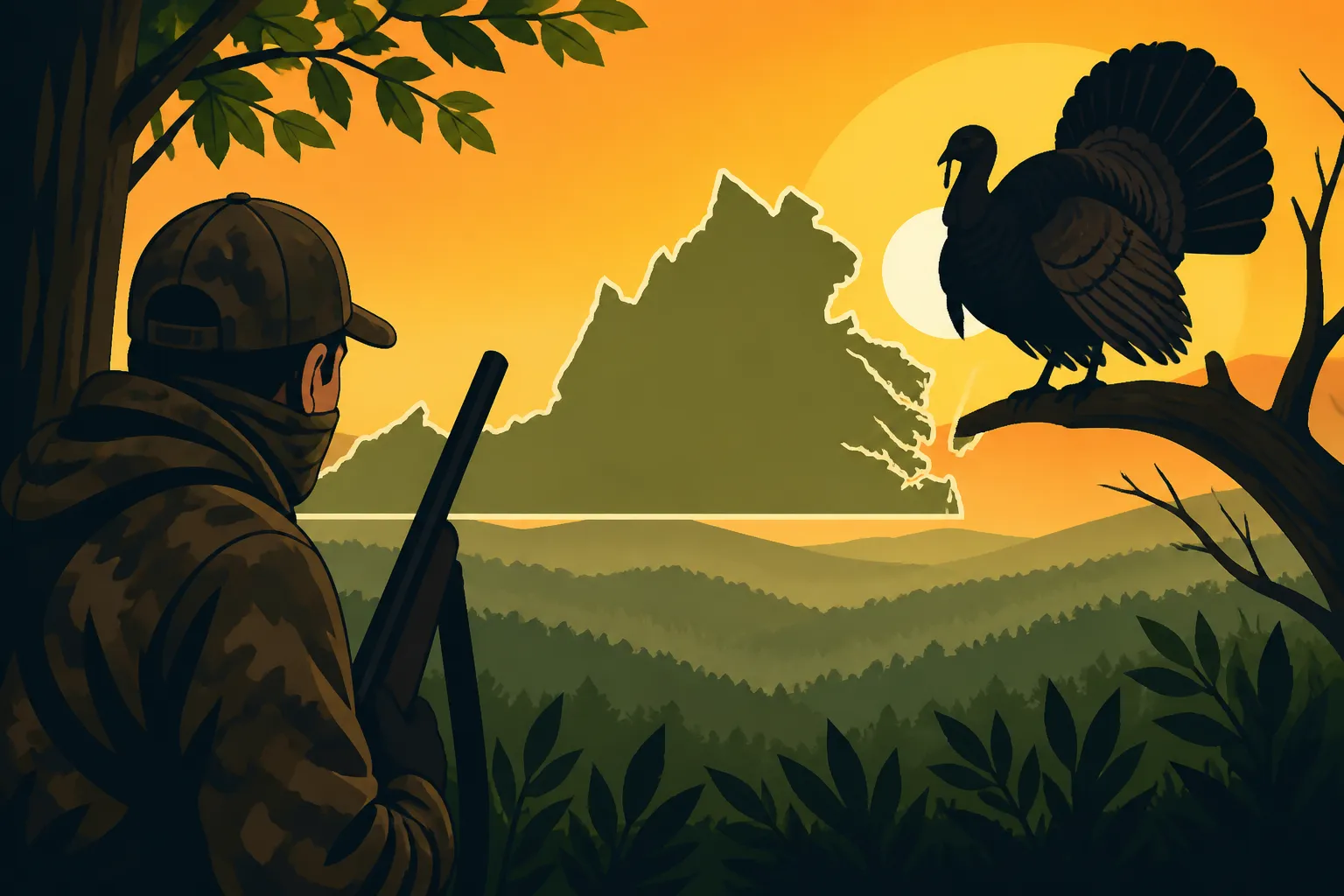
Once you've heard a gobbler (or multiple gobblers) in a general area, your objective shifts to observing his fly-up. Position yourself where you can see the general area, but remain undetected. Binoculars are invaluable here. Watch for the subtle movements as turkeys mill around the base of their chosen roost trees, often clucking or chirping softly before taking flight. The actual fly-up can be quite dramatic, with a burst of wingbeats as the bird ascends into the branches.
Once he's settled on the roost, often letting out a final sleepy gobble or two, it's time for the most critical part: the silent exit. You absolutely cannot spook that bird. If he knows you're there, he'll likely change roosts, or be incredibly wary the next morning. Pack up your gear carefully, making no noise. Use your headlamp on a red setting, or avoid it altogether if you know the terrain well enough. Walk slowly and deliberately, taking care not to snap twigs or kick rocks. This disciplined retreat is vital for ensuring your morning hunt is not compromised. You're leaving him undisturbed, allowing him to feel completely safe and settled for the night, unaware of the plan you're putting into action.
Planning for the Next Morning
With the gobbler successfully roosted and you safely back to your vehicle, the real planning for the next morning begins. Don't just go home and forget about it; this is prime time for strategizing. Open up your mapping app, like GoHunt, and mark the exact roost tree or cluster of trees you observed. Now, consider the approach for the morning.
- Entry Route: What's the quietest, most direct path to get to your setup location? Look for old logging roads, creek beds, or natural terrain features that provide cover. Avoid open fields or areas where noise will carry.
- Set-Up Location: Where will you position yourself? You want to be about 100-200 yards from the roost, ideally between the roost and where you expect the bird to fly down or travel towards. Consider prevailing winds, potential obstacles, and where you'll have clear shooting lanes. Look for a natural blind – a large tree, a brush pile, or even a slight rise in the terrain.
- Contingency Plans: What if he flies down in a different direction? What if he gobbles but doesn't move? Having a backup plan, even a simple mental one, can save precious minutes in the heat of the moment. This kind of detailed planning, sometimes incorporating knowledge from "Scouting Virginia Public Land Before Season", is what separates consistently successful roost hunters from those who leave it to chance. The more you visualize the next morning, the better prepared you'll be.
Essential Gear and Ethical Considerations for Roost Hunting
Roost hunting isn't just about stealth and strategy; it also requires the right tools and, perhaps even more importantly, a strong ethical compass. Being prepared with the right gear ensures you can execute your plan flawlessly, while adhering to ethical principles ensures you respect the game, the land, and your fellow hunters.
Optics, Calls, and Stealthy Apparel
Having the right gear is non-negotiable for effective roost hunting.
- Optics: A good pair of binoculars (8×42 or 10×42) is invaluable for glassing distant trees in low light to spot a roosted bird or confirm his identity. A rangefinder can also be useful for pinpointing exact distances to your planned setup spot and potential shooting lanes.
- Calls: While you won't be calling aggressively from the roost, having a variety of calls on hand is crucial for post-fly down strategies. A soft mouth call or slate call is excellent for subtle tree yelps and purrs. A loud locator call (owl hooter, crow call) is essential for shock gobbling birds in the evening. Learn about "Turkey Calls Worth Carrying in Virginia" to ensure you have a versatile arsenal.
- Apparel: Your clothing needs to be quiet and blend in. Layers are key for Virginia's unpredictable spring weather. Wool or fleece materials are often quieter than synthetics, especially when rubbing against brush. Choose camouflage patterns that match your hunting environment – mossy oaks for hardwoods, darker patterns for pine thickets. A face mask and gloves are essential for breaking up your outline.
- Headlamp: A quality headlamp with a red-light setting is a must for navigating in the dark without spooking game. Ensure it's fully charged or carry extra batteries.
- Seat Cushion: A comfortable, waterproof seat cushion can make those long, still waits in the pre-dawn darkness much more bearable.
Minimizing Pressure on Roosted Birds
This is perhaps the most critical ethical consideration for roost hunting. Continually disturbing a gobbler on the roost will quickly teach him to move, shut up, or become extremely wary. Your goal is to be a ghost:
- One-and-Done on a Roost: If you locate a gobbler on the roost, try to hunt him the very next morning. If you don't succeed, resist the urge to go back to that exact roost tree for several days, or even try a different area altogether. You don't want to burn out a spot.
- Silent Approaches and Exits: As discussed, your approach and departure must be absolutely silent. If you bump a bird flying up or flying off, you've compromised that roost site, likely for the rest of the season.
- Avoid Over-Calling: Especially in the evening when locating birds, use locator calls sparingly. You're trying to get a gobble, not engage in a full conversation. Similarly, in the morning, soft and subtle calling from the roost is usually best. Don't educate the bird.
- Respect Public Land Hunting Hours: While you're often getting into position well before legal shooting light, always be aware of "Virginia Public Land Hunting Hours" and refrain from any hunting activity until legal times. This goes for calling and engaging birds on the ground too.
Respecting Private Land Boundaries
Virginia has a mix of public and private lands, and respecting property lines is paramount, especially when you're focusing on specific roosting areas. It's incredibly easy to accidentally trespass, particularly in the dark.
- Know Your Boundaries: Before you ever step foot in the woods, use mapping tools like GoHunt or the Virginia DWR app to clearly identify property lines. Zoom in, mark them, and understand where you can and cannot go.
- Get Permission: If a gobbler you're targeting is roosted on or near private land, make every effort to secure permission from the landowner in advance. Don't wait until the morning of the hunt. Knock on doors, introduce yourself, and respectfully ask for permission. Many landowners are receptive, especially if you offer to share your harvest or help with small tasks. For more information, you can research "Do You Need Written Permission in Virginia?".
- Retrieve Game Ethically: If a bird you shoot on public land happens to cross onto private land before expiring, you are still required to obtain landowner permission before pursuing or retrieving it. Always prioritize being a good steward and neighbor.
- Be Aware of Setbacks: Remember that Virginia has laws regarding discharging firearms near occupied dwellings. Even if you're on public land, be mindful of any nearby homes or structures.
By combining meticulous scouting and silent execution with a strong ethical foundation, roost hunting Virginia gobblers can be one of the most exciting and rewarding ways to fill your spring turkey tag.
| Tactic/Time | Morning Roost Hunt | Evening Roost Hunt |
|---|---|---|
| Primary Goal | Kill a gobbler by setting up on his fly-down. | Locate a gobbler's exact roost for the next day. |
| Approach | Silent, stealthy approach in complete darkness. | Quiet movement to a listening post before sunset. |
| Calling Strategy | Soft, subtle tree yelps; post-fly down calls to draw. | Locator calls (owl, crow) to shock gobble. |
| Key Actions | Set up 100-200 yards from roost; wait for fly-down. | Observe fly-up; pinpoint roost tree. |
| Exit Strategy | Pack out game, or silently relocate if unsuccessful. | Silent, undetected exit to avoid spooking birds. |
| Risks | Spooking the bird during approach or over-calling. | Bumping the bird before or after it roosts. |
| Benefits | High chance of intercepting a bird before others. | Guaranteed knowledge of a bird's location for dawn. |
Disclaimer
Hunting carries inherent risks, including injury or death. Always prioritize safety, follow all Virginia Department of Wildlife Resources (DWR) regulations, and understand local land access rules. The information provided here is for educational purposes and should not replace professional guidance or official DWR resources. It is your responsibility to ensure you are hunting legally and safely.