Deer Drives on Virginia Public Land
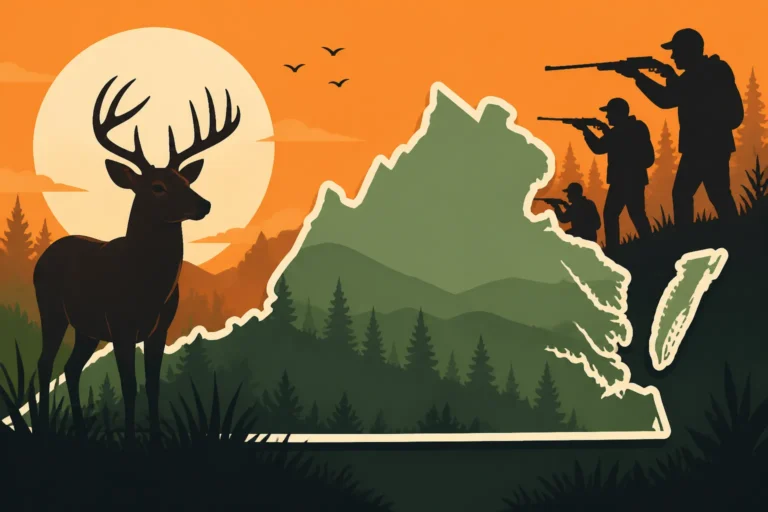
Trying to fill a tag on Virginia's public land can sometimes feel like trying to catch smoke, especially during the general firearms season. Deer, being the incredibly adaptable creatures they are, quickly learn to avoid pressure, turning nocturnal or simply disappearing into the thickest, nastiest cover they can find. This guide is all about tackling that challenge head-on by detailing how to effectively organize and execute deer drives on Virginia's public hunting grounds, helping you and your hunting party turn those invisible deer into venison.
Why Deer Drives on Virginia Public Land Make Sense
Virginia's public lands, whether it's the sprawling George Washington National Forest or one of our many Wildlife Management Areas, offer incredible hunting opportunities. But with opportunity often comes pressure. That's where a well-planned deer drive can truly shine, giving you an edge when solo hunting or still-hunting just isn't cutting it.
The Reality of Public Land Pressure
Let's be honest, public land in Virginia, particularly during the peak of rifle season, can be a busy place. From the Blue Ridge Mountains to the Piedmont forests, hunters are out there, and the deer feel it. This constant presence teaches mature whitetails a thing or two about survival. They become incredibly wary, often moving only under the cover of darkness or holing up in places so thick a rabbit would think twice about entering. You might spend days still-hunting through beautiful timber only to see nothing but old sign, leaving you wondering where all the deer went. They're still there, but they're locked down tight, adapting their patterns to avoid detection.
This adaptation means that deer on public land rarely move during daylight hours without a very good reason. They've learned that roads, clearings, and even well-used trails can be dangerous. Instead, they'll often bed down in dense cover just off the beaten path, waiting for nightfall or a break in the human activity. A solo hunter moving slowly through the woods might walk right past a bedded deer without ever knowing it, as the deer simply lets them pass, relying on its camouflage and stillness. The frustration of covering miles of prime habitat only to come up empty-handed is a common experience for many public land hunters in Virginia.
That's precisely where a deer drive comes into its own. The concept isn't about running deer ragged but about strategically applying controlled pressure to nudge these bedded animals out of their sanctuaries and into areas where standers are waiting. By using a small team to systematically move through a known bedding area, you can create the "good reason" those deer need to get on their feet and start moving during legal shooting hours. It’s a way to disrupt their carefully chosen hideouts and encourage them to expose themselves, giving you a chance you wouldn't otherwise have against such pressured animals.
Leveraging Natural Terrain and Cover
Virginia's landscape is incredibly diverse, from the rugged peaks of the Allegheny Mountains to the rolling hills of the Piedmont and the flat, swampy areas of the Tidewater. This varied terrain, with its mix of dense timber, thick brush, rocky outcroppings, and creek bottoms, provides endless possibilities for setting up effective deer drives. Understanding how deer use these features for cover, travel, and escape is key to planning a successful drive. Think about those steep mountain hollows where deer seek refuge from the wind, or the impenetrable pine thickets on private timber company land that offer thermal cover and security.
Deer naturally use topography to their advantage. A narrow saddle between two ridges acts as a highway for traveling deer, while a deep creek bed or a powerline cut can create a natural funnel, channeling deer movement in predictable ways. On public lands like the George Washington National Forest, you’ll find countless natural pinch points and travel corridors formed by the lay of the land. For instance, deer often move along benches that run horizontally across a mountainside, avoiding the steep climbs and descents. They'll also use logging roads, old clear-cuts grown up in briars, and even the edges of designated wilderness areas to evade hunters.
By scouting these areas and understanding how deer move through them, you can essentially predict their escape routes. If you know deer are bedding in a certain thicket on one side of a ridge, you can often anticipate that when pushed, they'll try to slip out through a low saddle or follow a distinct trail along the contour to the next hollow. These natural escape routes are prime locations for positioning standers. This strategy works particularly well when combined with a thorough understanding of the specific public land you're hunting, such as by studying maps on an app like GoHunt or reviewing DWR resources for George Washington National Forest Hunting or Jefferson National Forest Hunting.
When Drives Are Most Effective
Deer drives aren't a year-round tactic; they really shine during specific times of the hunting season. One of the best times to employ a drive is during periods of cold weather, especially after a significant drop in temperature. When it's genuinely cold, deer tend to bed down even tighter to conserve energy, making them less likely to move on their own. This can be particularly true in the late season when deer are focused on finding food and minimizing exertion, often leading them to hunker down in dense, wind-protected cover. A methodical push can be just what's needed to get these reluctant deer on their feet.
Another prime scenario for a drive is in the mid to late general firearms season, particularly after the initial hunting pressure has made deer wary. Opening weekend often sees deer moving more naturally due to less pressure, but as the season progresses, they become more patterned to human activity. When deer start becoming almost entirely nocturnal, retreating to impenetrable cover during daylight hours, a drive can be incredibly effective. It's a way to force a daylight encounter with an animal that would otherwise remain hidden until after legal shooting light.
It's also important to remember that deer drives aren't solely for large groups of hunters. While many envision a dozen guys walking abreast, even a small group of two or three hunters can execute a highly effective drive. A two-person drive might involve one hunter acting as a "pusher" moving quietly through a small, dense cover patch while the other acts as a "stander" positioned at a known escape route. These smaller, more surgical drives can be incredibly potent on smaller sections of public land or isolated pockets of cover, proving that you don't need an army to make deer move.
Essential Scouting for Successful Drives
Before you even think about putting boots on the ground for a drive, you need to put in the time scouting. This isn't just a casual stroll; it's a strategic mission to uncover the secrets of the land and the deer that inhabit it. A well-scouted area is the foundation of a safe and successful deer drive on Virginia's public lands.
Identifying Key Bedding and Escape Routes
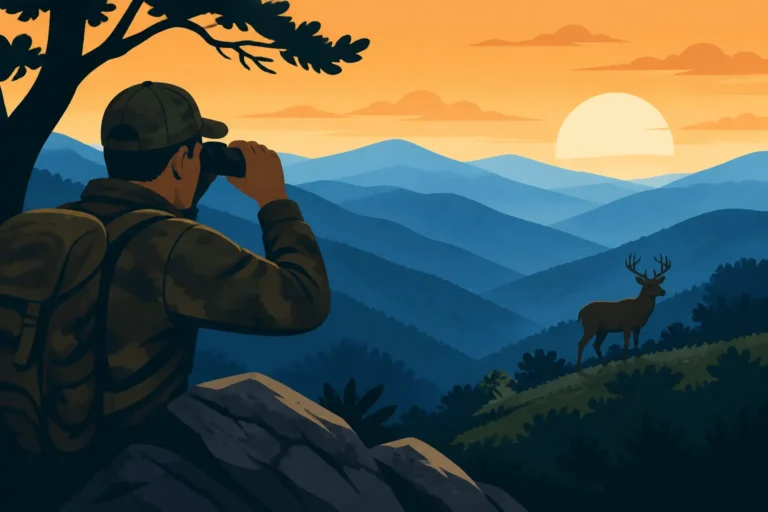
The most critical aspect of scouting for a deer drive is locating where the deer are actually spending their daylight hours. This means searching for bedding areas – the places deer feel safe and secure enough to rest. On public land, these often aren't obvious, well-trodden spots. Instead, look for dense, almost impenetrable thickets, laurel patches in the mountains, pine plantations, grown-up clear-cuts, or even small, isolated swamps or creek bottoms. These are the places where deer disappear when pressure mounts, and they are usually characterized by dense cover that offers both visual obstruction and protection from the elements. Apps like GoHunt, with their detailed satellite imagery and topographic overlays, can be invaluable for identifying these potential hideouts from your couch before you even step foot in the woods.
Once you've identified potential bedding areas, the next step is to figure out how deer get in and out, and more importantly, how they will try to escape when pressured. Look for subtle trails leading out of these thick spots, often skirting the densest cover. These are the escape routes. Pay close attention to pinch points – narrow strips of cover, natural funnels formed by terrain (like a small saddle between hills), or even man-made features like old fence lines or powerline cuts that force deer into a predictable path. These pinch points and funnels are goldmines for stander placement. Observing tracks, droppings, and rub lines can tell you not only that deer are using an area but also the direction of their preferred travel.
It’s not just about where the deer are bedding; it’s about understanding their "fight or flight" response when disturbed. A deer pushed from its bed will almost always try to use the path of least resistance or the path it perceives as safest. This could be a faint trail along a steep bluff, a narrow crossing over a creek, or a hidden gap in a dense hedgerow. The better you understand these instinctive escape tactics and have them mapped out, the more precise and effective your stander placement can be. Remember, the goal is not to have deer burst out in every direction, but to gently guide them along predictable routes toward your strategically placed standers. If you want to dive deeper into this, check out our guide on Scouting Virginia Public Land Before Season.
Understanding Public Land Boundaries and Topography
Before any drive, you absolutely must have a crystal-clear understanding of the public land boundaries. Virginia's public lands are often bordered by private property, and trespassing is a serious offense. Utilize Virginia Department of Wildlife Resources (DWR) maps, National Forest Service maps, or mapping apps to meticulously identify property lines, roads, trails, and any non-hunting zones. It's not just about staying legal; it's about planning a safe and effective drive that keeps deer within the huntable public area. Knowing exactly where that boundary fence or property line runs will dictate the outermost limits of your drive and where standers can safely be positioned to prevent deer from simply running onto private land.
Beyond boundaries, the topography of the land is your best friend when planning a drive. Virginia offers incredibly varied landscapes. In the mountains, look for saddles, benches, and draws that funnel deer. A saddle on a ridgeline, for instance, is a natural low point that deer frequently use to cross from one drainage to another. In flatter Piedmont or Tidewater regions, focus on creek crossings, swamp edges, or variations in timber density that create natural travel corridors. Deer will almost always follow the easiest path of travel, so understanding elevation changes and natural obstacles allows you to predict their movements with greater accuracy.
This detailed topographical knowledge directly informs where you’ll place your standers and how your drivers will move. If you have a steep bluff on one side of a bedding area, you know deer are unlikely to run straight up or down it, but will rather skirt its edge. If a major creek runs through the area, deer will likely use established crossings. By visually walking the area (virtually on a map and then physically on the ground), you can pre-visualize how a deer, pushed from a specific thicket, would likely try to escape, and thus, where your standers need to be positioned for the best shot opportunity. Every ridge, hollow, and creek bottom offers a strategic advantage if you know how to read it.
Mapping Out Drive Zones
Once you've poured over the maps and identified potential bedding areas and escape routes, it's time to get boots on the ground and physically walk the area. This is where your scouting moves from theoretical to practical. Take the time to mark potential stander locations with flagging tape (removed after the hunt, of course) or by dropping pins on your GPS app. Consider the visibility from each potential stander spot, ensuring they have clear shooting lanes and, crucially, safe backstops. You want to place standers in locations where they can intercept deer moving naturally, not necessarily bolting at full speed. Think about where a deer would pause or slow down as it navigates the terrain.
When mapping out the paths for your drivers, consider the density of the cover and the terrain. Drivers need to be able to move steadily and safely through the area. You're not looking for a chaotic stampede; you're looking for a controlled push. If the cover is too thick for drivers to maintain a line, you might need to adjust your drive's boundaries or consider a different approach. Pay close attention to wind direction and thermal drafts, especially if you're hunting in the mountainous regions. Deer have an incredible sense of smell, and a shifting wind can completely blow your drive. Understanding Wind and Thermals on a Blue Ridge Slope can make or break your success.
Finally, meticulously plan your entry and exit points for both drivers and standers. The goal is to get everyone into position with minimal disturbance to the area you plan to drive. This often means approaching from downwind and using terrain features to mask your movement. Similarly, plan how standers will exit their positions and how the entire group will converge after the drive, especially if a shot is taken. Minimizing disturbance before and after the drive helps maintain the integrity of the area for future hunts and reduces the chances of educating deer too much. Good planning at this stage sets the entire team up for success.
Executing the Drive: Tactics for Success
With your scouting complete and a plan in hand, it's time to put that strategy into action. Executing a deer drive on Virginia's public land requires coordination, communication, and a clear understanding of everyone's role. It's a team effort where safety and precision are paramount.
Assigning Roles: Standers vs. Drivers
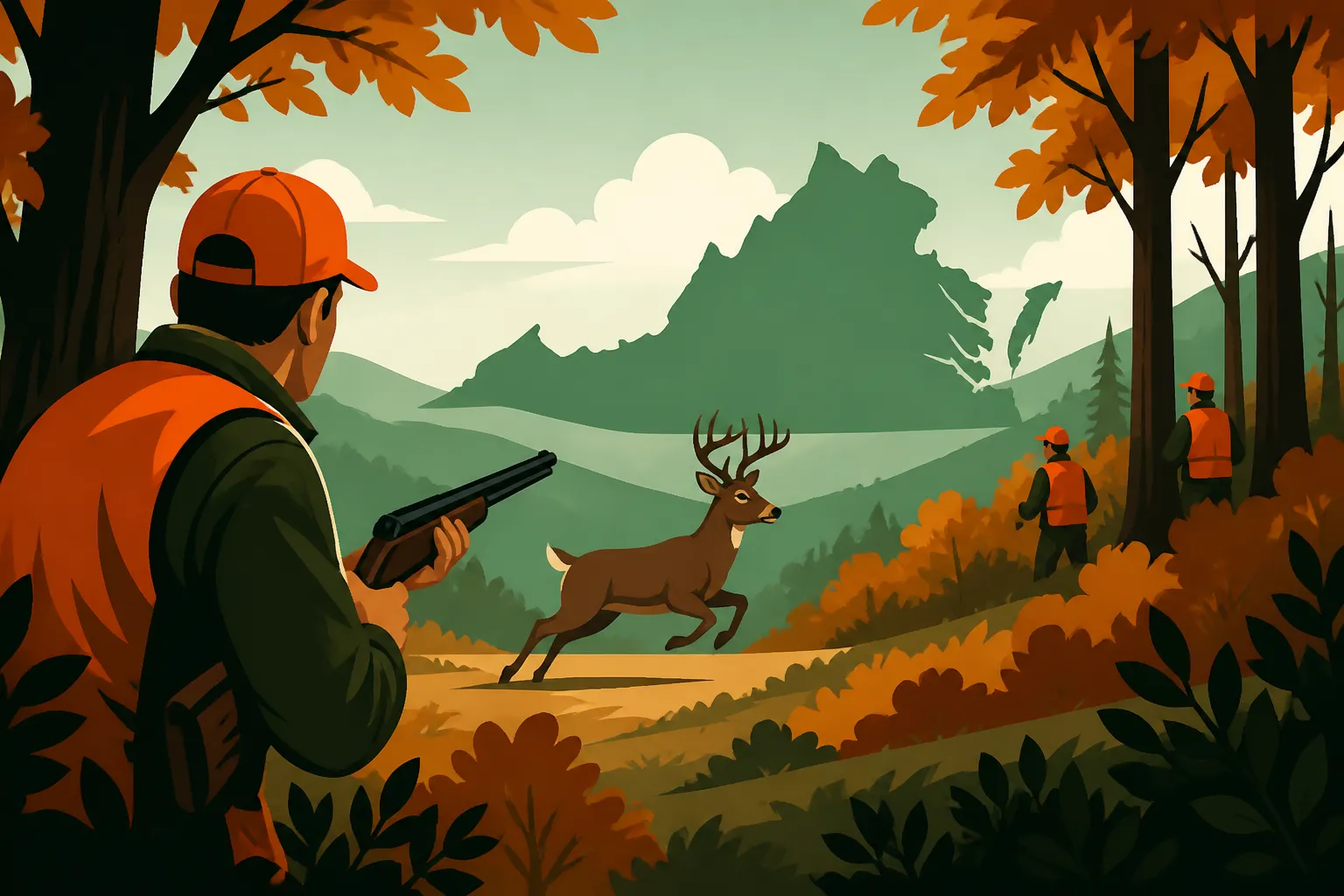
The success of any deer drive hinges on clearly defined roles for each participant. You essentially have two main groups: the standers and the drivers. Standers are the hunters strategically positioned to intercept deer that are pushed out of a bedding area. Their job is to remain absolutely silent, still, and alert. They must blend into their surroundings, often perched in a treestand or tucked into a ground blind, with their weapon ready and eyes scanning their assigned shooting lane. Standers should be placed in locations that offer good visibility of expected deer movement, but also safe shooting lanes with clear backstops. Remember, safety always comes first, and a stander's primary responsibility is to know their target and what is beyond it.
Drivers, on the other hand, are the ones who will be actively moving through the designated drive area. Their role is to systematically push deer towards the standers. This isn't about running and yelling; it's about a controlled, consistent advance that makes deer feel uneasy enough to move, but not so panicked that they break cover wildly in unpredictable directions. Drivers should move at a steady, deliberate pace, making enough noise to encourage deer to get up and move. This could involve simply walking through thick cover, stomping occasionally, or using subtle vocalizations. The key is to maintain a relatively straight line or a planned pattern, ensuring comprehensive coverage of the drive zone.
It's crucial for everyone to understand both their own role and the role of others. Before the drive begins, a detailed briefing should cover the boundaries, expected deer movement, specific stander positions, and driver paths. This ensures that every participant knows the "game plan" and can execute their part effectively. Communication between standers and drivers, even if limited to pre-determined signals or radio calls (where legal and effective without disturbing other hunters), is vital for a seamless operation. Effective role assignment and understanding prevent confusion, enhance safety, and ultimately increase the chances of a successful drive on public land.
Strategic Stander Placement
Placing your standers correctly is arguably the most critical component of a successful deer drive. These aren't just random spots; they are carefully chosen locations based on your scouting. Think about natural funnels that you identified – narrow strips of timber, saddles between ridges, or the convergence of multiple deer trails. These are prime spots because they naturally restrict deer movement, increasing the likelihood that a pushed deer will pass close enough for a shot. Also consider intersections of trails or areas where deer might pause, such as a clearing edge before entering another block of woods. A well-placed stander can intercept deer as they navigate these bottlenecks.
Beyond natural funnels, standers should be positioned to cover the most likely escape routes from the bedding area you're driving. If deer are known to slip out along a creek bottom, place a stander overlooking that route. If they tend to skirt the edge of a dense clear-cut, put a stander there. Crucially, standers must have clear shooting lanes, but also, and perhaps more importantly, a safe backstop. Never position a stander where their potential shot could carry onto a road, another hunter, or private property. This often means choosing elevated positions in a treestand, which provides a safer downward angle for shots, or finding natural ground blinds that offer excellent cover and a clear view. Using a quality safety harness with your stand, as discussed in Treestand Setups in George Washington National Forest, is non-negotiable for elevated stands.
Communication among standers before the drive is also vital. Each stander needs to know the exact location of other standers and the general direction of the drive. This helps establish clear shooting arcs and prevents unsafe shots. For example, if two standers are facing each other across a narrow strip of woods, they must agree on which side of the strip each will cover to avoid shooting towards the other. Hand signals or pre-arranged radio checks can confirm everyone is in position and ready. The goal is to create a coordinated net, where deer are encouraged to move towards standers, who are then prepared for a safe, ethical shot.
Driving Patterns and Communication
The pattern of your drive should be carefully chosen to match the terrain and the number of hunters involved. A simple straight push works well for small, linear patches of cover. For larger, more expansive bedding areas, a horseshoe or semi-circle drive might be more effective, with drivers fanning out and slowly converging towards a line of standers. If you're working with a smaller group, like Deer Drives With Three or Four Hunters, you might opt for a more subtle push or even a "bump" where one or two drivers simply walk through a thicket to move deer to a single stander. The key is to have a defined start and end point for the drive and to ensure drivers maintain their assigned positions relative to each other.
Maintaining line integrity is crucial, especially in thick Virginia cover like mountain laurel or dense pine stands. Drivers shouldn't get too far ahead or behind, as this can allow deer to slip through gaps in the line or cause them to double back. Communication among drivers is essential to keep the line even. Subtle whistles, quiet verbal cues, or even two-way radios (used sparingly and quietly) can help drivers stay aligned. The goal is to move steadily and cohesively, applying consistent pressure across the drive zone. Remember, you're not trying to spook deer into a full sprint right off the bat; you want them to get up, start walking, and try to sneak away.
The pace of the drive is another critical factor. A slow, steady pace is generally more effective than a fast, chaotic one. When drivers move too quickly, deer often bolt in unpredictable directions, sometimes even circling back through the drive line. A deliberate pace, with drivers making intermittent noise, encourages deer to walk or trot, looking for an escape. This slower movement gives standers more time to identify the animal, assess the shot, and make an ethical kill. It also allows deer to use their natural escape routes, which is exactly what you've scouted for and positioned your standers to intercept. A well-executed drive is a symphony of coordinated movement and subtle pressure, not a chaotic charge.
Safety and Ethics on Public Land Deer Drives
Deer drives on public land, while effective, come with increased responsibilities regarding safety and ethical conduct. You're not just hunting with your immediate group; you're sharing the woods with other hunters, hikers, and potentially nearby residents. Prioritizing safety and showing respect for others is non-negotiable.
Blaze Orange and Visibility Requirements
Virginia has specific regulations regarding blaze orange during firearms seasons, and adhering to them is not just about legal compliance – it's a fundamental safety measure, especially when conducting a deer drive. During the general firearms season, all hunters on public land, and all deer hunters on private land, are required to wear blaze orange. This includes a solid blaze orange or pink hat and at least 100 square inches of solid blaze orange or pink material visible from 360 degrees, or 50 square inches visible from the front and 50 square inches visible from the back. For specific details on requirements, check out How Much Blaze Orange Virginia Requires.
This requirement applies to everyone participating in the drive, regardless of whether they are a stander or a driver. While standers are often stationary and focused, drivers are actively moving through dense cover, making them more difficult to spot. Wearing sufficient blaze orange ensures that every member of your hunting party is highly visible to each other. It significantly reduces the risk of accidental shootings, which is the paramount concern during any group hunt. Imagine a driver pushing through thick briars; without blaze orange, another driver or a stander might only see a flash of movement and mistake it for a deer.
Beyond your immediate group, wearing blaze orange is also crucial for visibility to other hunters who might be in the area. Public land is shared space, and while you're executing a drive, other hunters might be still-hunting, walking to a different stand, or just passing through. Maximizing your visibility minimizes the chance of anyone else mistaking you for game. It's a sign of respect for other users of the land and a critical component of responsible hunting. Never, ever skimp on blaze orange during a deer drive; it's quite literally a lifesaver.
Understanding Shooting Lanes and Backstops
This cannot be stressed enough: never shoot at sound or movement alone. Every hunter, especially those involved in a drive, must positively identify their target as a legal deer and be absolutely certain of what is beyond that target. During a drive, deer can sometimes appear quickly, and the excitement can lead to hasty decisions. This is where pre-planning and disciplined execution become vital. Standers must be positioned where they have clear, unobstructed shooting lanes, allowing them to make a positive identification before even raising their weapon. If the cover is too thick, or visibility is poor, that is not a safe shooting lane.
Equally important is having a safe backstop for every shot. A backstop is anything solid and substantial enough to safely stop your projectile without ricochet or carrying on indefinitely. This could be the ground, a hillside, or a thick stand of trees. When hunting on public land, particularly in Virginia's rolling hills or mountains, bullets can travel surprising distances, and you might not always know what's beyond the immediate area. Never shoot over the crest of a hill if you don't know what's on the other side, or towards open fields that might contain structures or other people.
Before the drive, each stander should mentally (or physically, by scanning) define their "safe shooting zone" – the specific area where they can confidently and safely take a shot. This zone should consider the location of other hunters (both within your party and potentially others on public land), roads, trails, and private property. Any deer that moves outside this safe zone should not be engaged, no matter how good the opportunity appears. These rules are non-negotiable and are the foundation of a responsible and ethical hunt, protecting not only your group but everyone else who shares the woods.
Public Perception and Respect for Others
Deer drives, by their very nature, can be noisy and active. While effective for moving deer, this activity can be perceived negatively by other public land users. It's crucial to be mindful of this and operate with the utmost respect for hikers, bird watchers, photographers, and other hunters who might not be part of your group. Choosing drive locations that are less likely to intersect with popular hiking trails or picnic areas, especially during peak usage times, is a good practice. No one wants their quiet nature walk suddenly interrupted by yelling hunters.
Furthermore, consider any private residences or properties bordering your public land hunting area. While you might be legally hunting, excessive noise or perceived erratic activity near someone's home can lead to complaints and a negative public image for hunters as a whole. Always verify property lines using tools like GoHunt or DWR maps and plan your drives to avoid pushing deer directly towards residential areas. It's not just about avoiding legal issues; it's about being a good neighbor and ambassador for the sport.
Ethical considerations extend to how you manage the deer you push. Never intentionally try to push deer onto private land where you do not have permission to hunt or retrieve game. This is not only unethical but can also lead to legal complications. The goal of a public land drive is to harvest deer on public land. By planning carefully, communicating openly, and always prioritizing safety and respect, you can execute effective deer drives that uphold the integrity of hunting and ensure a positive experience for everyone sharing Virginia's beautiful outdoors.
After the Drive: Tracking and Recovery
So, the drive is done, and you've taken a shot. Now the real work begins. Recovering a deer on Virginia's public land, especially in thick cover or rugged terrain, requires patience, skill, and often a team effort. This final phase is just as critical as the drive itself.
Immediate Actions Post-Shot
The moment you take a shot at a deer during a drive, several immediate actions are crucial for successful recovery. First and foremost, if you are a stander who shot, stay put and carefully mark the exact spot where the deer was standing when you shot, and the direction it ran. Use a bright piece of flagging tape, your hat, or a physical marker like a tree. This initial mark is incredibly important for starting your blood trail. Immediately communicate with your hunting party – let them know you've shot, where you were, and the direction the deer headed. This prevents other hunters from entering the area too soon and helps coordinate the recovery effort.
Next, resist the urge to immediately jump up and chase after the deer, especially if the shot wasn't absolutely perfect. Waiting is often the hardest part, but it's vital for a higher recovery rate. For a deer hit in the vitals, waiting 20-30 minutes can allow the animal to lie down and expire. For a shot that might be marginal (e.g., gut shot or leg shot), waiting several hours, or even until the next morning if weather permits, dramatically increases your chances. A wounded deer that is pushed too soon can travel much further and become incredibly difficult to find. Use this waiting period to calm your nerves, replay the shot in your mind, and mentally prepare for the tracking effort.
Once the waiting period is over, begin your search at the marked shot location. Look for any sign of a hit: hair, blood, bone fragments, or disturbed earth. If you find no immediate blood, start a systematic grid search in the direction the deer ran, expanding your search pattern outward. Have your entire party help, walking slowly and deliberately, scanning the ground carefully. If multiple people are tracking, assign roles and maintain communication to ensure thorough coverage. A systematic approach, rather than a frantic dash, will lead to a better outcome.
Tracking in Virginia's Varied Terrain
Tracking a wounded deer in Virginia can present some unique challenges, thanks to our diverse landscapes. From the dense leaf litter of an oak-hickory forest to the thick, tangled underbrush of a clear-cut or the rocky terrain of a mountain hollow, finding a blood trail can be tough. The key is to slow down, be methodical, and look for any sign, not just pools of bright red blood. Sometimes, all you'll find are tiny drops on the underside of a leaf, a faint smear on a blade of grass, or a barely scuffed patch of earth. Reading a deer's sign in Virginia’s typical fall woods can be particularly hard, as discussed in our Tracking a Deer Through Virginia Leaf Litter guide.
When tracking, utilize all your senses. Look for blood, hair, or bone fragments. Listen for sounds of the deer moving ahead, especially if it's still alive. Pay attention to disturbed vegetation, broken twigs, or scuff marks where the deer's hooves may have dragged. If you lose the blood trail, fan out in a widening circle from the last known spot. One person should stay at the last sign while others search, calling out when they find new evidence. This method ensures you don't lose the trail entirely. In remote public land areas, a good headlamp is indispensable if tracking extends into twilight or after dark, but be mindful of any local regulations regarding light use.
The type of terrain dictates your approach. In dense thickets, you might need to crawl to find a trail. In rocky areas, look for blood on the sides of rocks or disturbed moss. In wet leaves, blood might soak in quickly, making it harder to spot, but a dark stain might still be visible. Always mark the last known blood sign, even if it's just a small twig broken or flagging tape, so you can easily return to it if you get off track. Patience and persistence are your greatest allies when tracking a deer in challenging Virginia conditions.
Recovery and Game Care on Public Land
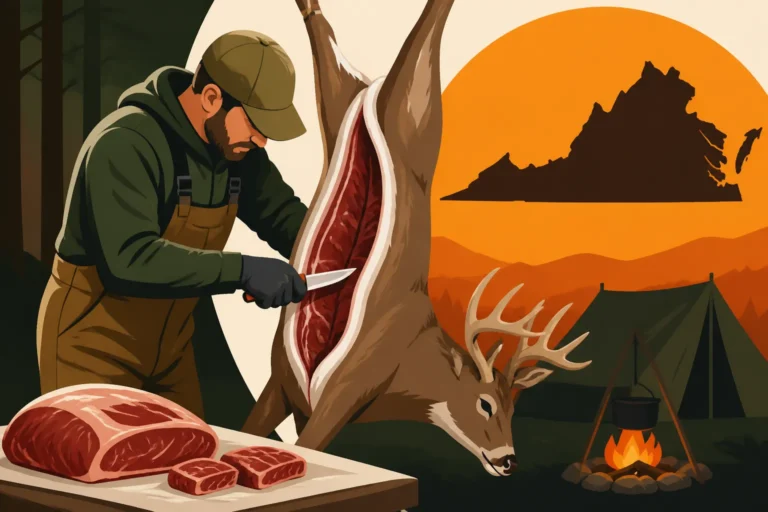
Once you've successfully located your deer, the immediate focus shifts to proper game care. Field dressing the animal promptly is critical, especially if temperatures are mild. Removing the entrails helps the carcass cool down quickly, preventing meat spoilage. In the mountains or more remote WMAs, you might be a long way from the nearest vehicle, so plan for extraction. For smaller deer, a sturdy deer sled or game cart can make the drag out significantly easier, especially across relatively flat terrain or old logging roads. However, in steep, rugged mountain country, these might not be feasible.
For larger deer or extremely remote locations, quartering the animal in the field might be the most practical option. This involves breaking the deer down into manageable sections (typically four quarters, backstraps, and tenderloins) that can be carried out in a hunting pack with a sturdy frame. This method, while requiring more time and effort in the field, can save you from an exhausting and potentially unsafe drag. Ensure you have proper game bags to protect the meat from dirt and insects, especially on warmer days. Remember that many public lands have strict rules about leaving gut piles or other animal remains, so know the regulations for your specific hunting area.
Finally, once the deer is recovered and transported, ensure you complete all required reporting to the Virginia Department of Wildlife Resources (DWR) in a timely manner. This typically involves checking the deer online or via the DWR mobile app, providing details about the harvest. This data is vital for wildlife management efforts and helps ensure healthy deer populations for future generations of Virginia hunters. Respectful handling of the animal, efficient meat care, and diligent reporting complete the ethical hunting cycle.
| Feature | Standers | Drivers |
|---|---|---|
| Primary Role | Intercept deer | Push deer |
| Movement | Stationary, silent, observant | Active, steady, audible |
| Key Skill | Patience, target identification, shooting | Navigation, maintaining line, consistent pressure |
| Positioning | Funnels, escape routes, high visibility | Within bedding areas, working towards standers |
| Safety Focus | Clear shooting lanes, safe backstops, communication | Visibility (blaze orange), knowing locations of others |
| Gear Notes | Treestand, ground blind, binoculars, rangefinder | Good boots, comfortable pack, navigation aids |
| Communication | Pre-drive briefing, pre-determined signals | Pre-drive briefing, quiet calls, line checks |
| Mindset | Calm, alert, disciplined | Focused, persistent, coordinated |
Disclaimer
Please note: Hunting involves inherent risks. Always prioritize safety, follow all Virginia Department of Wildlife Resources (DWR) regulations, and obtain appropriate licenses and permits. The information provided here is for educational purposes and should not replace professional guidance or personal judgment. Be mindful of property boundaries and respect other public land users.