Setting Up Against a Big Oak
One of the biggest frustrations for deer hunters in Virginia, especially when trying to pin down elusive whitetails, is figuring out precisely where to set up. It's not enough to just be in the woods; you need to be in the right spot, and often, that spot revolves around the lifeblood of the forest: the mighty oak. This guide is all about mastering the art of positioning yourself against a prominent oak tree to intercept deer movements, giving you a distinct advantage in your hunting pursuits.
Why Big Oaks Are Deer Magnets in Virginia
When autumn rolls around in Virginia, there’s one food source that consistently pulls deer in like a magnet: acorns. Big, mature oak trees are the grocery store, the social hub, and often, the key to unlocking consistent deer encounters. Understanding why deer are so drawn to these trees, and which ones in particular, is your first step toward a successful hunt.
Understanding Acorn Production and Timing
Virginia is blessed with a diverse array of oak species, each with its own characteristics, and deer have their preferences. Broadly, we categorize them into white oaks and red oaks. White oaks, like the common white oak, chestnut oak, and post oak, drop their acorns earlier in the fall, often starting in late August and continuing through September. These acorns are lower in tannins, making them sweeter and highly palatable to deer. Think of them as the candy of the deer world. When white oak acorns are raining down, deer will often abandon other food sources to gorge on them.
Red oaks, on the other hand, including species like northern red oak, scarlet oak, and pin oak, tend to drop their acorns later in the season, typically from October into December. These acorns are higher in tannins, giving them a more bitter taste. However, this also means they last longer on the ground and are a crucial food source once the white oak crop is depleted. In late fall and early winter, when frost has sweetened the red oak acorns and other food options are scarce, deer will readily switch their focus. It's a strategic move for them, and it should be for you too. Knowing this difference is paramount; you might start your season targeting white oaks and then transition your focus to red oaks as the season progresses and colder weather sets in.
| Oak Type | Acorn Drop Time | Palatability (Deer Preference) | Tannin Content |
|---|---|---|---|
| White Oaks | Late August – Sept. | High (Sweeter) | Low |
| Red Oaks | Oct. – Dec. | Moderate (Bitter, but lasts) | High |
Identifying Productive Oak Stands
Not all oaks are created equal, even within the same species. When you’re out scouting, you’re looking for a combination of factors that scream "deer haven." The most obvious sign of a productive oak is, of course, the acorns themselves. If you see a heavy drop on the ground, that’s a great start. But don’t just look up; look down for deer sign.
Heavy deer droppings around the base of an oak tree, especially fresh ones, are a dead giveaway. You’re also looking for heavily worn trails leading to and from the tree. Deer are creatures of habit, and if they’ve established a feeding pattern around a particular oak, those trails will be well-defined. Beyond feeding, keep an eye out for rubs and scrapes in the vicinity. Bucks will often work scrapes and rub trees near favored food sources, especially as the rut approaches. A big oak sitting on a ridge overlooking a travel corridor between a bedding area and another food source can be a goldmine. Utilizing aerial imagery on a tool like the GoHunt app can help you pinpoint these promising oak stands before you even step foot in the woods, allowing you to scout more efficiently by identifying transition zones or bottlenecks.
Strategic Considerations for Your Oak Setup
Once you’ve identified a promising oak, the real strategy begins. It's not just about picking a tree; it's about anticipating deer movement, managing your scent, and ensuring you can get into and out of your spot undetected. These elements are often more critical than the tree itself.
Wind Direction and Scent Control
This is probably the single most overlooked and underestimated factor in deer hunting, especially when setting up near a prime food source like a big oak. Deer rely heavily on their sense of smell, and if they catch a whiff of you, the hunt is over before it even begins. You absolutely must understand how the wind is behaving, not just at ground level, but how it swirls and carries your scent through the canopy and across terrain. This is particularly crucial when hunting on a Blue Ridge slope, where thermals can significantly impact wind patterns throughout the day.
Always approach and set up against the prevailing wind direction, ensuring your scent cone blows away from where you expect deer to approach or bed. This might mean adjusting your stand placement by a few yards or even choosing a different tree if the wind isn't cooperating. Beyond basic wind awareness, rigorous scent control is non-negotiable. This includes showering with scent-free soaps, washing your hunting clothes in scent-free detergent, storing them in airtight containers, and using scent-eliminating sprays on your clothes and gear before heading out. Even the most perfectly chosen oak tree won't matter if a savvy old buck winds you at 80 yards. Investing in quality scent control gear for urban archery hunts or any hunt for that matter, can pay dividends.
Entry and Exit Routes
This is where many hunters unknowingly sabotage their own hunts. A perfect stand location near a big oak is worthless if you spook deer getting in or out of it. Your entry and exit routes must be as stealthy and undetectable as possible. Plan your paths to avoid known bedding areas, active feeding zones, and primary travel corridors until you're in your stand or blind.
Think about using natural terrain features for cover: creek bottoms, dense thickets, ridge lines, or ditches can all help mask your approach. Try to walk into the wind if possible, especially during your final approach to the tree. If you're hunting public land, this often means walking further than you’d like, possibly even before first light, to get deep enough into cover. The goal is to arrive at your setup and depart from it without a single deer knowing you were ever there. This requires careful pre-scouting, sometimes even walking your proposed routes in the dark to identify noisy spots or obstacles.
Stand Placement and Shooting Lanes
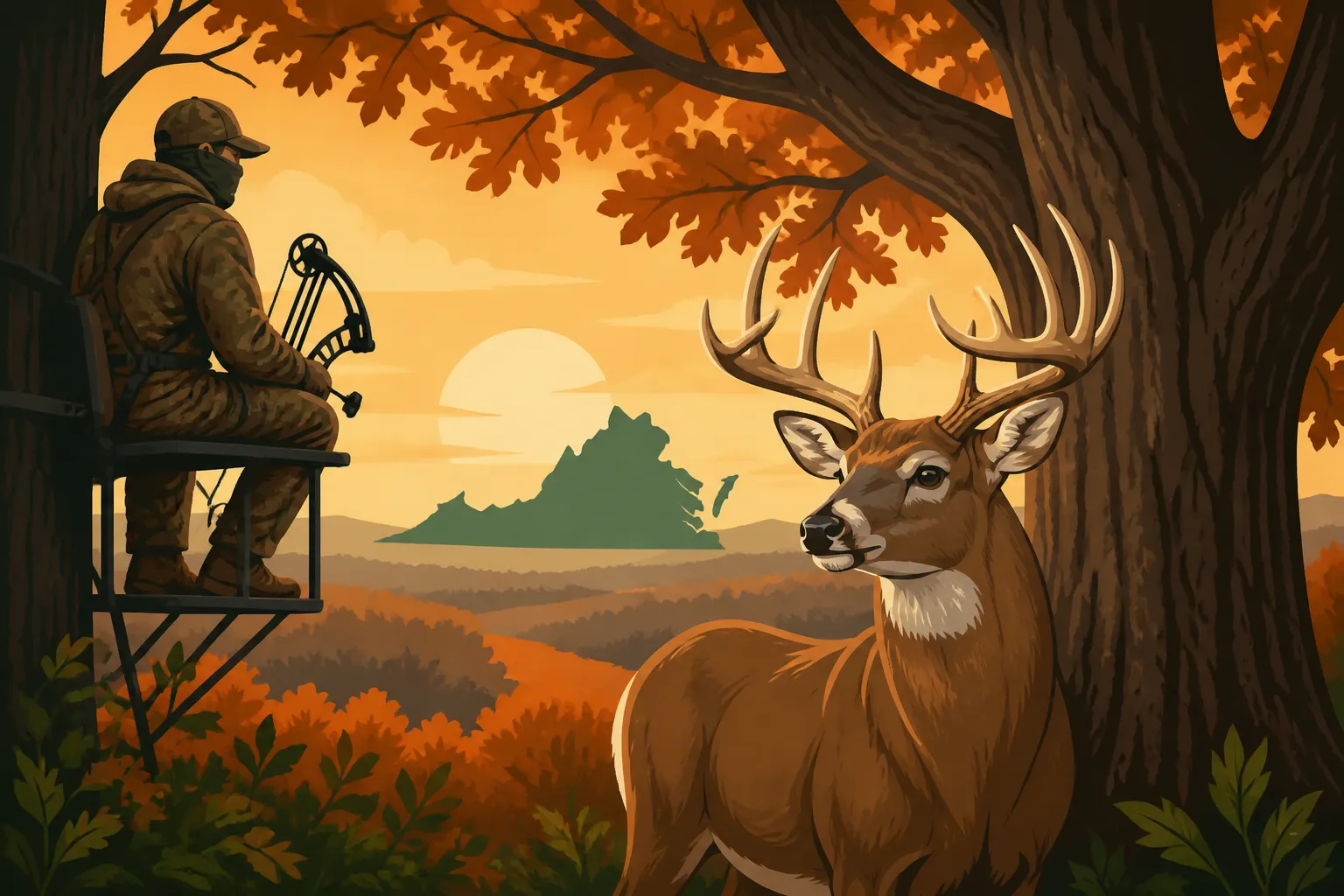
Once you've identified the perfect oak with plenty of fresh sign and planned your wind-safe approach, it's time to consider the actual setup. Whether you're hanging a treestand or deploying a ground blind, placement is critical. For a treestand, aim for a height that gives you a good vantage point over the feeding area, typically 15-25 feet, while still allowing the canopy of the oak or surrounding trees to break up your silhouette. You want to be high enough to see over some undergrowth, but not so high that you silhouette yourself against the sky.
Make sure the tree itself offers decent cover. Position yourself on the side of the tree that provides the best concealment while still giving you a clear shot at expected deer approaches. When it comes to shooting lanes, be judicious with your trimming. Only cut what is absolutely necessary for a clean shot. Over-trimming can make your stand obvious and remove valuable cover. You want lanes to where deer are likely to enter the feeding area, directly under the oak, and along any evident travel trails. Remember to check your lanes from your seated hunting position – what looks clear from the ground might be obstructed from above. When hunting in big timber like the George Washington National Forest, understanding how to position treestands effectively, using the terrain and natural cover, becomes an art form.
Executing Your Setup Against the Oak
The planning is done; now it's time for execution. This phase brings together all your scouting and strategic thinking into a physical setup that will hopefully put you face-to-face with a Virginia whitetail.
Choosing Your Specific Oak
In a stand of oaks, how do you pick the oak? It comes down to a few key factors. First, consider the size and health of the tree. Older, more mature oaks typically produce more acorns. Look for a tree that has a robust canopy and shows no signs of disease. Second, examine the surrounding cover. Is there enough underbrush or neighboring trees to break up your outline in a treestand, or to effectively conceal a ground blind? If you're going with a ground blind, using a ground blind on Virginia public land means finding a spot where you can blend into the natural foliage.
Third, look at the existing deer sign directly under and around that specific tree. Is the ground torn up? Are there fresh droppings? If deer are favoring one oak over others nearby, that's your spot. Finally, consider its proximity to other features. Is this oak part of a larger flat feeding area, or does it stand at a pinch point, like a funnel between two hollows or along a ridge-top saddle for rutting bucks? Oaks at these transition points can be incredibly productive, as deer will not only feed but also travel through. Sometimes, a single "wolf" oak with a sprawling canopy, standing somewhat isolated but still near bedding, can be a major draw for deer, especially mature bucks seeking a quieter meal.
Preparing the Tree and Surrounding Area
Whether you're hanging a stand or brushing in a blind, do it with minimal disturbance. If you're using a portable treestand, use climbing sticks or a climbing stand to get up the tree. Clear any noisy debris from the base of the tree and your immediate approach area that could crunch underfoot when you approach in the dark. If you’re setting up a ground blind, take your time to brush it in naturally with local vegetation, making it look like a permanent part of the landscape.
Any cutting of shooting lanes should be done sparingly and well in advance of the season if possible, to allow deer to get used to the slight change. The less you alter the environment, the better. The goal is to become an invisible predator, not an intruder. This meticulous preparation includes having all your gear ready – your bow or rifle, rangefinder, binoculars, and calls – quietly and efficiently accessible once you’re settled in.
Patience and Observation
Once you're set up, whether it's early morning or late afternoon, patience is your best friend. Deer will often filter into an oak feeding area slowly, sometimes taking an hour or more after sunrise or before sunset. Resist the urge to fidget or check your phone constantly. Instead, use your binoculars to scan the surrounding woods for movement. A tool like the GoHunt app can be useful here too for quick checks of property lines or wind changes on the fly.
Pay attention to subtle sounds – rustling leaves that aren't wind-driven, the soft snap of a twig, or the subtle chirping of squirrels. These can all signal an approaching deer. Your quiet entry and exit, coupled with your diligent scent control, will pay off here, allowing deer to move naturally into the feeding area without ever knowing you're there. The more time you spend simply observing, the better you'll become at reading deer behavior and anticipating their next move around that big oak.
Advanced Tips for Oak-Centric Hunting
Hunting around oaks isn't a static strategy; it requires adaptability and a deeper understanding of deer behavior throughout the season and across different mast crop conditions.
Adapting to Changing Mast Conditions
The bounty of acorns isn't a constant. Some years are "banner" mast years with heavy acorn production, while others might be a "bust," resulting in a poor acorn year. Knowing how to adapt to these fluctuations is vital. If your primary white oaks have dropped out completely, or if it's a generally poor acorn year, deer will shift their focus to other food sources. This might include persistent red oak acorns that remain on the ground longer, honeylocust pods, or agricultural fields like corn, soybeans, or winter wheat.
You might also find deer concentrating more heavily on other natural browse or forbs if hard mast is scarce. When acorns are limited, deer may travel further and longer to find alternatives, meaning you might need to adjust your setup to travel corridors between different food sources or more reliable bedding areas. Understanding the dynamics of available food is a continuous process throughout the season, and it's a smart idea to scout periodically even during the season to see what deer are currently keying in on. Don't be afraid to pull up a map on your GoHunt app and look for nearby agricultural fields or alternative mast species like persimmons or beechnuts if your oak strategy isn't producing.
Incorporating Calls and Decoys
While often associated with rut hunting, calls and decoys can sometimes play a role in an oak-centric setup, especially as the season progresses. If you're seeing bucks frequently checking the oak stand, a soft grunt call in mature Virginia timber can sometimes pique their curiosity and draw them a few extra yards into a shooting lane. This is particularly effective during the pre-rut and rut phases when bucks are actively searching for does. A doe decoy might be placed downwind of your stand, facing away, to draw a buck's attention, causing him to approach from your direction while offering a better shot opportunity.
However, use calls and decoys judiciously around food sources. Overcalling can spook wary deer, especially if they're simply trying to feed undisturbed. If deer are calmly munching on acorns, less is often more. But if things are slow, or if you spot a buck cruising just out of range, a well-timed bleat or a few soft grunts can sometimes be the perfect convincer. Always assess the situation: are deer relaxed, or are they on edge? Your approach to calling should match their mood. Understanding Deer Density East and West of the Blue Ridge can also inform your calling strategy, as more pressured deer might react differently.
Disclaimer
Hunting is an inherently dangerous activity. This guide provides information for educational purposes only. Always consult and adhere to all local, state, and federal hunting regulations and laws. Practice ethical hunting principles, prioritize safety, and obtain the necessary licenses and permits before engaging in any hunting activities.