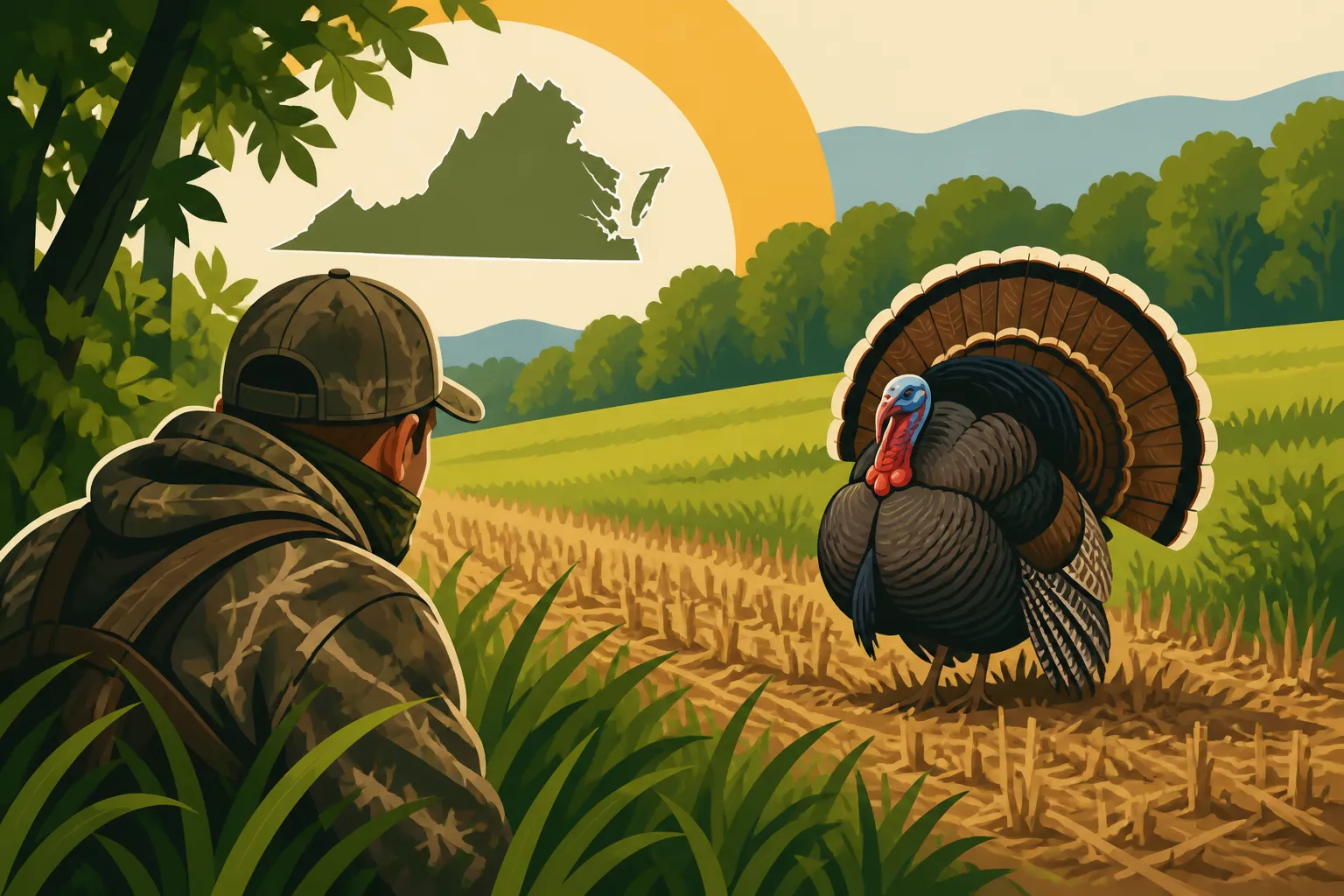
Turkey Tactics for Piedmont Field Edges
Oh, the Virginia Piedmont! There's nothing quite like it for turkey hunting. You see those gobblers strutting in a freshly cut hayfield, their vibrant reds and blues popping against the green, and your heart starts pounding. But then, you call, and they just… stay there. Frustrating, isn't it? They're visible, they're vocal, but getting them to commit to that field edge can be a real headache, especially with the hunting pressure these areas can sometimes see. This guide is all about tackling that particular challenge, giving you the ins and outs of making those field-edge gobblers in the Virginia Piedmont finally seal the deal.
Understanding Virginia Piedmont Turkeys and Their Habitat
Hunting turkeys in the rolling hills and agricultural landscapes of Virginia's Piedmont region presents a unique set of challenges and opportunities compared to the dense mountain timber. These birds have adapted to a patchwork of agricultural fields, woodlots, creek bottoms, and suburban fringes. They live a different life than their mountain cousins, and understanding these distinctions is your first step toward consistent success.
Why Field Edges Are Turkey Magnets
Field edges in the Piedmont are truly the lifelines for wild turkeys. They offer an ideal combination of safety, food, and breeding grounds. Think about it: a turkey can strut majestically in the open field, visible to hens from a distance, showing off his dominance. But within a few steps, he can dive into the cover of the woods, disappearing from the eyes of predators or unwanted attention. This transition zone, this field edge, is where they feel most secure while still being able to access the rich food sources of the open land.
Early in the spring, these fields are often lush with tender new growth, clover, or leftover grains from previous harvests, all of which are incredibly attractive to turkeys. They'll scratch for insects, pick at fresh greens, and even dust themselves in dry soil patches found along these edges. As the season progresses, insects become more abundant, and the convenience of feeding in a field before melting back into the timber for security or roosting is simply too good for a gobbler to pass up. This constant interplay between food, cover, and visibility makes these field edges prime real estate for gobblers throughout the season, from the first Virginia Spring Turkey Season Rules to the very end.
Typical Piedmont Terrain and Turkey Behavior
The Piedmont isn't just one type of landscape; it's a diverse mix. You'll encounter everything from large, sprawling corn and soybean fields to smaller, irregularly shaped pastures, power line cuts, and even more suburban-influenced areas where agricultural fields border residential developments. Turkeys in these areas are often quite accustomed to human activity, but they're also warier. They see tractors, cars, and sometimes other hunters on a regular basis, which means they've developed a keen sense of when something is out of place.
Their behavior around these fields is often dictated by the time of day and pressure. In the early morning, they'll fly down from roosts in the timber, often landing directly in the field or on the edge before moving out to feed and strut. As the sun climbs higher, they might retreat into the shade of the woods, especially on warmer days, only to re-emerge later in the afternoon. During the Hunting the Morning-Only Early Turkey Period or the Hunting the All-Day Late Turkey Period, their patterns can shift. A pressured gobbler might only visit the very corner of a field or stick to areas with thicker brush cover, constantly scanning for threats. They're masters of observation, and they'll often "hang up" just out of range, expecting the hen to come to them in the open, rather than exposing themselves by walking into the woods.
Key Scouting Strategies for Field Edges
Effective scouting is the bedrock of successful turkey hunting, and nowhere is this truer than on Piedmont field edges. You can't just show up on opening day and expect birds to magically appear and cooperate. These fields are dynamic, and turkey habits can change with weather, crop rotation, and hunting pressure.
Pre-Season Reconnaissance and Mapping
Before the season even kicks off, getting out into your hunting area and doing some serious legwork (or wheel-work, if you're lucky enough to drive roads that border fields) is crucial. Look for obvious signs of turkey activity: droppings, tracks in soft dirt near water crossings or field entrances, and dusting bowls. Pay particular attention to tree lines, fence rows, and hedgerows that run parallel to fields. These often serve as travel corridors for turkeys moving between feeding and roosting areas.
I always recommend using digital mapping tools like GoHunt during this phase. They let you zoom in on aerial imagery and mark potential roosting spots, strut zones, and natural funnels where turkeys might enter or exit a field. You can mark specific trees along a field edge that offer good cover for a setup, or identify small depressions or rises in the terrain that could provide a strategic advantage. A quick check on GoHunt can reveal property boundaries, allowing you to focus your efforts on land you have permission to hunt, or public parcels that see less pressure. Don't forget to check for water sources nearby, as turkeys need to drink, and these can be another indicator of a hotspot.
Locating Roosts and Staging Areas
There's nothing quite as exhilarating as hearing a gobbler sound off from the roost, and knowing where they're spending the night gives you a massive advantage. Before the season, or even the day before a hunt, you need to be out there at dusk or dawn, listening. Turkeys generally prefer large, sturdy trees—often oaks or pines—with strong horizontal limbs where they can feel secure overnight. These roost trees are typically found within a few hundred yards of a field, allowing the birds to easily pitch down into the open at first light.
On an evening scout, park your vehicle a good distance away and use an owl hooter or crow call sparingly to try and elicit a shock gobble. Once you pinpoint a general area, back out quietly. The goal isn't to get too close or disturb them; it's just to confirm their location. Knowing where they'll fly down allows you to plan your morning approach, ensuring you can get set up well before first light without being detected. This is a critical step in Roost Hunting Virginia Gobblers effectively. Identify potential "staging areas" too – these are often small clearings or slight rises near the roost where turkeys might gather after flying down before fanning out into the main field.
Effective Calling and Setup Tactics
Once you've done your scouting homework and you know where the birds are likely to be, the real game begins: getting that gobbler to come within range. This requires a delicate balance of setup strategy, calling prowess, and patience, especially when facing birds that have seen a few too many hunters this season.
Decoy Placement for Field Edge Gobblers
Decoys are an absolute game-changer when hunting field edges, especially for those visual-dominant gobblers. They see the decoys from a distance, and it gives them the confidence to commit to the open field. But placement is key. Generally, you want your decoys to be highly visible from where you expect the gobbler to approach, which is usually out in the field. Position them 15-25 yards from your setup, slightly off to the side of where you anticipate the bird to walk in. This puts the gobbler in ideal shotgun range when he comes to investigate.
Consider the "aggressive jake and hen" setup. A jake decoy, usually a sub-dominant male, combined with a breeding-phase hen, can be irresistible to a dominant gobbler. The jake acts as a challenge, while the hen is the prize. Place the jake decoy facing away from you, as if he's strutting towards the hen, giving the incoming gobbler the impression that the jake is oblivious and ripe for a fight. For pressured birds, sometimes a single, subtle hen decoy is all you need to pique their curiosity without overwhelming them. For specific advice on different scenarios, check out a guide on Decoy Placement for Pressured Virginia Birds. Make sure the decoys are positioned so that any gobbler approaching them will present a broadside or slightly quartering-away shot as he focuses on the imposters.
Mastering Piedmont-Specific Calling Sequences
Piedmont gobblers often hear a lot of calling throughout the season, so sounding authentic and knowing when to be aggressive versus subtle is vital. Start with soft tree yelps and clucks from your setup before flydown, mimicking a hen waking up on the roost. Once birds are on the ground, listen. If they're gobbling hard, you can be a bit more aggressive with yelps and cuts, but don't overdo it. The goal is to make them believe a real hen is just out of sight, ready to be bred.
If a gobbler is strutting endlessly in a field, seemingly uninterested in your calls, try a different approach. Sometimes, backing off on the calling and acting "hard to get" can be the trick. A few soft clucks or a quiet purr might be all it takes to plant that seed of curiosity. If he continues to hang up at 100 yards, resisting the urge to enter the woods, a good strategy is to cut off his gobble with a sharp, loud series of yelps and cuts. This can sometimes irritate him enough to break him from his routine. Carry a variety of calls—a mouth call for hands-free operation, a slate for versatility, and maybe a box call for loud, long-range yelps. This versatility is essential when selecting Turkey Calls Worth Carrying in Virginia. A key table summarizes typical calling scenarios:
| Calling Scenario | Recommended Call Type | Volume/Aggression | Rationale |
|---|---|---|---|
| Pre-dawn Flydown | Soft Tree Yelps, Clucks | Low | Mimic waking hen, announce presence without spooking. |
| Gobbler on Roost, Vocal | Yelp, Cluck, Purr | Medium | Entice curiosity, suggest a hen is nearby. |
| Gobbler on Ground, Strutting | Yelps, Cuts, Clucks, Purrs | Varied | Adapt to response; aggressive to challenge, soft to intrigue. |
| Gobbler Hung Up in Field | Sharp Cuts, Aggressive Yelps | High (then quiet) | Provoke a reaction, make him think hen is leaving or disinterested. |
| Mid-day Silence/Locating | Crow Call, Owl Hooter | High | Elicit shock gobble to locate non-vocal birds. |
Strategic Setup Locations Along the Edge
Your setup location along a field edge is paramount. You need to be hidden, comfortable, and positioned for a shot. Look for natural cover: a fallen log, a cluster of thick pines, a large oak tree, or dense brush. Your back should be against something wider than your shoulders to break up your silhouette, and you need a clear shooting lane in front of your decoys.
When scouting, mentally walk the edge and pick out multiple potential setup spots. Consider how the morning sun will hit the field (you don't want to be staring directly into it) and the likely approach routes of turkeys from their roost or other parts of the woods. A subtle rise in terrain or a slight bend in the field edge can give you a crucial advantage, forcing the gobbler to come closer to see your decoys. Always prioritize concealment. Even if it means sacrificing a perfect view, being hidden is far more important. A well-placed ground blind can also be highly effective, especially if you can brush it in naturally. Remember, a gobbler's eyesight is legendary; if he sees anything out of place, he's gone. For inspiration, consider tactics like Setting Up Against a Big Oak or using small natural breaks in cover.
Dealing with Pressure and Adaptability
One of the biggest realities of hunting Virginia's Piedmont, especially on accessible properties, is dealing with other hunters. This pressure changes turkey behavior, making them warier, less vocal, and often more challenging to harvest. Adaptability is your greatest asset.
Adjusting to Pressured Birds and Competition
When birds have been worked hard, they become "call-shy" or "hunter-wise." They've heard every yelp, cluck, and gobble under the sun, and they've likely had negative experiences. In these situations, less can be more. Instead of aggressive calling, try very soft, infrequent clucks and purrs. Let the gobbler do most of the talking, and only respond enough to keep his interest. Sometimes, completely silent setups, relying solely on decoys, can work when a bird is visibly frustrated with other hunters' relentless calling.
If you suspect other hunters are working the same bird or area, try to position yourself in a way that intercepts the bird if he gets pushed. Sometimes, a gobbler will get called at constantly from one direction and decide to circle widely or leave the area entirely, and that's your chance. Be patient. While others might move frequently, a strategic, quiet wait in a prime location can pay off. It might mean a longer sit, but it increases your odds of catching a bird that has slipped past more aggressive hunters. For similar tactics in a different context, explore Run-and-Gun Turkey Tactics on Public Land, but apply the principles with more patience in pressured field edge settings.
Mid-Day Tactics and Changing Locations
Many hunters pack it in by mid-morning, especially if the gobblers go quiet. This is a huge mistake, particularly in the Piedmont. Turkeys, especially gobblers, can become incredibly active during the late morning and early afternoon, especially when the initial flurry of hunting pressure has died down. These are often "cruising" times, when gobblers are actively seeking hens that might not have committed earlier in the day.
If your morning field edge setup didn't produce, don't despair. Instead of leaving, consider moving to a different field edge, or even slipping into the timber adjacent to a field to try and strike a mid-day gobble. This is where a locator call, like a crow or owl hooter, can be invaluable. Move slowly and deliberately, stopping frequently to call and listen. Turkeys will often travel long distances along wooded creek bottoms or power line cuts that connect fields. Use your GoHunt app again to identify these travel corridors. You might just find that lonely gobbler looking for love, far from the pressure of the morning's fly-down areas. This kind of flexibility is key, especially when Virginia Gobblers Go Quiet in May.
Entry and Exit Strategies to Avoid Spooking Birds
How you enter and exit your hunting area is just as important as how you hunt it. Spooking turkeys on your way in or out can ruin a hunt for days. Always approach your setup in the dark, using a headlamp only when absolutely necessary and keeping it on a low red-light setting. Plan your route to avoid walking directly through areas where turkeys might be roosting or feeding. Use terrain features, thick timber, or creek beds to mask your movement and sound.
Similarly, when you're done hunting for the day, be mindful of how you leave. If you've been working a field edge, don't just stand up and walk across the open field. Melt back into the timber, using the same stealth you employed on your way in. This prevents educating birds that might be watching from a distance. If you're leaving a property, drive slowly and scan the fields. You might spot a gobbler giving you valuable information for your next hunt, or for the Virginia Youth and Apprentice Turkey Weekend when you might be mentoring a new hunter. Consistently smart entry and exit strategies ensure you don't burn out your hunting spots prematurely.
Disclaimer
Hunting is an inherently dangerous activity. Always prioritize safety, follow all Virginia Department of Wildlife Resources (DWR) regulations, and obtain appropriate licenses and permissions before hunting. The information provided here is for educational purposes and should not replace professional guidance or local regulations.