Shot Placement on a Virginia Black Bear
Taking a shot at a black bear is an exhilarating, once-in-a-lifetime moment for many Virginia hunters, but it's also a high-pressure situation where ethical shot placement is absolutely paramount. There's nothing worse than making a poor shot, losing a magnificent animal, and facing the heartbreaking reality of a long, potentially fruitless tracking job. This guide is all about ensuring you're prepared to make that clean, ethical kill when the moment of truth arrives, focusing on the critical understanding of bear anatomy and optimal shot zones specific to Virginia black bears.
Understanding Virginia Black Bear Anatomy for Ethical Shots
Let's be real, many of us spend countless hours studying deer anatomy, but bears are a different beast entirely. Their physical structure, particularly the placement of their vitals, can be deceiving. A bear's heavy fur, thick fat layer, and deep chest cavity often make the "kill zone" appear larger or in a slightly different location than what you might instinctively assume based on a deer. Missing the vitals on a bear often means a tough tracking job, if you find the bear at all, which is why a deep understanding of their internal layout is non-negotiable.
The Vital Triangle: Heart and Lungs
When you look at a bear, the first thing you notice is often their mass. They're built like tanks, and that can make their vital organs seem protected or harder to pinpoint. However, just like any other animal, there's a specific "vital triangle" that you're aiming for. This triangle encompasses the heart and lungs, the two organs that, when effectively hit, lead to a rapid and ethical demise.
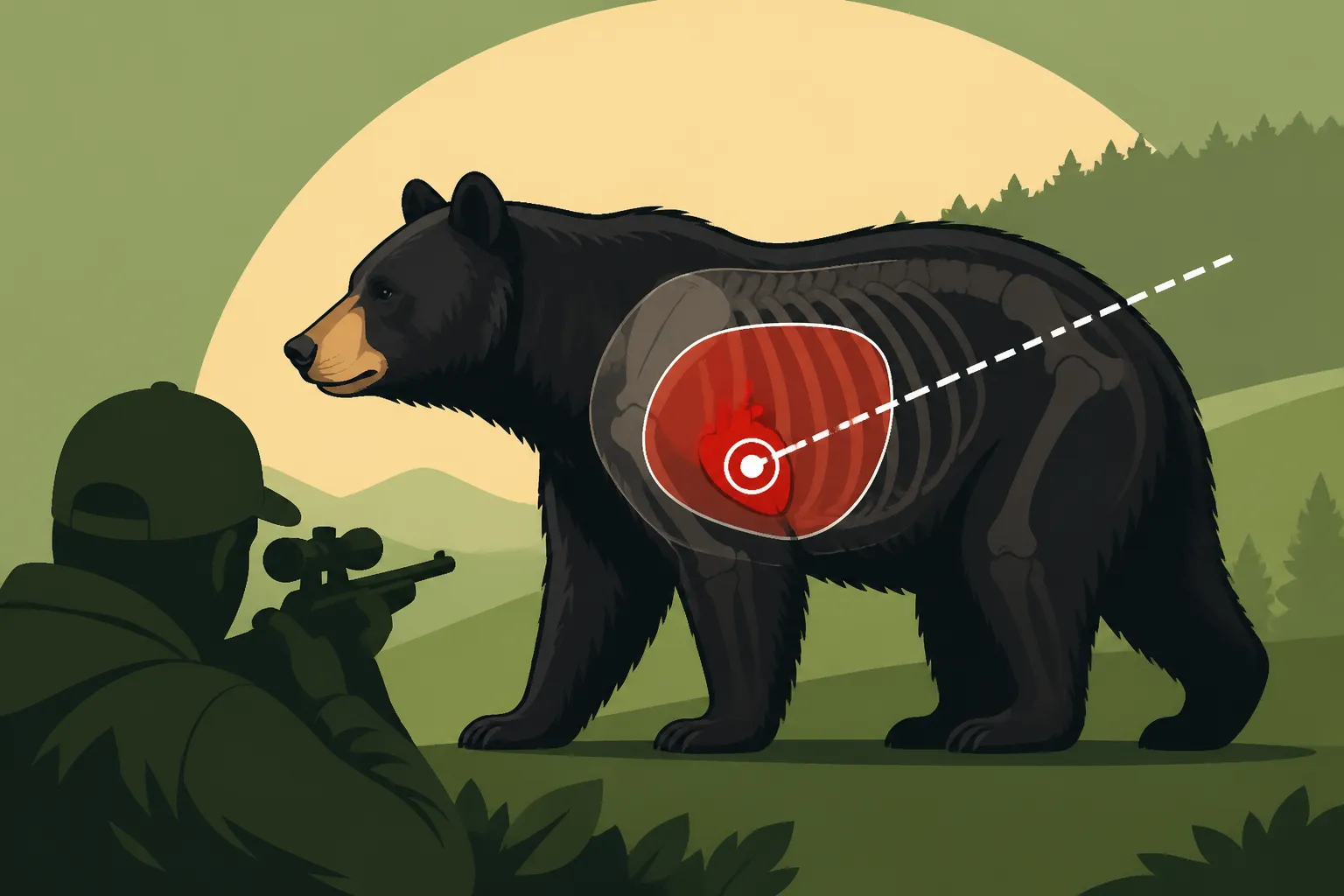
The lungs of a black bear are surprisingly high in the chest cavity, extending well up into the shoulder area. The heart sits low and forward, tucked just behind the leg bone when the bear is broadside. It’s critical to remember that the front leg, when extended forward, actually protects a good portion of the vitals. When the leg is back, it opens up that area just behind the shoulder. For an ideal broadside shot, you're generally looking to aim about one-third of the way up from the bottom of the chest, and just behind the line of the front leg when it's positioned naturally under the bear. Think of a line that runs from the armpit straight up, and then another line that runs horizontally across the mid-chest. Where they intersect, just behind that leg, is your sweet spot. This allows you to hit both lungs and, ideally, catch the top of the heart or major blood vessels.
Skeletal Structure and Major Organs to Avoid
Understanding the skeletal structure is crucial because bones can deflect or stop your projectile, especially if you're hunting with a bow or a smaller caliber rifle. A bear's shoulder blade is dense and can be surprisingly robust. While a high-powered rifle might punch through it, it's generally best to avoid hitting the heavy bone directly, as it can cause significant meat damage and potentially not reach the vitals effectively.
The liver is a large, highly vascular organ located just behind the diaphragm, and a hit here will eventually be lethal, but it's not a quick kill. A liver shot often results in a prolonged tracking job, and nobody wants that. The paunch (stomach and intestines) lies further back, and a gut shot bear is almost certainly a lost bear, suffering for days. The spine runs along the top, and while a spine shot is instantly incapacitating, it's a small target, and a shot just below or to the side of it can result in a crippling injury without being immediately fatal. When you consider the sheer mass of a Virginia's Black Bear Population, you realize how vital precision is. A good mental picture, perhaps from a scouting app like GoHunt that allows for anatomical overlays, can really help solidify this understanding.
Comparing Bear and Deer Anatomy Considerations
If you're primarily a deer hunter, you might assume bear vitals are similar, but there's a key difference: the bear's shoulder. A deer's shoulder blade is usually lower and less dense than a bear's. A bear's heart and lungs are tucked deeper and often slightly further forward, under the heavy musculature and bone of the shoulder. This means that a shot placed exactly where you'd aim for a deer's heart-lung area might hit the shoulder bone or only one lung in a bear.
Think of it this way: a bear's chest is deeper and more conical than a deer's. The broad, thick chest of a bear means you need to aim a bit lower and slightly further forward than you might for a whitetail, keeping that leg position in mind. For deer, many hunters aim for a "crease" behind the shoulder. For bears, you often want to aim a little into that shoulder mass, but still behind the leg, to get both lungs and the heart without hitting the heavy shoulder bone directly. It’s a subtle but critical distinction that can make all the difference in achieving a quick, clean kill on a magnificent animal.
Optimal Shot Angles and Zones for Black Bear
So, you’ve done your homework on bear anatomy. Now, let’s talk about the angles that give you the best chance of putting that projectile right where it needs to be. Every hunting scenario is different, but some shot angles offer a much higher probability of success than others. Understanding these optimal angles, and just as importantly, those to avoid, is the mark of a truly responsible hunter. Remember, the goal isn't just to hit the bear, but to hit it ethically and effectively.
The Broadside Shot: Your Best Bet
Without a doubt, the broadside shot is the gold standard for black bear hunting, whether you're using a rifle or a bow. This angle presents the largest, clearest target to access the vital organs. When a bear is standing perfectly perpendicular to you, both lungs and the heart are accessible, offering the highest margin for error within the kill zone.
For a broadside bear, visualize that line running up from the middle of the front leg, where it meets the chest. Your aim point should be about one-third to halfway up the chest, directly behind that leg. This placement ensures your bullet or arrow passes through both lungs and has a high probability of striking the heart or the major arteries above it. If you're Hunting Mountain Bears in November from a ridge or a treestand, adjust your vertical aim slightly to account for the angle, always aiming for the exit side to ensure the projectile travels through the full depth of the vitals. This is where practicing with your Rifle Calibers for Virginia Bear and understanding bullet trajectory truly pays off.
Quartering-Away: Precision is Key
The quartering-away shot is another excellent option, especially for bowhunters, but it demands more precision. In this scenario, the bear is angled away from you, exposing the ribs on the far side and allowing your projectile to travel through the vitals without encountering the heavy shoulder bone.
For a quartering-away shot, your aim point will be further back than a broadside shot. You want to aim for the opposite shoulder, meaning you're aiming to drive your projectile diagonally through the bear, entering behind the rib cage on your side and exiting through the vitals on the far side, ideally catching both lungs and the heart. The entry point will be slightly behind the last rib on your side, angled towards the opposite front leg. This shot requires careful consideration of the angle and the bear's movement. It's not a shot to take if you're unsure of the exact angle or if the bear is moving quickly. If you're on a Spot-and-Stalk Tactics for Mountain Bears hunt and the bear presents this angle, take your time, stabilize your shot, and ensure you have a clear path to the vitals.
Frontal Shots: High Risk, High Reward
A frontal shot, where the bear is facing directly towards you, can be lethal, but it's generally considered high-risk and is often discouraged, especially for bowhunters. For rifle hunters, it can be effective if executed perfectly, but the margin for error is extremely small.
If you must take a frontal shot with a powerful rifle, your aim point is the center of the chest, slightly low. You're trying to pass the projectile through the sternum and directly into the heart/lungs. The challenge is the dense bone structure of the sternum and the relatively small target presented by the vitals from this angle. A slight deviation can result in a superficial wound or a hit to the neck or head that may not be immediately fatal. Unless you have absolute confidence in your shooting ability, a stable rest, and a bear that is perfectly still at a close range, it's usually best to pass on a frontal shot and wait for a better opportunity. Remember, patience is a hunter's best friend.
Angles to Absolutely Avoid
Just as important as knowing where to shoot is knowing where not to shoot. Some angles offer almost no chance of an ethical kill and should always be passed up.
- Quartering-To: This is probably the worst shot angle. The bear is facing towards you at an angle, exposing its heavy shoulder and often the stomach contents first. Your projectile would have to penetrate a significant amount of bone and muscle before reaching the vitals, making a clean kill highly unlikely. You're much more likely to wound the bear or hit non-vital organs.
- Rear-Facing: A shot from directly behind the bear offers no access to the vital organs. This would be a gut shot, leading to immense suffering and a lost animal. Never take this shot.
- Head or Neck Shots: While a head or spine shot is instantly fatal, the target area is incredibly small. A slight miss can result in a jaw injury, a maimed bear, or a non-fatal wound. Unless you are a highly skilled marksman with pinpoint accuracy at close range and absolutely no other option, these are generally not recommended for big game hunting, as the risk of wounding is too high.
- Running Shots: Never shoot at a running bear. It's incredibly difficult to judge speed, distance, and shot placement, leading to a very high probability of wounding. Wait for the bear to stop and present an ethical shot.
It’s always better to let a bear walk away than to take a questionable shot. Your reputation as a responsible hunter, and the animal's welfare, depend on it.
Practical Considerations for Shot Placement in the Virginia Woods
Hunting black bears in Virginia isn't like shooting at a static target on a range. The environment, your setup, and the bear's behavior all play massive roles in whether you can execute that perfect shot. From the dense cover of the George Washington National Forest to the rolling hills of the Piedmont, every situation presents its own unique challenges that can influence your shot placement.
Treestands vs. Ground Blinds: Impact on Angle
Your hunting setup significantly affects your shot angle. If you're perched high in a treestand, you'll inherently have a downward angle on the bear. This can be an advantage, as it often helps you avoid hitting the shoulder blade directly on a broadside shot, driving the projectile down through the lungs. However, you need to adjust your aim point accordingly. For a treestand shot, instead of aiming strictly behind the leg, you'll want to aim slightly further back and lower to account for the angle and ensure your projectile exits through the opposing leg pocket, maximizing vital damage. Using a sturdy, well-placed stand in an area known for Where Mountain and Piedmont Bears Range can give you a clear advantage.
On the other hand, hunting from a ground blind or still-hunting means you'll typically have a flatter shot angle. This requires aiming precisely for that "sweet spot" behind the shoulder, without the benefit of a downward trajectory to help clear the shoulder bone. Ground blinds often offer more concealment but can limit your shooting lanes. Whichever method you choose, practice shooting from similar angles to what you expect to encounter in the field.
Estimating Range and Bear Size Accurately
Estimating distance in the woods can be tricky, especially with a large animal like a bear. Their size can sometimes make them appear closer than they actually are. Using a rangefinder is almost mandatory, particularly if you're hunting with archery gear. Even with a rifle, knowing the exact yardage allows you to compensate for bullet drop and ensure precise placement.
Beyond distance, accurately judging a bear's size is also important, as a larger bear might have a thicker hide and denser bone structure, requiring a powerful enough projectile. A good quality set of binoculars can help you assess the bear thoroughly before committing to a shot. Remember, Virginia's Virginia Bear Season Rules dictate when and where you can hunt, so be mindful of those regulations while scouting and preparing.
Here's a quick reference for common shot types and aim points:
| Shot Angle | Primary Vitals Targeted | Aim Point Recommendation | Considerations |
|---|---|---|---|
| Broadside | Heart, Both Lungs | One-third to halfway up chest, just behind front leg when extended. | Most forgiving shot. Account for treestand height by aiming slightly lower/further back. |
| Quartering-Away | Heart, Both Lungs | Entry behind last rib on your side, angled towards opposite shoulder. | Requires precision. Good for bowhunters. Avoid if bear is moving quickly. |
| Frontal | Heart, Both Lungs | Center of chest, slightly low. | High risk, rifle only. Small target, dense sternum. Best avoided if possible. |
| Quartering-To | None (Avoid) | N/A | Very high risk of wounding. Pass this shot. |
| Rear | None (Avoid) | N/A | Leads to gut shot, suffering. Pass this shot. |
Environmental Factors: Cover, Light, and Bear Behavior
Virginia's hunting landscape is diverse, from thick Appalachian ridges to dense Piedmont river bottoms. All this cover can obscure your shot. Always ensure you have a clear, unobstructed shooting lane to the bear's vitals. A small twig or branch can deflect an arrow or even a bullet, leading to a poor hit. Taking a moment to confirm your lane is clear is crucial.
Lighting conditions also play a huge role. Early morning and late evening, prime bear movement times, often come with low light. Ensure your optics are clear and your sight pins (for archery) or reticle (for rifle) are visible. A low-light scope, or an illuminated reticle, can be a game-changer when seconds count. Bear behavior is another factor. Are they calm and feeding, or alert and skittish? A calm, stationary bear offers a much better shot opportunity than one that's about to bolt. Pay attention to how the bear is reacting to its surroundings. Perhaps using a feature like those found on GoHunt, you can review historical weather patterns and light conditions for your chosen hunting grounds, helping you anticipate the conditions.
Post-Shot Procedures and Bear Recovery
You’ve made the shot! The bear reacts, maybe runs a short distance, and then vanishes into the thick cover. This is where the mental game truly begins. Your actions in the immediate aftermath of the shot are just as important as the shot itself in ensuring a successful and ethical recovery. Rushing in too quickly is one of the biggest mistakes a hunter can make when Handling a Bear After the Shot.
Waiting Period: Patience is a Virtue
Resist the urge to immediately jump out of your stand or blind and pursue the bear. This is probably the hardest part for any adrenaline-fueled hunter. A wounded bear, even fatally hit, can travel a surprising distance, and if pushed too soon, it might run further and bed down in an even thicker, more inaccessible spot.
The standard recommendation for a chest-shot bear (heart/lungs) is to wait at least 30-60 minutes, preferably longer. If you suspect a gut shot or a less-than-ideal hit, extending that wait to 4-6 hours, or even overnight if conditions allow (cool temperatures, no rain), is crucial. This gives the bear time to bleed out and stiffen up. When you think about Virginia's Black Bear Population and their incredible toughness, you understand why this patience is so vital. If it’s late in the day and you have a questionable hit, it might be best to back out completely and return with a tracking dog or a larger group in the morning.
Tracking Blood Trails: What to Look For
Once you begin tracking, take it slow and look for every single sign. Black bear blood can be sparse, especially if they ran through thick brush that wipes the blood off their fur. Look not just for blood, but also for disturbed leaves, broken twigs, scuff marks, and hair.
- Color of Blood: Bright red, frothy blood usually indicates a lung hit, which is a good sign. Dark red blood might suggest a liver hit. Greenish or brownish fluid with stomach contents points to a gut shot, which means a much longer wait.
- Location of Blood: A good blood trail right from the point of impact is ideal. If the blood trail quickly fizzles out, it might indicate a superficial wound or a hit high in the body that doesn't bleed externally as much.
- Bear Behavior: Did the bear stumble, hunch up, or make a distinctive sound after the shot? These are all clues. A bear that "bows" its back or hunches often indicates a gut shot. A quick, explosive sprint followed by silence often points to a heart/lung shot and a quick demise.
Mark your last known blood or sign with flagging tape or a piece of toilet paper. Use a GPS device or a mapping app like GoHunt to mark the spot where you shot, the point of impact, and the last sign. This creates a breadcrumb trail that can be invaluable in case you lose the trail.
Handling a Wounded Bear Scenario
A wounded bear, especially one that is still alive when you approach, can be extremely dangerous. They are powerful animals and will defend themselves fiercely if cornered. Never track a wounded bear alone. Always go with at least one other person, preferably two, and ensure everyone is armed and understands the plan.
Approach the area where you last saw the bear with extreme caution. Watch for any movement, listen for sounds, and observe disturbed vegetation. If you find the bear still alive, give it a finishing shot quickly and safely, aiming for the vitals or, if safe and necessary, the brain. Maintain a safe distance and be prepared for a quick follow-up shot. This is a situation where having a powerful, reliable firearm is non-negotiable.
Retrieving and Preparing Your Harvest
Once you've safely recovered your bear, the work really begins. Black bears are heavy, and often fall in challenging terrain. Field dressing immediately is crucial, especially if temperatures are mild, to allow the carcass to cool quickly. You can often roll the bear onto its back, prop it open, and gut it. If you're deep in the backcountry, you might consider quartering the bear and packing it out. Given their size, bringing game bags and strong rope or a game cart is a must for most Bear Hunting Gear in the Mountains outings.
Remember that all harvested bears in Virginia must be reported to the DWR. This is a critical step in Virginia Bear Checking Requirements. You'll typically need to call the DWR's toll-free reporting line or use their online reporting system or mobile app within a specific timeframe after the kill. This ensures accurate harvest data, which helps wildlife biologists manage the bear population effectively for future generations of hunters.
Disclaimer
Hunting is an inherently dangerous activity. This guide is for informational purposes only and should not replace professional hunter education, direct experience, or adherence to all local, state, and federal hunting laws and regulations. Always prioritize safety, ethics, and responsible hunting practices. The author and publisher are not responsible for any accidents, injuries, or legal issues that may arise from the use of this information.