Why Virginia Splits Spring Turkey Into Two Periods
It’s a common moment of confusion for Virginia turkey hunters: you’re geared up for spring, pouring over the regulations, and suddenly you hit the part about the split season. Why the heck does Virginia carve up its spring turkey season into two distinct periods, with different rules for each? It can feel like an unnecessary complication when all you want to do is chase gobblers, but trust me, there's a thoughtful, biologically sound reason behind it. This guide will walk you through exactly why Virginia manages its spring turkey season this way and how you can make the most of each period.
Understanding the Virginia Spring Turkey Season Structure
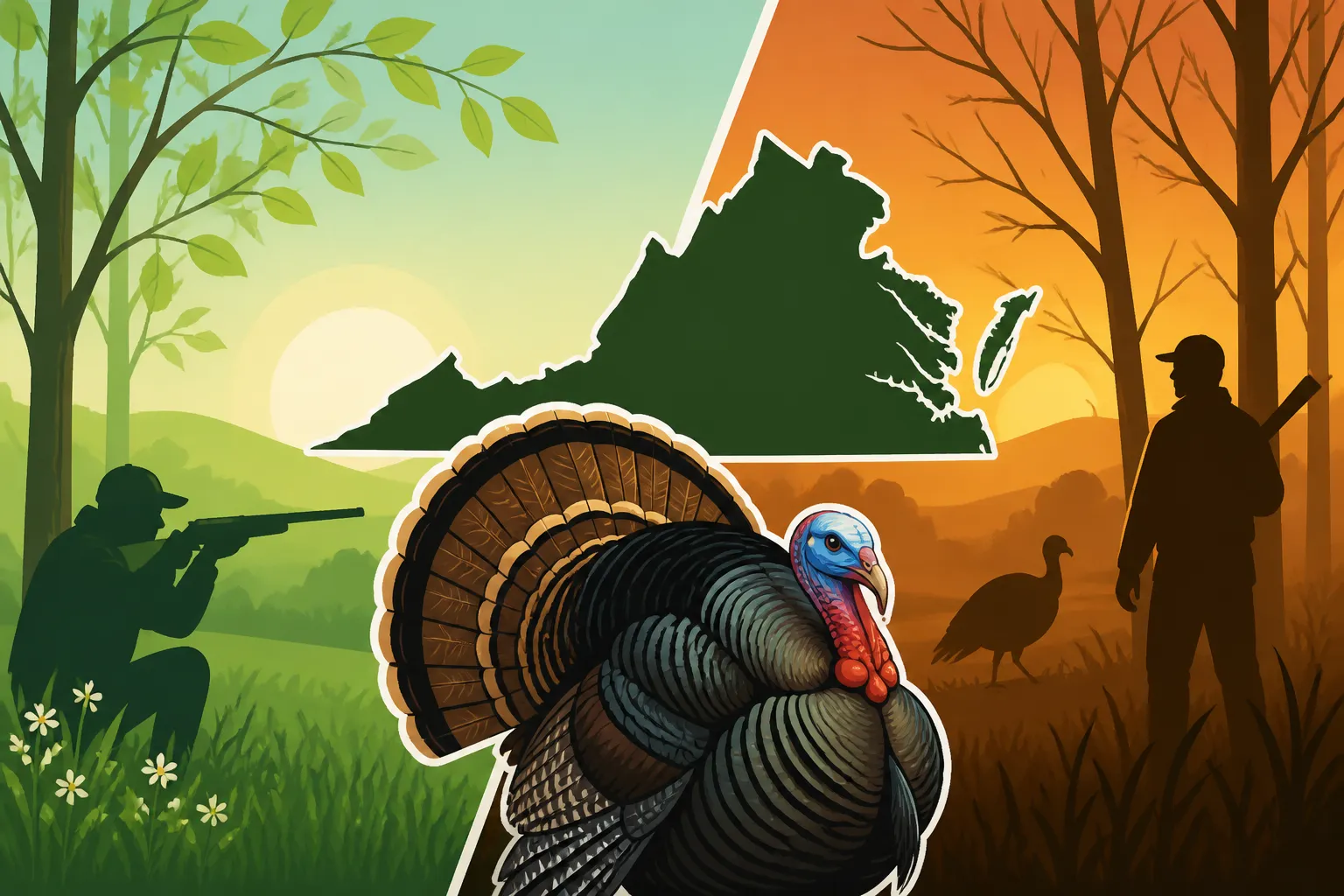
Virginia’s Department of Wildlife Resources (DWR) carefully crafts hunting seasons to balance hunter opportunity with sustainable wildlife management. For wild turkeys, this means a spring season that accounts for their unique breeding cycle. Unlike some states with a single, continuous season, Virginia implements a split system designed to protect the breeding population while still giving hunters ample chances to tag a bird.
The Early Period: Morning-Only Hunts
When the spring turkey season first kicks off, hunters are restricted to morning-only hunts. Historically, this has meant that hunting concludes at noon each day, a rule that has been in place for good reason. This specific timeframe, usually spanning the first two to three weeks of the season, coincides with the peak of the wild turkey breeding cycle. During this crucial time, gobblers are actively seeking hens, strutting, and doing their best to attract a mate. Hens are busy initiating nests and beginning their incubation period.
The decision to limit hunting to mornings during this initial phase is a direct response to the biological needs of the turkey population. It aims to minimize disturbance to nesting hens and allow gobblers to focus on breeding without constant pressure throughout the entire day. While it might feel restrictive to have to pack up and leave the woods at midday, it’s a conservation measure designed to ensure the long-term health and productivity of Virginia's wild turkey flock. It's also during this time that you might be looking for insights into things like Virginia Early Turkey Period Closing Time to make sure you're always in compliance.
The Late Period: All-Day Opportunities
As the spring season progresses, typically starting in late April or early May, the rules shift, and hunting becomes an all-day affair. This means you can stay in the woods from half an hour before sunrise until half an hour after sunset, giving you significantly more flexibility. This change in regulations reflects a natural transition in the turkeys' behavior and breeding cycle. By this point, many hens have successfully bred and are either on their nests incubating eggs or have already hatched poults.
With a larger portion of the hens committed to nesting, the intensity of gobbler breeding activity often begins to wane. However, there are still unbred hens and "lone wolf" gobblers out there, perhaps those that were less successful earlier in the season or lost their hens to predators. Opening up to all-day hunting at this stage provides hunters with extended opportunities without significantly impacting the overall reproductive success of the flock. It allows hunters to adapt their strategies, perhaps focusing on later morning or afternoon hunts when gobblers might be more inclined to travel and respond to calls, having been deserted by their hens. If you're planning your outings, understanding Virginia Late Turkey Period Hours is crucial for maximizing your time in the field.
The Youth and Apprentice Weekend
Before the main spring season even begins, Virginia often hosts a special Youth and Apprentice Weekend. This is a fantastic initiative designed to introduce new, younger hunters to the sport and allow them to gain experience in a less pressured environment. This special weekend typically follows the same morning-only rules as the early general season, providing a consistent framework for these budding hunters. It’s a dedicated time for mentors to pass on their knowledge and passion, focusing on education and safety. For those looking to participate or mentor, checking the exact dates and rules for the Virginia Youth and Apprentice Turkey Weekend is always a good first step.
The Biological Rationale Behind the Split
The DWR's decision to split the spring turkey season isn't arbitrary; it's deeply rooted in the biology and ecology of wild turkeys. Understanding these underlying reasons can help hunters appreciate the regulations and even inform their hunting strategies.
Protecting Nesting Hens
The primary driver behind the morning-only hunting during the early season is the protection of nesting hens. In spring, hens initiate nests and begin laying a clutch of eggs, typically 10-12. Once a hen has laid her full clutch, she begins a roughly 28-day incubation period. During this time, she is highly vulnerable to disturbance and predation.
If hunting pressure were allowed all day, there would be a significantly increased chance of disturbing incubating hens, causing them to abandon their nests, or making them more susceptible to predators while away from their nests. By restricting hunting to mornings, the DWR ensures that hens have a prolonged period of peace and quiet in the afternoons and evenings to tend to their nests without human interference. This window allows them to continue their crucial role in propagation, leading to higher nesting success rates and ultimately more poults joining the population. This strategic timing is vital for the overall Virginia Turkey Population Trends.
Maximizing Breeding Success
The early spring is the peak breeding period for wild turkeys. Gobblers are most active and vocal, strutting, gobbling, and attempting to mate with as many hens as possible. During this time, gobblers are often "henned up," meaning they are with a group of hens. As morning progresses, these hens typically break away to visit their nests or feed, leaving the gobbler alone and often more responsive to a hunter's calls.
The morning-only restriction acknowledges this natural behavior. It allows gobblers a significant portion of the day to continue their breeding activities undisturbed, ensuring that most hens are bred successfully. If hunters were pursuing gobblers all day, it could disrupt these vital breeding interactions, potentially reducing the overall fertilization rate and the number of fertile eggs laid. By allowing the natural breeding cycle to unfold with minimal human interference for a significant portion of the day, the split season helps maximize the reproductive output of the turkey flock. It’s about letting nature take its course when it matters most.
Population Management and Hunter Opportunity
The DWR's objective isn't just to protect turkeys; it's also to provide robust hunting opportunities for Virginia's sportsmen and women. The split season is a sophisticated tool that allows them to achieve both. By carefully monitoring Virginia Spring Turkey Harvest Numbers and poult production, the DWR can adjust the season length and structure as needed.
The early, limited-hour period ensures that the core breeding population is minimally impacted, safeguarding future generations of turkeys. The later, all-day period then expands opportunities for hunters once the most critical phase of nesting is past. This two-pronged approach allows for a longer overall season than might be possible with a single, all-day format from start to finish, which could put undue pressure on nesting hens. It’s a delicate balance, allowing hunters to experience the thrill of spring turkey hunting while maintaining a healthy, vibrant turkey population across the Commonwealth. The ultimate goal is to allow for sustainable hunting year after year, right up to the Virginia Turkey Season Closing Date.
Navigating the Split Season for Success
Understanding why the season is split is one thing; figuring out how to hunt effectively during each period is another. The changing rules and turkey behaviors demand different approaches, and adapting your strategy is key to success.
Early Season Tactics for Pressured Birds
During the early, morning-only period, gobblers are often "henned up." This means they'll likely be with a flock of hens as they fly down from the roost. Your challenge is to either call the gobbler away from his real hens or wait patiently for the hens to leave him, making him lonely and more susceptible to your calling. This takes patience and precision.
One effective strategy is to try to get as close to the roost as safely and legally possible before dawn. Use soft calls, like hen yelps or tree yelps, to pique a gobbler's interest. Once they fly down, if they go with hens, you might need to adjust your setup, perhaps trying to cut off their path or set up where the hens might lead him. Aggressive calling can sometimes work, but often a more subtle approach is best to make your calls sound like a lone, available hen. Scout hard to find areas with less hunter pressure, as gobblers in high-pressure zones become very wary quickly. You might find success using a ground blind or setting up against a large tree, as detailed in Setting Up Against a Big Oak, to conceal your movements.
Remember that you only have until noon, so your window of opportunity is limited. Focus on prime morning spots like field edges, open timber, or ridge tops where gobblers like to strut and display. Plan your approach and exit carefully to avoid spooking birds that might still be in the area. Early season also lends itself well to focused, strategic calling sessions like those covered in Calling a Virginia Gobbler Off the Roost.
Late Season Adjustments: All-Day Flexibility
When the season shifts to all-day hunting, your strategies can become much more dynamic. By this point, many hens are committed to nests, leaving gobblers feeling a bit more solitary and often more responsive to calls. This can be a fantastic time to find a "hot" gobbler that’s ready to commit.
With the extended hours, you can afford to be more patient or cover more ground. Don't be afraid to try a "run-and-gun" approach, moving through the woods, stopping to call, and listening for responses. If you get a gobbler to answer, you have the flexibility to pursue him throughout the day. This is when Run-and-Gun Turkey Tactics on Public Land can really shine. Consider focusing on areas with good cover, food sources, and water, as turkeys will still need to feed and drink. Sometimes gobblers go quiet in the late season, so being persistent and flexible is key, as discussed in When Virginia Gobblers Go Quiet in May.
Afternoon hunts can be particularly productive. Gobblers that were with hens in the morning might be alone and lonely by late afternoon, making them more receptive to your calls. They might also be more willing to travel across open areas or come into fields later in the day. Field edges, especially in the Piedmont region, can be prime spots for late-season action, so consider strategies like Turkey Tactics for Piedmont Field Edges. Utilize the full daylight hours; just because the early season dictated a noon exit doesn't mean you should limit yourself now.
Using Technology for Strategic Planning
In both periods of the split season, modern technology can give you a significant edge. Mapping applications like GoHunt offer invaluable tools for pre-season scouting and in-the-field navigation. With detailed topographic maps, aerial imagery, and property line overlays, you can identify potential roosting areas, strut zones, travel corridors, and even locate overlooked pockets of public land.
GoHunt's features allow you to drop pins for gobbling activity, potential setups, or even areas where you’ve seen fresh sign. This digital record-keeping becomes incredibly useful as you track turkey patterns throughout the different phases of the split season. You can mark where hens consistently lead gobblers in the early season, or where lone gobblers might be frequenting in the late season. Furthermore, the ability to check weather patterns, sun angles, and even historical harvest data (if available through DWR and integrated into platforms like GoHunt) can help you predict turkey movement and plan your hunts more effectively, especially when considering the short window of the early period or the expanded opportunities of the late period.
Using such platforms can also help you avoid areas with heavy hunter pressure, guiding you to less-traveled spots where turkeys might be more relaxed and responsive. Being able to visualize your hunting area and create detailed plans, even on your phone, is a game-changer for navigating the complexities of Virginia's split spring turkey season.
Virginia Spring Turkey Season Overview
To help you keep track of the key differences, here's a quick table summarizing the general characteristics of each period:
| Feature | Early Period (Typically April) | Late Period (Typically May) |
|---|---|---|
| Hunting Hours | Half-hour before sunrise until noon | Half-hour before sunrise until sunset |
| Gobbler Behavior | Often "henned up," focused on breeding. May be harder to call off hens. | More likely to be solitary, actively searching for unbred hens, potentially more responsive. |
| Hen Behavior | Actively breeding, initiating nests, some beginning incubation. Highly vulnerable. | Many are on nests, some have hatched poults. Less active in breeding pursuit. |
| Hunter Opportunity | Limited window, requires precise timing and strategy. | Extended hours, more flexibility for run-and-gun or patient, all-day sits. |
| Conservation Focus | Minimize disturbance during peak nesting/breeding. Protect breeding hens. | Provide extended opportunity once critical nesting phase largely past. |
| Calling Strategy | Often subtle, patient. Can try to intercept or wait for hens to leave gobbler. | Can be more aggressive; adaptable to gobbler's mood throughout the day. |
Disclaimer
Please remember that hunting regulations, season dates, and bag limits can change. It is always the hunter's responsibility to consult the most current Virginia Department of Wildlife Resources (DWR) regulations before heading into the field. This guide provides general information and recommendations but should not be considered a substitute for the official DWR hunting regulations.