James River WMA Bottomland Deer Ground
Many hunters dream of vast mountain ridges or sprawling agricultural fields when they think of deer hunting in Virginia. But often, some of the most overlooked — and productive — ground lies hidden within the dense, wet, and often challenging river bottomlands. If you’ve ever felt overwhelmed by the thought of tackling thick, swampy terrain, or wondered how on earth to find deer in such a place, you’re not alone. This guide is going to strip back the mystery of hunting the James River WMA’s bottomland deer ground, giving you the practical insights and strategies you need to unlock its hidden potential.
Understanding James River WMA's Bottomland Environment
The James River Wildlife Management Area offers a diverse landscape, but its bottomland sections are truly unique. These areas, shaped by the ebb and flow of the mighty James River, present both significant challenges and incredible opportunities for the dedicated deer hunter. They demand a different kind of strategy, a different set of gear, and a keen eye for subtle details that might be missed in more traditional hunting grounds.
The Unique Ecology of River Bottoms
River bottomlands are ecological powerhouses. The rich, alluvial soil deposited by centuries of flooding creates an incredibly fertile environment, supporting a dense and diverse array of vegetation that deer absolutely love. Think about it: while deer in upland areas might have to travel significant distances to find prime browse, a bottomland can offer a smorgasbord within a relatively small footprint. You'll often find a mix of mature hardwoods like oak, maple, and sycamore, providing acorns and other mast crops, alongside dense thickets of briar, honeysuckle, and river cane. These thickets aren't just food; they are incredibly valuable bedding and security cover, especially when human pressure pushes deer out of more open areas. The constant moisture also supports lush forbs and grasses that stay green later into the season or sprout earlier in the spring, offering a consistent food source.
Beyond the plant life, the water itself is a defining feature. Numerous sloughs, oxbow lakes, and small creeks meander through the bottomland, creating natural barriers and travel corridors for deer. These water features dictate movement, sometimes forcing deer into predictable patterns as they navigate the landscape. Understanding how deer interact with these waterways—where they cross, where they prefer to skirt the edges—is fundamental to success. The combination of abundant food, dense cover, and natural travel funnels makes these areas magnetic for whitetails, often holding higher deer densities than adjacent upland forests. It's a prime example of why deer thrive in areas that humans find inconvenient.
Challenges and Opportunities of Bottomland Terrain
Hunting bottomlands, particularly those along a major river like the James, is not for the faint of heart. The terrain can be physically demanding. Expect mud, standing water, and extremely dense undergrowth that can make even a short walk feel like a marathon. Navigating these conditions quietly, especially when trying to get to a stand pre-dawn, is a significant challenge. Mosquitoes and other biting insects can be relentless, especially during the warmer early season, turning an otherwise pleasant morning into a test of endurance. Accessibility can also be an issue, with many prime spots requiring wading or even the use of a small boat or canoe to reach, deterring many hunters. This is often why the best spots remain less pressured.
However, these very challenges create incredible opportunities. The dense cover that makes walking difficult also provides unparalleled security for deer. They feel safe in these thickets, often bedding very close to trails or feeding areas. The thermal inversions often experienced in river bottoms can also work in a hunter's favor, especially during cold mornings. As cold air sinks into the hollows and river channels, it can create predictable air currents that carry scent away from your approach. Furthermore, the natural funnels created by the waterways and dense cover can concentrate deer movement into very specific, narrow corridors. While many hunters avoid these difficult areas, those willing to put in the effort often find themselves in untouched pockets of prime deer habitat, experiencing less competition and encountering deer that are less wary than those in heavily hunted public land. It’s a trade-off: more effort, but potentially greater reward.
Scouting and Locating Deer in the Bottomlands
Effective scouting is paramount in any hunting scenario, but in the intricate world of river bottomlands, it becomes an art form. The unique conditions mean that traditional scouting methods might need a tweak, and technology can play a surprisingly crucial role in deciphering the landscape. You can't just walk in blindly; you need a plan.
Interpreting Sign in a Wet Environment
Finding fresh deer sign in a constantly moist or periodically flooded environment requires a discerning eye. Rubs, for instance, might be less visible if the trees are consistently wet and the fresh rub bark is quickly darkened by moisture. However, look for more permanent damage to smaller saplings or branches, indicating repeated use. Scrapes on the other hand, especially those on muddy ground, can be exceptionally clear. Fresh mud prints around a scrape indicate recent activity, and you might even find impressions of hooves or even a dewclaw print, giving you clues about the size of the deer. Pay attention to how deer utilize dryer pockets of ground within the bottomland. These slightly elevated areas become congregation points for communication and travel.
Deer trails in bottomlands can be incredibly well-defined due to the soft, often muddy ground. Look for "superhighways" that run parallel to a creek or slough, or pathways that connect a higher, drier bedding area to a rich feeding flat. These are clear indicators of consistent travel. Flooding can, of course, wash away sign, so scouting needs to be done strategically, perhaps after a dry spell or during periods of stable water levels. Additionally, don't overlook "browse lines" — evidence of deer feeding on specific plants. In thickets, a distinct line where leaves and tender shoots have been stripped can show where deer are consistently eating. Learning to read Reading Virginia Mud for Fresh Deer Movement is a skill that will pay dividends in these environments.
Using Technology for Bottomland Reconnaissance
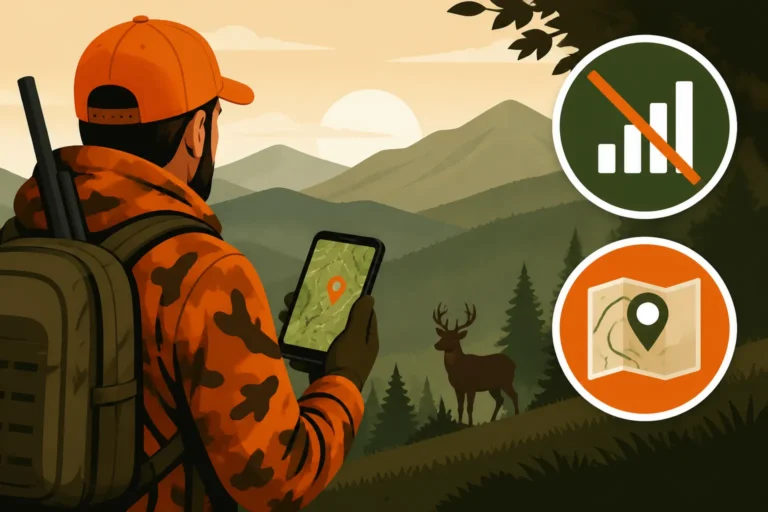
Modern mapping technology is a game-changer for scouting bottomlands. Platforms like onX Hunt and GoHunt provide invaluable aerial imagery that can reveal hidden features you'd never spot from the ground. Use these apps to identify subtle elevation changes, even a rise of just a few feet can mean the difference between wet ground and dry bedding cover for deer. Look for old oxbows, sloughs, and drainage ditches, as these often act as natural funnels. You can trace deer trails from above, pinpointing where they cross water or funnel into a thicket. This allows you to plan your access and stand locations long before you ever step foot in the mud. Reading Aerial Photos for Piedmont Deer is a critical skill, and it's even more so in river bottoms.
Topo maps within these apps are also incredibly useful for understanding subtle contour lines. A slight ridge that's barely noticeable on the ground can be a major travel corridor for deer trying to avoid deeper water. Mark potential pinch points, bottlenecks, and areas of dense cover where deer might bed. While you can't always predict current water levels, observing historical aerials might give you an idea of typical flood patterns and how they might affect deer movement. When using trail cameras, focus on main trails, pinch points, and the edges of thickets on slightly elevated ground. Ensure your cameras are weatherproof and elevated to account for potential rising water. GPS capabilities on these apps are also essential for navigating dense, featureless terrain where it’s easy to get disoriented, especially pre-dawn or post-dusk.
Hunting Strategies for James River Bottomlands
Once you've done your homework and found promising spots, it's time to translate that knowledge into effective hunting strategies. Bottomland hunting demands flexibility and a willingness to adapt to the unique challenges of the environment, from where you place your stand to how you approach your target.
Stand Placement and Access in Dense Cover
Choosing the right type of stand is crucial in bottomlands. While a traditional treestand can be effective, especially if you find a large, sturdy tree overlooking a funnel or feeding area, ground blinds often shine in these dense environments. Using a Ground Blind on Virginia Public Land can be incredibly effective when you're hunting within thick cover, allowing you to hide your movement and blend into the surroundings. Look for natural clearings or slight openings within the thickets, or even brush in your own blind against a large downed log or stump. For treestands, focus on locating pinch points created by water bodies or changes in vegetation. A small, subtle ridge that forces deer to walk a specific path can be a goldmine. Creek crossings, especially those with relatively shallow, stable banks, are also high-percentage spots.
Access is everything. Getting to your chosen location without spooking deer is paramount. This might involve wading through shallow water, using a canoe or kayak to navigate sloughs, or finding a less obvious trail that skirts the main travel routes. Consider your entry and exit routes carefully, ensuring they don't cross known deer travel paths if possible. When setting up your treestand, prioritize safety and stability, especially if you're working over soft ground. Using Climbing Sticks for Virginia Hardwoods is often a safer and more versatile option than a climbing stand in the diverse and sometimes gnarly trees found in bottomlands. Don't forget scent control; while wind is king, minimizing your scent can still make a difference, especially in close-quarters bottomland encounters.
Adapting to Changing Conditions
Bottomland deer hunting is rarely static. The environment is constantly changing, primarily due to weather and water levels, and successful hunters are those who can adapt. A heavy rainstorm might push deer out of low-lying areas, concentrating them on higher ground for a day or two, only for them to return once the water recedes. Conversely, a prolonged dry spell might make certain areas more accessible, leading to different travel patterns. Keep an eye on the river gauge for the James River, as significant rises in water levels will drastically alter deer movement. Understanding these shifts is key to knowing when and where to hunt.
Wind and thermals also behave differently in dense, wet environments compared to open hardwoods or fields. The thick canopy and varied terrain can create unpredictable swirls, so being extra vigilant about your scent cone is important. Generally, cold air will sink into low-lying areas in the morning, creating a thermal draw down the drainage, while warmer air will rise in the evening. However, dense vegetation can disrupt these patterns. Pay close attention to subtle breezes. Your best bet is to position yourself where your scent is blowing into an open area or over water, rather than directly into a bedding or feeding zone. Hunting early in the season might involve dealing with thick foliage and hotter temperatures, while later in the season, after leaf fall, visibility improves but deer might seek more thermal cover in the remaining thickets. Hunting Deer After a Cold Front can be particularly productive as deer will often move to feed heavily after inclement weather.
Essential Gear and Safety Considerations
To successfully navigate and hunt the bottomlands of James River WMA, you'll need more than just your usual hunting clothes and weapon. The unique environment calls for specialized gear and an extra emphasis on safety. Being prepared can make the difference between a successful hunt and a miserable — or even dangerous — experience.
Specialized Gear for Wet, Thick Terrain
Your footwear is arguably the most critical piece of gear for bottomland hunting. Forget your insulated hiking boots unless you know for a fact you'll be on bone-dry ground. Instead, invest in high-quality waterproof boots or chest waders. Boots for Virginia Swamps and Ridges means something different here; think knee-high rubber boots at a minimum, or full waders if you plan on navigating deeper sloughs. Lightweight, quiet rain gear is also essential, not just for rain, but for pushing through wet vegetation without getting soaked. You want something breathable yet fully waterproof, as being wet and cold can quickly ruin a hunt.
Navigation is another key area. In thick, uniform cover, it’s incredibly easy to lose your bearings. While a traditional GPS unit works, a robust phone app like onX Hunt, with its detailed satellite imagery and GPS tracking, is invaluable. Make sure your phone is fully charged and consider carrying a portable power bank. Don’t forget reliable bug repellent, especially in the early season when mosquitoes are rampant. Permethrin-treated clothing can also be a lifesaver. Finally, think about game retrieval. Dragging a deer through deep mud, over fallen logs, and through thick briars is exhausting. A sturdy deer drag, a game cart with large wheels if the terrain allows, or even a small sled can make the job significantly easier. Consider Game Bags for Warm September Days if you're out during early archery season, as the ambient heat and humidity can quickly spoil meat.
Safety First in the Bottomlands
Hunting in bottomlands introduces several unique safety concerns that hunters must take seriously. First and foremost is water safety. While many areas might seem shallow, deceptive deep spots, swift currents, or submerged obstacles can pose a real threat. Always know the depth of the water you're crossing and be aware of any currents. If using a boat, ensure you have all necessary safety equipment, including a life vest. Always tell someone exactly where you're going and when you expect to return. Cell service can be spotty in remote bottomland areas, so don't rely on it for emergency communication.
Beyond water, the dense vegetation itself can be a hazard. It's easy to trip over roots or hidden logs, so wear sturdy boots with good ankle support. Be aware of venomous snakes like copperheads, which are common in Virginia's moist, wooded areas and often found near water. A good first aid kit is not optional; it’s a necessity. It should include items for cuts, scrapes, insect bites, and any personal medications. Finally, with potentially difficult access and extraction, ensure you have a plan for retrieving a harvested animal, especially if hunting alone. Having a hunting buddy is always a good idea, as two people are far better equipped to handle a large deer and any unforeseen emergencies in challenging terrain. Remember, hunting in Virginia's bottomlands can be incredibly rewarding, but preparation and caution are your best companions.
Disclaimer
This article is for general informational purposes only and does not constitute professional advice. Laws, prices and regulations vary by location and change over time. Consult a qualified professional for guidance on your specific situation.