Waterfowl Hunting the Chesapeake Bay
For those of us drawn to the raw, untamed beauty of the Chesapeake Bay, the call of migrating waterfowl is an irresistible force. Battling the elements, deciphering ever-changing tides, and outsmarting wary ducks and geese can feel like an impossible puzzle, but the rewards are truly unmatched. This comprehensive guide will dive deep into everything you need to know to successfully and ethically hunt the legendary waters of Virginia's Chesapeake Bay.
Understanding the Chesapeake Bay's Waterfowl Appeal
The Chesapeake Bay isn't just a body of water; it's a living, breathing ecosystem, a vital artery in the Atlantic Flyway, and a temporary home for millions of migratory birds. For waterfowlers, its sheer scale and diversity present both immense opportunities and unique challenges. Understanding why birds are drawn here and what species frequent its waters is the first step toward a successful hunt.
Why the Bay is a Waterfowl Magnet
Imagine a massive, sheltered estuary, stretching over 200 miles with a shoreline exceeding 11,000 miles. That's the Chesapeake Bay, and it's a smorgasbord for waterfowl. Its vast expanse of brackish and freshwater marshes, eelgrass beds, and agricultural fields provides an unparalleled buffet of food sources. The shallow, nutrient-rich waters are teeming with submerged aquatic vegetation (SAV) like widgeongrass and sago pondweed, which are prime forage for dabbling ducks and many divers. The surrounding agricultural lands, especially on the Eastern Shore, offer vast expanses of corn, soybean, and winter wheat fields, attracting geese and dabblers looking for high-energy meals.
Beyond food, the Bay offers critical refuge. Its numerous islands, secluded coves, and expansive open water provide safe roosting areas where birds can rest and escape predation. When harsh winter weather pushes south, the Bay's relatively milder climate and ice-free waters become an essential stopover or overwintering ground for countless birds fleeing colder northern climes. This combination of abundant food, safe haven, and favorable climate creates an annual migration spectacle that hunters have pursued for generations. It’s a complex dance between nature's cycles and the birds' instincts, and understanding this rhythm is crucial for effective hunting.
Key Species and Their Habits
The Chesapeake Bay is renowned for its incredible diversity of waterfowl. You'll find a mix of dabbling ducks, diving ducks, and various goose species, each with their own preferences and behaviors. Knowing what to expect and where to find them is key.
Dabbling Ducks: These are your puddle ducks, like mallards, black ducks, gadwalls, widgeon, and pintails. They feed by tipping up in shallow water, often in marshes, tidal guts, and flooded timber. They're strong flyers and often decoying readily if the spread is set correctly and the hide is good. Mallards and black ducks are particularly prevalent, often found in both brackish marshes and freshwater impoundments or agricultural fields. When hunting the Eastern Shore, for example, you'll often see these birds working over cut cornfields near creeks.
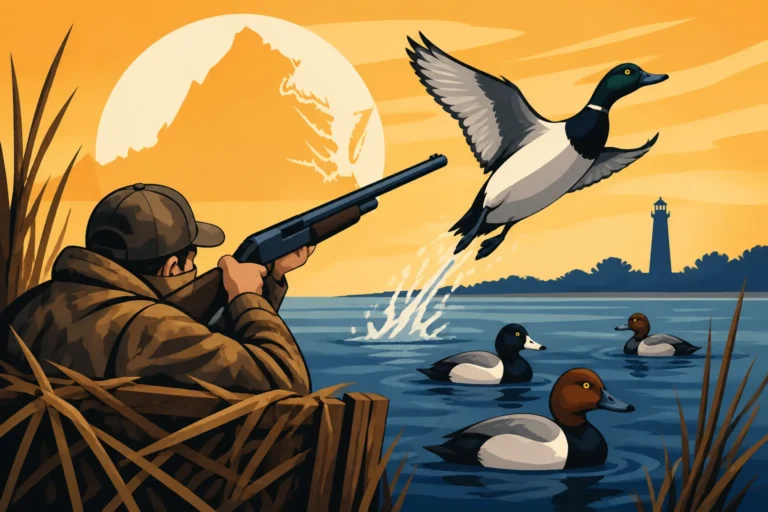
Diving Ducks: These birds, including canvasbacks, redheads, bluebills (scaup), ringnecks, and buffleheads, prefer deeper, more open water where they dive for submerged vegetation, mollusks, and small fish. The middle and lower Bay, with its deeper channels and extensive SAV beds, are prime territories for these species. Canvasbacks, in particular, are iconic Bay birds, known for their speed and wariness. Targeting divers often means deploying large decoy spreads in open water, sometimes far from shore, and using sturdy boats to handle the Bay's choppy conditions.
Geese: Canada geese are a ubiquitous presence, found both on open water and grazing in agricultural fields. Greater snow geese are also increasingly common, especially in the agricultural areas of the Eastern Shore, offering a different kind of hunting experience. Early in the season, you might encounter resident Canada geese before the larger migratory flocks arrive. Later, massive numbers of migratory Canada geese and snow geese descend upon the Bay, often concentrating in specific feeding grounds. Hunting geese often involves field blinds, large decoy spreads, and meticulous scouting to pinpoint their feeding patterns.
Migration Patterns and Timing
The timing of waterfowl migration is a delicate balance, heavily influenced by weather patterns to the north. Generally, the early season in Virginia, typically October, sees the arrival of northern-breeding wood ducks, blue-winged teal, and some early-migrating pintails and widgeon. These birds are often less pressured and can offer fast-paced action. As October progresses into November, colder fronts begin to push larger waves of mallards, black ducks, and gadwalls down the Atlantic Flyway. This is when the Bay really starts to come alive.
December and January are prime time for the true "big water" hunters, as the coldest weather up north forces the bulk of the diving ducks – canvasbacks, redheads, and scaup – into the relatively milder, ice-free waters of the Chesapeake. This period also sees the largest concentrations of Canada geese. The numbers of birds wintering on the Chesapeake Bay can be truly staggering, making it a globally significant waterfowl wintering area. Understanding these migration patterns, often observed through daily weather forecasts and online resources like GoHunt, allows hunters to anticipate which species will be present and where they might be found. A sudden cold snap in New England, for instance, often signals an influx of divers within a few days.
Navigating Virginia's Waterfowl Regulations and Zones
Hunting waterfowl on the Chesapeake Bay isn't just about understanding the birds; it's also about understanding the rules. Virginia's Department of Wildlife Resources (DWR) has a comprehensive set of regulations designed to manage waterfowl populations sustainably. Getting caught without the right licenses or stamps, or misinterpreting season dates, can quickly turn a dream hunt into a costly mistake.
Virginia's Waterfowl Zones and Seasons
Virginia is divided into several waterfowl hunting zones, each with slightly different season dates and regulations for ducks and geese. For those primarily focused on the Chesapeake Bay, the Coastal Zone is often the most relevant. This zone generally encompasses the waters and lands east of a specific line, including the entire Eastern Shore and much of the tidewater region. Understanding these boundaries is critical, as a few miles can mean a different season or bag limit. The DWR publishes a detailed annual hunting regulations booklet, which is the definitive source for these dates and zone descriptions. You can find up-to-date information on the DWR website or through their mobile app, which is incredibly handy for checking things while in the field.
Generally, Virginia's waterfowl season often begins in late September for early teal, followed by an early goose season, then a split duck and regular goose season that usually runs from October into January, with a break in between. The timing of these splits is carefully set to coincide with peak migration periods while also managing harvest pressure. It's not uncommon for hunters to start with jump-shooting wood ducks in September and finish the season targeting late-season geese in January. Always double-check the exact dates for the current season, as they can shift slightly year to year. For more specific details on these temporal boundaries, refer to the DWR's official information on Virginia Waterfowl Zones and Seasons.
Licensing, Stamps, and HIP Requirements
Before you even think about setting foot (or boat) in the Bay, you need to ensure all your paperwork is in order. It's a bit of a laundry list, but each item serves a purpose in supporting conservation.
- Virginia Resident or Nonresident Hunting License: This is your foundational license, required for all hunting activities in the state.
- Virginia Migratory Waterfowl Conservation Stamp: This state stamp specifically funds waterfowl habitat conservation within Virginia.
- Federal Migratory Bird Hunting and Conservation Stamp (Federal Duck Stamp): This iconic stamp, valid nationwide, is a must-have for all migratory bird hunters aged 16 and older. It contributes directly to the National Wildlife Refuge System. You can purchase these at most post offices, sporting goods stores, or online. The funds from the Virginia Federal Duck Stamp Requirement are crucial for maintaining the very habitats you hunt.
- Harvest Information Program (HIP) Certification: This free registration is mandatory for all migratory bird hunters in Virginia. It's how the U.S. Fish and Wildlife Service gathers vital data on hunter participation and harvest, which informs season setting and population management. It's usually a quick process done online when you purchase your licenses, and details can be found under Virginia HIP Certification for Bird Hunters.
Missing any of these can lead to fines and a ruined hunt, so take the time to acquire them well in advance. Keep digital copies on your phone or physical copies readily accessible in your hunting bag. Enforcement is strict on the Bay, and wardens are out there.
Bag Limits and Legal Shooting Hours
Understanding bag limits and legal shooting hours is not just about following the law; it's about ethical hunting and sustainable resource management.
Bag Limits: The DWR sets daily bag limits for each species of duck and goose, and these can vary based on the species, gender, or even location (though less common for ducks). For example, there's often a general duck bag limit, but within that, specific species like mallards, black ducks, and pintails might have lower sub-limits. Canvasbacks and redheads often have very conservative limits due to their population status. Goose limits can also differ significantly between early season and regular season. Always consult the official DWR regulations for the current Virginia Duck and Goose Bag Limits to avoid exceeding your limit. It’s also crucial to identify your birds before you shoot, as mistakenly taking an over-limit or out-of-season bird can carry serious penalties.
Legal Shooting Hours: Waterfowl hunting hours in Virginia generally begin one-half hour before sunrise and extend until sunset. This is a federal regulation, consistent across the country. Determining sunrise and sunset times accurately is critical, especially when you're out on the water. Many hunting apps, including those supported by platforms like GoHunt, provide precise sunrise/sunset tables based on your location. A good watch or GPS unit with this function is invaluable. Setting up your blind and decoys in the dark, well before legal shooting light, is standard practice to be ready for the first flight. Conversely, continuing to shoot after legal sunset is a common violation that is easily preventable.
Essential Gear for Chesapeake Bay Waterfowling
Waterfowl hunting on the Chesapeake Bay is a gear-intensive pursuit. The unique environment – cold, often rough water, vast distances, and varied hunting scenarios – demands specialized equipment. Skimping on quality here isn't just uncomfortable; it can be dangerous.
Shotguns, Ammunition, and Nontoxic Requirements
Your choice of firearm and ammunition is paramount for success and safety on the Bay.
Shotguns: The trusty 12-gauge shotgun reigns supreme for waterfowl. Its versatility allows it to handle a wide range of loads, from lighter loads for teal to heavy magnum loads for distant geese and hardy diving ducks. Many hunters opt for semi-automatic shotguns for their faster follow-up shots, especially when birds come in in multiples or you're pass-shooting. Reliable brands like Remington, Benelli, and Browning are popular choices, known for their durability and ability to withstand the harsh, corrosive saltwater environment. Over/unders or pumps are also perfectly suitable, depending on personal preference. Ensure your shotgun is well-maintained, especially after saltwater exposure, to prevent rust and ensure reliable cycling. For deep dives into specific shotgun setups, you might explore resources like a guide on Turkey Shotguns and Chokes, as patterning advice can cross over.
Ammunition: When hunting waterfowl, nontoxic shot is legally mandated nationwide, including all waters and lands of the Chesapeake Bay. This is a critical rule designed to prevent lead poisoning in birds. Steel shot is the most common and economical nontoxic option, available in various shot sizes. For ducks, sizes #2, #3, or #4 are popular, while for geese, BB, BBB, or T shot are often preferred for their increased energy and range. Bismuth, tungsten-matrix, and other denser alloys are also available. While more expensive, these alternatives often offer performance closer to traditional lead shot, especially at longer ranges, and can be particularly useful for wary diving ducks or large geese. Always match your shot size and choke to the target species and expected range. Details on Waterfowl Loads for Chesapeake Bay Divers can help you make an informed choice.
Chokes: Modified or Improved Cylinder chokes are common choices for most duck hunting scenarios, offering a good balance of pattern density and spread at typical decoying ranges. For pass-shooting or hunting particularly wary geese, a Full or even Extra-Full choke might be considered, but remember that tighter chokes perform differently with steel shot than with lead. Pattern your shotgun with your chosen nontoxic loads and chokes before the season to understand its true performance.
Decoys, Spreads, and Blind Setups
Decoys and a good blind are the heart of successful decoy hunting, and on the Bay, the demands are amplified.
Decoys: The size and type of decoy spread you deploy will depend on the species you're targeting.
- For Dabblers: A spread of 2-4 dozen mallard, black duck, and pintail decoys is a good starting point for marsh and shallow water hunting. Adding motion decoys, like spinning-wing decoys (e.g., Mojo Decoys) or jerk strings, can significantly enhance realism and attract passing birds.
- For Divers: Diving ducks, especially canvasbacks and scaup, often respond to much larger spreads, sometimes 50-100+ decoys. These are typically set in long lines, J-hooks, or V-patterns in open water to simulate a feeding raft. Brands like Avian-X and Tanglefree offer realistic and durable diver decoys.
- For Geese: Field hunting for Canada geese or snow geese requires specialized full-body or shell decoys. A large spread, often 3-5 dozen or more, is typical, deployed in feeding or resting patterns in harvested fields.
Decoy maintenance is crucial; keep them clean, repair cracks, and repaint them as needed to maintain realism. Secure rigging is also non-negotiable on the Bay, where currents and waves can quickly tangle or carry away expensive decoys. Using heavy anchor weights and strong lines is a must. For an in-depth look, check out our guide on Decoy Spreads for Chesapeake Bay Divers.
Blind Setups: Your concealment needs vary widely across the Bay's diverse habitats.
- Layout Blinds: These low-profile blinds are ideal for hunting ducks and geese in agricultural fields or open, shallow water where natural cover is scarce. They allow hunters to lie prone, popping up when birds are in range. Effective Layout Blind Hunting Eastern Shore Fields requires careful brushing-in to blend seamlessly with the surroundings.
- Shore Blinds: Permanent or temporary blinds built into marsh edges, cattail stands, or wooded shorelines are common. These often consist of natural materials like reeds, brush, or cedars, augmented with camouflage netting. The key is to blend in completely with the natural surroundings.
- Boat Blinds: Many Bay hunters use specialized duck boats with built-in or removable blinds. These can be pushed into marsh grass, anchored in shallow water, or even beached on small islands. Make sure your boat blind offers full concealment from above and is stable enough to shoot from.
- Natural Cover: Sometimes, the best blind is no blind at all – simply sitting in dense marsh grass or behind a natural point, wearing good camouflage, can be highly effective, especially for pass-shooting or jump-shooting.
No matter the blind type, focus on breaking up your outline, eliminating shiny objects, and ensuring you have a clear line of sight and shooting lanes.
Boats, Waders, and Cold Weather Clothing
The Bay is an unforgiving environment, and the right personal gear is essential for safety, comfort, and endurance.
Boats: A reliable boat is often the most critical piece of equipment for Bay waterfowling. You need something stout enough to handle choppy waters, strong currents, and potentially long runs. Jon boats, specialized duck boats, and larger center console boats are all used. Consider the draft of your boat – many prime hunting spots are in shallow areas that deeper V-hulls cannot access. A powerful, dependable outboard motor is essential, and many experienced Bay hunters carry a spare prop or even a small kicker motor as a backup. Navigation equipment, including GPS (many hunters use apps like GoHunt for detailed satellite imagery and land ownership overlays), depth finders, and reliable lights, is also crucial, as you'll often be navigating in the dark or in foggy conditions. Learn more about navigating the waters in our article on Marsh Boats and Push Poles.
Waders: Good quality waders are indispensable. Chest waders, preferably insulated neoprene or breathable GORE-TEX, are standard. Make sure they fit well and offer good insulation for cold water. Boot-foot waders are convenient, but stocking-foot waders with separate wading boots can offer more support for long walks through mud or marsh. Always wear a wading belt to prevent water from filling your waders if you trip or fall, which can quickly become a life-threatening situation in cold water. For extensive marsh work, selecting Waders for Cattail Marsh Hunting can make a huge difference in comfort and durability.
Cold Weather Clothing: Layering is key on the Bay. Temperatures can plummet, and the wind chill on open water can be brutal.
- Base Layers: Wicking materials like merino wool or synthetics are crucial to pull moisture away from your skin.
- Mid-Layers: Fleece or down insulation for warmth.
- Outer Shell: A waterproof, windproof, and breathable outer layer (jacket and pants) is non-negotiable. Look for durable fabrics that can withstand abrasive boat rides and brush. Brands like Sitka Gear, Kuiu, and Columbia offer excellent waterfowl-specific clothing.
- Extremities: Don't forget insulated, waterproof gloves (with a finger option for shooting), a warm hat (many hunters prefer blaze orange or pink in Virginia for safety in some scenarios), and warm, moisture-wicking socks. Hand warmers are also a lifesaver on bitter cold days.
Remember, dressing for the worst-case scenario is always wise. Hypothermia is a real and present danger on the open waters of the Bay.
Scouting and Location Selection on the Bay
Successfully hunting the Chesapeake Bay hinges on meticulous scouting. You can have the best gear and call, but if you're not where the birds want to be, you're out of luck. The Bay's vastness makes this challenging, but also incredibly rewarding when you find that sweet spot.
Reading the Water and Tides
The Chesapeake Bay is a tidal estuary, and understanding its ebb and flow is fundamental to waterfowling success. Tides influence everything from water depth and current strength to where birds feed and rest.
Water Depth: Tidal fluctuations can change water depth by several feet in some areas. A spot that was perfect for dabbling ducks at high tide might be completely dry at low tide, exposing mud flats. Conversely, prime diving duck habitat in deeper channels will remain accessible. Pay attention to tide charts (easily found online or via apps like GoHunt) and observe how different water levels affect specific locations. Birds might feed in a flooded marsh during a rising tide, then move to deeper water or loaf on exposed mud bars as the tide recedes.
Currents: Strong tidal currents can make setting decoys challenging, causing lines to tangle or decoys to bunch up unnaturally. They can also make boat handling difficult. Learning to anchor your boat and set your spread effectively against the current is a skill developed over time. Observing how Reading a Bay Marsh for a Morning Flight helps you anticipate where birds might move as the water changes.
Food Sources: Tides play a critical role in making food available. A rising tide can flood shallow marsh edges, allowing dabblers to access submerged vegetation or seeds. A receding tide might expose invertebrates on mudflats, drawing shorebirds and occasionally ducks. Understanding how these factors interact will guide your setup location, ensuring your decoys are in the "dinner zone" when the birds arrive.
Identifying Key Feeding and Roosting Areas
This is where the real detective work begins. Waterfowl are creatures of habit, driven by the need for food and safety.
Feeding Areas:
- Submerged Aquatic Vegetation (SAV) Beds: These underwater grass beds are prime feeding grounds for many dabblers and most divers. Look for areas known to have healthy SAV, often found in shallower, less turbid waters. Aerial maps (GoHunt is excellent for this) and local knowledge can help identify these.
- Agricultural Fields: For geese and often mallards and black ducks, harvested corn, soybean, and winter wheat fields adjacent to the Bay or its tributaries are major attractants. Scout these fields in the late afternoon or early morning to observe flight patterns and pinpoint where birds are actively feeding. Fresh droppings and crop damage are obvious signs.
- Shallow Marshes and Ponds: Protected shallow areas within the marsh system or small freshwater ponds (impoundments) offer excellent feeding for dabblers, especially during cooler weather when open water might be rough.
Roosting Areas: Birds need safe places to rest, especially after feeding or during periods of heavy hunting pressure.
- Open Water: Large rafts of diving ducks and geese often congregate in the middle of open bays or large coves, far from shore, where they feel safe from predators.
- Secluded Coves and Islands: Protected coves, often with dense marsh grass or small islands, can serve as roosting sites, especially for dabblers and geese.
- National Wildlife Refuges and Sanctuaries: These protected areas, like portions of the Blackwater National Wildlife Refuge (though primarily in MD, the principles apply to VA's Eastern Shore refuges), provide critical undisturbed roosting. While you can't hunt directly in them, birds often fly out of these refuges to feed, creating opportunities on adjacent properties.
Scouting isn't a one-time event; it's an ongoing process. Birds' preferences can change daily based on weather, food availability, and hunting pressure.
Utilizing Public and Permitted Access Points
Access is a major consideration on the Chesapeake Bay, as much of the shoreline is privately owned.
Public Lands: Virginia offers several excellent public hunting opportunities on the Bay.
- Wildlife Management Areas (WMAs): The Virginia DWR manages several WMAs with waterfowl hunting opportunities. While some are inland, others, like Hog Island WMA on the Eastern Shore, are directly on the Bay or its tidal tributaries and offer managed waterfowl hunts, sometimes via quota draws. These often have specific rules regarding access, boat launching, and blind placement, so always check the WMA's regulations.
- National Wildlife Refuges: Refuges like Back Bay National Wildlife Refuge or portions of Chincoteague National Wildlife Refuge offer limited, permitted hunting opportunities. These hunts are highly regulated, often with application periods and draw systems. Getting a permit for Getting a Chincoteague Refuge Hunt Permit can be challenging but incredibly rewarding.
- General Public Waters: While the shoreline might be private, the vast majority of the water itself in the Chesapeake Bay is public. This means if you can launch a boat from a public ramp and navigate to a location outside of marked private property, you can often hunt. However, setting decoys or blinds that encroach on private land or are too close to residential areas can lead to conflicts, so always be mindful of property lines, which can be seen clearly on platforms like GoHunt.
Private Land and Leases: Gaining permission to hunt private land, especially agricultural fields near the Bay, can provide some of the best and least pressured hunting. This usually involves:
- Knocking on Doors: Politely asking landowners for permission well in advance of the season is still a tried-and-true method.
- Hunting Leases: Many farmers lease their land for waterfowl hunting. These can be expensive but often provide consistent access to prime spots.
- Guide Services: If private access is difficult to secure, hiring a reputable guide service is an excellent option. They have the knowledge, equipment, and private access to put you on birds.
Always respect landowner rights, whether you have explicit permission or are hunting adjacent to private property. Being a good steward of the land and a respectful hunter can open doors for future opportunities.
Effective Hunting Strategies for Bay Waterfowl
Once you understand the birds and have your location scouted, it's time to put a plan into action. The Chesapeake Bay offers a variety of hunting scenarios, each requiring different tactics.
Layout Blind Hunting Eastern Shore Fields
This strategy is highly effective for hunting geese and often dabbling ducks like mallards that feed in agricultural fields. Layout Blind Hunting Eastern Shore Fields is a classic approach that relies on meticulous concealment and large decoy spreads.
The Setup: Hunters position low-profile layout blinds (essentially camouflaged coffins you lie in) directly within a field where birds have been observed feeding. The blinds are then "brushed in" with local vegetation – corn stalks, cut soybeans, winter wheat, or whatever matches the field. The goal is to make the blinds disappear into the landscape. A large spread of full-body goose decoys (often 3-5 dozen or more for Canada geese, and hundreds for snow geese) is then deployed around the blinds, simulating a feeding flock. Motion decoys, like flags or flyers, can add realism.
The Hunt: Hunters lie concealed in their blinds, watching for incoming flocks. When birds commit and begin to circle, hunters use calls to "work" them closer, often employing soft clucks and moans to create a realistic feeding chatter. The key is to wait until the birds are within optimal shooting range, with their landing gear down, before calling the shot and springing up from the blinds. This can be exhilarating, as birds often drop right into your spread, offering close-range shots. Patience is paramount; don't jump up too early and flare a flock. This method is particularly effective when targeting late-season geese that are wary from weeks of hunting pressure.
Hunting Chesapeake Bay Diving Ducks
Chasing diving ducks on the open waters of the Chesapeake is a specialized and often demanding endeavor. These birds are fast, resilient, and prefer the deeper, rougher parts of the Bay. To learn more about this specific challenge, check out our guide on Hunting Chesapeake Bay Diving Ducks.
The Setup: Diver hunting often involves using large, heavy-duty decoy spreads, typically 50 to 100+ decoys, set in long lines, J-hooks, or V-patterns in open water. These patterns mimic large rafts of feeding or resting ducks. The decoys need heavy anchors and robust rigging to withstand currents and waves. Hunters typically use sturdy boats, often camouflaged and sometimes equipped with pop-up blinds, anchoring offshore in strategic locations. The boat itself often serves as the blind, or hunters might utilize natural points or small islands if available.
The Hunt: Diver hunting is less about intricate calling and more about location, large numbers of realistic decoys, and persistence. Divers often fly low and fast over the water. Once they spot the spread, they may make a few passes before committing. Aggressive calling can sometimes work, but often, a simple low "growl" or "burr" call is all that's needed to reassure them. Shooting is typically done when birds are committed to the spread and begin their final approach. Due to the nature of open water, retrieves can be challenging, requiring a fast boat and sometimes a patient dog. Safety is paramount on open water; always be aware of changing weather and boat traffic.
Pass-Shooting and Jump-Shooting Tactics
These methods are less about elaborate setups and more about stealth, quick reactions, and understanding bird flight paths.
Pass-Shooting: This involves positioning yourself along a known waterfowl flight path – such as over a narrow body of water, along a river bend, or between a roosting area and a feeding ground – and shooting birds as they fly by. You're not trying to decoy them; you're intercepting them.
- Key: Thorough scouting is crucial to identify these high-traffic corridors. Often, these are areas where birds are funneling through due to terrain, wind, or distance.
- Concealment: Good concealment is still essential. Sit or stand in natural cover (dense marsh grass, behind a tree line, etc.) and keep movement to a minimum. Wear effective camouflage.
- Technique: Pass-shooting requires excellent wing-shooting skills. Birds are often moving quickly and at varying angles and distances. Lead estimation is critical. This is where practicing with clays can really pay off. This tactic is especially productive for early-season teal and wood ducks, or for wary geese that refuse to decoy.
Jump-Shooting: This is an active, often solitary hunting method that involves walking along a creek, marsh edge, or through flooded timber, flushing birds at close range, and taking quick shots.
- Habitat: Look for areas with dense cover, tight bends in creeks, or small pockets of water where birds might be hidden. Wood ducks, mallards, and teal are common targets for jump-shooting.
- Stealth: Move slowly and quietly, often against the wind to muffle sound. Use cover to your advantage to surprise birds.
- Speed: When birds flush, they explode from cover. You need to be ready to mount your gun quickly, acquire the target, and shoot efficiently. It's often a one-shot or two-shot opportunity before they're out of range.
- Safety: Always be aware of your surroundings, potential hazards, and other hunters. Never swing on a bird if you're unsure of what's beyond it. This method can be particularly effective on smaller, less pressured waterways feeding into the Bay.
Safety and Ethics on the Open Water
Hunting the Chesapeake Bay presents incredible opportunities, but it also carries inherent risks due to its expansive, unpredictable nature. Ethical conduct and rigorous safety practices aren't just recommendations; they are non-negotiable for anyone venturing out onto these waters.
Boating Safety and Emergency Preparedness
The Bay can turn from glassy calm to dangerously rough in a matter of minutes. Prioritizing boating safety is paramount.
Vessel and Equipment Checks: Before every trip, inspect your boat, motor, and trailer. Check fuel levels, battery charge, navigation lights, and emergency kill switch. Ensure all required safety equipment is onboard and easily accessible. This includes:
- Life Jackets (PFDs): One approved PFD for every person on board, and they should be worn at all times, especially in cold weather.
- Visual Distress Signals: Flares, flag, or strobe light.
- Sound Producing Device: Whistle or air horn.
- Fire Extinguisher: Charged and accessible.
- Anchor and Line: Appropriate for the size of your boat and depth of water.
- Bilge Pump: Functional, manual or electric.
- Navigation: GPS (a reliable unit or phone app like GoHunt with downloaded maps), paper charts, and a compass.
- Communication: A marine VHF radio is strongly recommended, especially on open water, in addition to a fully charged cell phone.
- Tool Kit: Basic tools for minor repairs, spare prop, shear pins.
Weather Monitoring: Always check the marine weather forecast before heading out. Pay attention to wind speed, wave height, and potential for fog or storms. Be prepared to cancel or cut short a trip if conditions are or become unsafe. High winds can quickly make even moderate chop dangerous for small duck boats.
File a Float Plan: Tell someone reliable where you are going, what time you expect to return, and what to do if you don't check in. This simple step can be a lifesaver if you encounter trouble.
Cold Water Immersion: Even a short dip in cold Bay waters can lead to hypothermia rapidly. Dress in layers that provide insulation even when wet (wool, synthetics). Always wear your PFD. If someone goes overboard, immediate retrieval and warming are critical. Our guide on Waders for Cattail Marsh Hunting touches on aspects of staying dry and safe in the elements.
Respecting Other Hunters and Private Property
The Bay is a shared resource, and respecting others is fundamental to a positive hunting experience.
Hunter Etiquette:
- Spacing: Give other hunters ample space. Don't set up too close to another spread, especially if they were there first. A general rule of thumb is to avoid setting up within sight (or easy shooting distance) of another active hunting party.
- Passing Blinds: When running your boat past other active blinds, slow down, especially if you're throwing a large wake. This prevents disturbing their setup or swamping their decoys.
- Right of Way: On the water, observe boating right-of-way rules.
- Calling: Don't "sky-bust" (shooting at birds outside of effective range) over another hunter's setup, and avoid excessive or obnoxious calling that interferes with their hunt.
- Sharing Information: While prime spots are closely guarded secrets, sharing general information about bird patterns or hazards can build goodwill among the hunting community.
Private Property Boundaries: Much of the Bay shoreline is privately owned.
- Know Your Location: Use mapping apps or GPS to clearly identify property lines. GoHunt, for instance, provides detailed land ownership maps that are invaluable.
- Do You Need Written Permission in Virginia?: Yes, it is always best practice to have written permission if you are hunting on private land, even if it's just a small piece of land bordering the water where you might set up a shore blind. While Virginia law specifies landowners can post land to prohibit trespass, it's safer to always assume you need permission for land access.
- Retrieving Game: If a downed bird falls on private property, you generally need the landowner's permission to retrieve it. This is a common courtesy and legal requirement. Never assume you have the right to trespass to retrieve game.
Respecting these boundaries prevents conflicts, maintains access, and upholds the positive image of hunters.
Responsible Game Handling and Retrieval
Ethical hunting doesn't end with the shot; it extends to responsible game handling and retrieval, ensuring no bird is wasted.
Quick Retrieval: When a bird is downed, retrieve it as quickly as possible. This is not only ethical to prevent spoilage but also crucial to prevent losing crippled birds. A well-trained retriever dog is invaluable for this, especially in heavy cover or open water. Our article on Bird Dog Gear for Virginia Cover covers some of these essentials.
Care of Harvested Birds:
- Cooling: On warmer days, or if you have a successful hunt, cool your birds promptly. Place them in a cooler with ice, but keep them dry, perhaps in game bags. This helps preserve the meat quality.
- Cleanliness: Keep harvested birds as clean as possible to prevent contamination.
- Tagging/Reporting: Ensure you comply with Virginia's deer reporting deadlines and other game checking requirements, though waterfowl typically don't require individual tagging beyond the federal stamp and HIP registration.
Dealing with Cripples: The most ethical response to a crippled bird is to pursue it immediately and humanely dispatch it. This means having a follow-up shot ready or being prepared to quickly secure and dispatch the bird by hand. Leaving a crippled bird to suffer or escape is unacceptable.
Responsible game handling ensures that the resource is respected and the harvest is utilized to its fullest, reflecting positively on all hunters.
Challenges and Adapting to Changing Conditions
Waterfowl hunting on the Chesapeake Bay is rarely easy. It's a dynamic environment, constantly throwing new curveballs. Successful hunters are those who can anticipate, adapt, and persevere.
Weather Extremes and Their Impact
The Bay region experiences a wide range of weather conditions, all of which heavily influence bird behavior and hunting success.
Cold Fronts: Often, the best hunting follows a strong cold front. These fronts push new waves of migratory birds south, bringing fresh numbers and often more aggressive feeding patterns as birds seek to refuel. However, cold fronts also bring high winds and plummeting temperatures, making conditions challenging for hunters. You need to be prepared for the cold, wind, and choppy water.
Warm Spells: Conversely, warm spells can bring hunting to a standstill. Birds may become lethargic, disperse, or simply not need to feed as intensely. They might loaf in open water, making them difficult to decoy. During these times, focusing on early morning and late evening flights, or targeting specific food sources that remain attractive, can be your best bet.
Fog and Rain: Fog can create extremely dangerous conditions on the water, reducing visibility to mere feet. It also often grounds birds, making hunting impossible. Rain, especially a light drizzle, can sometimes improve hunting by making birds less wary, but heavy downpours are simply unpleasant and unproductive. Learning to interpret marine forecasts and having contingency plans is crucial. If fog rolls in, head for shore immediately.
Ice: In severe winters, parts of the Bay and its tributaries can freeze over. This drastically alters bird distribution, often concentrating them in the few remaining open water areas or pushing them to coastal areas. Hunting these limited open spots can be excellent, but access becomes challenging, and breaking ice can be dangerous for boats. Knowing when to call it due to ice or dangerous weather is a sign of an experienced and responsible hunter.
Dealing with Hunting Pressure
The Chesapeake Bay is a popular hunting destination, which means you'll often encounter other hunters. High pressure can make birds extremely wary.
Adapting Decoy Spreads: If birds are flaring from large, aggressive spreads, try reducing your spread size and making it look more natural. Sometimes, fewer, more realistic decoys work better for pressured birds. Experiment with different decoy types, like adding pintails or widgeon for a different look. Our guide on Decoy Spreads for Chesapeake Bay Divers can help here.
Changing Locations: If your usual spot is consistently pressured, be willing to move. Sometimes, finding smaller, overlooked pockets of water, or fields that are harder to access, can yield better results. This might mean walking further or exploring new public access points. GoHunt's detailed maps can assist in finding those hidden gems.
Timing Your Hunt: Hunting mid-week can often reduce pressure compared to busy weekends. Also, arriving extra early to set up before anyone else, or staying a bit later to catch birds flying back to roost, can make a difference. Early season ducks often come to calls and decoys more readily than late-season birds that have "seen it all."
Stealth and Concealment: When birds are wary, perfect concealment becomes even more critical. Ensure your blind is completely brushed in, minimize movement, and avoid any shiny gear that can reflect sunlight.
Conservation Efforts and the Hunter's Role
As waterfowlers, we have a vested interest in the health of the Chesapeake Bay and its bird populations. Our license and stamp purchases directly fund critical conservation efforts.
Habitat Preservation: Organizations like Ducks Unlimited, Delta Waterfowl, and the Chesapeake Bay Foundation work tirelessly to restore and protect wetlands, create impoundments, and manage habitat crucial for waterfowl. Our contributions, through stamps and direct donations, support these efforts.
Responsible Practices: Adhering to bag limits, shooting hours, and nontoxic shot regulations are all part of responsible stewardship. Reporting poachers or polluters is also our duty. By being ethical and law-abiding, we ensure the future of the sport.
Advocacy: Hunters are powerful advocates for conservation. Speaking up for habitat protection, sensible regulations, and sound wildlife management ensures that future generations will have the same opportunities we enjoy. The DWR regularly solicits input on season frameworks and regulations, and participating in these discussions is part of our role. Our passion for Virginia Waterfowl on the Atlantic Flyway means we must also be its strongest protectors.
Post-Hunt Care and Memories
The hunt doesn't truly end when the gun is unloaded. The final steps of processing your harvest and preserving the memories are just as important, bringing the experience full circle.
Processing Your Harvest
Properly caring for your harvested birds ensures the meat is delicious and safe to eat.
Field Dressing vs. Full Plucking:
- Field Dressing: This usually involves removing the entrails and is often done right after the hunt, especially on warmer days, to cool the bird quickly. While not always necessary for waterfowl in cold weather, it helps prevent bacteria growth.
- Plucking: Many hunters choose to pluck their ducks and geese, leaving the skin on for cooking. This provides a layer of fat that enhances flavor and moisture. This can be a time-consuming process, but electric pluckers can speed it up.
- Breast Filleting: For those who prefer to simplify, simply remove the breast meat and legs/thighs, discarding the rest of the carcass. This is a quick way to process birds, though you lose some of the skin-on cooking benefits.
Cleaning and Storage:
- Cleaning: After plucking or filleting, thoroughly wash the meat. Remove any remaining shot pellets or damaged tissue.
- Storage: The most common method for long-term storage is freezing. Wrap individual pieces or whole birds tightly in freezer paper or vacuum-seal them to prevent freezer burn. Properly frozen waterfowl can last for 6-12 months.
- Refrigeration: If you plan to cook the birds within a few days, store them in the refrigerator, preferably in a shallow pan covered lightly, to allow for air circulation.
Aging: Some hunters choose to age their waterfowl for a few days in a cool, dark, well-ventilated space (like a garage or dedicated game fridge) before processing. This can tenderize the meat and deepen its flavor. However, strict temperature control is necessary to prevent spoilage.
Preserving the Experience
Beyond the meat, the memories of a Chesapeake Bay waterfowl hunt are precious.
Photography: Take photos of your setup, the sunrise over the Bay, your dog retrieving, and, of course, your successful harvest. These photos become cherished mementos of your adventures. Ensure photos are tasteful and respectful of the animals.
Journaling: Keeping a hunting journal can be incredibly rewarding. Document details like the weather, tide, wind direction, species seen, specific tactics used, and any interesting observations. This not only preserves memories but also serves as a valuable record for future hunts. Noting details about Duck Migration Timing Through Virginia or the success of particular decoy spreads can inform next season's planning.
Sharing with Others: Introduce new hunters to the sport, share your experiences with family and friends, and pass on your knowledge. The stories shared around a fire or dinner table are often as good as the hunt itself.
Taxidermy: For a particularly magnificent bird or a trophy from a memorable hunt, consider having it mounted by a reputable taxidermist. This provides a lasting tribute to your experience.
Future Planning and Scouting
Even as one season ends, the anticipation for the next begins.
Reviewing the Season: Take time to reflect on what worked and what didn't. Did you see birds in new areas? Were certain tactics more successful? This post-season analysis is a critical part of becoming a better hunter.
Off-Season Scouting: The off-season is a prime time for scouting. With no leaves on the trees, you can often see deeper into marshes or identify new field edges. Look for old sign, potential access points, or new food sources. Use aerial imagery, like that provided by GoHunt, to identify potential pinch points, cover, and water features. This is also a good time to repair or build new blinds, ensuring they are ready for the next season. Our article on Scouting Virginia Public Land Before Season provides excellent tips for this.
Maintenance and Preparation: Use the off-season to clean and repair all your gear. Service your boat and motor, repaint decoys, clean and lubricate your shotgun, and patch waders. This ensures everything is in top condition when opening day rolls around again. Being prepared minimizes stress and maximizes enjoyment once the season starts.
Disclaimer
Please remember that hunting regulations, seasons, and licensing requirements can change. Always consult the most current Virginia Department of Wildlife Resources (DWR) regulations before planning any hunting trip. This guide is for informational purposes only and should not be considered legal advice. Safety should always be your top priority in the field and on the water.