Decoy Spreads for Chesapeake Bay Divers
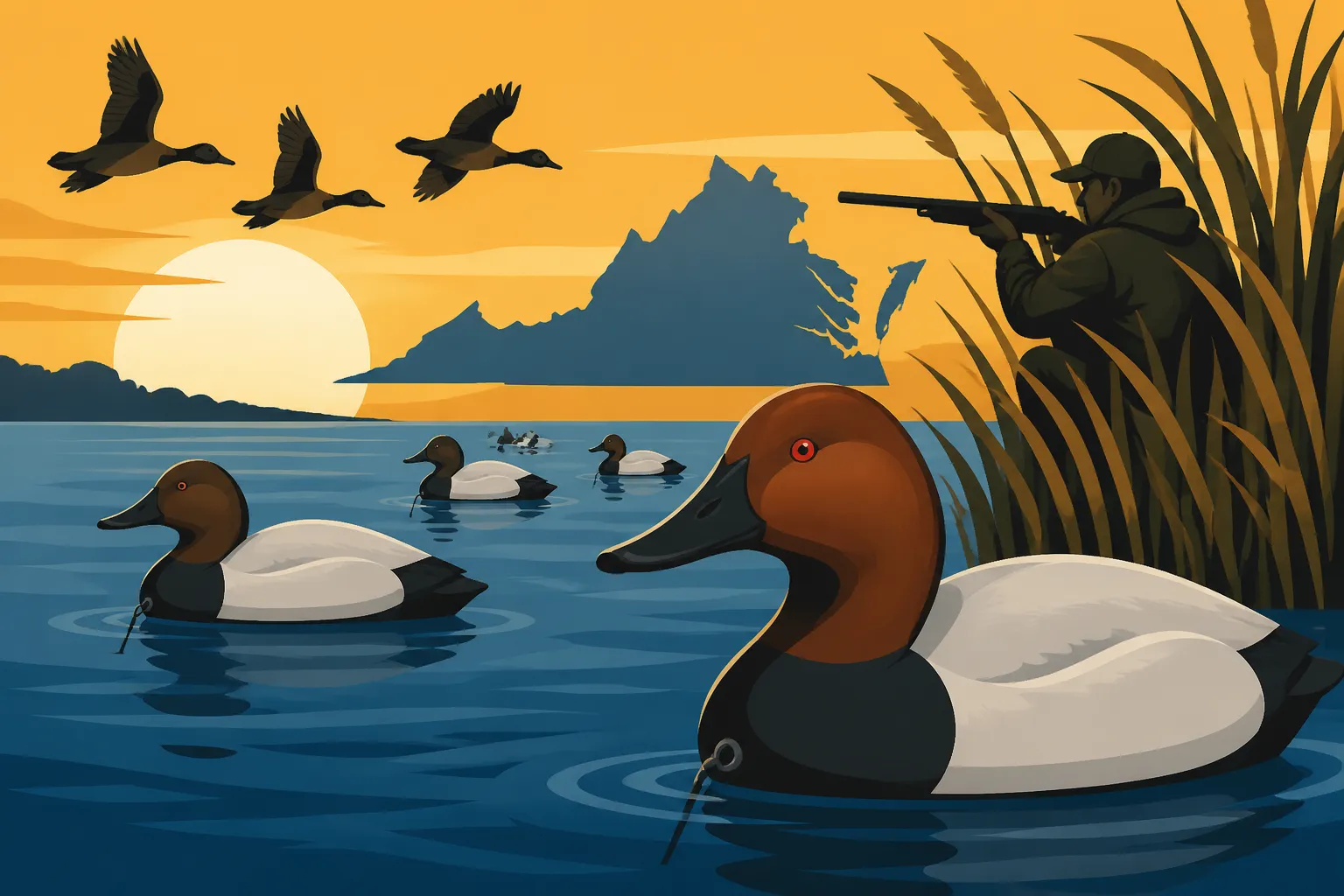
The Chesapeake Bay is an iconic stage for waterfowl hunting, offering some of the most challenging and rewarding experiences for those chasing diver ducks. The vast, open waters and complex currents, however, can make setting up an effective decoy spread feel like an art form, especially when trying to lure fast-flying birds like canvasbacks and bluebills. This guide dives deep into the nuances of decoy spreads specifically designed for diver ducks on Virginia's Chesapeake Bay, helping you understand their behavior, choose the right gear, and deploy your blocks for maximum success.
Understanding Diver Duck Behavior on the Chesapeake Bay
Diver ducks are a different breed than their puddle duck cousins. They thrive on the wide-open water of the Chesapeake Bay, feeding on submerged vegetation and shellfish, and they approach a spread with speed and a distinct flight pattern. To consistently bring these birds into range, you first need a solid understanding of what makes them tick in this unique environment.
Key Diver Species and Their Habits
On the Chesapeake, you're primarily targeting species like canvasbacks, redheads, bluebills (scaup), and ring-necked ducks. Each has its own subtle preferences, but they share a common affinity for deeper water and open areas where they can feed and raft. Canvasbacks, often called the "King of Ducks," are powerful fliers that prefer vast expanses of water and feed heavily on sago pondweed. Redheads, another sought-after species, are often found in slightly shallower bay flats, mingling with canvasbacks and bluebills. Bluebills, or scaup, are incredibly common and will often work spreads aggressively, especially in rougher conditions. Then you have ring-necked ducks, which, while technically divers, often frequent smaller, sheltered coves and even freshwater impoundments in the region, but can still be found working bay spreads. Knowing which species you're seeing on a given day can influence your subtle adjustments.
These birds are constantly on the move, responding to changes in weather, food availability, and hunting pressure. A warm spell might scatter them, while a sharp cold front can bring new waves of migrants down the Atlantic Flyway, making for incredible hunting. Paying attention to these migratory patterns and understanding what influences them, which you can often glean from resources detailing Virginia Waterfowl Migration Timing, is crucial for timing your hunts.
Feeding Patterns and Preferred Forage
Diver ducks are named for their primary feeding strategy: diving underwater to snatch their meals. This means they are often found where their preferred food sources are abundant. For many divers on the Chesapeake, this means submerged aquatic vegetation (SAV) like wild celery, sago pondweed, and widgeon grass, which thrive in certain bay flats and shallow areas. They'll also consume various shellfish and aquatic insects, especially in areas with a hard bottom. The presence of these food sources dictates where large rafts of divers will gather, and consequently, where you should consider setting your spread.
Scouting these feeding grounds before the season, or even during off-days, is invaluable. Look for areas where birds are actively diving, or where you see evidence of their feeding, such as plucked vegetation floating on the surface. These are the "hot spots" where a decoy spread is most likely to be effective. Sometimes, simply locating a dense bed of eelgrass is all you need to start. Modern tools, like mapping apps that provide bathymetric data, can help you identify these crucial underwater structures even before you launch, allowing you to visualize potential feeding locations from the comfort of your home.
Flight Paths and Resting Areas
Diver ducks are masters of flight, traveling long distances at high speeds. Their flight paths over the Chesapeake often follow natural contours of the land or specific water features. They tend to fly along coastlines, over prominent points, or between large bodies of water. Understanding these flight corridors helps you position your blind and spread where birds are naturally traveling. They're not going to detour miles out of their way for your spread, so setting up where they want to be is paramount.
Additionally, divers frequently use large, open areas of the Bay as resting or loafing zones, especially during midday or when disturbed from feeding. These rafts can number in the thousands. While you can't hunt resting birds, observing where they gather can inform your morning or evening hunt strategy. Often, birds will move from resting areas to feeding grounds, and understanding this transition can help you intercept them. When scouting, pay attention to these patterns. Are they resting far offshore and then moving in closer to points? Are they trading between two distinct feeding flats? The answers to these questions will heavily influence where you choose to set up your Decoy Spreads for Chesapeake Bay Divers and why.
Essential Decoy Types for Chesapeake Bay Divers
When it comes to outfitting your boat for a diver hunt on the Chesapeake Bay, the type and quality of your decoys make a tangible difference. Diver hunting is often a numbers game—you need a lot of blocks to get noticed on such vast water—but the realism and species representation also play a significant role.
The Role of Different Decoy Species
For diver ducks, it’s generally a good idea to lean heavily into diver species for your spread, but don't shy away from adding a few "confidence" birds. A pure spread of canvasbacks or bluebills is often highly effective. If you're targeting canvasbacks, a large spread of these distinct white-sided blocks can be irresistible. Similarly, a big spread of bluebills, often numbering 5-10 dozen, can pull in passing flocks, especially on blustery days. Some hunters prefer to mix in a few redheads, as these birds often associate with canvasbacks and bluebills.
However, sometimes a few non-target birds can make your spread look more natural. Adding a handful of floating goose decoys or even a few coots at the edge of your spread can lend an air of authenticity, signaling to wary birds that the area is safe. These are your "confidence decoys." The key is to make it look like a natural grouping of birds, not just a random collection of plastic. Observing actual rafts of birds on the bay can give you great insight into how different species naturally intermingle.
Keel Types and Weighting
The keel is the backbone of your decoy, literally and figuratively. It dictates how your decoy rides in the water and how it interacts with current and wind. For Chesapeake Bay divers, you’re almost always dealing with current, chop, or both, so stability is key.
- Weighted Keels: Most diver decoys come with weighted keels, often integrated directly into the mold. These are designed to keep the decoy upright and riding naturally in rough water. The heavier the keel, the more stable the decoy will be, which is crucial when the Bay kicks up.
- Self-Righting Keels: Some decoys feature a specific design that ensures they always return to an upright position, even after being tossed by waves or current. This can be a huge time-saver, as you won't have to constantly retrieve or right overturned blocks.
- Decoy Weights: Regardless of the keel type, you’ll need adequate weights to keep your decoys from drifting away in strong Bay currents. Mushroom anchors, flat teardrop weights, or even small lead sash weights are common choices. The amount of weight depends on the depth and current; in deep water with strong tides, you might need a pound or more per decoy, especially if running individual rigs. For long lines, a heavier anchor at each end suffices. You can learn more about managing your gear in this environment by checking out advice on Waders for Bay Marsh Hunting and Waterfowl Gear for the Chesapeake Bay.
Decoy Finishes and Realism
In today's market, decoy realism has reached new heights, and it truly makes a difference, especially on heavily hunted waters. Diver ducks, particularly older, wiser birds, can pick out an unnatural-looking spread from a distance.
- Flocked Decoys: These decoys have a textured, almost velvety finish that mimics the dull, non-reflective plumage of real birds. This finish absorbs light rather than reflecting it, making the decoys look incredibly natural, especially on bright, sunny days when traditional painted decoys might glare. The downside is that flocking can wear off over time, especially with heavy use.
- Painted Decoys: High-quality painted decoys with intricate feather detail and realistic color schemes are still highly effective. Look for decoys with a matte finish to reduce glare. Many manufacturers use durable, UV-resistant paints that hold up well to the harsh saltwater environment.
- Motion Decoys: While less common for large diver spreads than for puddle ducks, subtle motion can still add realism. Jerk cords attached to a few blocks can create ripples and natural movement, making your spread appear alive. Battery-operated swimming decoys are another option, though their effectiveness with divers can be debated compared to traditional blocks. The movement is meant to simulate actively feeding birds, and that visual cue can be a powerful attractant.
When choosing your decoys, consider the prevailing weather conditions you'll typically hunt. If you're often out on bright, clear days, flocked decoys might give you an edge. If you're frequently battling overcast skies and choppy water, durable painted blocks might be your workhorses.
Strategic Decoy Spreads for Open Water
Decoy placement for diver ducks on the vast waters of the Chesapeake Bay isn't just about throwing out a bunch of blocks. It's about creating an illusion, a welcoming "safe zone" that encourages fast-flying birds to commit and cup their wings right into your shooting lane. The sheer scale of the Bay often necessitates larger spreads to catch a diver's eye from a distance.
The Classic "J" or "Hook" Spread
One of the most tried-and-true layouts for diver ducks on open water is the "J" or "Hook" spread. This setup is incredibly effective because it leverages the natural tendencies of divers to land into the wind, much like an airplane.
Imagine your blind or boat as the tip of the hook. The long arm of the "J" extends far out into the open water, visible from a distance. This long line of decoys acts as a visual funnel, drawing the attention of passing birds. The curve of the "J" then creates a protected pocket or "landing strip" where birds feel comfortable dropping in. Your shooting hole, or the "kill hole," is located just inside this curve, typically about 20-30 yards from your blind, allowing incoming birds to land safely within range.
The beauty of the "J" is its adaptability. You can adjust the length of the arm and the tightness of the curve based on the wind direction and the number of decoys you have. For instance, if the wind is blowing from left to right, you'd extend the "J" to the left, with the hook curving back towards your right, allowing birds to fly into the wind and land just in front of you. This spread works well because it mimics a natural raft of birds, with a welcoming gap that encourages them to settle. For advice on specific diver species, you might find more helpful tips in articles discussing Mallards and Divers on the Chesapeake Bay.
The "X" or "V" Spread
Another highly effective pattern for divers, particularly when you have a strong crosswind or want to offer multiple landing zones, is the "X" or "V" spread. These shapes also act as funnels but with slightly different dynamics.
The "V" spread places your blind at the base of the V. The two arms extend outwards, creating a wide opening that birds fly into. The "kill hole" is situated right at the apex of the V, where the birds would naturally converge if they continued flying down the funnel. This spread is excellent for guiding birds that might be coming from slightly different directions or for creating a larger, more ambiguous landing zone if you're not entirely sure of their approach vector.
The "X" spread is essentially two "V"s joined at their points, or two long lines crossing. Your blind would typically be situated near the intersection, with shooting lanes defined by the gaps between the arms. This spread offers multiple entry and landing points, which can be advantageous on very large bodies of water or when hunting with multiple blinds. Both the "V" and "X" spreads maximize visibility from multiple angles and create the psychological effect of a large, inviting raft of birds. When deploying these larger spreads, particularly in deep or open water, using a marsh boat can make the process significantly easier and safer. Looking into Marsh Boats and Push Poles can provide some practical insights.
Confidence Decoys and Enhancements
While a large spread of diver blocks is the foundation, adding a few "confidence decoys" can significantly boost your success rate. These aren't necessarily the target species, but rather birds that divers commonly associate with, making your spread appear more natural and less threatening.
Floating goose decoys (like Canada geese or snow geese) placed on the outer edges of your spread, or even a few coots bobbing nearby, can convince wary divers that the area is safe. Geese often raft with divers, and coots are almost always present in diverse waterfowl habitats. These additions suggest a relaxed, undisturbed environment. Imagine a lone flock of bluebills circling, seeing hundreds of their kind, but also a few lazy geese contentedly floating—it paints a picture of security.
Beyond other species, motion decoys can provide subtle, lifelike movement. While spinning-wing decoys are generally frowned upon for divers (they tend to flare rather than attract), subtle jerk rigs or even a few battery-operated swimming decoys (used judiciously) can create ripples and the appearance of active feeding. This small detail can be the final convincer for birds that are on the fence. Always observe how real birds behave; if they’re actively dabbling or diving, a bit of motion can emulate that. However, be cautious not to overdo it, as too much unnatural motion can sometimes have the opposite effect on pressured birds.
Decoy Rigging and Deployment Techniques
Getting hundreds of decoys into the Chesapeake Bay and then retrieving them efficiently is half the battle when diver hunting. The rigging method you choose will heavily impact your setup time, your ability to handle currents, and the natural appearance of your spread. Choosing the right approach depends on the conditions and your personal preference.
Long Lines and Gang Rigs
For diver hunting on expansive waters like the Chesapeake Bay, long lines (or gang rigs) are incredibly popular. They allow you to deploy a large number of decoys quickly and efficiently, and they keep your spread organized in strong currents.
A long line consists of a heavy main line (often thick tarred rope, braided nylon, or even coated cable) that connects numerous decoys at regular intervals. Each decoy is attached to the main line via a shorter dropper line (leader) and a clip, usually spaced about 3 to 6 feet apart. The main line is anchored at both ends with heavy weights, typically 5-15 pounds each, depending on the depth and current.
The primary advantage of long lines is speed. Once set up, you can deploy a string of 10-20 decoys in a matter of minutes. When retrieving, you simply pull in the main line, and the decoys stack neatly. They also ensure your decoys stay perfectly aligned and facing into the current, mimicking a natural raft. This is crucial on the Bay where tides and wind can quickly turn individual decoys every which way. However, they require careful handling to avoid tangles, and if one decoy needs adjustment, you often have to retrieve a whole section. For hunting vast open water areas, where How Many Ducks Winter on the Chesapeake Bay can be staggering, long lines are often the only practical solution for deploying a truly effective spread.
Individual Decoy Rigs
While long lines are the workhorse for diver spreads, individual decoy rigs still have their place, especially in shallower water, tighter spots, or when you need more flexibility in your spread design.
An individual rig consists of a single decoy, a length of line (often tarred line or heavy monofilament), and an individual weight (usually a mushroom anchor or lead strap weight) tied directly to the line. The line length needs to be adjustable or long enough to reach the bottom, plus a few extra feet to allow for natural movement.
The main advantage of individual rigs is versatility. You can place each decoy exactly where you want it, making fine adjustments to your spread shape or density. This is great for creating nuanced "kill holes" or adapting to very specific water features. They are also easier to retrieve if you only need to pick up a few blocks quickly. However, deploying a large number of individual decoys can be time-consuming, and in strong currents, they can sometimes tangle or get blown out of position if not weighted correctly. Many hunters use a combination: a core of long lines for the main bulk of the spread, and individual rigs for the "kill hole" or to fill in gaps.
Anchoring and Retrieving Spreads
Anchoring is paramount on the Chesapeake Bay. Without proper anchoring, your carefully crafted spread will quickly become a scattered mess, drifting away with the tide or wind.
- Anchoring: For long lines, heavy anchors (like boat anchors, cinder blocks, or custom lead anchors) are essential at both ends. In deeper water, use plenty of rope to ensure the anchor has enough scope to hold. For individual decoys, lead mushroom anchors (1-2 lbs) are common, as they dig into soft bottoms. Pay attention to bottom composition—muddy bottoms might need different anchors than sandy or shell bottoms. You can gain valuable insights into finding suitable spots for anchoring by understanding Reading a Bay Marsh for a Morning Flight.
- Retrieving: Retrieval can be just as challenging as deployment. A grappling hook attached to a sturdy rope is indispensable for snagging long lines. For individual decoys, a long decoy pole or a gaff can help you reach blocks without having to constantly motor around. Many hunters use a "decoy boat" – a smaller, stable boat (like a scull boat or sneak boat) designed for deploying and retrieving decoys, often operated by a separate person or tethered to the main blind.
Ultimately, the best rigging and deployment method is one that you can execute safely and efficiently in the conditions you typically hunt. Practice makes perfect, and having a well-organized system for your lines, weights, and decoys will save you immense frustration when the wind is howling and the ducks are flying.
Adapting Your Spreads to Bay Conditions
The Chesapeake Bay is a dynamic environment, constantly changing with the whims of weather, tides, and seasonal migrations. What worked perfectly yesterday might be a bust today if you don't adapt your decoy spread to the current conditions. Being flexible and observant is the mark of a seasoned diver hunter.
Wind and Current Considerations
Wind and current are arguably the two most influential factors on a Chesapeake Bay diver hunt. They dictate how birds will approach your spread and how your decoys will behave.
- Wind Direction: Divers almost always land into the wind. Your spread must be set up to account for this. If the wind shifts mid-hunt, you'll likely need to adjust your spread, or at least your boat's position, to keep the "kill hole" in the optimal spot relative to the new wind direction. For example, if you have a "J" spread, ensure the open end of the "J" is facing the incoming birds, allowing them to swing around and land into the wind right in front of your blind. A consistent wind will also ensure your decoys are always facing the same direction, which adds to their realism.
- Current Strength: The Chesapeake Bay has significant tidal currents that can pull your decoys out of position, cause tangles, or even drag anchors. Strong currents necessitate heavier anchors and robust rigging, especially for long lines. In very strong currents, your decoys will naturally string out, creating a long, narrow appearance. You might need to adjust your spacing or the overall shape of your spread to compensate for this natural stretching. Sometimes, hunting a slack tide period can offer a calmer setup, but birds are often most active when the tide is moving, so you have to work with it. Understanding the local tide charts is as crucial as checking the weather forecast.
A stiff wind and strong current together can create significant chop, which helps hide your blind and add natural movement to your decoys, but also demands extreme stability from your blocks. For more about this, research Virginia Waterfowl Zones and Seasons for specific geographic influences.
Water Depth and Bottom Composition
The physical characteristics of your chosen hunting spot – namely water depth and what lies beneath – will heavily influence your decoy deployment and overall setup.
- Water Depth: Diver ducks prefer water deep enough to dive for their food, often ranging from 5 to 20 feet, but they can be found in shallower water near feeding flats. Your decoy lines need to be long enough to reach the bottom and still allow the decoy to float naturally. Trying to anchor in 30 feet of water with a 10-foot decoy line is a recipe for disaster. Always know the approximate depth of your hunting area before you start deploying your spread. For long lines, this means having ample main line and leaders. For individual rigs, you might need varying line lengths to match different depths across your chosen flat.
- Bottom Composition: The type of bottom affects how well your anchors hold. Muddy bottoms often require mushroom anchors that can "suck" in, or fluked boat anchors. Sandy bottoms can be more challenging for mushroom anchors, often requiring heavier, flatter weights or grappling anchors. Shell hash bottoms can be great for holding anchors, but can also snag lines and make retrieval tougher. Understanding these nuances helps you choose the right anchoring system and minimize frustration. Tools like the GoHunt app, which often include bathymetric charts and sometimes even bottom composition overlays, can be incredibly helpful for pre-scouting these critical features.
Dealing with Hunting Pressure and Smart Birds
The Chesapeake Bay sees its fair share of hunting pressure, especially on weekends and during peak migration. This pressure makes birds "smarter" and warier. Your spreads need to adapt to these educated ducks.
- Larger Spreads: When birds are pressured, they become less likely to commit to small, sparse spreads. A larger spread (50-100+ decoys) provides the confidence of a massive, established raft, making them feel safer. The sheer visual impact can overcome some of their wariness.
- Realistic Decoys: As discussed earlier, high-quality, realistic decoys with matte or flocked finishes become even more crucial. Any unnatural shine or poor feather detail will be picked out by birds that have seen dozens of spreads already.
- Subtle Movement: Overusing spinning-wing decoys or overly aggressive motion can often flare pressured divers. Instead, focus on subtle, natural movement created by the wind and current, or a very gentle jerk cord. The goal is to mimic feeding or resting birds, not a carnival.
- Location, Location, Location: Perhaps the most important tactic against pressure is finding spots that see less of it. This might mean pushing further out, scouting remote points, or moving into areas that are harder to access. Sometimes, even a slight change in position, like moving 100 yards down a point, can put you out of the direct flight path of other hunters and into a natural flyway for unpressured birds. The GoHunt app can be a great resource for identifying less-frequented public lands or difficult-to-access areas that might hold untouched birds. Also, look for ways to hide your blind more effectively, as birds that have been shot at frequently are very adept at spotting unnatural shapes.
By constantly observing, adapting, and refining your approach, you can turn a challenging Bay diver hunt into a memorable and successful experience, even when the birds are wise to the game.
Decoy Rigging Comparison for Chesapeake Bay Divers
When you're out on the Chesapeake Bay, battling currents and trying to entice wary divers, your choice of decoy rigging can make or break your hunt. Here's a quick comparison to help you decide which method suits your style and the conditions you're facing.
| Rigging Method | Pros | Cons | Ideal Conditions |
|---|---|---|---|
| Long Line | Quick deployment/retrieval of many decoys | Can tangle if not carefully managed | Deep, open water with strong currents |
| Keeps decoys aligned in current | Less flexible for spread shape/density | Large spreads (50+ decoys) | |
| Efficient use of anchors | One decoy issue can affect entire string | ||
| Individual | Maximum flexibility for spread design | Time-consuming for large numbers | Shallower water, varied depths, tighter areas |
| Easy to adjust or remove single decoys | Requires many individual weights | Smaller, more nuanced spreads (1-3 dozen) | |
| Less prone to tangling between lines | Can drift if not adequately weighted | When precise placement is critical |
This table highlights the fundamental differences, but remember that many experienced Bay hunters will use a hybrid approach, combining the efficiency of long lines for the bulk of their spread with individual rigs for their precise "kill hole" or confidence decoys.
Disclaimer
This article is for general informational purposes only and does not constitute professional advice. Laws, prices and regulations vary by location and change over time. Consult a qualified professional for guidance on your specific situation.