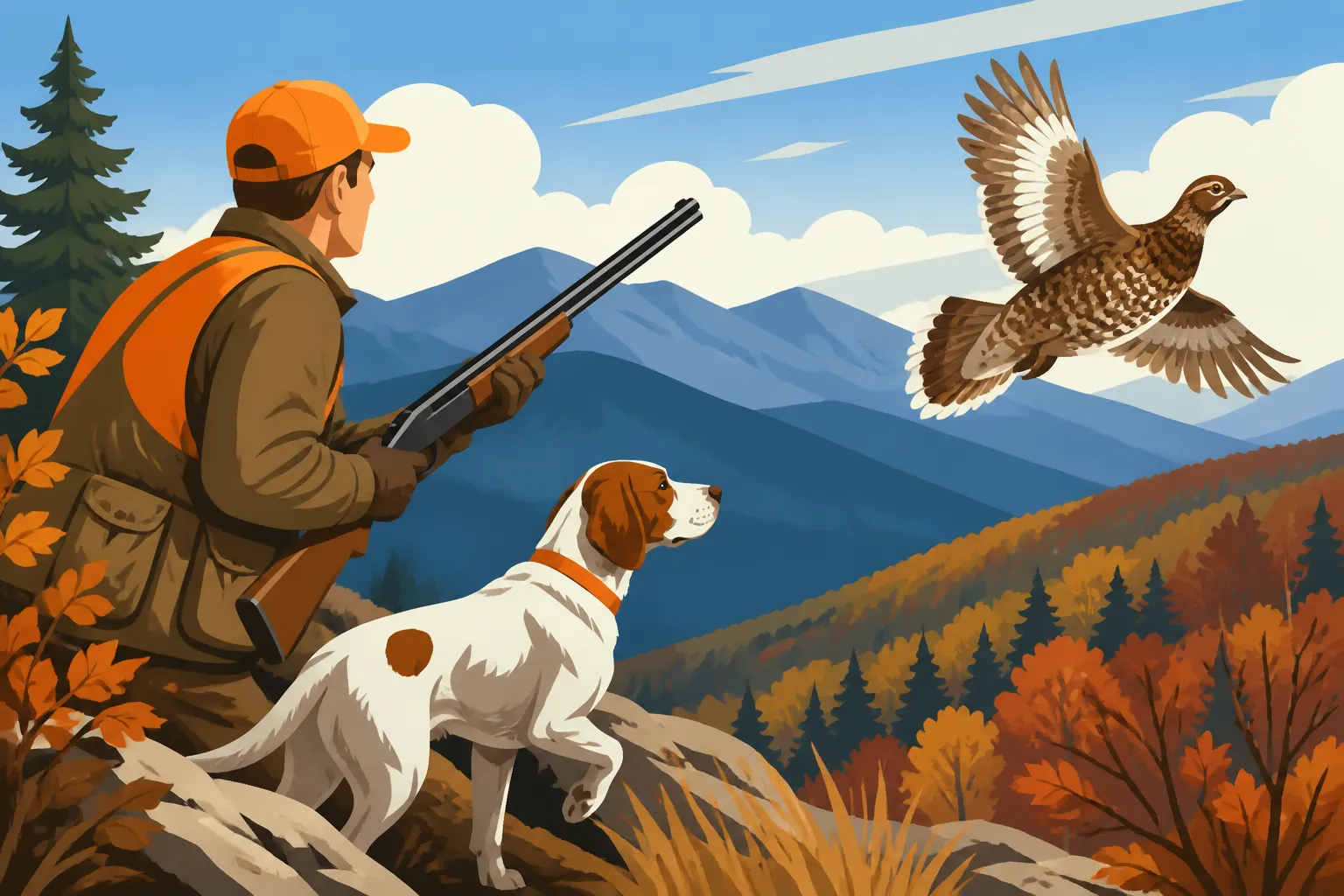
Upland Guns for Mountain Grouse Cover
Oh, the thrill of chasing ruffed grouse through Virginia's mountains! It's a pursuit that tests your patience, your dog's nose, and your shooting reflexes like almost nothing else. If you've spent any time busting through rhododendron thickets or scrambling up a steep Blue Ridge slope, you know the frustration of a missed flush – that drumming thunder, the blur of wings, and then… nothing but the echoing silence. This guide is all about helping you choose the right upland gun to put more of those elusive birds in your vest, focusing specifically on what performs best in Virginia's challenging mountain cover.
The Unique Challenges of Mountain Grouse Hunting in Virginia
Hunting ruffed grouse in Virginia isn't like strolling through a Kansas stubble field for pheasants. It's an altogether different beast, demanding specific considerations from your gear, especially your shotgun. The terrain, the cover, and the behavior of the birds themselves conspire to make it one of the most exciting, yet humbling, experiences in the uplands.
Dense Cover and Quick Shots
Imagine busting through a laurel slick on a cold November morning. Your legs are burning, your dog is working hard ahead, and suddenly, a grouse explodes from seemingly nowhere, weaving through a maze of branches faster than you can blink. This isn't a long-range shot. We're talking about incredibly tight windows, often within 10 to 20 yards, where you have mere fractions of a second to mount your gun, acquire the target, and pull the trigger. There's no time for finesse; it's pure instinct and quick gun handling. A cumbersome, slow-swinging gun will lead to a lot of empty promises and frustrated sighs. You need something that becomes an extension of your body, quick to shoulder and point. This immediate reaction time is paramount when the bird is gone as fast as it appears, disappearing into the thick undergrowth.
The Terrain and Its Demands on Gear
Virginia's mountains, especially areas within the George Washington National Forest Hunting and Jefferson National Forest Hunting, are beautiful but unforgiving. You'll be climbing steep grades, navigating rocky creek bottoms, and pushing through dense stands of mountain laurel, greenbrier, and rhododendron. Your gun needs to be lightweight enough not to become a burden after a few hours of this kind of hiking, yet robust enough to handle bumps, scrapes, and the occasional tumble. Heavy, ornate firearms might look gorgeous, but they quickly become a liability when you're a mile off the beaten path, wrestling with a downed tree or sliding down a muddy incline. A gun that can take a beating and still perform flawlessly is key, because pristine conditions simply don't exist in grouse country. Every branch you push through, every rock you stumble over, tests the durability of your equipment.
The Elusive Nature of the Bird Itself
Ruffed grouse are often called the "king of game birds" not just for their regal appearance but for their uncanny ability to evade hunters. They hold tight, often flushing unexpectedly at your feet, or bursting from a covert just out of sight. Their flight path is typically erratic and designed to put as much natural obstruction between them and you as possible. This makes precise shooting incredibly difficult. You're not aiming for a clean, open-sky shot; you're often snap-shooting into a tunnel of branches. This means your choice of choke and shot size needs to be forgiving enough to account for this chaotic, close-range encounter. It’s a dance of anticipation and surprise, where the bird almost always dictates the terms.
Understanding Upland Shotgun Types for Grouse
When it comes to upland guns, there's a good variety out there, each with its own pros and cons for the specific demands of grouse hunting in Virginia. Your personal preference and shooting style will play a huge role, but understanding the characteristics of each type is crucial.
Over/Under and Side-by-Side Shotguns
These classic break-action shotguns are often considered the quintessential upland guns. They are typically lightweight, quick to shoulder, and offer the immediate advantage of two barrels with two different choke constrictions – allowing you to have a more open choke for close flushes and a tighter one for a second, slightly longer shot.
- Over/Under (O/U): An O/U shotgun offers a single sighting plane, which many shooters find instinctive and easy to point. They tend to be a bit more modern in feel and balance. The relatively compact receiver also contributes to their sleek profile, which is great when you're trying to navigate thick brush. Brands like Browning Citori and Beretta Silver Pigeon are popular choices, though many excellent options exist across various price points. Their weight distribution generally makes for a smooth swing, and the ability to instantly select your choke adds a layer of tactical advantage.
- Side-by-Side (SxS): The traditional "double barrel," a side-by-side shotgun often has a slightly wider feel but can be incredibly fast to handle due to its typically shorter overall length and often lighter build. Many traditional grouse hunters swear by them for their aesthetics and pointability. The wider barrel spacing might take a moment to get used to for some, but for snap shooting, they can be exceptionally quick. The older models often feel like a natural extension, pointing almost instinctively. Both O/U and SxS designs are known for their reliability and ease of cleaning in the field, with no complex actions to foul up with dirt or debris.
Semi-Automatic Shotguns
Semi-automatic shotguns offer the benefit of reduced recoil and often a third shot, which can be tempting when birds are flushing wildly. For grouse, however, their advantages are sometimes offset by their drawbacks.
- Recoil Reduction: The gas or inertia operation of a semi-auto absorbs some of the recoil, making follow-up shots potentially faster and more comfortable, especially if you're sensitive to kick. This can be a real benefit during a long day of shooting.
- Weight and Balance: Many semi-autos tend to be a bit heavier and often longer than their break-action counterparts, which can make them feel sluggish in the dense cover of a Virginia mountainside. A longer gun might snag on branches more frequently, slowing down your swing or even preventing a shot altogether. However, there are lighter models available today that strive to offer the best of both worlds. The balance point is also key; some semi-autos can feel nose-heavy.
- Reliability in the Field: While generally reliable, semi-autos have more moving parts than break-actions and can be more susceptible to fouling from dirt, mud, or moisture, which is a common occurrence when pushing through wet, gritty mountain cover. Consistent cleaning is crucial. For someone who doesn't mind the added weight for the recoil reduction and potentially faster follow-ups, a semi-auto can certainly be a viable choice.
Pump-Action Shotguns
Pump-action shotguns are the workhorses of the shotgun world. They are renowned for their rugged reliability and affordability, making them a popular choice for many hunters across various disciplines.
- Durability and Cost: If you're looking for a gun that can truly take a beating without breaking the bank, a pump-action is hard to beat. They are incredibly robust, and their simple mechanism means there's less to go wrong when you're miles into the backcountry. This makes them a fantastic option for the rough and tumble nature of grouse hunting.
- Manual Operation: The main drawback for grouse hunting is the manual cycling of the action. While many experienced pump-gun shooters are incredibly fast, it still requires a conscious effort to rack the slide between shots. This can be a critical second lost when a grouse is hurtling through thick timber. In a quick double flush, that brief interruption can make all the difference.
- Weight and Balance: Like semi-autos, some pump guns can be on the heavier side, though there are plenty of lighter options available, particularly in 20 gauge. Their balance can also vary, but generally, they are built to be sturdy rather than feather-light and lightning-quick. For those who prioritize absolute reliability and budget, a pump-action is a solid contender, but it demands more proficiency from the shooter to be effective on fast-flushing birds.
Gauge, Choke, and Shot Size Considerations
Beyond the type of shotgun, the specific configuration of your gun – its gauge, the choke you choose, and the size of the shot in your shells – will profoundly impact your success rate in the dense Virginia woods. This combination needs to be tailored to the typical distances and cover you'll encounter.
The Case for Lighter Gauges (20ga, 28ga)
While the 12 gauge is often considered the standard, for grouse in thick cover, many experienced hunters gravitate towards lighter gauges.
- 20 Gauge: This is arguably the most popular choice for grouse hunting today. A 20 gauge offers a significant reduction in weight compared to a 12 gauge, making it much easier to carry all day up and down hills. More importantly, it allows for quicker gun handling and faster swings in tight quarters. The recoil is also noticeably lighter, which contributes to comfort during a long hunt. Despite being smaller, a 20 gauge loaded with appropriate shot can still deliver plenty of pellets to humanely take down a grouse at typical flushing distances. You're simply carrying less bulk, which is a massive advantage when every ounce feels like a pound by the end of the day. For most shots at 15-25 yards, a 20 gauge is perfectly adequate. Many hunters find that a 20 gauge offers the perfect balance of power, weight, and manageability for this demanding sport.
- 28 Gauge: The 28 gauge is a delightful little gun, often referred to as a "gentleman's gauge." It's even lighter and produces almost negligible recoil, making it incredibly enjoyable to shoot. For the very close-range flushes common in thick cover, a 28 gauge can be surprisingly effective. Its smaller payload means shot placement is a bit more critical, and you'll want to ensure you're using a dense pattern. However, for those who truly love its nimble feel and minimal kick, it's a fantastic option for the dedicated grouse hunter who knows their effective range and understands the limitations. It forces you to be a better shot, which isn't a bad thing! Remember to choose your loads carefully to maximize pellet count within a usable pattern. For more on this, check out Best Shotgun Gauge for Virginia Grouse.
Ideal Choke Constrictions for Grouse
Choke constriction is critical for close-range upland hunting. You want a pattern that opens quickly but is still dense enough to ensure a clean kill.
- Improved Cylinder (IC): This is often the go-to choke for the first shot in grouse cover. It allows for a wide pattern at close range (10-25 yards), giving you a larger margin for error on those snap shots through the trees. When a grouse flushes at 10 feet, a tighter choke would effectively turn your pattern into a fist-sized group, making it nearly impossible to hit. An IC choke provides a much more forgiving spread.
- Light Modified (LM) or Modified (M): For a two-barreled gun (O/U or SxS), pairing an IC in the first barrel with a Light Modified or Modified in the second is a classic combination. The LM or M choke will provide a slightly tighter pattern for a follow-up shot if the bird has put a bit more distance between you and is still visible. This gives you versatility for slightly longer shots, perhaps out to 30-35 yards.
- No Full Chokes! A full choke is almost always too tight for grouse in the woods. At close ranges, it will produce a pattern so dense that you're likely to miss entirely or, conversely, completely obliterate the bird, making it unsuitable for the table. The goal is a pattern that spreads quickly enough to catch a fast-moving, close-range target without shredding it. For more detailed advice, consider reading Choke Choice for Fast Flushes.
Choosing the Right Shot Size
The right shot size ensures adequate energy to bring down the bird without excessive damage.
- Lead Shot: If permissible (always check local regulations, as some public lands or specific areas may require non-toxic shot), common lead shot sizes for grouse are 7 ½ or 8.
- 7 ½ Shot: Offers a good balance of pellet count and individual pellet energy. It's often preferred by many hunters for its versatility and effectiveness on grouse. The slightly larger pellets carry a bit more punch, which can be useful when you're shooting through light cover.
- 8 Shot: Delivers a higher pellet count per shell, creating a denser pattern. This can be advantageous for extremely close-range shots where you want to maximize the chances of hitting the bird through a flurry of branches. However, individual pellets are lighter, so their energy dissipates faster over distance.
- Non-Toxic Shot: If you're hunting on public lands or waterfowl management areas that require non-toxic shot (which can sometimes overlap with upland hunting areas, so always double-check), you'll need to use alternatives like steel, bismuth, or tungsten-matrix.
- Steel Shot: Go up one or two shot sizes (e.g., 6 or 7) when using steel, as it's lighter and loses energy more quickly than lead. Steel also patterns tighter, so you might consider an even more open choke than usual.
- Bismuth or Tungsten Alloys: These heavier-than-lead alternatives perform much closer to lead, allowing you to use similar shot sizes and chokes. They are more expensive but offer superior performance to steel for upland game. For a deeper dive into this, see Shot Size for Grouse and Woodcock.
Key Features to Look for in a Grouse Gun
Beyond the basic type and gauge, certain design characteristics can make a world of difference when you're navigating the demanding environment of Virginia's grouse cover. These features contribute to how the gun handles, performs, and withstands the rigors of the hunt.
Barrel Length and Balance
The length of your shotgun barrel directly impacts how the gun swings and handles, especially in tight spaces.
- Shorter Barrels (24-26 inches): For grouse hunting in dense cover, shorter barrels are generally preferred. They are much easier to maneuver through thick brush and timber without getting snagged. A shorter barrel also typically results in a faster swing, which is crucial for snap shooting at birds that flush quickly and disappear into the foliage. While some believe shorter barrels sacrifice range or pattern quality, with modern ammunition and chokes, this concern is largely unfounded for typical grouse distances. The ability to quickly bring the gun to bear and swing it through a tight window outweighs any perceived disadvantage.
- Balance: A well-balanced gun feels natural in your hands, not muzzle-heavy or butt-heavy. When you mount it, it should come up smoothly and point instinctively. This is a highly personal preference, so it's always best to shoulder a few different models to see what feels right to you. A gun that balances well will feel lighter and less tiring to carry all day, and will contribute significantly to faster, more accurate shooting in those fleeting moments of truth. Consider reading Barrel Length for Walking Thick Cover for more perspectives.
Stock Fit and Recoil Management
A gun that fits you properly is paramount for instinctive shooting, and minimizing felt recoil improves your comfort and readiness for a second shot.
- Stock Fit: This is perhaps the most overlooked aspect of shotgun selection. A properly fitted stock ensures that when you quickly mount the gun, your eye naturally aligns with the rib and bead without having to consciously adjust your head or neck. If the stock is too long, too short, has the wrong amount of drop, or the wrong cast, you'll be fighting the gun, leading to missed shots. While custom fitting can be expensive, many modern shotguns offer adjustable combs or butt pads to help achieve a better fit. Even small adjustments can make a huge difference in how quickly and accurately you can point the gun. Remember, you're not aiming like a rifle; you're pointing like you'd point your finger, and a good fit makes that seamless.
- Recoil Management: Even with lighter gauges, cumulative recoil over a long day of shooting can take its toll. Modern shotguns often incorporate recoil pads and sometimes even internal dampening systems to reduce felt recoil. Semi-automatics naturally mitigate recoil due to their operating system. For break-actions, a good recoil pad is essential. If you're sensitive to recoil, this is a feature you won't want to skimp on, as it directly impacts your ability to stay comfortable and ready for the next shot.
Durability and Weather Resistance
Grouse hunting is a fair-weather sport only in your dreams. You'll encounter rain, snow, mud, and humidity. Your gun needs to be able to shrug off these conditions.
- Synthetic Stocks and Stainless Components: While a beautiful walnut stock is traditional, a synthetic stock is far more durable and weather-resistant. It won't swell or warp with moisture, scratch as easily, or absorb water. Similarly, stainless steel components or corrosion-resistant finishes can greatly extend the life of your gun in damp conditions. You want to focus on hunting, not constantly worrying about your gun rusting or seizing up.
- Simple Mechanics: As mentioned with break-actions and pumps, simpler mechanisms tend to be more reliable in harsh conditions. Less can go wrong with fewer moving parts. When you’re miles from the truck, battling the elements, the last thing you want is a malfunctioning firearm. Look for designs that are easy to field strip and clean, even if it's just a quick wipe-down at the end of a wet day.
Carrying and Handling Your Upland Gun in Rough Country
The way you carry and handle your shotgun in Virginia's challenging mountain grouse cover is almost as important as the gun itself. It impacts your safety, your energy levels, and your readiness for that explosive flush.
Slings and Carrying Methods
Walking for hours on uneven terrain with a shotgun in hand can be exhausting. A good sling can save your back, but its use needs to be tactical.
- When to Use a Sling: A quality padded sling is invaluable for covering long distances, especially when climbing steep hills or crossing tricky terrain where you need both hands free for balance. It allows you to shift the weight of the gun off your arms and shoulders, distributing it more evenly. Many hunters prefer a two-point sling that can be worn across the chest or over one shoulder.
- When to Keep it Off: However, a gun on a sling is generally not ready for an immediate shot. When you're in prime grouse cover, especially when your dog is birdy, it's usually best to carry the gun in a "ready" position, off the sling, typically cradled in your arms or held at the low-ready. This allows for the quickest mount and shot. Practice transitioning from a slung position to a ready position, and understand that in heavy cover, the sling can sometimes snag on branches. Many grouse hunters simply forgo the sling entirely once they are in active hunting areas, preferring constant control of their firearm.
Field Stripping and Maintenance in the Field
Things happen in the woods. Mud, water, and debris can find their way into your gun. Knowing how to quickly address minor issues is important.
- Basic Field Strip: Be familiar with the basic field stripping of your shotgun. For most break-actions, this is incredibly simple – just open the action, remove the forend, and take off the barrels. Semi-autos and pumps require a bit more disassembly. This knowledge allows you to quickly clear a jam, wipe down a wet barrel, or dislodge a piece of grit that might be causing an issue.
- Minimalist Cleaning Kit: Carrying a small, lightweight cleaning kit in your vest can be a lifesaver. This might include a bore snake, a small bottle of light gun oil, and a few patches. You're not looking to do a deep clean in the field, but rather to perform emergency maintenance to keep your gun functioning. A quick swipe with a bore snake can remove mud or water from the barrel, and a drop of oil can prevent a sticky action.
Safety Practices in Thick Cover
Grouse hunting in Virginia's mountains means navigating challenging terrain, often with hunting partners and dogs. Safety must be your absolute top priority.
- Muzzle Control: Always be acutely aware of where your muzzle is pointing. In thick cover, it's easy for a barrel to inadvertently swing towards a partner or a dog. Keep your finger off the trigger until you are ready to shoot.
- Loading and Unloading: Only load your shotgun when you are in active hunting cover and expect to encounter birds. Unload it immediately when crossing fences, climbing over obstacles, or entering a vehicle. Familiarize yourself with how to safely unload your specific firearm. With break-actions, this is as simple as breaking open the gun; with pumps and semi-autos, you'll need to cycle rounds out of the magazine.
- Blaze Orange: Virginia law requires hunters to wear a certain amount of blaze orange (or blaze pink) during general firearms seasons. Even if you're hunting during an archery-only period when it's not strictly mandated, wearing blaze orange is a smart and safe practice, especially when sharing public land with other hunters or hiking with partners. It dramatically increases your visibility and helps prevent accidents. For specific requirements, refer to Virginia Blaze Orange Requirements.
Modern Innovations and Personal Preferences
The world of upland hunting gear is constantly evolving, with new materials and designs emerging. Yet, at its core, finding the right grouse gun often comes down to what feels right to you and how well you can integrate modern tools into your traditional pursuit.
The Role of Customization and Aftermarket Parts
While many shotguns come perfectly capable out of the box, customization can fine-tune your upland gun for peak performance and personal comfort.
- Stock Adjustments: As mentioned earlier, a proper stock fit is crucial. Many modern shotguns offer spacers to adjust length of pull, or adjustable combs for changing drop at heel. These small modifications can significantly improve your shooting consistency and comfort. For older, fixed-stock guns, a skilled gunsmith can often make adjustments.
- Recoil Pads: Upgrading to a premium recoil pad can make a noticeable difference in felt recoil, especially if you spend a lot of time at the range patterning your gun or if you're sensitive to kick. Brands like Limbsaver or Pachmayr offer excellent aftermarket options that can be fitted to most stocks.
- Sights and Ribs: While most upland shotguns feature a simple bead sight, some hunters prefer fiber optic beads for better visibility in low light, or even express sights for very precise work. However, for fast-flushing grouse, a simple bead is often all you need. Focus on instinctive pointing rather than aiming.
Understanding Your Personal Shooting Style
Ultimately, the "best" upland gun is the one that best suits your shooting style and physical build. Are you a snap-shooter who excels at quick, close-range shots? Do you prefer a slightly longer swing?
- Practice, Practice, Practice: The only way to truly find out what works for you is to spend time shooting. Head to the sporting clays course or even just a safe open field with a hand thrower. Work on mounting your gun quickly and consistently. Pay attention to how different guns feel in your hands, how they swing, and how they point.
- Listen to Your Body: If a gun is too heavy, too long, or kicks too much, it will negatively impact your performance and enjoyment. Don't be afraid to try different gauges, barrel lengths, and stock configurations until you find that "just right" feeling. It's an investment, and you want to ensure it's one you'll be happy with for years of grouse hunting in the Virginia mountains.
Integrating Technology for Better Scouting
While your gun selection is key, finding the birds in the first place is half the battle, especially when you're after Ruffed Grouse in the Virginia Mountains. This is where modern technology can really shine, helping you identify prime habitat and plan your approach.
- Mapping Applications: Tools like GoHunt (and others that offer similar features) can be incredibly useful for scouting grouse cover. By overlaying public land boundaries, topo maps, and aerial imagery, you can identify old clear-cuts, thick regenerating timber stands, dense laurel thickets, and remote benches that grouse love. You can pinpoint potential access points, plan routes that avoid the steepest climbs, and even mark areas where you've flushed birds in the past. This kind of advanced scouting, done from the comfort of your home, can save you countless hours of unproductive walking in the field, allowing you to spend more quality time in actual bird cover. Knowing the terrain beforehand can also inform your gun choice, for example, if you anticipate needing to push through extraordinarily dense patches. You can even use these apps to find spots with less hunting pressure on Virginia public lands.
- GPS and Communication: Carrying a reliable GPS unit or using a mapping app on your phone (with downloaded offline maps, as cell service is often non-existent in remote mountain hollows) is essential for navigation and safety. Two-way radios are also excellent for communicating with hunting partners in thick cover, ensuring everyone stays safe and informed.
| Shotgun Type | Weight Range (typical upland) | Recoil Absorption | Follow-Up Shot Speed | Reliability in Field | Cost (general range) | Best For Grouse? |
|---|---|---|---|---|---|---|
| Over/Under (O/U) | 6-7.5 lbs | Moderate | Fast | High | Mid-High | Excellent; quick handling, two chokes, single sighting plane. |
| Side-by-Side (SxS) | 5.5-7 lbs | Moderate | Fast | High | Mid-High | Excellent; traditional feel, very quick to point, two chokes. |
| Semi-Automatic | 6.5-8 lbs | High (low felt) | Very Fast | Good | Mid-High | Good; low recoil, potentially 3rd shot, but can be heavier/longer, more parts to clean. |
| Pump-Action | 6-8 lbs | Moderate | Moderate (manual) | Very High | Low-Mid | Good; extremely durable/reliable, but manual action can slow follow-ups. |
Chasing ruffed grouse through the mountains of Virginia is a challenging but incredibly rewarding endeavor. It's a sport that connects you deeply to the wild places of our state. By thoughtfully selecting the right upland gun, tailored to the demands of this unique environment and your personal shooting style, you'll be better equipped to make the most of those fleeting, heart-stopping flushes. Remember to always prioritize safety, respect the game, and cherish every moment spent in the grouse woods. You can also explore options for Virginia Small Game Season Rules if you plan to hunt other species alongside grouse.
Disclaimer
This article is for general informational purposes only and does not constitute professional advice. Laws, prices and regulations vary by location and change over time. Consult a qualified professional for guidance on your specific situation.