Rifle Calibers for Virginia Bear
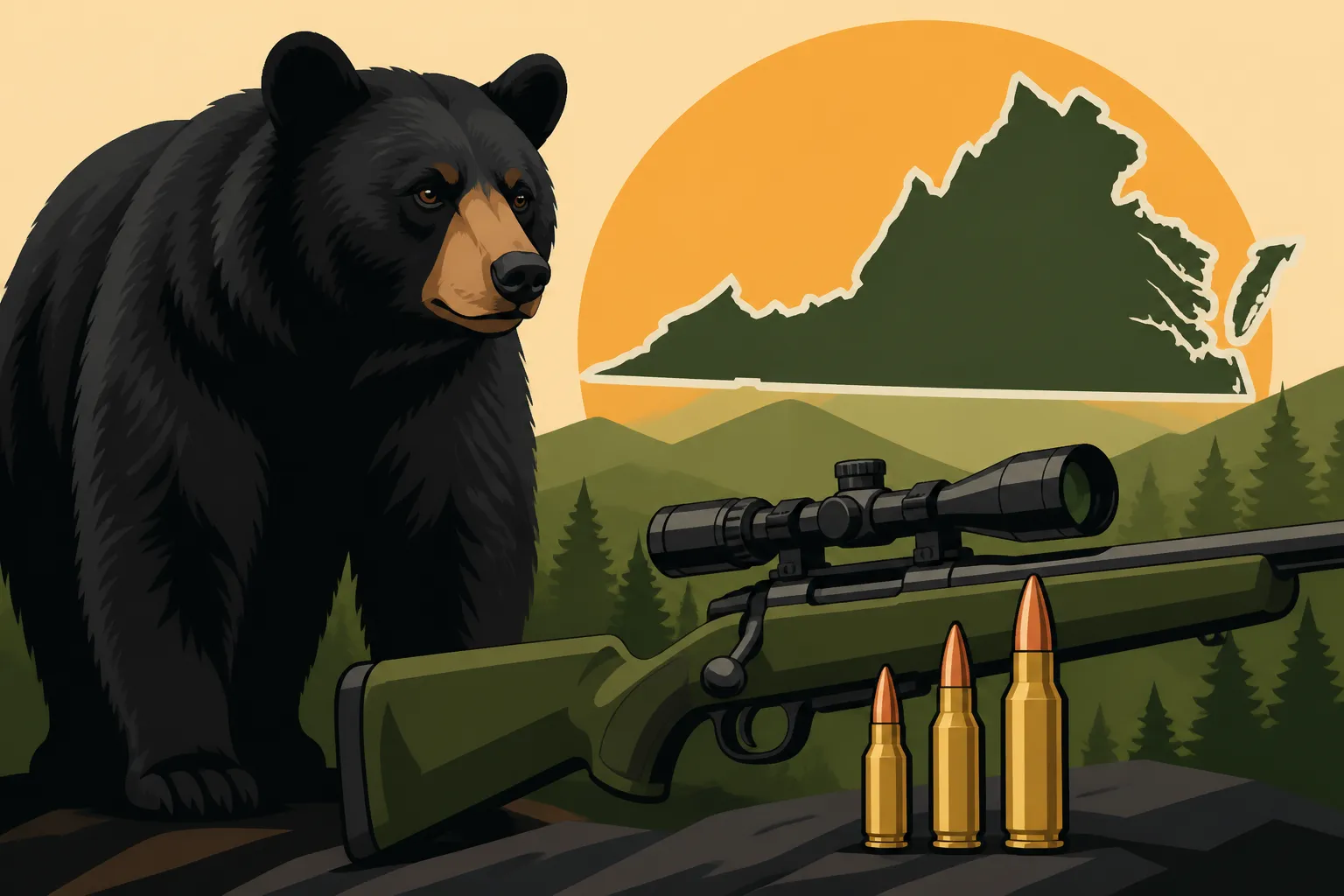
Hunting black bears in Virginia is an exciting challenge, demanding not just patience and woodcraft, but also the right tools for the job. Many hunters fret over selecting the perfect rifle caliber, worried about having enough knockdown power for these tough animals. This guide will walk you through understanding what makes a good bear hunting caliber for Virginia, considering our diverse terrain and robust bear population, ensuring you're well-equipped and confident when that opportunity arises.
Understanding Virginia Black Bear Hunting with a Rifle
Virginia's black bears are formidable creatures, surprisingly resilient and capable of covering ground quickly even after a solid hit. Their dense muscle, thick hide, and heavy bone structure demand a caliber that can deliver a powerful, ethical punch. We're not talking about varmints here; a mature Virginia black bear can weigh several hundred pounds, especially those bruisers out of the Blue Ridge and Allegheny mountains.
The Challenge of Virginia Black Bears
Unlike deer, a bear's vitals are often shielded by a significant layer of fat and muscle, particularly during the fall season when they're packing on weight for winter. This means your bullet needs to not just hit, but penetrate deep and reliably expand to create a devastating wound channel through the lungs and heart. A caliber that might be perfectly adequate for whitetails might leave you wishing for more when facing a large bear. The terrain itself adds another layer of complexity. From the steep, thick hollers of the Jefferson National Forest to the sprawling public lands of the George Washington National Forest, or even the thicker, brushier tracts of the Piedmont, shots can be anywhere from a few dozen yards to a couple of hundred. You need a setup that performs consistently across these variables. Virginia's Black Bear Population has grown steadily, meaning more opportunities, but also more responsibility to make clean, ethical kills.
Legal Requirements and Considerations
Before even thinking about which rifle to sling over your shoulder, you absolutely must be familiar with Virginia's hunting regulations. The Virginia Department of Wildlife Resources (DWR) sets clear rules on legal firearms for bear, deer, and other game. Generally, any centerfire rifle .23 caliber or larger is permitted for bear hunting during the designated firearms seasons. There are no specific restrictions on maximum caliber, meaning you won't be over-gunned as long as you can handle the recoil and shoot accurately. However, magnum calibers, while legal, aren't always necessary for Virginia's black bears if you choose the right bullet for a more moderate caliber. Always double-check the current Virginia Bear Season Rules for any updates or county-specific regulations, as these can change. You'll want to be sure your chosen rifle and ammunition comply with these guidelines.
Top Rifle Calibers for Virginia Black Bears
When it comes to selecting a rifle caliber for Virginia black bears, the sweet spot lies in a balance of power, trajectory, and bullet availability. You want something that hits hard, penetrates well, and that you can shoot accurately under pressure.
Mid-Range Powerhouses: .308 Winchester and .30-06 Springfield
For many hunters, the .308 Winchester and the .30-06 Springfield are the workhorses of the deer woods, and for good reason. They are also incredibly effective choices for black bears in Virginia, especially when loaded with appropriate ammunition.
The .308 Winchester is known for its excellent accuracy, moderate recoil, and compact action. When paired with high-quality, heavy-for-caliber bullets (165-180 grains) designed for deep penetration and controlled expansion, it's more than capable of taking down a black bear cleanly. This caliber is particularly well-suited for the medium-range shots often encountered in Virginia's mixed forests and thick cover. Its flatter trajectory compared to some heavier options makes it forgiving on longer shots, while its inherent accuracy helps place that bullet precisely where it needs to go. Many hunters appreciate the lighter rifle platforms often available in .308, making long treks into the mountains a bit less grueling.
The .30-06 Springfield often gets the nod as America's classic all-around cartridge, and it certainly holds its own for bear hunting. With a slightly larger case capacity than the .308, it can push heavier bullets (180-200 grains) at higher velocities, delivering more kinetic energy downrange. This extra oomph can be reassuring, especially if you anticipate shots at larger bears or in situations where deeper penetration might be needed through tough angles. The .30-06 is incredibly versatile, with a vast array of bullet choices available, making it easy to find loads specifically engineered for big game like bears. Its reliability and widespread availability of ammunition are also huge advantages. Both of these calibers, when matched with the right bullet, provide an excellent balance of power, accuracy, and manageable recoil for most hunters.
Heavier Hitters: .300 Winchester Magnum and .338 Winchester Magnum
For those who hunt areas known for exceptionally large bears, or simply prefer the extra insurance of a magnum cartridge, the .300 Winchester Magnum and .338 Winchester Magnum step up to the plate. These calibers offer significantly more power, but come with increased recoil.
The .300 Winchester Magnum takes the .30-caliber performance to another level. Capable of launching 180-200 grain bullets at blistering speeds, it delivers tremendous energy and a flat trajectory suitable for longer shots across clearings or wide-open ridge lines you might find in some parts of the George Washington National Forest. This magnum round is an excellent choice for bear, providing substantial knockdown power and ensuring deep penetration even through heavy bone and muscle. However, the increased recoil means more practice is usually required to maintain accuracy, and finding a rifle that fits you well becomes even more critical. If you're confident in your shooting abilities with a magnum, the .300 Win Mag leaves little doubt about its effectiveness on even the largest Virginia black bears.
Stepping up further, the .338 Winchester Magnum is unequivocally a dedicated big-game thumper. Firing heavier, larger-diameter bullets (200-250 grains), it offers superior energy transfer and penetration, making it an excellent choice for bear hunting, especially if you are concerned about a charging animal (though rare, it's a consideration for some). The .338 Win Mag ensures maximum tissue damage and a higher probability of a quick, clean kill, even on bears pushing the upper limits of size. This is a powerful cartridge and comes with significant recoil. It's often chosen by experienced hunters who prioritize maximum stopping power. For most Virginia bear hunting scenarios, it might be more than strictly necessary, but if you're comfortable with it, it's undeniably effective.
Other Capable Options and Considerations
Beyond the popular .30-caliber rounds, several other rifle calibers are perfectly capable of harvesting a Virginia black bear.
The venerable 7mm Remington Magnum is a fantastic choice, offering a flatter trajectory than the .30-06 and often similar or slightly more energy than the .308, depending on the load. It excels at delivering heavy-for-caliber 7mm bullets (160-175 grains) with excellent penetration and expansion. Its milder recoil than the .300 Win Mag makes it more comfortable for many hunters to shoot accurately.
For those who prefer a classic, lever-action feel or hunt in extremely dense cover, a .45-70 Government or .35 Remington can be very effective. While their effective range is shorter, typically under 150 yards, they deliver a massive punch with heavy, large-diameter bullets at close quarters. These are particularly well-suited for still-hunting through thick mountain laurel or dog-hunting situations where shots are often up close and personal. Remember to use modern, heavy-hitting loads designed for big game, not cowboy-action target rounds.
Ultimately, the "best" caliber is one you can shoot accurately and consistently. A well-placed shot with a .308 will always be more effective than a poorly placed shot with a .338.
Here's a quick comparison of some popular rifle calibers for Virginia bear hunting:
| Caliber | Common Bullet Weights (grains) | Pros | Cons | Recommended Virginia Use Cases |
|---|---|---|---|---|
| .308 Winchester | 150-180 | Accurate, moderate recoil, readily available | Less energy than magnums | Mixed timber, moderate range, accessible |
| .30-06 Springfield | 165-200 | Versatile, strong energy, common | More recoil than .308 | All-around, heavier timber, potential longer shots |
| 7mm Remington Magnum | 160-175 | Flat trajectory, good energy, less recoil than .300 | Magnum cost/recoil, less common than .30-cal | Longer shots, open areas, mountain hunting |
| .300 Winchester Magnum | 180-200 | High energy, flat trajectory, deep penetration | Significant recoil, higher ammo cost | Large bears, challenging angles, long-range opportunities |
| .338 Winchester Magnum | 200-250 | Maximum energy, superior penetration | Heavy recoil, less common ammo | Dedicated big game, extreme penetration needs |
| .45-70 Government (modern) | 300-405 | Heavy hitting at close range, brush busting | Short range, heavy recoil | Dense cover, close-quarters, dog hunting |
Factors Beyond Caliber: Bullet Choice and Shot Placement
Choosing the right rifle caliber is only part of the equation. What really matters is the bullet you put in that caliber, and where you put it on the animal.
The Critical Role of Bullet Construction
This cannot be stressed enough: for black bear hunting, bullet construction is paramount. You need a bullet designed for controlled expansion and deep penetration, not rapid, explosive expansion like some varmint or lighter deer bullets. Look for bullets that are bonded, partitioned, or monolithic (solid copper/gilding metal).
- Bonded bullets (like the Federal Terminal Ascent, Nosler AccuBond, or Hornady InterBond) feature a lead core chemically bonded to the copper jacket, preventing separation. This ensures the bullet retains most of its weight, driving deep while still expanding reliably.
- Partitioned bullets (like the Nosler Partition) have a partition wall that separates the front half of the lead core from the rear, allowing the front to expand while the rear maintains integrity for penetration.
- Monolithic bullets (like Barnes TSX or Hornady GMX) are solid copper, expanding by peeling back petals without losing any weight. They offer exceptional penetration.
Avoid ballistic tip bullets or soft-point bullets designed for rapid expansion on thin-skinned game. While they might work on a smaller deer, they can fragment or expand too quickly on a bear, failing to reach the vitals. Your goal is two holes: an entrance and an exit, creating maximum blood loss and a clear blood trail for recovery.
Perfecting Your Shot Placement
Even with the most powerful caliber and best bullet, poor shot placement leads to wounded game and heartbreaking searches. For bears, the aiming point for a clean kill is similar to deer: the vitals, specifically the heart and lungs. These lie in the chest cavity, just behind the shoulder.
A broadside shot, aiming approximately one-third of the way up the body directly behind the shoulder, is ideal. This targets the lungs and often catches the top of the heart. If the bear is quartering away slightly, aim to exit through the opposite front shoulder. Avoid head-on shots unless absolutely necessary, as the brain is a small target and the skull is incredibly thick. A gut shot bear, even with a magnum, is often a lost bear. Practicing regularly at the range, especially from hunting positions (off-hand, kneeling, from a treestand), will build the confidence needed for a precise shot when it counts. Learning about Shot Placement on a Virginia Black Bear can significantly increase your success rate.
Terrain and Range Considerations
Virginia's diverse hunting terrain means your rifle needs to perform across various distances. In the dense thickets and steep terrain typical of Hunting West of the Blue Ridge or specific areas within the Shenandoah Valley, shots are often up close – sometimes as close as 30-50 yards. Here, a heavier, slower bullet from a .308 or .30-06, or even a .45-70, can perform admirably, punching through brush and delivering a significant impact.
Conversely, if you're hunting more open timber, agricultural fringes in the Piedmont, or elevated positions with clearer sightlines, you might encounter shots stretching to 200 yards or even a bit further. This is where the flatter trajectory of the .30-06 or magnum calibers like the 7mm Rem Mag or .300 Win Mag shine. However, always know your rifle's effective range and your personal limitations. Never take a shot beyond what you can confidently make, regardless of the caliber. Using a rangefinder consistently is crucial, as distances in the woods can be deceptive. A good rangefinder and a quality set of Optics for Blue Ridge and Piedmont Hunting can make all the difference.
Preparing for Your Virginia Bear Hunt
Successfully harvesting a bear in Virginia takes more than just the right rifle and ammunition; it requires thorough preparation, from consistent practice to strategic scouting.
Practice Makes Perfect
There's no substitute for time on the shooting range. Knowing your rifle intimately, understanding its capabilities, and becoming proficient with it under various conditions are critical.
- Range Practice: Practice shooting from a bench to zero your rifle precisely, but don't stop there. Practice shooting from kneeling, sitting, and even standing positions, as these are more representative of real hunting scenarios. Fire multiple shots in quick succession to simulate follow-up shots.
- Field Practice: If possible, practice in a setting that mimics your hunting environment. Walk a short distance, elevate your heart rate, and then take a shot. This helps you understand how adrenaline might affect your shooting. Use the exact ammunition you plan to hunt with, as different loads can have different points of impact.
- Recoil Management: If you're using a magnum caliber, effective recoil management is essential for accuracy and avoiding flinching. Techniques like proper gun fit, a good shooting pad, and a firm grip can help. Don't be afraid to start with lighter loads or a smaller caliber to build good habits, then transition to your hunting load as you gain confidence. Rifle Setups for Virginia Deer Hunting offers insights into general rifle preparedness that cross over to bear hunting.
Scouting and Strategy
Effective scouting is paramount for bear hunting. Virginia bears are creatures of habit but can be elusive. Look for bear sign such as scat, tracks (especially near water sources or food plots), claw marks on trees, and overturned rocks or logs where they've been foraging. Areas with abundant natural food sources like acorns, persimmons, and berries are prime locations during the fall.
Consider the terrain. Bears often use thick cover for bedding and travel corridors. Ridgelines, saddles, and dense creek bottoms are all places where you might intercept a moving bear. Tools like GoHunt can be incredibly helpful for e-scouting, allowing you to identify potential travel routes, bedding areas, and food sources before you even set foot in the woods. While GoHunt offers fantastic mapping capabilities, always cross-reference public land boundaries with official DWR maps and be mindful of private property. Understanding Bear Hunting Virginia's Mountains and Piedmont and Hunting Mountain Bears in November can give you an edge in developing your strategy based on the typical bear behavior in these regions. Remember to think about wind direction and thermal currents, especially in mountainous terrain, as bears have an incredible sense of smell.
A successful bear hunt is the culmination of preparation, patience, and ethical execution. By choosing an appropriate caliber, using the right bullet, practicing diligently, and scouting effectively, you’ll greatly increase your chances of a rewarding experience in Virginia’s bear woods.
Disclaimer
This article is for general informational purposes only and does not constitute professional advice. Laws, prices and regulations vary by location and change over time. Consult a qualified professional for guidance on your specific situation.