Illuminated Reticles for Dark Timber
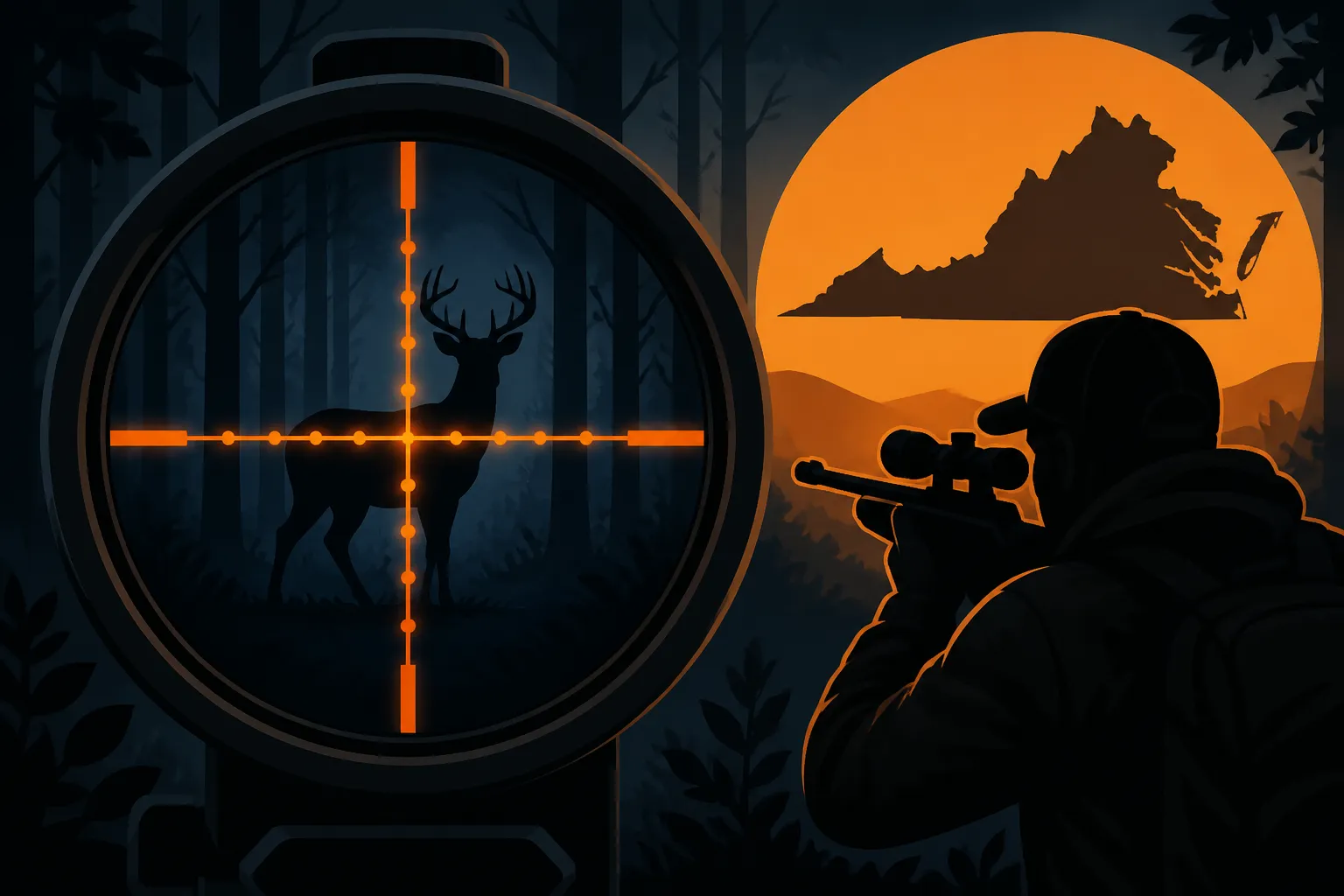
If you've spent any time deer hunting in Virginia's dense timber, especially during those magical first and last minutes of legal light, you know the struggle: you've got a buck stepping out of a thicket, the crosshairs are on, but your black reticle has utterly disappeared against its dark hide or the shadows of the woods. It's a frustrating, confidence-shattering experience that can cost you an opportunity. This guide is all about understanding how illuminated reticles can transform your low-light hunting, giving you the clarity and precision needed to make ethical shots when traditional optics fail.
The Challenge of Dark Timber Hunting in Virginia
Virginia's diverse landscape offers incredible hunting opportunities, but it also presents unique challenges, particularly when you venture into the thick, dark timber. From the deep hollows of the Blue Ridge Mountains to the dense bottomland hardwoods of the Piedmont, low-light conditions are a constant companion for hunters.
Why Low Light Conditions are So Common
Think about those steep, north-facing slopes in the Jefferson National Forest Hunting or the dense canopy of mature hardwoods along a creek bottom in the eastern part of the state. Even in the middle of the day, these areas can feel like perpetual twilight. In the early morning, before the sun has a chance to burn through the fog or reach over a high ridge, or in the evening as shadows stretch and deepen, the available light drops significantly. This isn't just a minor inconvenience; it's a critical factor in deer hunting, as these low-light periods are often when deer are most active, moving between bedding areas and food sources.
The topography itself plays a huge role. When you're Hunting West of the Blue Ridge, those deep mountain hollows are notorious for holding shadows long after sunrise and reclaiming them well before sunset. Even in the relatively flatter Hunting the Virginia Piedmont, dense pine plantations or mature oak stands with a thick understory can create incredibly dark pockets. This means that a deer moving through such cover might only be visible for a fleeting moment, and that moment is often in very poor light. The problem isn't necessarily that you can't see the deer, but that your scope's reticle becomes impossible to discern against the dark background.
The Problem with Traditional Reticles in Poor Light
Most traditional rifle scopes feature a black reticle – simple crosshairs or a duplex pattern. This works beautifully in good lighting, providing excellent contrast against most targets. However, introduce low light, deep shadows, or a dark-colored animal like a deer's hide, and that black reticle can simply vanish. It blends in, leaving you with a blurry, indistinct sight picture. Imagine a mature Virginia buck, its dark winter coat silhouetted against a stand of pines at last light. You can see the outline, perhaps even make out its antlers, but when you look through your scope, the crosshairs are gone, swallowed by the darkness.
This lack of contrast severely hampers your ability to quickly acquire a precise aiming point. You might have to frantically search for the reticle, shifting your eye, or even making a guess, which is obviously unacceptable for an ethical shot. In a high-stakes hunting scenario where milliseconds count, losing your reticle can mean the difference between a successful hunt and a missed opportunity, or worse, a poorly placed shot. It undermines the very purpose of having a scope designed for Low-Light Performance in a Scope if the reticle itself can't perform.
Understanding Illuminated Reticles
Illuminated reticles are a game-changer for hunting in challenging light conditions. They solve the fundamental problem of a disappearing reticle by providing an independent light source for your aiming point, ensuring it stands out against any background, no matter how dark.
How Illuminated Reticles Work
At their core, illuminated reticles are standard reticle patterns – like duplex, mil-dot, or various ballistic drop compensation (BDC) designs – that have a small portion, often the center crosshair or a central dot, lit up. This illumination is typically powered by a small battery and controlled by a rheostat dial on the scope's turret. You can adjust the brightness, usually through multiple settings, to match the ambient light conditions. Most commonly, you'll find red or green illumination, as these colors are generally easy for the human eye to perceive in low light and provide good contrast against natural backgrounds.
The light source is usually a small LED that projects light onto or through the reticle, making it glow. The goal is to make the reticle bright enough to be clearly visible without being so bright that it washes out your target or creates excessive glare. The best designs ensure that the illumination is crisp and contained, not bleeding into the rest of the sight picture. Many modern scopes offer a wide range of brightness settings, from barely visible for truly dark conditions to daylight bright for use against snow or very light backgrounds, though the latter is less relevant for dark timber hunting.
Key Benefits for Virginia Hunters
For those of us navigating Virginia's varied terrain, the benefits of an illuminated reticle are immense. The most immediate advantage is faster target acquisition in dim light. When a buck steps into a small opening in the deep woods right before legal shooting light ends, you don't want to be fumbling to find your crosshairs. With an illuminated reticle, your aiming point is immediately visible, cutting down crucial seconds. This can be particularly helpful when still-hunting through thick cover or when a deer suddenly appears in a shaded Hunting a Funnel Between Two Hollows.
Secondly, it provides improved visibility against dark hides or backgrounds. Whether you're aiming at a black bear in the mountains or a dark-coated deer in a shadow-filled ravine, the illuminated reticle cuts through the darkness, giving you a clear point of aim. This boosts your confidence immensely, knowing exactly where your shot is going. When you're deep in the George Washington National Forest Hunting and the light is fading, every bit of confidence helps. Many hunters use resources like GoHunt's optics reviews to compare how different illuminated reticles perform in varying conditions, helping them pick the ideal setup for their specific Virginia hunting grounds. The clarity it offers for precise shot placement means you're not guessing where the reticle ends and the target begins.
Choosing the Right Illuminated Reticle for Virginia
Selecting an illuminated reticle isn't just about getting any illuminated scope; it's about choosing the right one for the specific demands of hunting Virginia's diverse landscapes. What works for open plains won't necessarily be ideal for our dense timber.
Considerations for Brightness and Color
The ability to adjust brightness is paramount. You need a reticle that can go from almost imperceptible for truly dark timber, where even a slight glow would be too much, to bright enough to be seen on a cloudy afternoon under a thick canopy. A scope with too few brightness settings, or settings that are too far apart, can be more of a hindrance than a help. You don't want the reticle to bloom or halo, obscuring your target. Practice at dusk and dawn to find your sweet spots.
When it comes to color, red and green are the most common options. Red is often favored because it tends to be less disruptive to night vision, which is a major plus when you're glassing and then transitioning to your scope in very low light. However, some hunters find green reticles to be more vivid and easier to pick up, especially against certain natural backgrounds like autumn foliage or dark earth. It really comes down to personal preference and what your eyes perceive best. It's worth trying both if you can, perhaps by checking out different models on a site like GoHunt before making a purchase. Ultimately, the best color is one that provides clear contrast without distracting you or creating eye fatigue.
Reticle Patterns and Their Practical Application
While the illumination itself is key, the reticle pattern also matters. For hunting in dark timber, simplicity is often best. A busy reticle with too many lines or dots can become cluttered and confusing in low light, defeating the purpose of the illumination. A simple illuminated dot or a fine illuminated crosshair is often ideal for quick, precise shots at close to medium ranges, which are typical for timber hunting. While complex ballistic reticles are great for long-range shooting, they might not be your primary concern when you're primarily focused on short-to-medium range shots in the thick woods of Virginia.
For instance, if you're primarily still-hunting and expecting close encounters, a simple illuminated dot might be all you need for rapid target acquisition. If you’re hunting areas where you might get a slightly longer shot across a power line or small clearing, a duplex reticle with an illuminated center dot might offer a good balance of speed and precision. The key is to choose a pattern that allows for quick aiming without obscuring too much of your target, especially when light is scarce.
Battery Life and Durability
Reliability is non-negotiable in the field. Nothing is worse than ranging a deer in dim light, shouldering your rifle, hitting the illumination button, and finding the battery dead. Look for scopes with good battery life, and crucially, an auto-shutoff feature that will turn off the illumination after a period of inactivity. This can save you a lot of headache. Always, and I mean always, carry spare batteries. Keep them taped to your scope, in your pack, or in your rifle case. You never know when you'll need them, especially if you forget to turn the illumination off after a morning hunt.
Durability is another major factor, especially for Virginia hunters. Our hunting conditions can be tough – rain, snow, cold, and rough terrain. Your scope needs to withstand being bumped, jostled, and exposed to the elements. Ensure the scope is waterproof, fogproof, and shockproof. High-quality scopes will have robust construction that protects the sensitive electronics of the illuminated reticle, ensuring it performs when you need it most. Many hunters find that investing in a reputable brand pays off in terms of reliability and longevity in the field.
Practical Tips for Using Illuminated Reticles
Having an illuminated reticle is one thing; using it effectively to enhance your hunting experience is another. It's not just a "set it and forget it" feature; a bit of practice and preparation goes a long way.
Zeroing and Practice in Low Light
You wouldn't just mount a traditional scope and expect it to be accurate without proper zeroing. The same goes for an illuminated reticle. It's vital to zero your rifle with the reticle illuminated, as the slight change in your eye's focus or perception with the light on might subtly affect your point of aim, particularly if the illumination creates any bloom. More importantly, practice shooting in varying light conditions, not just bright daylight at the range. Head out to the range early in the morning or late in the evening and practice acquiring targets as the light fades. This helps you get a feel for how different brightness settings impact your sight picture and allows you to find the ideal setting for common scenarios you might encounter in the Virginia woods.
Understanding Rifle Scopes for Low-Light Mountain Hollows goes hand-in-hand with this. Take a few shots in full daylight with the illumination off, then turn it on to a medium setting and see if your point of impact shifts at all. Most quality scopes won't show a difference, but it's good to confirm. Then, try setting the illumination to its lowest effective setting and practicing on dark targets in diminishing light. This isn't just about accuracy, but about building muscle memory for quick, confident target acquisition when legal shooting light is fading fast.
Battery Management and Field Preparedness
As mentioned before, spare batteries are your best friend. Make it a habit to check your scope's illumination before each hunt. A quick press of the button will confirm it's working. If your scope has an auto-shutoff, wonderful, but still double-check it's off when you pack up. Consider marking your batteries with the date you installed them so you have an idea of their lifespan. Some hunters even carry a small, portable power bank if their scope uses a common rechargeable battery, although most illuminated reticles run on small, easily replaceable coin cells.
Think about your Packs for a Jefferson Forest Day Hunt. Do you have a small, easily accessible pocket for those spare batteries? Can you change them quickly and quietly in the field if needed? These seemingly small details can make a huge difference when that moment of truth arrives. You don't want to be fumbling for a tiny battery in the dark with cold fingers.
Integrating with Other Optics and Gear
An illuminated reticle is just one part of your overall hunting system. It works in concert with your other optics. For example, your Binocular Power for Mountain Hunting will help you locate game in dim light. Once spotted, your illuminated reticle in your scope becomes the tool for precise aiming. If you're a turkey hunter, you might already appreciate the speed a Red Dots on a Turkey Shotgun offers in dark woods. The principle is similar for deer rifles: the illuminated reticle helps overcome the contrast issues inherent in traditional crosshairs.
Consider how your entire setup functions in low light. Are your binoculars providing enough light gathering to even spot a deer in that dark timber? Are your Boots for Virginia Swamps and Ridges quiet enough to get you into position without spooking game? An illuminated reticle is a powerful tool, but it's most effective when integrated into a well-thought-out system that supports low-light hunting. Many hunters rely on online platforms like GoHunt not only for optics reviews but also for insights into how different gear combinations perform in various hunting scenarios, helping them build a truly optimized kit for their Virginia adventures.
| Feature | Red Illuminated Reticle | Green Illuminated Reticle |
|---|---|---|
| Visibility | Often preferred for low light, less impact on night vision | Can appear brighter to some eyes, good contrast against brown/green |
| Eye Fatigue | Generally causes less eye strain over long periods | Some users report more eye fatigue in very dim conditions |
| Background Contrast | Excellent against dark targets, dark timber, snow | Very good against dark targets, stands out against red/orange autumn leaves |
| Brightness Range | Varies by model, crucial for versatile use | Varies by model, crucial for versatile use |
| Commonality | More widely available in a variety of scopes | Becoming more popular, but red is still dominant |
| Personal Preference | Highly subjective, what works for one may not for another | Highly subjective, what works for one may not for another |
Disclaimer
This article is for general informational purposes only and does not constitute professional advice. Laws, prices and regulations vary by location and change over time. Consult a qualified professional for guidance on your specific situation.