Deer Sleds for Mountain Country
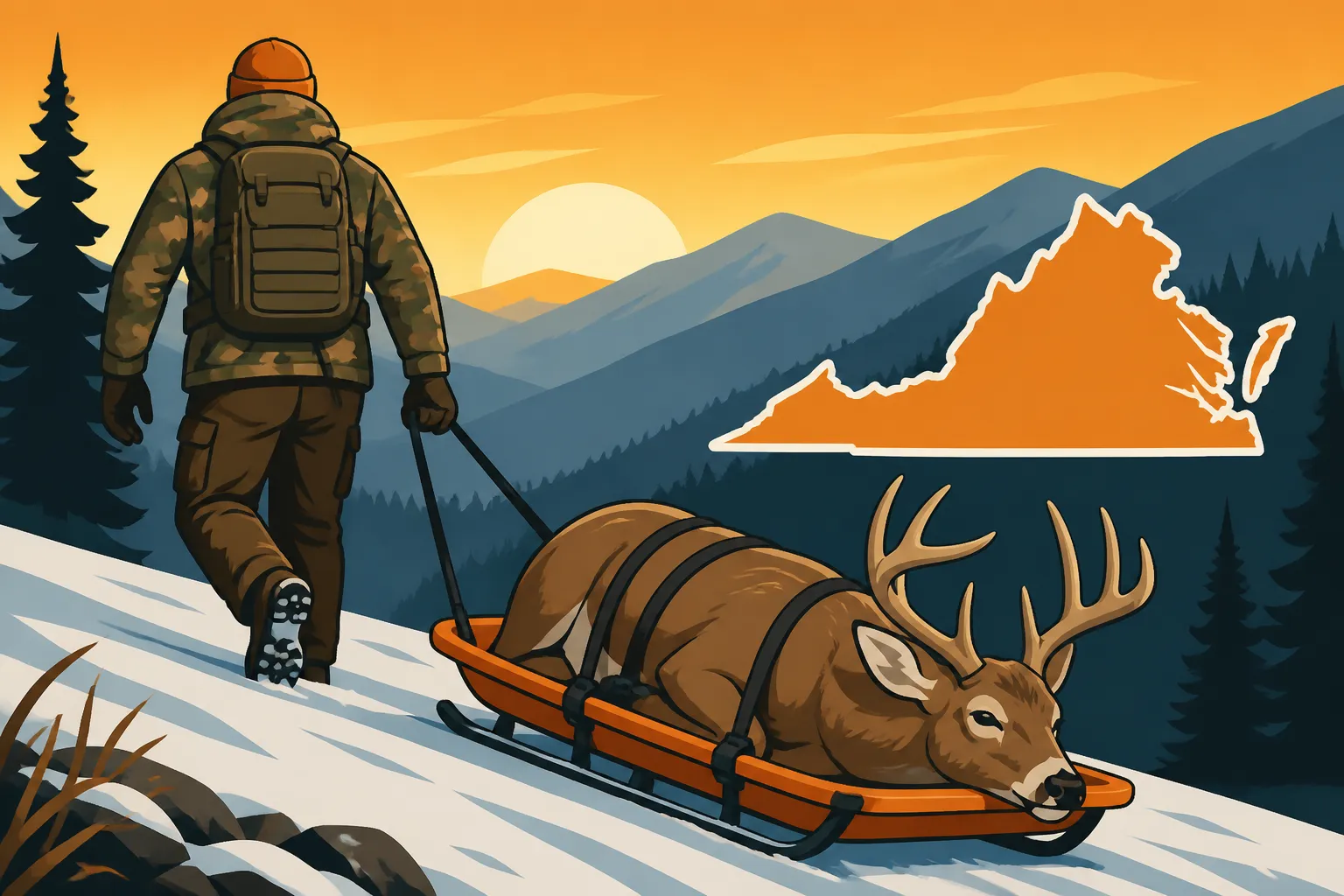
Oh, the joy and dread of a successful mountain hunt in Virginia! You've put in the scouting, braved the steep climbs, made the perfect shot, and now the real work begins: getting that deer off the mountain. There's nothing quite like the feeling of looking at a magnificent buck or a fat doe miles deep in the George Washington National Forest, only to have a cold wave of exhaustion wash over you as you realize the long, arduous drag back to the truck. This feeling, that heavy mix of triumph and impending pain, is a common one for hunters in our rugged Western Virginia terrain. But what if there was a way to make that monumental task a little less daunting? This guide will dive deep into how deer sleds can be a total game-changer for deer recovery in Virginia's challenging mountain country, transforming a back-breaking chore into a more manageable effort.
The Unique Challenges of Deer Recovery in Virginia's Mountains
Let's be real, hunting the mountains of Virginia isn't for the faint of heart. It demands a different kind of preparation, a different kind of stamina, and a totally different recovery strategy than, say, hunting a flat Piedmont field edge. When you connect with a deer in the Blue Ridge or Alleghenies, the battle isn't over until that animal is safely loaded into your vehicle.
Steep Slopes and Uneven Terrain
Imagine you're deep in the Jefferson National Forest, perhaps several hollows away from any forest road. You've just dropped a solid buck halfway up a ridge. The shot was perfect, but now you're facing a recovery route that looks more like a rollercoaster than a trail. You've got to contend with inclines that feel like climbing a ladder, followed by equally treacherous descents. These aren't just gentle rolling hills; we're talking about pitches that make your quads burn just looking at them, even when you're empty-handed.
Adding to the misery, the ground itself is rarely smooth. There are rocky outcroppings, hidden roots waiting to trip you, fallen timber from old logging operations, and constantly shifting leaf litter that can hide all sorts of ankle-twisting surprises. Trying to drag a heavy, limp deer carcass over this kind of ground with just a rope is a recipe for exhaustion, frustration, and potentially an injury that ruins the rest of your season. It's not just about brute strength; it's about navigating an obstacle course with a dead weight.
Dense Cover and Obstacles
Virginia's mountains, particularly in areas like the Shenandoah Valley or the more remote sections of the Appalachian range, are often choked with dense undergrowth. Think mountain laurel thickets so dense you can barely push through them, thorny greenbrier patches that snag everything you own, and young timber stands that form a wall of saplings. A deer might drop in what looks like open woods from your treestand, but the moment you get to it, you find yourself in a jungle.
Dragging a deer through this kind of cover means it snags on every branch, every root, every bit of brush. Its legs catch, its antlers dig in, and you end up expending twice the energy just to move it a few feet. Then there are stream crossings – often rocky, sometimes muddy, and always slick – where you're trying to keep your footing while wrestling a heavy animal. It's enough to make you consider boning out an entire deer right where it fell, and sometimes, that's exactly what dedicated mountain hunters do. The thought of a long drag through this stuff is often the most significant deterrent to going deep.
The Sheer Weight of a Virginia Whitetail
Let's not forget the star of the show: the deer itself. A mature Virginia whitetail buck can easily weigh 150-200 pounds field dressed, and a large doe isn't far behind. Now imagine adding that kind of dead weight to the steep, uneven, obstacle-laden terrain we just discussed. If you're hunting solo, as many dedicated public land hunters do, you quickly realize you're trying to move a mass that's often equal to or greater than your own body weight, all while navigating a wilderness gauntlet.
Even with a partner, dragging a deer can be a monumental task. The friction of the carcass against the ground, the constant re-positioning, the need to lift it over obstacles – it all adds up. You'll sweat, you'll curse, and you'll likely feel every muscle in your body protest. Without the right tools, the memory of a successful hunt can quickly be overshadowed by the physical agony of the recovery. This is where a little ingenuity, and a good deer sled, can truly save the day. For more on the typical size of these animals, check out Virginia Deer Weight Averages by Region.
Why a Deer Sled is Your Mountain Recovery MVP
Given the gnarly conditions we've just laid out, it's pretty clear that simply grabbing an old rope and hoping for the best isn't the most efficient or back-friendly approach. This is where a deer sled steps in, often hailed as the unsung hero of many a mountain hunter's season.
Types of Deer Sleds and Their Features
When we talk about deer sleds, we're not just talking about any old plastic toboggan from your childhood. While those might work in a pinch for a short, flat drag on snow, dedicated deer sleds are designed with hunters and rough terrain in mind.
At their core, most deer sleds are made from durable, slick, often high-density polyethylene plastic. This material is chosen because it's incredibly tough, flexible enough to conform to uneven ground without cracking, and, most importantly, provides minimal friction against dirt, rocks, and stumps. You'll find a few main types:
- Flat Sheet Sleds: These are essentially large, stiff plastic sheets, sometimes with a slightly raised lip around the edge. They are usually rolled up for transport and then flattened out for use. They're lightweight and packable.
- Molded Sleds: These have a more defined, boat-like or scoop-like shape, often with raised sides. They offer more protection for the carcass, keeping it cleaner and more contained, especially on rough descents. They can be bulkier to transport but excel in tough conditions.
- Convertible Sleds: Some clever designs integrate straps or harnesses that allow the sled to be worn like a backpack (when empty) or pulled with shoulder straps when loaded.
The key features to look for across all types include: sturdy rope holes (often reinforced with grommets), a thick, durable tow rope, and a shape that allows the sled to glide over obstacles rather than getting hung up.
Advantages Over Traditional Dragging
Let's break down why a sled beats a bare rope in mountain country every single time:
First and foremost, reduced friction. This is the biggest benefit. Instead of the deer's fur or hide dragging directly on the ground, snagging on every root and rock, the slick plastic underside of the sled slides right over most obstacles. This means you need significantly less force to move the same amount of weight, translating directly into less effort for you. What might take two strong hunters to drag a deer a quarter-mile with a rope, could be manageable for one person with a good sled, especially on a slight downhill grade.
Secondly, protection for the carcass. When you drag a deer with a rope, its hide is going to get scuffed, dirty, and potentially torn. If you're in an area with gravel, dirt, or mud, that meat is going to get grimy. A sled keeps the carcass elevated slightly off the direct ground, protecting the hide and keeping the meat much cleaner, which is a big plus, especially if you plan to get that trophy mounted or want to ensure pristine venison.
Finally, easier navigation of obstacles. While a sled can still get hung up on a truly large log, it generally glides over smaller rocks and roots with far less effort than a deer's legs or antlers. It also prevents the deer's body from twisting and turning, which can make it hard to keep a straight line or prevent it from getting wedged between trees. You're effectively streamlining the deer into a single, less-snagging unit. For those really long hauls out of a deep ravine, this efficiency is priceless. If you find yourself in a mountain hollow, knowing how to efficiently retrieve your game is critical, so be sure to check out Recovering a Deer From a Mountain Hollow.
Practical Considerations for Mountain Use
While deer sleds are fantastic, they aren't magic. There are still a few things to keep in mind when using them in Virginia's rugged mountain terrain.
Steep ascents will still be a grunt. While a sled reduces friction, you're still pulling the full weight of the deer uphill. On very steep climbs, you might still need two people, or consider a "ratchet pull" method where you move the sled a few feet, then anchor it, rest, and repeat. Some hunters even attach a small recovery winch to a tree to pull the sled up extremely steep sections.
Steep descents require control. The very slickness that helps you on flat ground or moderate slopes can make a sled want to run away from you on a steep downhill. You'll need to use the tow rope to control its speed, perhaps even having a second person on a "brake rope" at the rear to prevent it from outrunning you or slamming into trees. Think of it like steering a bobsled rather than just dragging.
Packability is key for getting the sled to the deer. Many flat sheet sleds roll up, and some molded ones can be strapped to a pack. However, some larger, rigid molded sleds might be too cumbersome for long hikes to remote areas. Consider how far you typically hike into your hunting spots. For public land hunting in areas like the George Washington National Forest, where long walks are common, packability can make or break whether you actually bring the sled along. You might even find some creative ways to attach it to your pack, leveraging mapping tools from GoHunt to plan your approach.
Choosing the Right Deer Sled for Your Virginia Hunts
So, you're convinced a deer sled is worth it. But with so many options, how do you pick the one that's perfect for your specific hunting style and the gnarly Virginia terrain you call home? It boils down to a few key factors: material, size, and the quality of the attachment points.
Material and Durability
The material choice is paramount for mountain hunting. You need something that can take a beating from rocks, stumps, and frozen ground without cracking or puncturing. Most quality deer sleds are made from high-density polyethylene (HDPE), often in a dark color like black or olive green.
HDPE pros: It's incredibly durable, retains its flexibility in cold weather (unlike cheaper plastics that become brittle), and has that essential low-friction surface. It's designed to slide, not snag, and can withstand repeated abuse. Look for thicker gauges of plastic; a flimsy sled won't last a season if you're regularly pulling it over rocks and roots. Some manufacturers might even boast about their specific blend of resins, indicating increased toughness. A good quality sled will have some flex to it, allowing it to conform slightly to terrain without breaking, but still be stiff enough to provide a stable platform for the deer.
What to avoid: Thin, brittle plastics. If you can easily bend and crease the plastic with minimal effort, it might not stand up to the rigors of a mountain hunt. You're not looking for a disposable item; this should be a tool that serves you for many seasons to come. Think about the sharp edges of broken rocks you might encounter or the cold snaps during late season where plastic can become more fragile.
Size and Capacity Considerations
The size of your sled directly impacts its utility and its portability. You need a sled big enough to hold the deer you expect to harvest, but not so large that it becomes impossible to maneuver or transport.
For solo hunters: A medium-sized sled, roughly 2-3 feet wide and 5-6 feet long, is usually a good compromise. It can accommodate most Virginia whitetails, including larger bucks, and is still manageable for one person to pull. It might even roll up or fold enough to be strapped to a pack when empty.
For hunting with a partner or larger game: If you frequently hunt with a buddy and expect to encounter larger-bodied deer, or perhaps even a smaller black bear (where legal), a larger sled might be warranted. Some sleds are designed to be wider, providing more stability and keeping the deer more contained. However, remember that wider sleds can be harder to navigate through dense timber or narrow trails. It's always a trade-off.
Consider the typical size of deer in your hunting area. If you're consistently hunting in regions known for bigger bucks, like some of the prime Piedmont areas or the richer bottomlands, you might lean towards a larger sled. However, in the mountainous regions, while bucks can be big, the sheer difficulty of terrain might push you towards a more nimble, slightly smaller sled that's easier to control. When choosing, consider how much game you plan to recover and how much extra weight you're willing to manage.
Handles, Ropes, and Attachment Points
These often overlooked details are critical to the functionality and user-friendliness of a deer sled. A great sled with a crummy rope is still a frustrating experience.
Tow Rope: The sled should come with, or allow for, a thick, strong, durable rope. Think at least 3/8-inch to 1/2-inch braided nylon or polypropylene. It needs to be long enough (around 8-10 feet) to give you leverage and distance from the deer, especially on descents. Some hunters prefer to upgrade the rope that comes with the sled to something even more robust, adding a loop at the end for an easier handhold or for attaching a harness.
Attachment Points: Look for reinforced grommets or molded-in holes where the rope attaches to the sled. These are high-stress points and will fail quickly if not properly designed. Some sleds have multiple attachment points, allowing you to change the pulling angle depending on the terrain or to distribute the load if two people are pulling from the front.
Handles/Harness Options: While many sleds just use the tow rope, some fancier models include integrated handles at the front, or even a padded shoulder harness system. A harness can be a godsend, distributing the pulling force across your shoulders and core rather than concentrating it on your hands and arms. This significantly reduces fatigue and allows you to use your body weight more effectively. For Dragging a Deer Out of a Mountain Hollow over a long distance, a harness can mean the difference between making it out efficiently and having to make multiple stops or even abandoning the deer overnight.
Here's a quick comparison of popular sled types:
| Feature | Flat Sheet Sleds | Molded/Scoop Sleds |
|---|---|---|
| Material | Thinner, flexible HDPE | Thicker, more rigid HDPE |
| Shape | Flat, sometimes with low lip | Defined boat or scoop shape, raised sides |
| Protection | Basic, keeps carcass off ground | Excellent, contains and shields carcass better |
| Packability | Excellent, often rolls/folds | Good, but bulkier and less flexible |
| Maneuverability | Very nimble, easy to turn | Stable, but wider turns through dense brush |
| Price Point | Generally more affordable | Often a higher price point |
| Best Use Case | Backcountry, solo hunting, variable terrain | Rough ground, steep descents, cleaner transport |
Techniques for Effective Sled Use in Rugged Terrain
Having the right deer sled is only half the battle. Knowing how to use it effectively, especially in the tricky landscape of Virginia's mountains, is where you truly unlock its potential.
Solo Recovery Strategies
For the solo hunter who ventures deep into the wilderness, a deer sled transforms an impossible task into a challenging, but achievable, one.
The first step, even before moving the deer, is to field dress the animal immediately. This removes a significant amount of weight (blood, entrails) and helps cool the carcass. Every pound counts when you're pulling a deer out of a mountain hollow. You might even consider the "gutless method" for larger animals if you're far from the truck, reducing the weight you need to drag substantially and improving meat quality by rapidly cooling it. Need a refresher? Look up Field Dressing a Deer in Cold Weather.
Next, load the deer head-first into the sled. This helps its antlers, if any, lay flat and keeps them from snagging as much. Secure the deer in place if possible, using extra straps or rope, so it doesn't shift around too much inside the sled, especially on uneven ground.
When pulling, try to stay on the path of least resistance. This often means following game trails, logging roads, or the path you took coming in. Use the natural contours of the land. Instead of dragging straight up or down a steep slope, try to traverse it diagonally, making switchbacks. This makes the incline less severe for any given segment.
Finally, take frequent breaks. This isn't a race. Pace yourself. Every 50-100 yards, stop, rest your muscles, catch your breath, and re-assess your route. Hydrate. A solo recovery can take hours, so conserve your energy. And remember, platforms like GoHunt can help you pre-plan potential extraction routes, marking points of concern or easier paths on your map.
Teamwork Makes the Dream Work (with a sled)
If you're lucky enough to be hunting with a partner or a small group, a deer sled becomes an incredibly efficient tool for game recovery.
The "Puller and Pusher" Method: This is classic. One person takes the main tow rope at the front, pulling the sled forward. The other person positions themselves behind the sled, pushing it or guiding it from the rear. The pusher can lift the rear of the sled over obstacles, keep it tracking straight, and prevent it from veering off course. This dramatically reduces the effort on the front puller and allows for much faster progress.
The "Tandem Pull" for Steep Ascents: For those brutal uphill sections, two people can pull from the front. This is where a sled with multiple front attachment points or a strong cross-bar for the tow ropes comes in handy. Each person can pull with their own harness or simply by hand, combining their strength to conquer the incline. Communication is key here: "Ready? Pull!" and "Stop!" to ensure you're working in sync.
Controlled Descents: On steep downhill grades, one person should remain at the front, managing the tow rope to control the sled's speed, guiding it gently rather than letting it run wild. A second person can be at the rear with an auxiliary rope, acting as a "brake." This person slows the sled's descent, prevents it from gaining too much momentum, and steers it away from trees or rocks. This prevents damage to the sled, the deer, and most importantly, yourselves. Deer Drives With Three or Four Hunters often plan for specific retrieval methods with multiple people, and a sled should be part of that strategy.
Navigating Obstacles and Steep Descents
Successfully using a deer sled in mountain country isn't just about raw strength; it's about smart navigation.
Over Logs and Boulders: For smaller obstacles, the sled will often glide right over them. For larger logs, the puller needs to lift the front of the sled up and over, while the pusher can assist by lifting the rear. Sometimes, you might need to temporarily unload the deer, drag the empty sled over, and then reload, though this is a last resort. Always look for a natural ramp or the lowest point to cross.
Through Dense Brush: While the sled helps prevent snagging, you'll still encounter thickets. The best strategy is to avoid them whenever possible by scouting a clear path. If you must go through, the puller should break trail, pushing branches aside. The sled, with its smooth profile, will generally follow without too much trouble, but it will still be a slower, more deliberate process than on open ground.
Steep Downhill Runs: As mentioned, control is paramount. Never just let the sled go. Keep the rope taut and guide it slowly. If it's extremely steep, consider running the rope around a tree or solid stump as a "friction brake" to control the descent. This is a technique often used in mountaineering and can be adapted for sled retrieval. The person at the front controls the rope and the path, while the person at the back provides additional braking and ensures the sled doesn't get sideways. This level of control is crucial for safety and preventing injury. When traversing areas with significant elevation changes, knowing Wind and Thermals on a Blue Ridge Slope can sometimes help you predict where deer will be, making your recovery route more predictable.
Remember, a deer sled is a tool that enhances your ability to hunt and recover game in Virginia's magnificent, but challenging, mountains. It's an investment in your back, your time, and your overall hunting experience.
Disclaimer
This article is for general informational purposes only and does not constitute professional advice. Laws, prices and regulations vary by location and change over time. Consult a qualified professional for guidance on your specific situation.